





Key points
- The Federal Government is advancing plans to create economic opportunities for 37,000 women and young people in the dairy value chain.
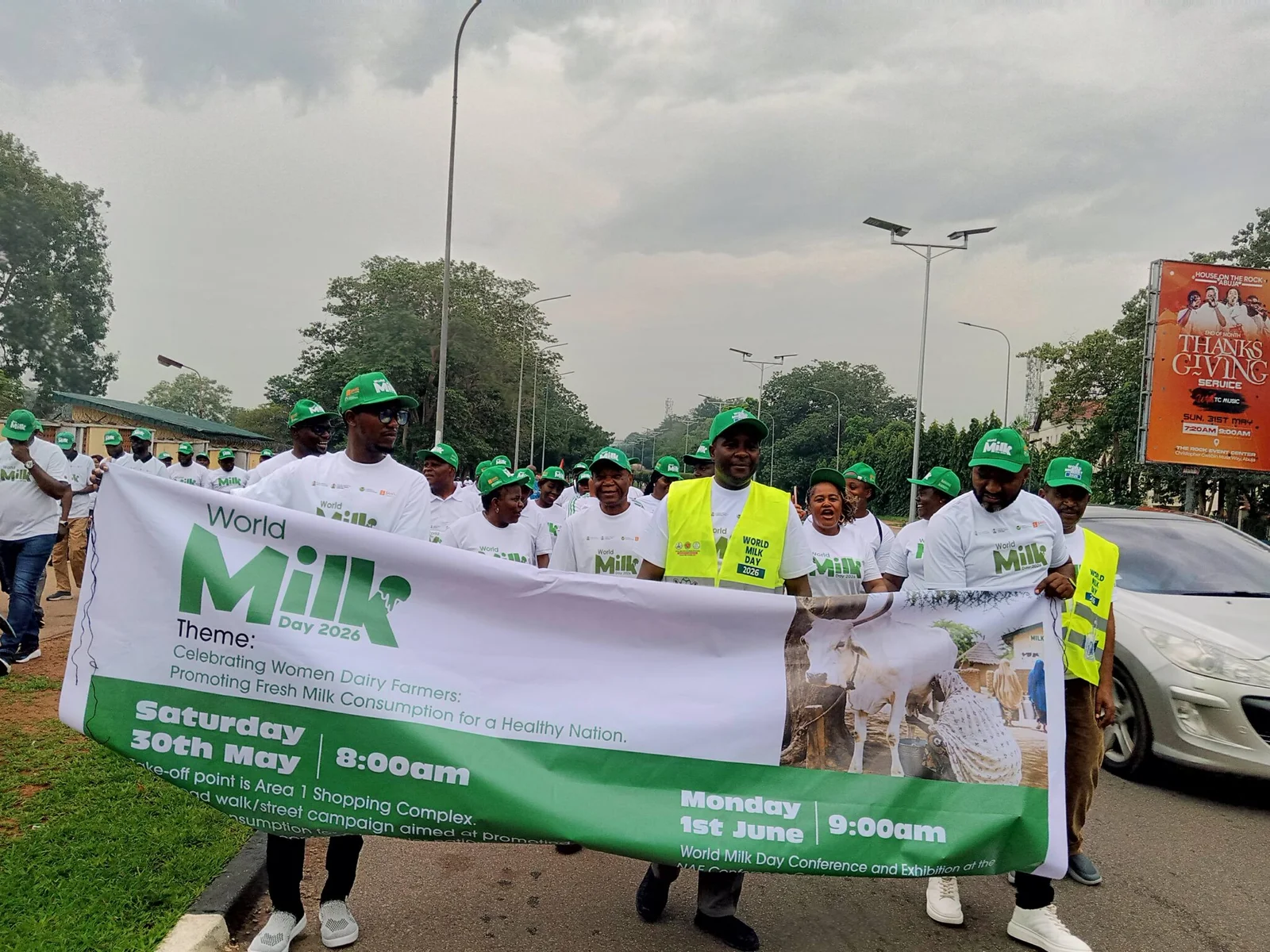
- Minister of Livestock Development Alhaji Idi Maiha announced the initiative on Saturday in Abuja during a road walk for the 2026 World Milk Day.
- The theme for the 2026 celebration is “Celebrating Women Dairy Farmers: Promoting Fresh Milk Consumption for a Healthy Nation”.
- Nigeria’s national annual milk demand is estimated at 1.7 million metric tonnes, while local production ranges between 600,000 and 700,000 metric tonnes.
- The supply gap drives a significant import dependence, resulting in an estimated 1.5 billion dollars in foreign exchange expenditure annually for dairy products.
Main Story
The Federal Government says it is advancing plans and strategic interventions to create economic opportunities for 37,000 women and young people in the dairy value chain, covering production, processing and marketing activities.
The Minister of Livestock Development, Alhaji Idi Maiha, disclosed this on Saturday in Abuja during a road walk organised as part of activities marking the 2026 World Milk Day celebration.
News reports reveal that World Milk Day is celebrated annually on June 1. The theme for the 2026 celebration is “Celebrating Women Dairy Farmers: Promoting Fresh Milk Consumption for a Healthy Nation”.
To evaluate intermediate structural dependencies, agricultural economists monitor localized collection networks alongside refrigeration logistics to ensure raw product shelf-life remains stable before supply chains expand to industrial processors.
Maiha, who was represented by Prof. Eustace Iyayi, Special Assistant to the Minister, said the initiative formed part of efforts to celebrate and empower women dairy farmers across the country.
He explained that the programme, which is currently under consultation, is designed to focus on skills development, enterprise integration, cooperative strengthening, access to finance, technology transfer and sustainable livestock production.
According to the minister, the commemoration provides an opportunity to recognise the invaluable contributions of women, men and families to food security, household nutrition, rural livelihoods and the growth of the dairy economy.
Furthermore, international development banks track commercial credit availability for smallholders to determine if micro-enterprise loans can reliably offset initial setup overheads during regulatory shifts.
Maiha stressed that the ministry recognises that no meaningful transformation of the dairy sector can occur without the inclusion and empowerment of women.
Citing data from the International Dairy Federation, the minister said global milk production now exceeds 780 million metric tonnes annually, while dairy consumption continues to rise across developing economies due to population growth, urbanisation and increasing income levels.
Earlier, the Permanent Secretary in the ministry, Dr Chinyere Akujobi, said the road walk underscored a collective commitment to improving nutrition, promoting healthy lifestyles, advancing sustainable livestock development and strengthening Nigeria’s dairy industry.
The Issues
- Resolving a massive national supply gap where annual milk demand stands at 1.7 million metric tonnes but local production yields only 600,000 to 700,000 metric tonnes.
- Curbing an intense import dependence that drains an estimated 1.5 billion dollars in foreign exchange expenditure annually for dairy products.
- Designing and implementing gender-responsive dairy policies to properly integrate women producers who manage core livestock responsibilities.
What’s Being Said
- Detailing the specific infrastructural and support services being structured for women producers to expand local processing reach, Alhaji Idi Maiha stated: “The ministry is also exploring the establishment of women-led milk aggregation and processing cooperatives, which aim at increasing reach in order to strengthen local value addition and improve access to processors. Improve milk storage systems, mobile veterinary support, and extension services that are tailored specifically towards women dairy producers who often carry the core responsibility of livestock production as well as household care,”
- Characterizing the targeted demographics as the foundational labor asset required to achieve any meaningful structural adjustments in livestock production, Maiha noted: “They are the human resource pillar of the sector. So when you need people to do anything, be it dairy, milk, sheep, goat production, poultry production, whatever it is you need human beings. We have recognised them as strategy and important in the success of our transformation effort.”
- Reaffirming the institutional pledge to implement supportive frameworks that guarantee inclusive and equitable development across the value chain, he added: “So we are committed to promoting gender-responsive dairy policies and interventions that create greater opportunities for women and youth through strengthening of dairy productivity, skills development, milk aggregation systems, value addition and enterprise support initiatives. The ministry therefore remains committed to building a dairy sector that is not only productive but also inclusive, equitable and sustainable,”
- Highlighting the stark supply-and-demand mismatch within the local market and the resulting heavy financial burden on external reserves, the minister explained: “The global reality of milk production and consumption presents both a challenge and an opportunity for us in Nigeria. Nigeria remains one of Africa’s largest consumers of dairy products. Our national annual milk demand is estimated to be about 1.7 million metric tonnes. Local production currently ranges between 600,000 metric tonnes and 700,000 metric tonnes annually. So there is a huge gap in this country. This gap continues to drive significant import dependence and foreign exchange expenditure estimated to be around 1.5 billion dollars annually for dairy products,”
What’s Next
- The Ministry of Livestock Development will advance its consultations on the new skills development and enterprise integration programme.
- Government officials will look to establish women-led milk aggregation and processing cooperatives to improve access to processors.
- Public institutions, the private sector, and development partners will seek closer collaboration to scale up local milk production and secure national food security.
Bottom Line
To address a steep 1 million metric tonne supply gap that costs Nigeria 1.5 billion dollars in annual imports, the Ministry of Livestock Development has unveiled a strategic World Milk Day initiative to empower 37,000 women and youth through women-led aggregation cooperatives, localized storage systems, and targeted financial access.