






KEY POINTS
- Finance Minister Taiwo Oyedele says the proposed $21.7 billion external borrowing plan is a five-year investment programme, not an immediate drawdown.
- About $10.6 billion is earmarked for transport projects, while more than $7.9 billion is expected from multilateral and bilateral development partners.
- The plan includes $3.3 billion for state government projects and $1.45 billion for the Federal Capital Territory.
- The Federal Executive Council approved financing for electricity substations, Kano-Maradi railway rolling stock, Bauchi roads and customs inspection scanners.
MAIN STORY
The Federal Government has defended its proposed $21.7 billion external borrowing plan, describing it as a multi-year investment programme for infrastructure and other assets rather than funding for immediate government spending.
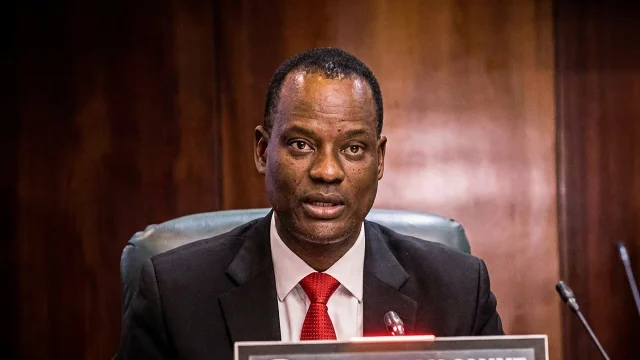
Minister of Finance and Coordinating Minister of the Economy, Taiwo Oyedele, made the clarification after the Federal Executive Council meeting at the Presidential Villa in Abuja, following public concerns over the borrowing proposal submitted by President Bola Tinubu to the National Assembly.
Oyedele said the plan would span about five years and should not be interpreted as an immediate withdrawal of the entire amount. He argued that borrowing to finance productive assets could create lasting value for the country, unlike borrowing to fund consumption.
Of the proposed borrowing, $10.6 billion is earmarked for major transport infrastructure, including the Sokoto-Badagry Highway, Lagos-Calabar Coastal Highway and Kano-Kaduna Metro Rail.
More than $7.9 billion is expected from multilateral and bilateral development partners, including $5 billion from the World Bank. Oyedele said the development financing would carry an average interest rate of about 2.1 per cent.
The plan also allocates $3.3 billion directly to state government projects and another $1.45 billion to the Federal Capital Territory.
The minister linked the government’s investment programme to its wider economic recovery efforts, arguing that improved national economic indicators must translate into better living conditions for households and businesses.
He cited ₦372.6 billion disbursed through the Nigerian Education Loan Fund to more than 1.5 million students, over ₦600 billion distributed to 10 million households, and single-digit interest loans provided to more than 800,000 micro, small and medium-sized enterprises through the Bank of Industry.
The government also plans to expand cash transfers to 15 million vulnerable households. Oyedele said the Federal Executive Council had fully adopted the 90-day execution framework established by the National Economic Council and pledged strict fiscal discipline.
Separately, the council approved 10 memoranda submitted by the finance minister, including financing arrangements for electricity infrastructure, railway equipment, roads and border inspection technology.
One approval was a €155.9 million credit facility arranged by Deutsche Bank to construct five 132/33kV substations under Phase One of the Presidential Power Initiative. The project is intended to improve electricity supply and reduce energy costs.
The council also approved a $970 million syndicated 10-year facility led by Standard Chartered Bank and the Africa Finance Corporation for rolling stock on the Kano-Maradi railway line, with the stated aim of supporting regional trade and lowering freight costs.
Another approval was a €76.8 million credit from the ECOWAS Bank for Investment and Development to Bauchi State for urban and rural road networks, including farm-to-market routes.
The council further approved investment in non-intrusive cargo inspection scanners for the Nigeria Customs Service. The equipment is intended to speed up cargo clearance, combat smuggling and help prevent illicit arms trafficking.
THE ISSUES
The central question surrounding the $21.7 billion borrowing plan is whether the assets financed will deliver enough economic value to justify the debt and its repayment costs.
Roads, railways and electricity infrastructure can support businesses by reducing transport expenses, improving access to markets and making production more reliable. But the benefits depend on projects being completed, maintained and used effectively.
The proposed financing also involves different sources and purposes. The government says more than $7.9 billion will come from multilateral and bilateral development partners, at an average interest rate of about 2.1 per cent. That rate applies to the development financing described by Oyedele and should not be assumed to cover every facility under the wider borrowing plan.
The distinction between a borrowing proposal and money already drawn is also important. Oyedele said the plan spans about five years, but the source material does not provide a full annual borrowing schedule, repayment timetable or breakdown of the terms for every proposed facility.
For businesses, the potential benefits include improved roads for moving goods, better electricity supply and more efficient cargo clearance. However, these gains will depend on delivery, while the government will still need to manage the obligations arising from the financing.
WHAT’S BEING SAID
“Borrowing to consume is harmful, but borrowing ₦1 to build transformative assets worth more than ₦1 creates net positive wealth for the country,” – Taiwo Oyedele, Minister of Finance and Coordinating Minister of the Economy.
WHAT’S NEXT
The proposed $21.7 billion external borrowing plan has been transmitted to the National Assembly. Its legislative consideration and the eventual terms, timing and implementation of individual projects will determine how the wider programme proceeds.
The government has also pledged to implement the National Economic Council’s 90-day execution framework. The practical test will be whether approved financing translates into completed infrastructure, improved public services and measurable benefits for households and businesses.
BOTTOM LINE
The Federal Government says its proposed $21.7 billion borrowing plan is intended to build productive assets over five years. Its economic value will depend on transparent financing terms, disciplined implementation and whether the infrastructure delivers benefits that justify the cost of borrowing.