



Key points
- Experts have called for a National Renewable Energy Industrialisation Roadmap to expand local manufacturing and improve energy access.
- They say Nigeria faces widespread energy poverty despite its abundant energy resources.
- The proposed roadmap would strengthen domestic production of solar technologies and critical renewable energy components.
- Stakeholders also urged gradual import restrictions on solar panels only after local manufacturing capacity is established.
Main story
Renewable energy experts have called on the Federal Government to develop a National Renewable Energy Industrialisation Roadmap to strengthen local manufacturing and expand access to affordable solar energy across Nigeria.
The recommendation followed a dialogue organised by the Centre for Renewable Energy and Sustainability Transition (CREST), Bayero University, Kano, in collaboration with the Global Initiative for Food Security and Ecosystem Preservation (GIFSEP).
Participants drawn from government, academia, the private sector, financial institutions and civil society said the roadmap would provide a strategic framework for the sustainable growth of Nigeria’s clean energy industry.
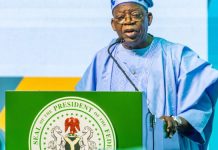
Speaking in an interview with the News Agency of Nigeria (NAN), the Executive Director of GIFSEP, Dr Michael David, said Nigeria continued to face the paradox of abundant energy resources alongside widespread energy poverty.
He noted that millions of Nigerians still lacked reliable electricity and depended on petrol and diesel generators for power.
Citing World Bank estimates, David said about 86.8 million Nigerians were without electricity by the end of 2025.
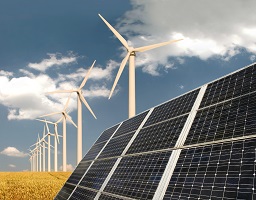
He said the rapid adoption of solar energy demonstrated its growing role in providing reliable electricity for households, businesses, schools, healthcare facilities and public institutions.
David acknowledged progress in lithium battery manufacturing, local solar panel assembly and the development of critical minerals but said current production capacity remained insufficient to meet domestic demand.
He advocated a phased industrialisation strategy that combines wider renewable energy deployment with stronger local manufacturing capacity.
According to him, achieving this would require investment incentives, affordable financing, technical skills development, research, innovation and improved product quality standards.
David also said the Electricity Act 2023 had created new opportunities for state governments to expand electricity generation through decentralised and renewable energy systems.
He stressed the need for policies that attract investment, strengthen regulation, protect consumers and encourage local industrial development.
Stakeholders at the dialogue further recommended increased investment in technical education, research and technology commercialisation to support the growth of Nigeria’s renewable energy industry.
They also advised that any future restrictions on solar panel imports should be implemented gradually and only after local manufacturers develop sufficient capacity to meet domestic demand.
The issues
Nigeria’s growing demand for solar energy presents an opportunity to build a domestic renewable energy manufacturing industry. However, limited local production capacity means the country still relies heavily on imported equipment, highlighting the need for industrial policies that balance energy access with local value addition.
What’s being said
“The roadmap would provide a strategic framework for sustainable growth of Nigeria’s clean energy industry.” — Dr Michael David, Executive Director, GIFSEP
What’s next
Stakeholders want the Federal Government to develop and implement a national industrialisation roadmap while expanding investment in manufacturing, skills development and innovation to build a competitive renewable energy sector.
Bottom line
Experts argue that expanding renewable energy access alone is not enough. Building a strong domestic manufacturing base will be essential if Nigeria is to reduce energy poverty, create jobs and capture more value from the global clean energy transition.