





Keypoints
- East Asian stock markets rose for a second consecutive day on Wednesday, April 15, 2026, buoyed by hopes of an end to the U.S.-Iran conflict.
- South Korea’s KOSPI led the region with a 3% surge, while Japan’s Nikkei 225 and Hong Kong’s Hang Seng also posted solid gains.
- Brent crude oil fell below the psychological $100 mark, trading around $94.50 as geopolitical risk premiums began to fade.
- President Donald Trump signaled optimism in a Fox News interview, stating the war is “close to over” and hinting at a potential new round of talks in Islamabad.
Main Story
Investors across the Asia-Pacific region reacted with relief on Wednesday as a wave of optimism swept through global markets. The rally followed a series of reconciliatory signals from Washington, most notably an interview with President Donald Trump on Fox Business where he characterized the war as being in its final stages.
While the President maintained a firm stance noting that U.S. forces are “not finished” and have significantly degraded Iranian infrastructur his admission that Tehran wants to “make a deal very badly” was taken by traders as a sign that a diplomatic exit is imminent.
The market surge was further fueled by a cooling of the energy sector. Brent crude, which has been highly volatile since the implementation of the U.S. naval blockade on Monday, dropped to $94.50 per barrel.
This decline reflects growing confidence that the Strait of Hormuz may soon reopen to regular traffic, ending the “open for none” stalemate that had threatened global supply chains. In South Korea, the KOSPI’s 3% jump was particularly notable, driven by tech and manufacturing sectors that are highly sensitive to energy costs.
The Issues
The primary challenge remains the negotiation-enforcement gap; while markets are pricing in peace, the U.S. naval blockade remains “fully implemented,” and the physical siege of Iranian ports continues. Authorities must solve the problem of nuclear red lines, which were the main sticking point during the failed Islamabad talks last weekend. Furthermore, there is a trust deficit between the two nations; while the April 8 ceasefire brokered by Pakistan is currently holding, the U.S. has made it clear that “the ball is in Iran’s court” regarding nuclear enrichment and uranium relinquishment. To transform this market optimism into a lasting recovery, mediators must find a way to align Trump’s “maximum pressure” successes with a framework that Iran’s leadership can accept without total domestic humiliation.
What’s Being Said
- “I think it’s close to over, yeah. I view it as very close to being over,” stated President Donald Trump in his Fox News interview.
- Vice President J.D. Vance previously noted that while a deal wasn’t reached in the first round, “a lot of progress” was made and the strategic advantage lies with Washington.
- Market analysts in Seoul observed that the drop in oil prices below $100 is a “vital oxygen mask” for East Asian economies that rely on imported energy.
- Skeptics at the Council on Foreign Relations cautioned that “vague remarks” about new talks do not guarantee a signature, especially given Iran’s long-standing insistence on its sovereign right to enrich uranium.
What’s Next
- A second round of peace talks is anticipated to begin in Islamabad as early as Thursday, with a U.S. delegation potentially led again by Vice President J.D. Vance.
- Oil traders will be watching for any signs of the U.S. Navy easing its blockade, which would likely send Brent crude prices toward the $85–$90 range.
- The UN Security Council is expected to keep a close eye on the Pakistani-brokered ceasefire, which remains the only thin line preventing a return to active “Operation Epic Fury” hostilities.
- Wall Street is likely to follow the Asian lead, with futures pointing to a strong opening if the “close to over” rhetoric is supported by actual diplomatic movement.
Bottom Line
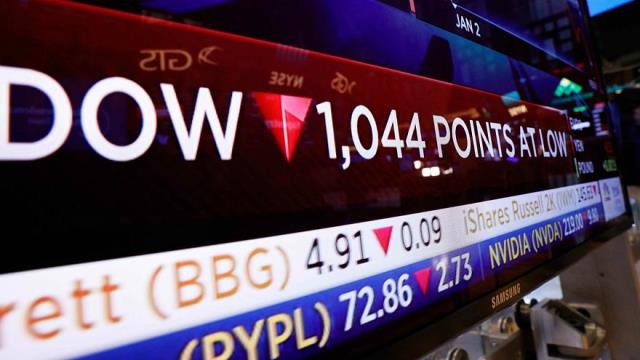
For the first time in seven weeks of conflict, the momentum has shifted from the battlefield to the bargaining table. While the naval blockade continues to squeeze Tehran, the stock market’s “green screen” on Wednesday suggests that the world is betting on a handshake rather than a broadside.