







KEY POINTS
- China has invited Nigeria to join the World Artificial Intelligence Cooperation Organization as bilateral trade between both nations reached $18 billion in the first half of 2026.
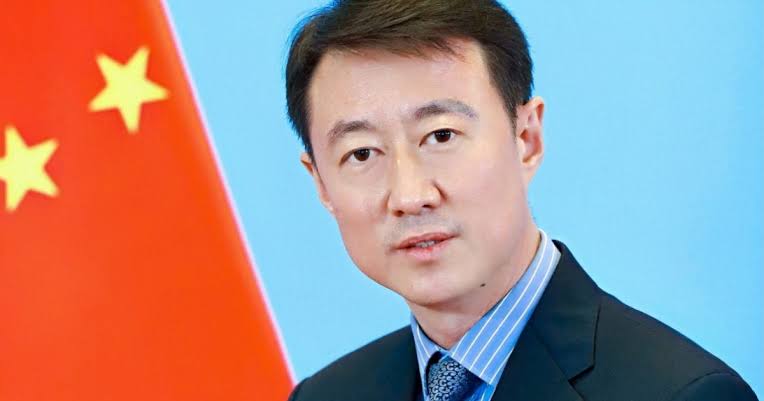
- The Chinese Ambassador to Nigeria, Yu Dunhai, announced the proposal in Abuja during a reception marking the founding anniversary of the People’s Republic of China.
- Officials noted that bilateral exchanges grew by 35 per cent, supported by rising Chinese import volumes from Nigeria and broader economic reforms.
MAIN STORY
China has moved to deepen its economic partnership with Nigeria beyond conventional trade and infrastructure, inviting Abuja to join a global artificial intelligence cooperation platform as bilateral trade reached $18 billion in the first half of 2026.
The proposal was made by the Chinese Ambassador to Nigeria, Yu Dunhai, during a reception in Abuja commemorating the founding anniversary of the People’s Republic of China.

Yu stated that Beijing is prepared to align its 15th Five-Year Plan with President Bola Tinubu’s Renewed Hope Agenda, focusing on industrialisation, digital technology, and the green and blue economies. He formally invited Nigeria to join the World Artificial Intelligence Cooperation Organization to enable the country to participate in global technological advancements.
Highlighting the growth of economic ties, the ambassador disclosed that bilateral trade increased by 35 per cent during the first half of the year, while Chinese imports from Nigeria surged by 81 per cent. He also pointed to China’s zero-tariff policy for 53 African nations as an opportunity for local producers to expand market access, provided they meet quality and supply standards. Furthermore, Yu praised the current administration’s macroeconomic stabilization measures and structural reforms.
Representing the Nigerian government, the Director-General of the Nigeria-China Comprehensive Strategic Partnership and Minister of Power, Joseph Tegbe, acknowledged China’s vital contributions to national infrastructure, including the Lekki Deep Sea Port, railway modernization, and the Zungeru Hydroelectric Power Station.
Tegbe reaffirmed Nigeria’s adherence to the One-China policy and welcomed ongoing technical and healthcare cooperation. Additional remarks from the Inter-Party Advisory Council Chairman, Yusuf Dantalle, emphasized the need for Nigeria to emulate long-term national planning and discipline.
THE ISSUES
- Translating expanding market access and zero-tariff concessions into higher non-oil export volumes requires local producers to overcome persistent supply chain and quality standard hurdles.
- Aligning bilateral technology initiatives with domestic industrial strategies necessitates robust local institutional frameworks and digital capacity building.
WHAT’S BEING SAID
“Our future cooperation holds boundless potential.” – Yu Dunhai, Chinese Ambassador to Nigeria
WHAT’S NEXT
Both governments will explore frameworks for integrating Nigerian institutions into the World Artificial Intelligence Cooperation Organization and expanding bilateral industrial collaboration.
BOTTOM LINE
Bilateral ties between Nigeria and China are shifting toward emerging technologies and digital cooperation following a 35 per cent rise in trade value during the first half of 2026.