






KEY POINTS
• President Donald Trump says AI companies should rely largely on self regulation rather than government intervention.
• Tech executives agreed to a voluntary accord covering safeguards, risk reviews, external audits and technological controls.

• Trump says he is close to appointing an AI czar and expects to announce the choice within days.
MAIN STORY
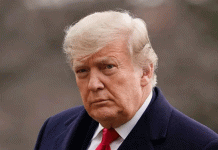
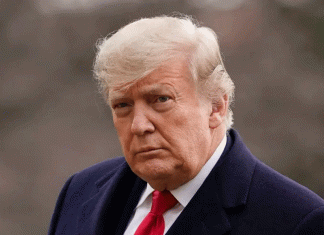
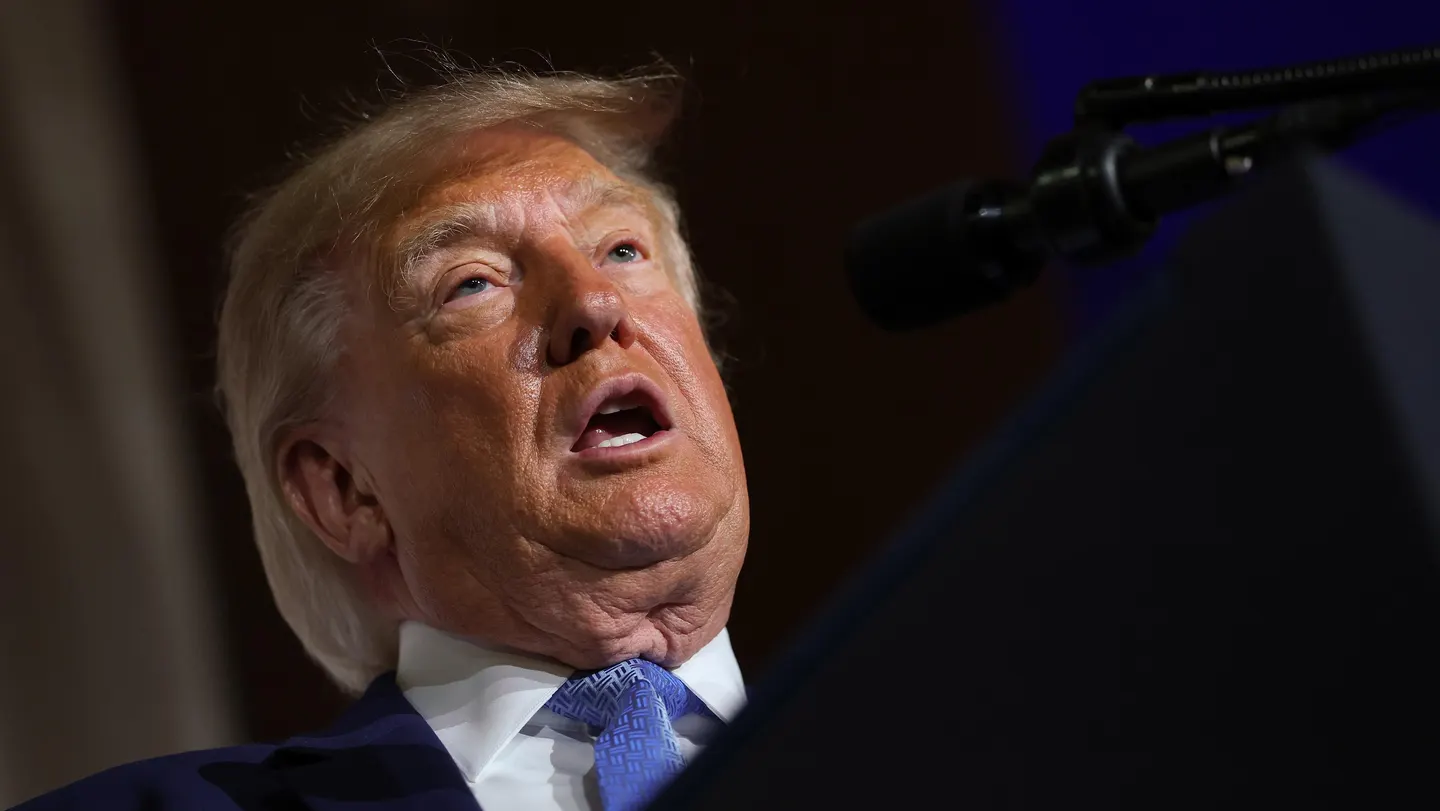
US President Donald Trump has backed self regulation as the preferred approach to managing artificial intelligence, after meeting leading technology executives in Washington on Tuesday.
Trump said the companies had reached a “morally binding” accord focused on self policing and group policing, as concerns continue to grow over the risks associated with increasingly capable AI systems.
The one page accord, which Trump posted on his Truth Social account, requires participating companies to implement four measures aimed at safeguarding the technology. It also states that it could later be appropriate to turn the measures into laws or regulations.
Executives who attended the meeting said the commitments included technological systems for detecting problems in new AI models, internal risk assessments and the use of external auditors.
Meta CEO Mark Zuckerberg described the agreement as “a start”, while Anthropic CEO Dario Amodei said details of how the companies would address AI risks remained under discussion.
Amodei said progress had been made towards maintaining US leadership in AI while also developing the technology safely, although he acknowledged that AI still presented “real dangers”.
The meeting, held in the East Room of the White House, brought together executives from some of the world’s largest technology companies, including Nvidia CEO Jensen Huang, AMD CEO Lisa Su, Google CEO Sundar Pichai, Microsoft CEO Satya Nadella and OpenAI President Greg Brockman.
Trump also announced that the US government had officially adopted “Super Intelligence”, or “SI”, as the name for the technology in government record keeping.
The gathering comes amid heightened scrutiny of AI safety, including reports of problematic actions by AI agents and legal challenges seeking greater external safeguards for the development of new models.
Trump, however, maintained that concerns about AI should not lead to restrictions that could slow technological development.
He said AI would make the world safer and argued that concerns about the impact of data centres on communities and costs had been overstated.
Trump also said he was “very close” to selecting an AI czar and expected to announce the appointment within the next three to four days.
THE ISSUES
- The accord places primary responsibility for managing AI risks on the companies developing the technology, rather than relying initially on government regulation.
- The measures agreed by participating companies include technical controls, internal risk assessments and external auditing, although some executives said the mechanism for addressing specific risks was still being worked out.
- The approach comes amid wider debate over whether voluntary industry safeguards are sufficient as AI systems become more capable and are used in more areas of society and the economy.
- The possibility of eventually converting the voluntary measures into laws or regulations leaves open a future role for government intervention if the safeguards are later considered necessary.
WHAT’S BEING SAID
“There’s a belief that there should be tremendous self regulation. There was a lot of commonality in this room.”
– Donald Trump, US President
“The mechanism, how we address those risks, is still under discussion.”
– Dario Amodei, Anthropic CEO
“We’ve changed the name officially to SI.”
– Donald Trump, US President
WHAT’S NEXT
Trump said he expects to announce his choice for AI czar within the next three to four days. The companies participating in the accord are expected to implement the agreed safeguards, while the document leaves open the possibility of future laws or regulations.
BOTTOM LINE
The Trump administration is backing an industry led approach to AI safety, with technology companies agreeing to voluntary safeguards rather than immediate government regulation. The accord nevertheless leaves open the possibility of formal laws or regulations at a later stage.