







Key points
- The United States has imposed a 12.5% tariff on imports from Nigeria over alleged failure to prohibit imports of goods produced with forced labour.
- The measure targets 60 economies investigated under Section 301 of the US Trade Act.
- Countries such as India, Indonesia, Malaysia, Mexico and the UK received a lower 10% tariff after adopting or committing to forced labour import bans.
- The tariff excludes products listed under specific exemptions contained in the U.S. Federal Register notice.
- The U.S. says the policy is aimed at encouraging stronger global enforcement against forced labour in supply chains.
Main Story
The United States has imposed a 12.5 per cent tariff on imports from Nigeria as part of a new trade policy targeting countries that Washington says have failed to prohibit the importation of goods produced with forced labour.
The measure affects imports from 60 economies investigated under Section 301 of the Trade Act of 1974 following a review launched by the Office of the United States Trade Representative (USTR) in May 2026.
According to the USTR, Nigeria falls within the category of countries that have not “imposed and effectively enforced a prohibition on the importation of goods produced with forced labour,” making its exports to the United States subject to the new 12.5 per cent tariff.
In contrast, countries including India, Indonesia, Malaysia, Mexico and the United Kingdom will attract a lower tariff rate of 10 per cent after implementing, or committing to implement, restrictions on imports linked to forced labour.
The USTR said the investigation involved more than 1,600 written submissions, public hearings featuring over 100 witnesses and consultations with more than 45 governments before the final decision was reached.
A Federal Register notice specifically addressing Nigeria stated that a 12.5 per cent tariff would apply to Nigerian products entering the U.S. market, except for goods listed under designated exemptions contained in Annexes I and II of the notice.
The U.S. government noted that exemptions would apply to selected products, including raw materials capable of creating domestic supply shortages, goods that may trigger broader economic disruptions, products unavailable in sufficient quantities from U.S. or alternative suppliers, and certain products from countries that have adopted or pledged to adopt forced labour import bans.
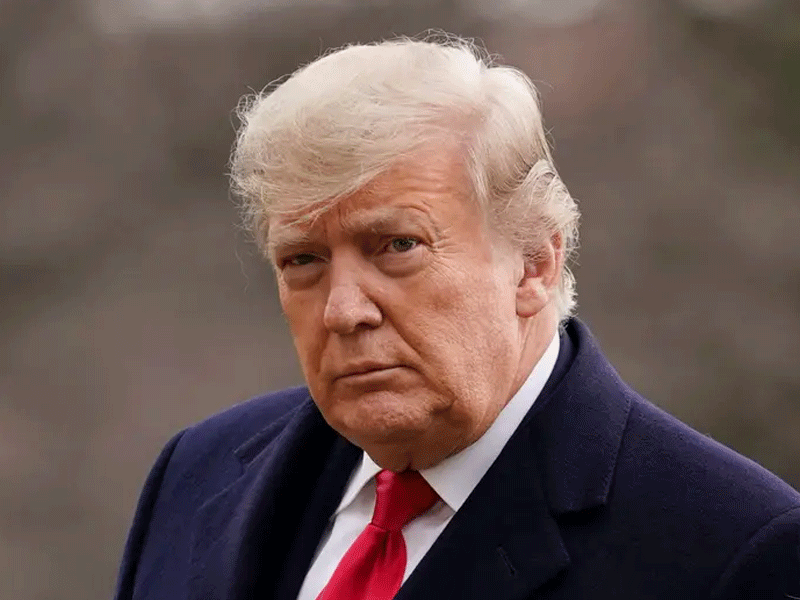
The latest action follows President Donald Trump’s decision to invoke Section 122 of the Trade Act of 1974 after the U.S. Supreme Court blocked the administration’s broader reciprocal tariff plan introduced under the International Emergency Economic Powers Act.
The tariff forms part of Washington’s broader effort to tighten enforcement against forced labour within global supply chains while encouraging trading partners to adopt similar import restrictions.
The Issues
The latest tariff raises several economic and trade concerns for Nigeria:
Export competitiveness: The additional tariff could make Nigerian exports more expensive in the U.S. market, reducing their competitiveness against products from countries facing lower duties.
Trade relations: The decision may place additional pressure on Nigeria-U.S. trade relations, particularly as Nigeria seeks to diversify exports beyond crude oil.
Policy reforms: The measure highlights increasing international scrutiny of labour standards and supply chain transparency, potentially requiring Nigeria to strengthen legislation and enforcement relating to forced labour.
Investor confidence: Export-oriented manufacturers may face increased uncertainty if higher trade barriers persist, potentially affecting investment decisions in sectors serving the U.S. market.
What’s Being Said
Jamieson Greer, United States Trade Representative
“President Trump recognises that decades of moral suasion have not eradicated forced labour from global supply chains.”
“The United States has had a forced labour import ban for nearly a century. It’s well past time for our trading partners to do the same.”
Office of the United States Trade Representative (Federal Register Notice)
“Based on the findings in the investigation of Nigeria… the Trade Representative has determined to impose 12.5 percent tariffs on products of Nigeria, except as provided in Annex I and Annex II.”
“The tariff rate to be applied, and the scope of tariffs and exemptions, are appropriate to obtain the elimination of the acts, policies, and practices determined to be actionable in the investigation.”
What’s Next
The new tariff is expected to take effect in accordance with the implementation schedule contained in the Federal Register notice, although exempted products will continue to enter under separate arrangements.
Nigeria may also face pressure to introduce or strengthen laws prohibiting the importation of goods produced with forced labour if it hopes to qualify for a lower tariff category in future reviews.
Meanwhile, exporters, manufacturers and trade officials are expected to assess the impact of the new duties on Nigeria’s exports to the U.S. and explore measures to preserve market access.
Bottom Line
The United States’ decision to impose a 12.5 per cent tariff on Nigerian imports signals a tougher trade stance centred on labour standards. Beyond the immediate cost implications for exporters, the measure underscores the growing importance of supply chain governance and labour compliance in determining access to key global markets.