









KEY POINTS
• KADIFF says film and storytelling can influence girls’ perceptions of STEM careers.
• Speakers call for more opportunities, mentorship and leadership pathways for African women in science.
• Scientists highlight interdisciplinary careers, including the use of AI in disease diagnosis.
• Kaduna officials stress mentorship and creative science education for young people.
MAIN STORY
Film and storytelling can help change how girls perceive careers in Science, Technology, Engineering and Mathematics (STEM), the Executive Director of Kaduna International Film Festival (KADIFF), Israel Audu, has said.
Audu spoke on Friday in Kaduna at a forum titled “The Science of African Women”, organised by the Embassy of Spain in Nigeria in partnership with KADIFF and Women for Africa Foundation.
He said cinema could serve purposes beyond entertainment by opening conversations, influencing perceptions and connecting people across sectors and cultures.
According to Audu, the forum demonstrated the potential of film as a tool for education, advocacy, cultural exchange and social development.
He said young girls, particularly those from underserved communities, needed opportunities to see science as a field in which they could participate, lead and create change.
“We must continue to create opportunities for young girls, particularly those in underserved communities, to see science not as a distant field, but as a space where they belong, can lead and can transform lives,” he said.
Audu described support for women in science as an investment in Africa’s future, saying society stood to benefit when women and girls had access to opportunities, resources, mentorship and platforms to develop their capabilities.
He added that KADIFF was committed to partnerships that advance creativity, education, cultural diplomacy, inclusion and empowerment.
Also speaking, María Almela, Coordinator of the Science by Women Programme at Women for Africa Foundation, said African women possessed the talent required to excel in science but lacked sufficient opportunities to lead and thrive.
“It is not that talent is not there. It is not that African women in science do not exist. It is that simply there are not many programmes that are designed for them to lead and to thrive specifically,” she said.
Almela said the Science by Women Programme was focused on creating opportunities for scientific collaboration, leadership and sustained partnerships between African women scientists and institutions in Spain.
She also stressed the importance of ensuring that African women had a role in decisions on scientific priorities and funding.
“We need to create spaces where scientific creation is actually co-led, is co-created, is co-owned,” she said.
Prof. Gloria Chechet, a molecular parasitologist and Associate Professor of Biochemistry at Ahmadu Bello University, Zaria, said women could also find opportunities in emerging areas of science, including artificial intelligence.
Chechet said her own career had expanded from biochemistry and parasitology into applying AI to disease diagnosis, demonstrating how scientific disciplines could intersect.
She encouraged young women to remain open to new possibilities in their careers, noting that a scientific background could lead to work in other fields.
“you may start with biology today and you end up working with computers.”
Dr Ibetade Jawonisi, a biochemist at Kaduna Polytechnic, called for stronger science education, mentorship and creative approaches to make scientific learning more accessible to girls.
“Science is not difficult. But we can make science friendly,” Jawonisi said, recommending practical experiences, puzzles and visual materials to make science more engaging.
She also called for more female role models in science, describing them as “she-roes” capable of inspiring girls to pursue STEM careers.
Mrs Gloria Ibrahim, Commissioner for Youth Development, Kaduna State, said changing young people’s mindsets was important to helping them recognise and develop their abilities.
Ibrahim said mentorship could help young people avoid mistakes, identify their strengths and find productive ways to apply their abilities.
She added that every young person had unique strengths that society needed to help them discover, develop and maximise.
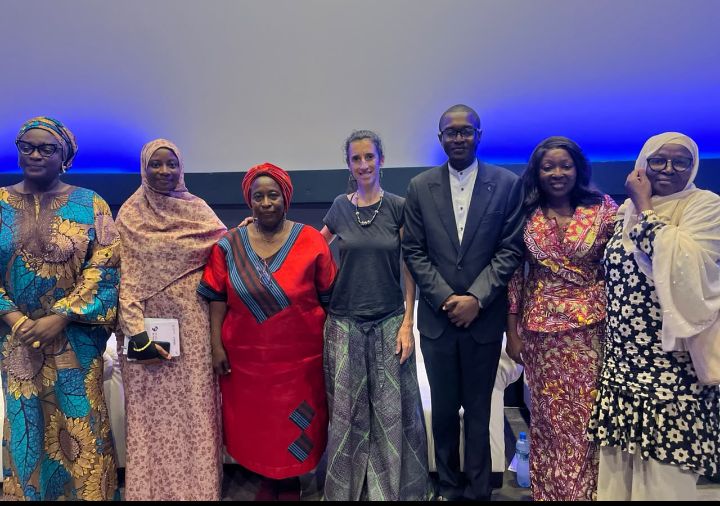
The forum brought together women scientists, government representatives, filmmakers and other stakeholders to highlight the achievements and contributions of African women in STEM.
THE ISSUES
- Girls’ exposure to science can be influenced by how STEM careers are presented to them, with speakers at the forum identifying film, practical learning and female role models as potential ways to make science more accessible.
- The speakers also highlighted the importance of creating pathways that allow African women scientists not only to participate in research but also to lead, make decisions and influence scientific priorities and funding.
- The growing overlap between scientific disciplines creates additional opportunities for women entering STEM, with Chechet’s experience showing how training in one field can lead into emerging areas such as AI.
- Mentorship remains important to helping young people identify their strengths and make informed choices about education and careers.
WHAT’S BEING SAID
“We must continue to create opportunities for young girls, particularly those in underserved communities, to see science not as a distant field, but as a space where they belong, can lead and can transform lives,” – Israel Audu, Executive Director, KADIFF
“We need to create spaces where scientific creation is actually co-led, is co-created, is co-owned,” – María Almela, Coordinator, Science by Women Programme, Women for Africa Foundation
“Science is not difficult. But we can make science friendly,” – Dr Ibetade Jawonisi, Biochemist, Kaduna Polytechnic
WHAT’S NEXT
The forum called for continued investment in science education, mentorship, leadership opportunities and partnerships that can support African women and girls pursuing STEM careers.
BOTTOM LINE
Speakers at the Kaduna forum identified storytelling, education, mentorship and stronger leadership opportunities as ways to widen girls’ participation in STEM. They also highlighted the growing opportunities created by collaboration between traditional scientific disciplines and emerging technologies such as AI.



, ...)