






By Boluwatife Oshadiya | June 11, 2026
Key Points
- President Donald Trump says the U.S. military conducted a covert operation that helped more than 200 commercial vessels safely transit the Strait of Hormuz
- Trump claims the operation enabled over 100 million barrels of oil to reach global markets despite disruptions caused by the U.S.-Iran conflict
- The announcement comes as tensions remain elevated in the Gulf region, with Iran continuing to challenge shipping activities in one of the world’s most strategic energy corridors
Main Story
U.S. President Donald Trump has revealed details of what he described as a secret military operation aimed at protecting commercial shipping and maintaining oil flows through the Strait of Hormuz amid escalating tensions with Iran.
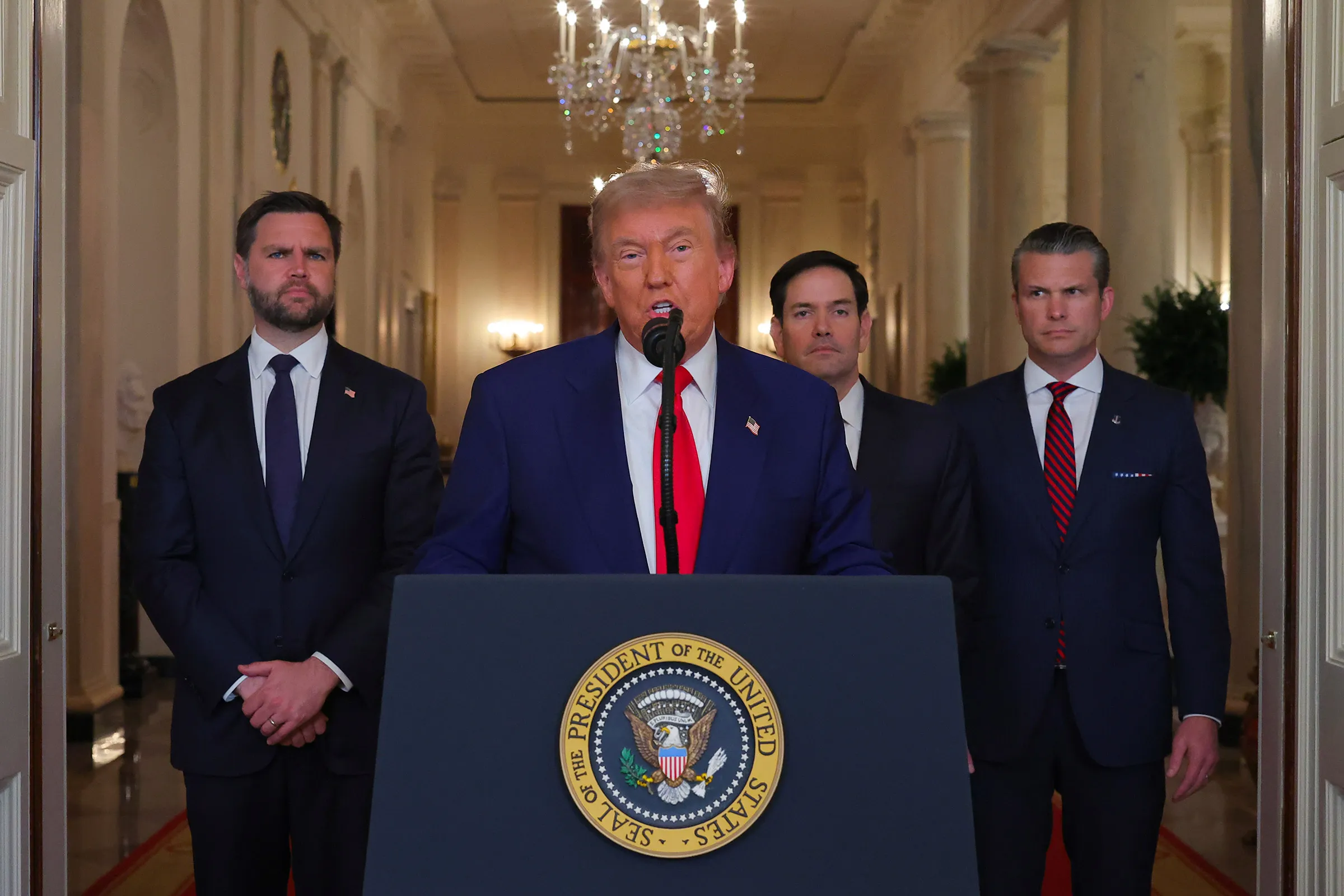
Speaking on June 10, Trump said he personally authorized the mission last month, claiming it facilitated the safe passage of more than 200 commercial vessels and helped move over 100 million barrels of oil into global markets.
The Strait of Hormuz remains one of the world’s most critical energy chokepoints, handling roughly one-fifth of global petroleum consumption under normal conditions. Since the outbreak of intensified hostilities between the United States and Iran earlier in 2026, shipping traffic through the waterway has faced growing security threats, including attacks on vessels, increased insurance costs, and concerns over potential supply disruptions.
Trump argued that U.S. military operations had significantly weakened Iran’s ability to monitor and disrupt maritime traffic in the region.
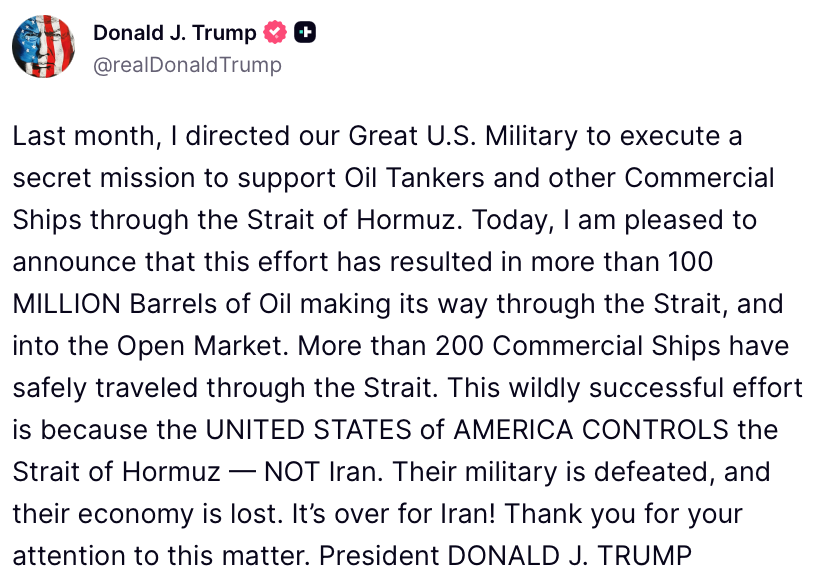
“The United States of America controls the Strait of Hormuz — not Iran. Their military is defeated, and their economy is lost,” Trump said in a statement released through official White House channels.
The president further claimed that the operation prevented oil prices from rising dramatically, suggesting crude prices could have surged to as much as $250 per barrel without U.S. intervention. Global oil prices have remained volatile in recent months, although benchmark crude has largely traded between $85 and $90 per barrel following periodic conflict-related spikes.
While U.S. officials have previously acknowledged efforts to support freedom of navigation in the Gulf, independent verification of the specific figures cited by Trump remains limited.
The Issues
The announcement highlights the growing geopolitical risks facing global energy markets as the U.S.-Iran conflict continues to threaten one of the world’s most important oil transit routes.
The Strait of Hormuz serves as a strategic gateway for crude exports from major producers including Saudi Arabia, the United Arab Emirates, Kuwait, Iraq, and Qatar. Any prolonged disruption could significantly impact global energy supplies, shipping costs, and inflation trends.
The disclosure also comes at a time when energy prices remain a major concern for policymakers worldwide. Rising oil costs have contributed to inflationary pressures across several economies, including the United States, where consumer price growth accelerated in recent months amid conflict-driven energy market volatility.
What’s Being Said
“The United States of America controls the Strait of Hormuz — not Iran,” President Donald Trump said while announcing the operation.
Iranian officials have rejected similar U.S. assertions in recent weeks and continue to maintain that foreign military activities in the Gulf contribute to regional instability.
Independent energy market analysts note that while naval escort operations can help stabilize shipping routes, long-term market confidence will depend largely on whether diplomatic efforts can prevent further escalation between Washington and Tehran.
What’s Next
- Global energy traders will continue monitoring shipping activity through the Strait of Hormuz for signs of disruption or improvement
- U.S. and allied naval operations in the Gulf are expected to remain active as commercial vessels navigate the region
- Investors will closely watch crude oil prices and inflation data for evidence of the conflict’s economic impact
- Diplomatic efforts involving regional and international stakeholders may intensify as pressure grows to prevent further escalation
The Bottom Line: Trump’s announcement underscores the central role the Strait of Hormuz continues to play in global energy security. While U.S. military efforts may have helped maintain oil flows during the conflict, sustained market stability will ultimately depend on whether broader geopolitical tensions between Washington and Tehran can be contained.