






Key points
- Joint operations by Nigerian and US forces successfully eliminated over 200 Islamic State fighters in Borno State.
- The kinetic intervention neutralized Abu Bilal al-Minuki, identified as the global second-in-command for ISIS.
- Senior military spokespersons confirmed the systematic destruction of terrorist checkpoints, training camps, and weapons caches.
- The collaborative security framework covers intelligence sharing, strategic communications, and tactical surveillance.
- Armed forces representatives emphasized that operations were executed in full alignment with Nigerian national sovereignty.
Main Story
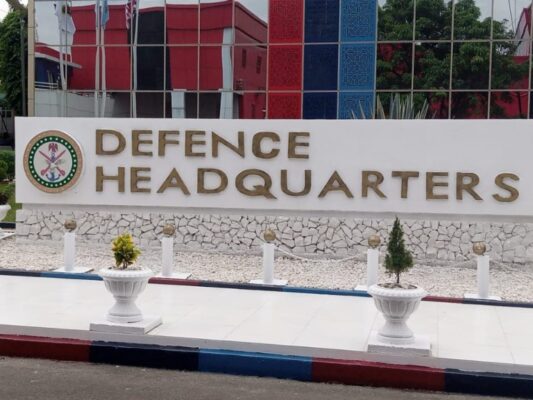
A strategic counter-terrorism partnership between Nigeria and the United States has significantly degraded the operational capabilities of the Islamic State of West Africa Province (ISWAP), Nigeria’s Defence Headquarters (DHQ) and the U.S. Africa Command (AFRICOM) announced on Tuesday.
The Director of Defence Information, Maj.-Gen. Samaila Uba, disclosed the developments during an X Spaces digital panel focused on strengthening regional security through strategic intelligence integration. Uba stated that the bilateral cooperative framework has driven critical advancements across five key operational pillars: real-time intelligence pooling, localized capacity building, strategic communication, joint logistics support, and overall tactical battlefield effectiveness for frontline Nigerian troops.
“Terrorism remains an explicitly transnational threat that requires sophisticated intelligence cooperation, continuous technological innovation, synchronized strategic communication, and robust international alliances to permanently defeat,” Uba stated.
The defense spokesman noted that recent collaborative efforts have fueled high-yield, intelligence-driven operations that successfully disrupted localized insurgent cells and systematically dismantled hostile enclaves and logistics infrastructure. The bilateral partnership has systematically upgraded the surveillance and reconnaissance capabilities of the Armed Forces of Nigeria while simultaneously improving the operational readiness of frontline combat units via specialized military training programs.
Uba extended formal appreciation to the United States Government and AFRICOM for their sustained tactical support against violent extremism. He further commended President Bola Tinubu for consistently providing the Armed Forces of Nigeria with the combat platforms, advanced hardware, and strategic resources required to effectively prosecute ongoing operations.
Corroborating the metrics of the campaign, the Director of Public Affairs for AFRICOM, Col. Rebecca Heyse, confirmed that the joint counter-terrorism maneuvers have severely weakened core ISIS operations within the West African theater. Heyse revealed that the kinetic offensive, which officially commenced on May 16, materialized from months of deliberate planning, multi-agency communication monitoring, and bilateral intelligence sharing.
According to Heyse, a major breakthrough was achieved during the initial phases of the sweep with the elimination of ISIS global second-in-command, Abu Bilal al-Minuki, alongside several high-ranking operational planners and media strategists.
The AFRICOM spokesperson further disclosed that more than 200 frontline ISIS fighters were neutralized over the course of the operations. Concurrently, joint forces successfully uncovered and destroyed fortified insurgent checkpoints, hidden weapons caches, tactical logistics hubs, and active training facilities. The targeted maneuvers effectively disrupted the decentralized financial networks and media structures that have historically sustained terrorist networks across Nigeria.
Heyse attributed the success of the multi-week campaign to close field collaboration between Nigerian and U.S. military forces, reinforced by robust backend intelligence support from relevant defense agencies. She emphasized that the security framework remains rooted firmly in absolute respect for Nigeria’s national sovereignty, serving as a template for the efficacy of international partnerships against global terror.
The AFRICOM spokesperson praised the high level of professionalism demonstrated by the Nigerian Armed Forces and reaffirmed Washington’s long-term commitment to sustained defense collaboration. Closing the briefing, both Uba and Heyse re-emphasized that continuous information sharing, intelligence cooperation, and active public engagement remain the vital tools required to lock in current security gains and promote enduring regional stability.
The Issues
- Verifying high-value battlefield casualties amid the frequent use of duplicate noms de guerre by disparate insurgent factions.
- Harmonizing foreign tactical commando deployments with domestic military public relations to manage local transparency expectations.
- Preventing residual insurgent cells from reforming around decentralized, lower-tier field commanders following leadership vacuums.
What’s Being Said
- Underscoring the shared threat landscape of modern asymmetric warfare, the Director of Defence Information, Maj.-Gen. Samaila Uba, stated: “Terrorism remains a transnational threat that requires intelligence cooperation, technological innovation, strategic communication and strong partnerships to defeat.”
- Confirming the precise strategic impact of the joint operations, the Director of Public Affairs for AFRICOM, Col. Rebecca Heyse, noted: “The joint counter-terrorism operations conducted by Nigerian and U.S. forces have significantly weakened ISIS activities in the region. The operations led to the elimination of ISIS global second-in-command, Abu Bilal al-Minuki, alongside several key operational and media leaders.”
What’s Next
- Nigerian and US intelligence agencies will continue forensic assessments on captured digital assets to uncover active terror financing nodes.
- The Defence Headquarters will deploy additional stabilization units to hold liberated zones across the Lake Chad Basin.
- AFRICOM and the Nigerian Army will initiate a review of their joint training protocols to prepare for upcoming dry-season security maneuvers.
Bottom Line
By blending advanced US intelligence capabilities with the localized combat execution of the Nigerian Armed Forces, the joint operation has delivered a crushing blow to ISWAP, proving that modern counterterrorism depends entirely on deep, cross-border institutional integration.