






Key points
- Political Science Professor Femi Otubanjo stated that nuclear weapons have structurally shifted from tools of warfare into direct triggers of global conflict.
- Speaking at a Nigerian Institute of International Affairs (NIIA) lecture in Lagos, he labeled controversies over atomic capabilities as active causes of conventional wars.
- The academic detailed the devastating planetary consequences of nuclear warfare, emphasizing severe environmental destruction and total economic collapse.
- Otubanjo cited the protracted geopolitical friction between the United States and Iran as a prime contemporary example of this paradigm shift.
- The foreign policy expert urged immediate global public sensitization, noting that nuclear fallout remains an existential threat to Africa despite geographical distance.
Main Story
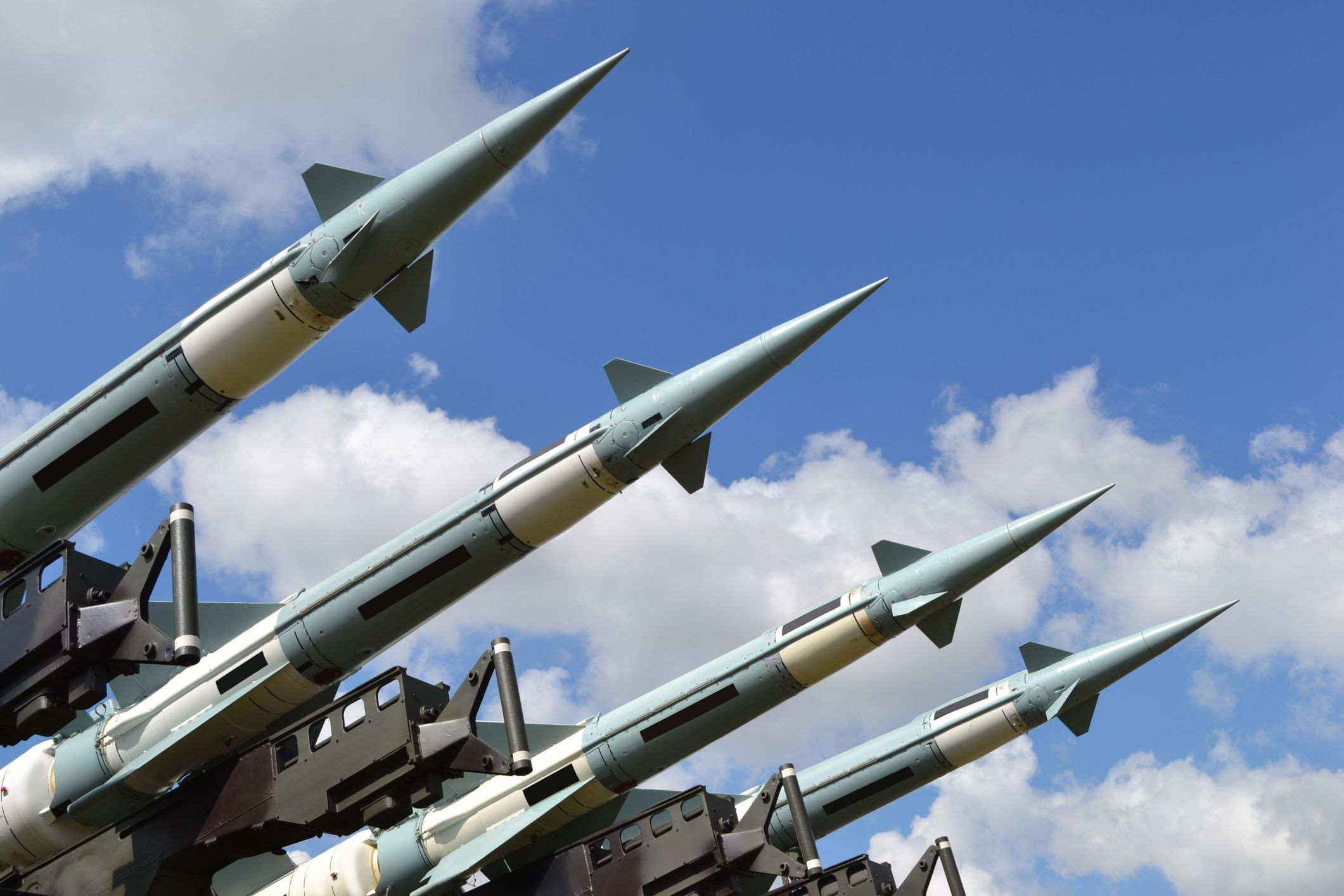
Nuclear weapons have evolved from being mere instruments of battlefield warfare into primary drivers of international crises and conventional conflicts, a Professor of Political Science, Femi Otubanjo, announced on Tuesday.
Delivering a high-profile foreign policy lecture organized by the Nigerian Institute of International Affairs (NIIA) in Lagos, Otubanjo warned that humanity cannot afford complacency in the face of escalating atomic rivalries. The presentation, titled “Nuclear Weapons: From Instrumenta Belli to Causae Bellorum,” detailed how contemporary disputes over the acquisition, deployment, and policing of nuclear capabilities have surpassed their historical role as passive deterrents, actively morphing into structural triggers for diplomatic standoffs, economic sanctions, and preventive military operations.
“The emergence of nuclear weapons transformed the strategic environment of the 20th Century and continues to shape the international system in the 21st Century,” Otubanjo stated. “Their existence altered the distribution of power, encouraged doctrines of deterrence, and generated unprecedented fears regarding the survival of humanity.”
The research professor explained that while traditional nuclear deterrence under the doctrine of Mutual Assured Destruction (MAD) previously prevented direct kinetic clashes among major superpowers, the global security environment has fractured. To illustrate this shift, Otubanjo cited the volatile relationship between the United States and Iran since the 1979 Iranian Revolution, highlighting how Iran’s nuclear development program has become the central source of regional friction.
He noted that Washington’s persistent efforts to limit Tehran’s regional influence and prevent its atomic acquisition have repeatedly sparked sweeping international sanctions and recurring security emergencies, proving that nuclear ambitions now serve as the root cause of localized instability rather than tools of warfare.
Addressing the technical and human costs of a potential breakdown in restraint, the political scientist outlined a bleak trajectory of mass casualties, environmental ruin, and complete political disorder. He underscored that while atomic discussions often feel detached from the everyday realities of African nations, a large-scale nuclear exchange presents a borderless, existential threat capable of triggering global famine, infrastructure collapse, and the erasure of organized human civilization.
Relying on baseline strategic theory, Otubanjo attributed the absence of nuclear warfare since 1945 to a strict hierarchy of national interests and the reality that modern warheads—wielding capacities up to 800 kilotons—make total conflict entirely irrational. Recalling classical military theory, he concluded that because war is fundamentally the pursuit of politics by other means, an atomic conflict that leaves no survivors fails to achieve any logical political objective.
The Issues
- Mitigating the diplomatic spillover of superpower atomic friction into developing economies through targeted non-proliferation advocacy.
- Overcoming geographic and political apathy within African civil society regarding global nuclear disarmament frameworks.
- Adapting traditional Cold War deterrence models to police decentralized, multi-polar non-state and regional nuclear ambitions.
What’s Being Said
- Highlighting the far-reaching environmental and social catastrophe of an atomic exchange, NIIA Research Professor Femi Otubanjo stated: “The consequences of nuclear war include immediate mass casualties, nuclear winter, environmental devastation and psychological trauma. Although discussions on nuclear weapons often appear distant to many Africans, the reality is that such weapons pose an existential threat to all humanity.”
- Emphasizing the absolute futility of deploying modern high-yield atomic arsenals to settle geopolitical disputes, Otubanjo added: “Modern nuclear warheads possessed destructive capacities ranging from 100 to 800 kilotons, while the Soviet Union’s Tsar Bomba reached 50 megatons, approximately 3,300 times the power of the Hiroshima bomb. War remains politics pursued by other means; a war that destroys everything would achieve no political objective.”
What’s Next
- The Nigerian Institute of International Affairs will publish the full text of the foreign policy lecture to guide regional diplomatic attachés.
- African Union representatives will review continental non-proliferation compliance protocols ahead of the upcoming UN disarmament session.
- Non-governmental organizations plan to launch public awareness campaigns across West Africa to highlight the hidden environmental threats of global arms races.
Bottom Line
According to NIIA Research Professor Femi Otubanjo, modern nuclear arsenals have transitioned from weapons of absolute defense to primary drivers of conventional global warfare, making international nuclear restraint a critical prerequisite for the survival of developing nations.