







Key points
- Israel has pledged to strengthen cooperation with Nigeria in innovation, agriculture, healthcare, security, education, and skills development.
- Israeli Ambassador Michael Freeman says collaboration between both countries is an investment in a shared future, not charity.
- Nigeria says opportunities exist to expand bilateral ties in culture, tourism, and the creative economy.
Main story

Israel has reaffirmed its commitment to strengthening economic and development cooperation with Nigeria, with a focus on innovation, agriculture, healthcare, security, education, and skills development.
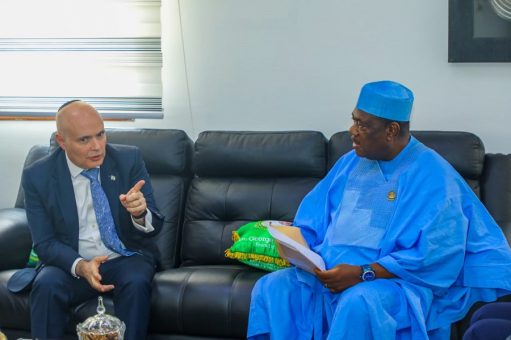
The Israeli Ambassador to Nigeria, Michael Freeman, made the commitment on Monday night in Abuja during the 78th anniversary celebration of the independence of the State of Israel, organised by the Israeli Embassy.
Freeman described the relationship between both countries as one built on shared opportunities and mutual growth, stressing that deeper collaboration would create jobs, boost productivity, and drive sustainable development.
According to him, expanding Israeli-Nigerian cooperation should be viewed as an investment in a shared future rather than an act of charity.
“The future of Israeli-Nigeria relations will not be defined by speeches. It will be defined by entrepreneurs who build companies, farmers who increase their harvests, doctors and paramedics who save lives, and young people who refuse to accept limitations,” he said.
He noted that Nigeria possesses enormous potential, citing its youthful population, entrepreneurial culture, agricultural resources, and resilience as critical assets for future growth.
The issues
Nigeria continues to seek strategic partnerships that can support economic diversification, job creation, food security, healthcare delivery, and technological advancement.
At the same time, strengthening innovation ecosystems and skills development remains a priority as the country seeks to harness the potential of its growing youth population.
Experts have argued that international collaborations that facilitate technology transfer, knowledge exchange, and investment could play a significant role in accelerating economic development.
What’s being said
Freeman highlighted ongoing initiatives between both countries, including the Innovation Fellowship for Aspiring Inventors and Researchers (i-FAIR) programme, through which young Nigerian entrepreneurs collaborate with Israeli and Nigerian mentors.
According to him, the programme is helping innovators transform ideas into viable businesses capable of creating jobs and addressing real-world challenges.
He also revealed plans to expand the initiative.
“I am pleased to announce tonight that we are committing to a fifth cohort programme for 2027,” he said.
The ambassador added that Israeli companies are already active in Nigeria’s agricultural sector, contributing expertise and technology aimed at improving productivity and food security.
He expressed confidence that stronger collaboration would unlock new opportunities for economic growth and innovation.
“Because when Nigerian ingenuity meets Israeli innovation, extraordinary things happen,” he stated.
Also speaking at the event, the Minister of Art, Culture, Tourism and Creative Economy, Hannatu Musawa, said Nigeria and Israel share a longstanding relationship founded on mutual respect, cooperation, and a belief in the transformative power of communities.
According to her, both countries, despite their geographical differences, are connected by cultural diversity and a shared commitment to national development.
Musawa said Nigeria’s economic transformation agenda under the administration of Bola Ahmed Tinubu presents opportunities for deeper collaboration with Israel in culture, tourism, and the creative industries.
What’s next
Both countries are expected to explore new areas of partnership, particularly in technology-driven entrepreneurship, agricultural innovation, education, and capacity development.
The planned expansion of the i-FAIR programme and ongoing investments by Israeli companies in Nigeria are likely to serve as key pillars of future bilateral cooperation.
Stakeholders will also be looking at opportunities to deepen cultural and tourism exchanges as part of broader economic engagement between the two nations.
Bottom line
Israel is seeking to deepen its strategic partnership with Nigeria through innovation, technology, agriculture, healthcare, and skills development, with both countries positioning collaboration as a catalyst for economic growth, job creation, and sustainable development.