





Key points
- Nigerian women workers are calling for stronger laws and policies to tackle workplace abuse, exploitation, and discrimination.
- Labour leaders say women, particularly domestic and informal sector workers, remain vulnerable despite progress on gender equality.
- Workers’ groups are partnering with international organisations to advance gender justice and improve women’s representation in decision-making.
Main story
Nigerian women workers have called for stronger legal and institutional safeguards to protect women from workplace abuse, exploitation, harassment, and discrimination across various sectors of the economy.
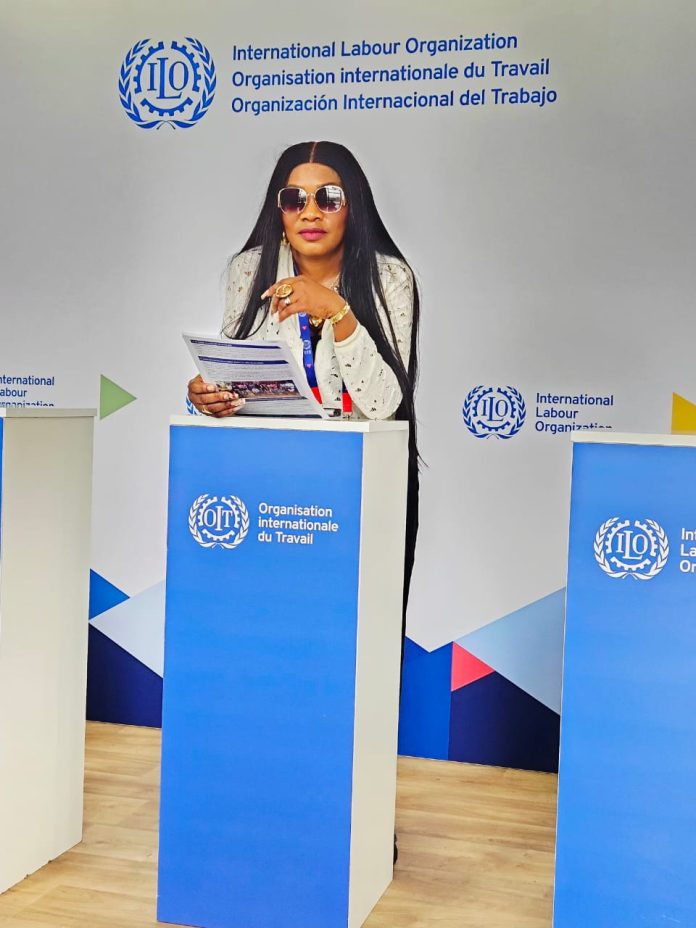
The demand was made on the sidelines of the 114th Session of the International Labour Conference (ILC) in Geneva, Switzerland, where labour representatives from around the world are discussing key issues affecting workers’ rights and welfare.
Speaking on behalf of Nigerian women workers, Mrs. Mary-Anne Mbanaso, National Chairperson of the Petroleum and Natural Gas Senior Staff Association of Nigeria (PENGASSAN) Women Commission and National Secretary of the Trade Union Congress (TUC) Women Commission, said significant gaps still exist in the protection of women’s rights in Nigeria.
According to her, while progress has been recorded in advancing gender equality, many women—especially domestic workers and those in the informal sector—continue to face exploitation, abuse, and unequal treatment in the workplace.
She noted that the conference presents an important opportunity for governments, employers, and workers’ organisations to strengthen international conventions and policies aimed at protecting the rights and dignity of women.
The issues
Despite growing awareness of gender equality and workplace rights, many Nigerian women continue to encounter challenges ranging from workplace harassment and discrimination to unfair labour practices and limited representation in leadership positions.
Women employed in domestic work, informal employment, and other vulnerable sectors are often exposed to exploitation with limited access to legal protection or effective redress mechanisms.
Labour advocates also argue that gender disparities remain evident in decision-making structures, where women are frequently underrepresented despite their contributions to the workforce.
What’s being said
Mbanaso said Nigeria still faces significant gender-related challenges that require urgent policy attention.
“We know that our country, Nigeria, still has a lot of disparities and gaps, especially when it comes to women and gender issues,” she said.
She expressed optimism that resolutions emerging from the conference would strengthen protections against workplace abuse and harassment.
“A lot of women have been used and abused in labour matters, child labour, domestic work and even in the informal sector. There are many abuses where women are treated as though they have no value,” she stated.
The labour leader also stressed the need for greater female representation in leadership and decision-making processes.
“Our women must have their place, have their say and be represented where decisions affecting them are taken,” she added.
Mbanaso further highlighted the importance of collaboration with international labour organisations, noting that partnerships with the International Trade Union Confederation (ITUC) and the International Labour Organisation (ILO) would help amplify the voices of women workers globally.
She disclosed that the PENGASSAN Women Commission had initiated collaboration with labour women groups in Ghana and would host a webinar in the coming month to deepen discussions on workplace gender issues.
What’s next
Nigerian labour leaders are expected to leverage outcomes from the International Labour Conference to push for stronger implementation of gender-related labour protections at home.
The PENGASSAN Women Commission plans to expand advocacy campaigns, strengthen collaborations with regional and international partners, and continue engaging relevant authorities to ensure enforcement of workers’ rights.
The group also intends to intensify awareness programmes aimed at educating women on workplace rights and available mechanisms for reporting abuse and discrimination.
On the future of work, Mbanaso said women workers are increasingly embracing digital transformation through training and capacity-building initiatives designed to prepare them for emerging technologies, including Artificial Intelligence (AI).
Bottom line
Nigerian women workers are using the global platform of the International Labour Conference to push for stronger protections against workplace abuse and discrimination, while advocating greater representation, enforcement of labour rights, and capacity-building to prepare women for the changing world of work.