Keypoints
- UN Secretary-General António Guterres has called for immediate diplomacy between the U.S. and Iran, warning that respect for international law is being ignored.
- Speaking at the UN headquarters, he noted that the crisis has disrupted shipping in the Strait of Hormuz and left thousands of seafarers stranded.
- Guterres is visiting the International Court of Justice (ICJ) in The Hague to mark its 80th anniversary and reaffirm the role of the legal order.
- He emphasized that there is no military solution to the conflict and urged all states to respect navigational rights and humanitarian obligations.
Main Story
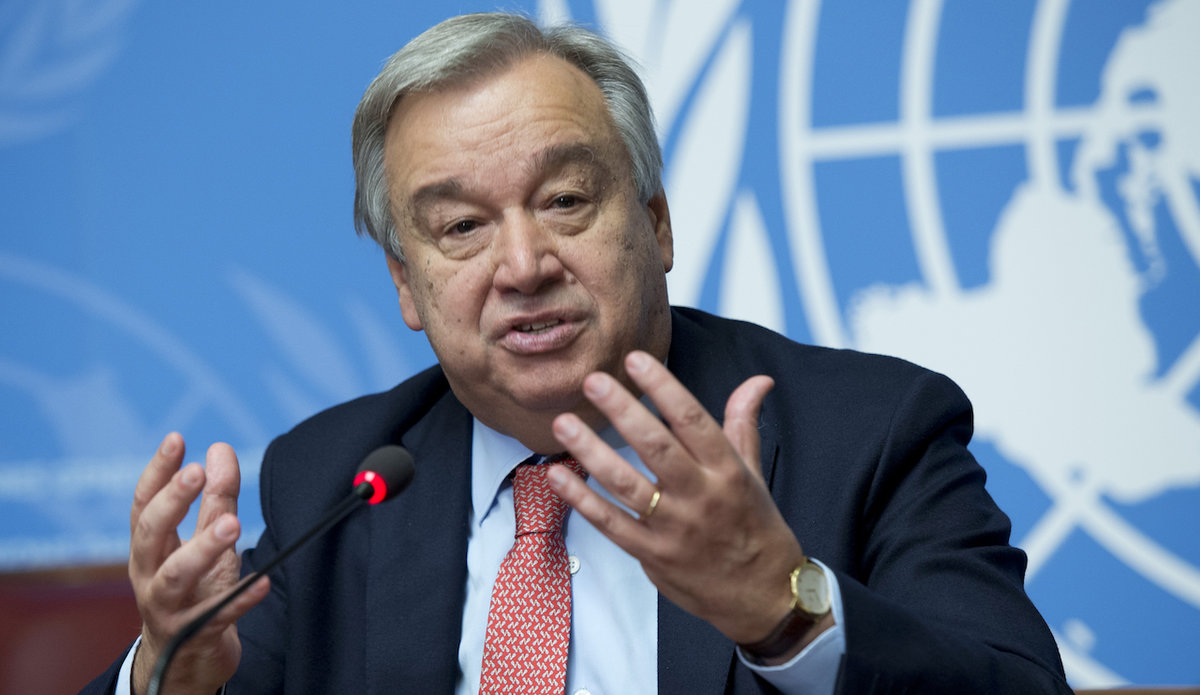
UN Secretary-General António Guterres issued a stark warning on Tuesday, stating that the ongoing conflict between the United States and Iran is fueling “chaos, suffering and destruction.”
Addressing journalists in New York, Guterres lamented that international law is currently being “trampled,” particularly in the Middle East. He argued that the global community is choosing to turn a blind eye to justice at a time when reaffirming legal institutions is most critical.
The Secretary-General’s upcoming visit to the ICJ is intended to send an “unmistakable message” that international rules are not optional for any state.
He specifically highlighted the devastation caused to maritime trade, noting that the blockade of the Strait of Hormuz has created a humanitarian crisis for seafarers caught in the crossfire. Guterres called for a shift from escalation to restraint, insisting that peace requires sustained political will rather than military force.
The Issues
The primary challenge for the UN is the enforcement-sovereignty gap; while the ICJ is a pillar of legal order, it lacks a standing military to enforce its rulings on powerful states like the U.S. or Iran. Authorities must solve the problem of maritime paralysis, as the thousands of stranded seafarers represent a growing humanitarian disaster that neither side has addressed. Furthermore, there is a multilateral trust deficit; with the U.S. pursuing a “blockade” and Iran retaliating with “asymmetric” measures, the middle ground for negotiation has nearly vanished. To restore order, Guterres must now convince both parties that “navigational rights” in the Strait are a global necessity that transcends their bilateral war.
What’s Being Said
- “Justice is meant to be blind. But today, too many are choosing to turn a blind eye to justice itself,” stated António Guterres.
- Human rights organizations have echoed the Secretary-General’s concerns, reporting that the stranded seafarers are running low on essential supplies.
- Legal scholars at The Hague noted that the 80th anniversary of the ICJ comes at its most “existential moment” since the end of the Cold War.
- Diplomatic sources suggest that while Guterres is calling for “restraint,” the U.S. administration remains committed to its blockade until a “comprehensive deal” is signed.
What’s Next
- Guterres’ visit to The Hague this week is expected to result in a formal declaration regarding the “sanctity of international waters.”
- The International Maritime Organization (IMO) is anticipated to launch an emergency mission to evacuate or resupply the stranded crews in the Strait of Hormuz.
- UN-led mediation may be proposed as a “neutral track” to run alongside the Pakistani-brokered talks in Islamabad.
- A General Assembly resolution condemning the “trampling of international law” is likely to be drafted by non-aligned nations following the Secretary-General’s speech.
Bottom Line António Guterres is attempting to use the 80th anniversary of the ICJ to shame the warring parties back to the negotiating table. By framing the Strait of Hormuz crisis as a violation of “blind justice,” the UN is hoping to mobilize global opinion against the continued use of blockades as a tool of diplomacy.