








Keypoints
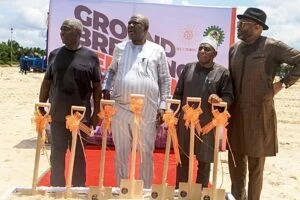
- Minister Ekperikpe Ekpo performed the groundbreaking for the Southfield Petroleum Ltd. (SPL) 200 million standard cubic feet per day (MMSCFD) gas processing plant in Utorogu, Delta State.
- The project is a collaboration between SPL and the Nigerian Content Development and Monitoring Board (NCDMB) to address Nigeria’s gas supply shortfall.
- Phase 1 of the facility is targeted for completion by November 2026.
- At full capacity, the plant is expected to produce 123,000 metric tonnes of LPG (cooking gas), 22,000 metric tonnes of propane, and 72,000 metric tonnes of condensate annually.
Main Story
In a move to bolster Nigeria’s “Decade of Gas” initiative, the Minister of State for Petroleum Resources (Gas), Ekperikpe Ekpo, officially launched the construction of the SPL Utorogu gas processing plant on Tuesday.
The facility is designed to process wet gas from the OML 34 field, removing impurities to produce lean gas for the Escravos-Lagos Pipeline System. Ekpo emphasized that the project would catalyze industrial growth, boost manufacturing productivity, and significantly reduce the country’s reliance on imported Liquefied Petroleum Gas (LPG).
The project holds significant environmental and social promise. By converting gas that might otherwise be flared into clean energy, the plant supports Nigeria’s climate goals and provides a safer alternative to firewood for millions of households.
Minister Heineken Lokpobiri (Oil) and NCDMB Executive Secretary Felix Ogbe both noted that the plant would create thousands of direct and indirect jobs in logistics, fabrication, and maintenance, urging the host communities to protect the infrastructure as a vital economic asset for the Niger Delta.
The Issues
The primary challenge for the SPL project is the infrastructure-security gap; while the plant is a critical piece of the gas-powered economy, its success depends on the safety of the pipelines and the OML 34 field. Authorities must solve the problem of domestic pricing volatility, as even with increased local production, LPG prices are often tied to international benchmarks and forex fluctuations. Furthermore, there is a timeline risk; achieving Phase 1 completion by November 2026 requires seamless coordination between investors, regulators, and contractors in a complex regulatory environment. To ensure long-term stability, the project promoters must maintain deep community engagement to prevent the “resource curse” tensions that have historically affected Niger Delta energy projects.
What’s Being Said
- “This project represents a critical piece of infrastructure in our journey towards a gas-powered economy,” stated Minister Ekperikpe Ekpo.
- Pius Aigbomeikhe Bawa, MD of SPL Utorogu, noted that the facility is a major step forward in “gas commercialisation and reduction of gas flaring.”
- Felix Ogbe of the NCDMB highlighted that the plant will produce 123,000 metric tonnes of LPG annually, which will “significantly improve domestic cooking gas availability.”
- Community leaders have been urged by Minister Lokpobiri to “protect the facility with everything they have” to ensure the promised skills transfer and infrastructure development materialize.
What’s Next
- Construction activities are expected to ramp up immediately, with a focus on local fabrication and hiring from the Utorogu host communities.
- Phase 1 completion is firmly targeted for November 2026, which will see the first volumes of lean gas injected into the national grid.
- The NCDMB is anticipated to monitor the project closely to ensure it meets strict “Nigerian Content” requirements throughout the engineering and procurement stages.
- LPG distributors are looking forward to 2027, when the full 123,000 metric tonnes of annual production is expected to hit the market, potentially stabilizing domestic cooking gas prices.
Bottom Line
The SPL Utorogu plant is a double win for Nigeria: it reduces harmful gas flaring while providing the “lean gas” needed to power industries and the “cooking gas” needed in homes. By setting a 2026 completion date, the government is signaling that the “Decade of Gas” is moving from policy talk to physical steel and pipes.







, Ekperikpe Ekpo, ...)