






BIZWATCH | EXCLUSIVE INTERVIEW
From inflated panel specs to hidden ROI timelines — Sunit Arya, head of the renewable energy vertical at Simba Solar and project division, gives BizWatch an unfiltered look at what Nigerian businesses must know before going solar.
BizWatch Executive Lounge | March 14, 2026
Walk into the Lagos headquarters of Simba Solar on any given weekday and you will notice something unusual: the air conditioning is humming, the lights are on, and the entire facility is running on 100 per cent solar – not a single generator growling in the background, not even battery backups. That is an intentional statement.
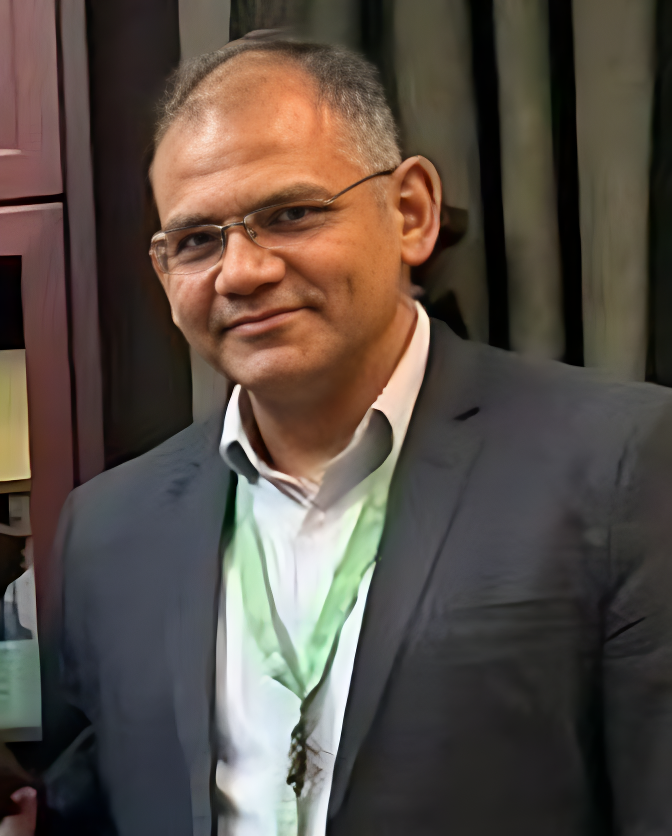
Sunit Arya, who leads the renewable energy vertical and project division at Simba Solar, is the kind of executive who would rather show you results than sell you a dream. In a wide-ranging conversation with BizWatch, he peeled back the curtain on Nigeria’s solar industry – its real growth trajectory, the financial models quietly reshaping how SMEs access clean energy, the safety incidents nobody wants to own, and the single most common mistake businesses make when going solar.
What follows is what the glossy brochures will not tell you.
Three Decades in Power — And Why Solar Became Inevitable
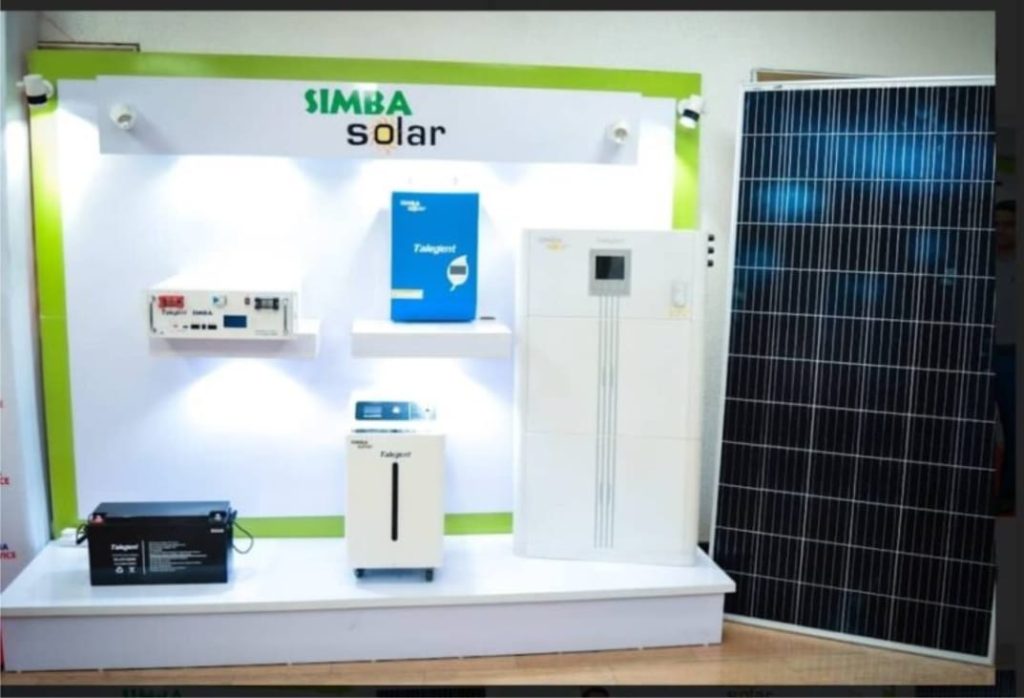
Simba is not a startup chasing a trend. The group has been operating in Nigeria for close to 40 years, and its power business stretches back nearly three decades, starting with battery inverters long before solar panels became a household conversation.
“Nigeria is a power-deficient market,”Arya says plainly. He describes Lagos, the city he now calls home, as a place where even residents in well-established neighbourhoods run most of their power consumption through diesel generators – that has taken the conversation beyond efficiency to convenience. For him, that is not a crisis. It is an opportunity the country has barely scratched.
The falling global cost of solar components sealed the argument. Solar is now, in his words, ‘affordable, viable, and environmentally friendly’ – the trifecta that makes it the logical answer for a country still searching for a lasting solution to its energy poverty.
Is Solar Actually Taking Off? The Honest Answer
Ask most solar executives whether adoption is growing and you will get a chorus of enthusiasm. Arya is more measured. “It’s picking up very fast – not picked up,” he says “particularly in the last one year”, drawing a distinction that matters for anyone making a business decision today.
He credits two forces for the momentum that does exist: a more informed public and a government push through the Rural Electrification Agency (REA), which has been steering institutional attention toward solar. Compared to five years ago, he argues, the education gap has narrowed considerably.
The bottleneck? Money. It is a capital expenditure for both organisations and residences. Not just the cost of solar itself, but the structure of how Nigerians are expected to pay for it. “Solar is still picking up, not picked up. The major reason is the financial gap in the system,” Arya says.
Real ROI: What Nobody Tells SMEs Upfront
The number that stops most businesses at the door is the upfront capital cost. Arya does not pretend otherwise. But he frames it differently: the question is not whether solar is expensive, but how long it takes to pay for itself through potential savings on diesel and electric utility bills.
For a building like Simba’s own facility operating on daytime hours, running heavy appliances including air conditioning entirely on solar – the return on investment comes within two to three years when measured against what they would otherwise spend on grid power and diesel. For industrial clients running battery backup systems, that window extends to five to six years. It is longer, Arya acknowledges, but the calculus shifts when you factor in uninterrupted power and reduced emissions.
An on-grid solution, one without battery storage – designed purely for daytime operations, offers the fastest payback and the lowest entry cost. It is, he suggests, the starting point most businesses overlook.
Breaking the Lump-Sum Barrier: Financing Models Quietly Changing the Market
Naira pressure, import duties, and the sheer weight of upfront capital have historically kept solar out of reach for most Nigerian SMEs. Simba has been working to close that gap through financial partnerships that allow customers to pay in equal monthly instalments rather than a single lump sum.
For larger institutional clients, the company offers Power Purchase Agreement models – energy as a service, where the customer essentially pays for electricity consumed rather than the infrastructure generating it. It eliminates the capital outlay entirely.
The results so far are promising but honest. By Arya’s own estimation, roughly 20 to 30 percent of Simba’s business revenue currently flows through financing arrangements, meaning the remaining 70 percent of customers are still paying outright. The gap is real, and he does not dress it up.
“Banks cannot finance everyone,” he says. “There is always a risk for them. And the cost of financing in Nigeria is too high.” Until affordable green capital becomes widely accessible, financing will remain a partial solution at best.
The Safety Crisis: What Happened at That Bank Building
One of the most sobering moments in the conversation comes when Arya brings up the fire at a major bank building, which he came across in the news – reportedly linked to a battery inverter and solar installation. It is the kind of incident that can set an entire industry back years.
His response is not defensive. “If the technology is right, there is no issue,” he says. The problem, in his diagnosis, is not solar, it is the chain of decisions that leads to substandard components being installed by undertrained hands with no ongoing maintenance plan.
At Simba with over 250 engineers in-house entrusted with standardisation alone, every component in their ecosystem – panels, inverters, and batteries carries TUV, UL and IEC certifications, the international standards that require rigorous testing under extreme conditions including fire resistance. Their installation team operates with Standard Operational Procedures (SOPs) and checklists – documented, step-by-step protocols that every engineer must follow on site, supported by checklists that ensure nothing is missed, from cable sizing to final commissioning.
But his most pointed observation is aimed beyond an individual company: “When such an incident happens, it ruins the technology.” Every bad installation, every cut corner, every uncertified panel is a problem for the entire sector. Standardisation, he argues, is not just good global business practice. It is existential and– government is also working with various organisations to achieve that goal beyond self-regulation.
The Dirty Secret About Undersized Panels — and Dangerous Batteries
Arya reveals a secret the market does not advertise: a solar panel labelled as 500 watts may actually be delivering 400. Panel undersizing is a documented problem in Nigeria’s market, being perpetuated by unscrupulous elements and it leads to systems that underperform, frustrate customers, and unfairly tarnish the technology’s reputation. “So, people should recognise the brands,” he cautioned.
More alarming is the proliferation of secondary-cell lithium batteries – cheaper, unverified cells assembled into battery packs that carry real fire risk. “If you buy a secondary cell lithium battery, it is very dangerous,” Arya says bluntly.
The pattern he describes is a race to the bottom: a customer, understandably cautious about cost, pressures a vendor to go cheaper. The vendor, rather than educating the customer on why cheaper means dangerous, complies. The system underperforms or, worse, fails catastrophically. And the customer walks away convinced that solar simply does not work.
“Solar is a technical product,” he says. “It is the responsibility of players like us to educate customers. We are not a sales company. To be honest, we position ourselves as more of technical.”
Training 300 Women Entrepreneurs — and Building the Next Generation of Solar Installers
Upstairs from the showroom floor, Simba has built a training centre. It is open not just to company partners but to anyone who wants to learn the industry. Under the Simba Elite Programme, the company actively recruits young people looking to enter solar, offering hands-on practical training.
In Borno State, the company has gone a step further, training approximately 300 women entrepreneurs not just in solar theory but in installation, and equipping them with starter solar kits. The goal is not charity. It is workforce creation. These women are trained, certified, and ready to operate as solar installers in their communities. It is one of the more quietly ambitious workforce development initiatives currently running in the sector.
After-Sales: The Part That Separates Good Companies From Bad Ones
A solar system that fails silently is a liability. Arya is aware that after-sales support is where many solar providers fall apart, and it is an area where Simba has invested deliberately.
Customers receive training on maintenance. AMC (Annual Maintenance Contract) options are available.
It is the kind of infrastructure that raises the bar for what solar customers should expect and what they should ask about before they sign anything.
The company operates a dedicated 24-hour call centre, seven days a week, linked to a Customer Relationship Management (CRM) system, a centralised platform that logs every complaint and automatically routes it to the nearest Simba service centre, regardless of whether the customer is based in Lagos or Kano. No complaint falls through the cracks based on geography. For products under warranty, on-site service is free, with a resolution turnaround target of 24 to 48 hours.
Advice for Any SME Considering Solar Right Now
Arya’s parting advice to SMEs is strikingly practical and, in context, a little unusual coming from someone trying to sell solar: involve your technical person first, not your commercial person.
The most common error he sees is businesses approaching solar as a commodity purchase, negotiating on price before understanding what they actually need. “Many people think that if my consumption is 100 kilowatts, I need 100 kilowatts of solar. It never happens,” he explains. Proper sizing requires an energy audit, a load analysis, and a customised design. Skipping those steps leads directly to underperforming systems and disillusioned customers.
This is precisely where Simba’s in-house design team comes in. Before any order is released, the team visits the site, conducts an energy audit, and uses proprietary software to model the optimal system for that specific client’s consumption profile and hours of operation. “We do optimal cable sizing – we provide a complete turnkey kind of solution to our customers individually.” Every customer gets a customised solution, not an off-the-shelf package. “We tell them specifically: this system is made for this capacity, with this kind of backup,” Arya says. “We guarantee that.”
His final word: if a vendor is not asking questions about your consumption before quoting you, that is your first red flag.
About Sunit Arya
Sunit Arya is a techno-commercial leader and renewable energy expert with over 23 years of experience in the global energy sector. He currently leads solar energy initiatives at Simba Group in Nigeria, focusing on expanding sustainable power solutions.
Throughout his career, Arya has held senior leadership roles, including Board Chairman & CEO of MGP-Mera Gao Power and Founder of DeyHaat, where he championed rural electrification through innovative microgrid models. His expertise spans international trade, strategic partnerships, and large-scale project management across markets in Asia, Africa, and the Middle East. He is a graduate of the National Institute of Technology Hamirpur and is recognized for his contributions to accelerating the global energy transition.