









Key points
- Traders and residents across the Federal Capital Territory have expressed deep concern over the escalating cost of perishable food items.
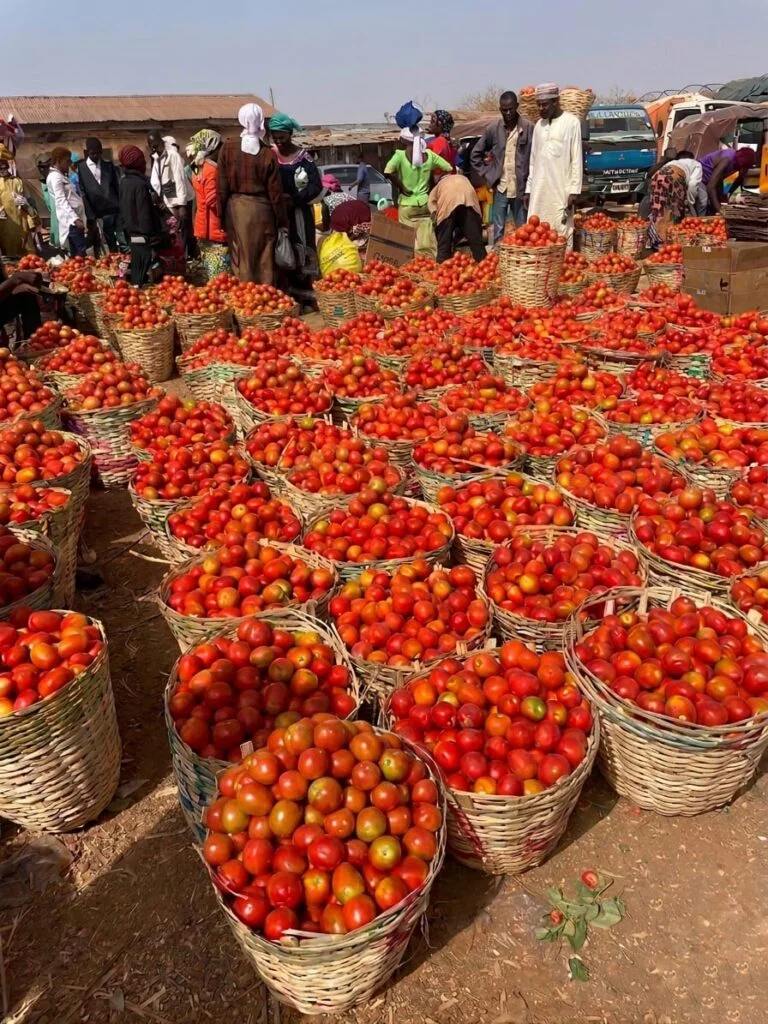
- Market data shows the price of a big basket of tomatoes has fluctuated dramatically between March and May.
- Heightened demand linked to the upcoming Sallah celebration has worsened the price surges in recent days.
- Spiraling transportation costs and fuel prices remain the primary drivers behind the current food market instability.
- Low consumer patronage has forced many families to switch to dried tomatoes and pepper as cheaper alternatives.
Main Story
Some traders and residents of the Federal Capital Territory (FCT) have expressed concern over the rising prices of perishable goods such as tomatoes and pepper.
They spoke in separate interviews with the News Agency of Nigeria (NAN) in Abuja, noting that seasonal food items such as tomatoes, pepper and fruits were no longer affordable, even during their harvest periods.
They said prices of tomatoes and pepper had continued to rise in recent weeks and worsened in the past few days due to increasing demand ahead of the Sallah celebration.
According to them, while prices of some perishable items have dropped due to the rainy season, others have increased significantly because of transportation costs and rising demand.
Mr Idris Adamu, a tomato and pepper dealer at Gwagwalada Market, said the current economic situation in the country had affected virtually everything in the market.
Adamu said prices of tomatoes and pepper, particularly tomatoes, had continued to fluctuate since March, noting that many traders now lack the financial capacity to stock goods.
Furthermore, retail operators in satellite areas like Karu and Nyanya have reported similar sharp commodity price adjustments. A big basket of tomatoes is currently selling for between N65,000 and N80,000, while secondary items like okra, onions, tatashe, and shombo have also recorded heavy cost increases.
The steep market shift has heavily eroded profit margins as fresh produce frequently spoils due to low patronage, forcing retail sellers to split single bags among themselves to survive.
The Issues
- Mitigating high transportation and logistics costs driven by the rising cost of fuel.
- Managing the rapid spoilage of fresh agricultural produce resulting from low consumer patronage.
- Addressing the decreased purchasing power of average citizens and civil servants facing difficult feeding choices.
What’s Being Said
- Highlighting the market shifts observed over the last few months, Gwagwalada dealer Mr Idris Adamu explained: “Between March and May, the price of a big basket of tomatoes fluctuated between N60,000 and N100,000, compared to between N20,000 and N35,000 in February.”
- Outlining the operational anxieties that prevent merchants from ordering large wholesale quantities, Adamu added: “Some traders are afraid customers may not be willing to spend so much on tomatoes because the increase in the price of baskets will also affect the price of smaller quantities,”
- Expressing the frustration of civil servants attempting to balance a strict household budget, Mrs Firdausi Bello noted: “I am shocked at the price of tomatoes and pepper. I cannot afford to buy a bucket of tomatoes for N6,500, while some sellers charge N7,000 for the same quantity that sold for N2,500 a few days ago.”
- Explaining her domestic substitution strategy to cope with the sudden multi-fold price jump, Bello stated: “The only alternative I have now is to continue buying dried tomatoes and pepper until the prices reduce.”
- Questioning how average workers can effectively survive under the prevailing macroeconomic conditions, she added: “As a civil servant, if I spend N6,500 on just one bucket of tomatoes, how much will remain for other household needs? It is high time the government looked into the plight of Nigerians. People are really suffering,”
- Detailing how retail merchants are forced to pool resources to purchase inventory, trader Mr Abdul Isiaku stated that the cost of tatashe “now cost between N70,000 and N85,000” which “had made it difficult for him to purchase a full bag alone, forcing him to contribute money with other traders to buy and share.”
What’s Next
- Consumers will continue relying on dried alternatives to avoid the high costs of fresh produce.
- Market associations will monitor demand fluctuations as the Sallah celebration approaches.
- Traders will look toward the relevant authorities to potentially address fuel prices and offer transportation support.
Bottom Line
Driven by high fuel prices, rising transport costs, and Sallah demand, a major price spike has hit FCT markets—with tomato baskets reaching up to N100,000—forcing traders to pool funds to buy stock and pushing civil servants to dump fresh produce for cheaper dried alternatives.





 have expressed concern over the rising prices of perishable goods ...)