









Key points
- President Bola Tinubu has directed all MDAs to fully digitise operations and adopt paperless workflows.
- Government says 38 MDAs are already operating secure electronic systems under ongoing civil service reforms.
- FG links digital transition to efficiency, transparency, and improved public service delivery.
Main story
President Bola Ahmed Tinubu has directed all Ministries, Departments and Extra-Ministerial Agencies (MDAs) to fully digitise their workflows and transition to a paperless governance system as part of sweeping reforms in the Nigerian public service.
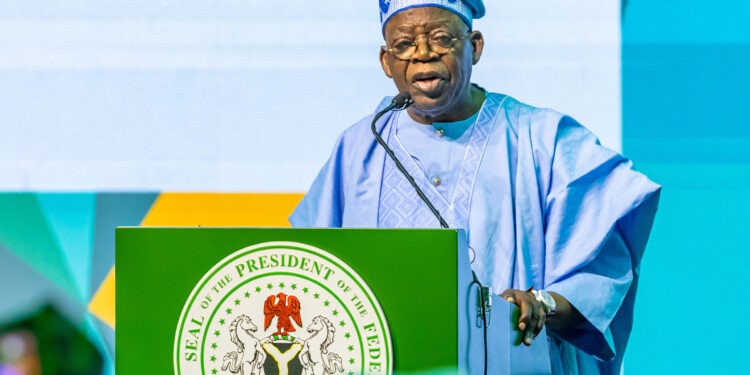
Tinubu issued the directive on Tuesday at the opening ceremony of the International Civil Service Conference 2026 held in Abuja, where he was represented by the Secretary to the Government of the Federation, Senator George Akume.
The President said the era of manual bureaucracy and administrative inefficiency must give way to a modern governance structure driven by speed, transparency, data-based decision-making and citizen-focused service delivery.
He described the conference theme, “Reforms, Resilience and Results,” as a reflection of the administration’s shift from policy intentions to measurable outcomes in governance.
According to him, Nigeria’s public service has, within the last 11 months, moved beyond policy declarations to practical reforms designed to withstand economic pressures and rising public expectations.
Tinubu said the Renewed Hope Agenda places strong emphasis on a capable, disciplined and performance-driven civil service as the backbone of national transformation.
“You are the engine room of national transformation. Today, that engine is becoming faster, smarter, more accountable and more responsive to the needs of our people,” he said.
He disclosed that 38 MDAs are already operating secure, end-to-end electronic workflow systems as part of the ongoing digital transition in the federal bureaucracy.
The President added that the digital shift demonstrates Nigeria’s commitment to improving efficiency, encouraging innovation, and strengthening service delivery across all levels of government.
Tinubu also revealed that the Personnel Audit and Skills Gap Analysis approved during the 2025 conference is nearing completion. The exercise, he said, is aimed at identifying capacity gaps and ensuring proper placement of personnel with relevant digital competencies.
He further highlighted ongoing efforts under Project BRIDGE — Building Resilient Digital Infrastructure for Growth — describing it as a key initiative to enhance connectivity, job creation, innovation and public sector efficiency.
Commending reforms in the civil service, Tinubu praised the Head of the Civil Service of the Federation, Mrs Didi Esther Walson-Jack, for implementing the Federal Civil Service Strategy and Implementation Plan (2021–2025).
He also acknowledged the contributions of ministries, departments and agencies in sustaining institutional reforms aimed at improving governance outcomes.
Tinubu said Nigeria’s ongoing public service transformation is positioning the country as an emerging benchmark for governance reform in Africa.
He urged participants at the conference to ensure that reforms are institutionalised, accountability is strengthened, and technology is fully leveraged to improve service delivery.
“We must institutionalise resilience so that the progress of today becomes the standard of tomorrow. The world is watching Nigeria,” he said.
Tinubu formally declared the International Civil Service Conference 2026 open, expressing optimism that it would produce actionable reforms and measurable results.
The issues
Nigeria’s public service has long been criticised for bureaucratic delays, excessive paperwork, and inefficiencies in administrative processes.
The transition to digital governance is intended to address corruption risks, improve transparency, and speed up service delivery across MDAs.
However, challenges remain around infrastructure gaps, digital literacy among civil servants, and uneven implementation across government institutions.
What’s being said
The Federal Government says the paperless transition marks a major step toward building a modern, efficient and accountable civil service.
Officials argue that digital workflows will reduce delays, improve record-keeping, and enhance citizen access to government services.
Reform advocates also view the policy as a critical foundation for long-term governance transformation.
What’s next
MDAs are expected to scale up adoption of electronic workflow systems, with further directives likely to enforce compliance timelines and performance monitoring.
Government is also expected to expand digital infrastructure and training programmes to support full implementation across the civil service.
Bottom line
Tinubu’s directive signals a decisive push toward full digital governance in Nigeria, positioning the civil service for faster, more transparent and technology-driven operations aimed at improving public service delivery nationwide.





 to fully digitise ...)