In May 2026, António Guterres made a statement that drew attention across global energy and finance circles.
Africa could generate ten times more electricity than it needs by 2040 using renewable energy.
The remark pointed to a larger shift already taking shape in global energy markets. Africa is increasingly being viewed as a major long-term source of renewable energy capacity, not only for domestic use but also for global industrial demand.
The continent holds around 60 percent of the world’s best solar resources, according to estimates from the International Energy Agency and the International Renewable Energy Agency. It also has significant wind, hydro, and geothermal potential. At the same time, its population and cities are expected to grow quickly over the next two decades. Global electricity demand is rising as well. Artificial intelligence systems, industrial electrification, data centres, and cleaner manufacturing processes are all increasing pressure on energy systems worldwide.
Even with these conditions, Africa still receives less than 3 percent of global clean energy investment. That gap is becoming one of the most important underdeveloped opportunities in global infrastructure.
Africa’s scale advantage
Africa’s renewable energy strength is not only about how much sun it receives. It is also about how consistently that energy can be captured across large areas.
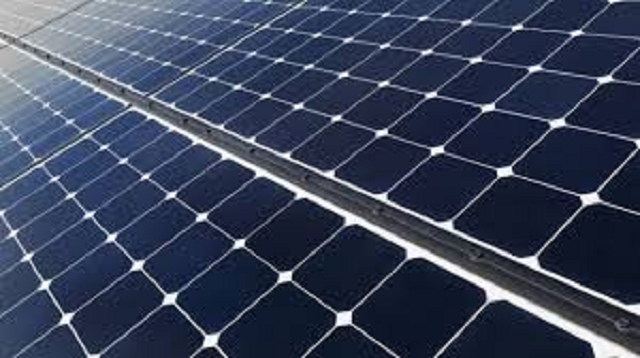
The World Bank classifies regions with strong solar performance as those capable of producing more than 4.5 kilowatt-hours per kilowatt-peak per day. Africa is the only continent where the average across the landmass exceeds that level. In parts of the Sahara and Namib deserts, solar output is significantly higher than in most regions where large-scale solar farms are currently concentrated globally.
Across much of the continent, solar production is also more stable throughout the year. In higher latitude regions, output drops sharply during winter months. In Africa, that seasonal drop is far less severe, which makes long-term energy planning more predictable. The overall scale is large enough to reshape energy economics. Estimates suggest that using a small fraction of Africa’s land for solar infrastructure could generate multiple times the continent’s current electricity demand. Total solar potential is often placed at around 60 million terawatt-hours annually. This level of capacity places Africa among the most resource-rich regions in the global energy transition.
The investment gap
Despite this resource base, capital allocation remains limited. Africa continues to receive only a small fraction of global clean energy investment, even as global spending on renewable energy has grown into the trillions of dollars. The main constraint is not energy availability. It is how risk is priced.
Many renewable projects across Africa face high financing costs due to concerns about currency stability, sovereign debt levels, and infrastructure readiness. A key structural issue is how projects are evaluated. Even strong renewable developments are often priced based on the credit profile of the country where they are located. This can increase borrowing costs significantly compared to similar projects in more developed markets.
Currency exposure adds another layer of complexity. Developers often borrow in dollars or euros while earning revenue in local currencies. When exchange rates move sharply, repayment becomes more difficult. Grid infrastructure is another constraint. Many transmission systems are not yet strong enough to support large-scale renewable integration without upgrades.
As a result, renewable potential is expanding faster than the financial systems needed to support it. For long-term capital, this creates a market that is still forming rather than one that is fully established.
Africa is already building
Even with these constraints, energy development across the continent is accelerating. In 2025, solar deployment reached one of its highest growth levels on record. Expansion is no longer limited to a few major economies.
Countries such as Zambia, Ghana, and Chad are expanding renewable capacity. In these markets, solar is increasingly being used not only for electrification but also for industrial and commercial reliability.
In Nigeria, where grid instability and fuel costs remain major business challenges, companies are investing in solar and battery systems to reduce dependence on diesel generation. For many firms, energy choice has become a cost decision rather than an environmental one.
Domestic capital participation is also increasing. Pension funds and local financial institutions in several countries are beginning to fund renewable infrastructure, often through new structures designed to reduce currency risk.
At the same time, distributed energy systems are expanding rapidly. Rooftop solar, mini-grids, and pay-as-you-go models are reaching households and small businesses that are not connected to reliable national grids.
In 2025, Africa imported more than 18 gigawatts of solar panels, significantly more than what was recorded as grid-connected capacity. A large portion of this equipment is being used in decentralised systems that are not fully captured in official statistics. This indicates that energy transition in Africa is already happening through multiple channels, not just large-scale infrastructure projects.
The industrial opportunity
The implications of Africa’s renewable growth extend beyond electricity access. As global industries move toward lower-carbon production, access to affordable and reliable clean energy is becoming a key factor in investment decisions.
This is particularly important for sectors such as green hydrogen, fertilizer production, metals processing, and digital infrastructure.
Several African countries are positioning themselves to participate in emerging green hydrogen markets, particularly to serve demand from Europe as it reduces reliance on fossil fuels. However, the more significant long-term opportunity may lie in domestic industrial development. If renewable electricity becomes abundant and affordable at scale, it could support new manufacturing capacity across multiple sectors. This includes processing of raw materials, industrial services, and technology infrastructure.
Energy availability often determines where industrial growth happens. In this sense, renewable energy is not only an environmental issue but also an industrial competitiveness issue.
A market moving into a new phase
Across Africa, governments and financial institutions are beginning to address barriers that have limited renewable investment.
New financing structures are being introduced to reduce exposure to currency risk. Blended finance arrangements are increasingly used to lower project risk for private investors. Regulatory reforms are also improving transparency in energy markets.
The World Bank and African Development Bank-backed Mission 300 initiative aims to expand electricity access to 300 million people by 2030 while also attracting greater private investment into the sector.
Corporate energy agreements are becoming more common, allowing renewable developers to sell electricity directly to large industrial users rather than relying solely on state utilities.
While progress remains uneven, the direction is clear. Energy markets across the continent are gradually becoming more structured and more investable.
A defining decade
The next decade will determine how Africa’s renewable potential is ultimately used. The resource base already exists at scale. Renewable technology continues to become more affordable. Global demand for clean electricity is rising steadily.
What remains uncertain is how quickly financing systems, transmission infrastructure, and regulatory environments can evolve to match physical potential.
Africa’s renewable story is no longer only about access to electricity. It is becoming a broader question about where future industrial growth will be located and how global energy systems will be organised.
The outcome will shape not just Africa’s energy future, but part of the next phase of global economic development.