







KEY POINTS
- The Senate has passed an amendment bill seeking to give the National Oil Spill Detection and Response Agency stronger powers to punish environmental violations.
- The proposed law seeks to introduce heavier fines and criminal penalties for oil spills and other breaches of environmental regulations in the petroleum sector.
- Lawmakers said existing fines were too weak to deter offenders and highlighted the damage pollution causes to fishing, farming and other livelihoods in oil-producing communities.
- The bill was passed after consideration by the Senate Committee of the Whole and a third reading.
MAIN STORY
The Senate has passed a bill seeking to strengthen penalties for oil spills and other environmental violations in Nigeria’s petroleum sector by empowering the National Oil Spill Detection and Response Agency (NOSDRA) to impose heavier fines and introduce criminal sanctions.
The National Oil Spill Detection and Response Agency (Establishment) Act (Amendment) Bill, 2026, seeks to amend the existing NOSDRA Establishment Act of 2006 to provide a legal basis for stronger penalties and criminal offences aimed at improving compliance with environmental regulations.
Presenting the report of the Senate Committee on Environment on behalf of its chairman, Senator Olubiyi Fadeyi Oluwole, Senate Chief Whip Tahir Monguno said the amendment was intended to address persistent environmental degradation in the Niger Delta and other oil-producing communities.
Monguno, who represents Borno North Senatorial District, said oil spills and pollution had continued to damage the environment and deprive residents of their livelihoods, particularly people who depend on fishing and farming.
He argued that existing fines were insufficient to discourage environmental violations and that stronger sanctions were necessary to improve compliance with the law.
“The fines are not deterrent enough to deter offenders,” Monguno told the Senate.
He added that the proposed legislation would introduce criminal liability for oil spills that cause environmental damage and deprive affected communities of their means of livelihood.
According to him, the amendment is intended to strengthen accountability by ensuring that those responsible for environmental violations face appropriate sanctions.
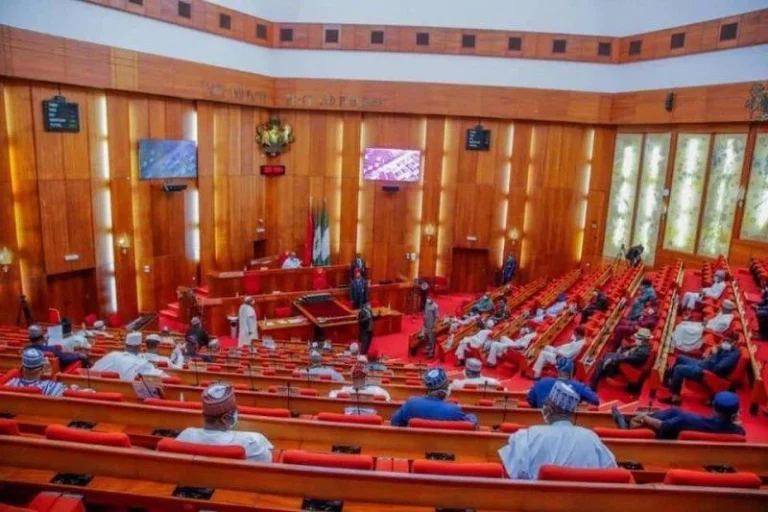
Following the presentation of the committee’s report, the Senate resolved into the Committee of the Whole to examine the bill clause by clause. Lawmakers approved Clauses 1 to 12, as well as the short title, explanatory memorandum and long title, before returning to plenary.
The bill was subsequently read for the third time and passed.
Senate President Godswill Akpabio commended the chairman and members of the Senate Committee on Environment for their work on the legislation and congratulated NOSDRA on the additional powers proposed under the amendment.
“I also congratulate the agency for the extra powers granted today through this legislation,” Akpabio said.
The Senate President also asked the Senate leadership to check on Senator Oluwole, noting that the committee chairman had not been seen in the chamber for some time, and requested an update on his welfare at a subsequent sitting.
The bill’s passage comes amid continuing concerns over the environmental and economic effects of oil spills in the Niger Delta and other oil-producing communities.
THE ISSUES
Oil pollution can affect more than the immediate environment. When spills contaminate waterways and farmland, fishing and farming communities may lose income, while businesses that depend on local food production and other economic activities can also suffer.
The proposed amendment seeks to address a key enforcement concern: whether existing penalties are strong enough to discourage companies and other responsible parties from violating environmental laws.
Heavier fines and criminal penalties could increase the consequences of non-compliance. However, the effectiveness of the changes will depend on how the law is ultimately enacted and implemented, including the ability of authorities to identify violations and hold responsible parties accountable.
For oil-producing communities, stronger sanctions could provide a firmer basis for environmental enforcement. The bill’s passage alone, however, does not establish that pollution will decline or that affected residents will automatically receive compensation or restoration of their livelihoods.
WHAT’S BEING SAID
- “The fines are not deterrent enough to deter offenders.” – Tahir Monguno, Senate Chief Whip.
- “I also congratulate the agency for the extra powers granted today through this legislation.” – Godswill Akpabio, Senate President.
WHAT’S NEXT
The Senate has passed the bill, but the supplied report does not establish whether it has completed all remaining legislative and presidential approval stages required to become law.
The practical effect of the proposed changes will depend on the final legal provisions and their implementation. NOSDRA’s enforcement capacity and the application of any new penalties will be important in determining whether the amendment improves compliance and accountability in the petroleum sector.
BOTTOM LINE
The Senate’s passage of the NOSDRA amendment bill marks a move towards tougher penalties for oil spills and environmental violations. Its significance for oil-producing communities will depend on whether the proposed powers become law and are effectively used to deter pollution and protect livelihoods.