





By Annette Ikponmwonba | November 2nd, 2026
Key Points
· Lagos State Governor Babajide Sanwo-Olu says the average cost of land in Ikeja is slightly above N3m per square metre
· He said this makes it difficult for low-income earners to live in the area
· He spoke during his acceptance speech after being invested as an Honorary Fellow of the Nigerian Institute of Town Planners at its 57th Annual Conference and AGM in Ikeja
· He was represented by the Commissioner for Physical Planning and Urban Development, Dr Oluyinka Olumide
· He said the administration has invested heavily in rail so people can live in Agbado and commute daily to central Lagos
· He said the government’s priority in its remaining time is to consolidate progress and strengthen institutions
Main Story
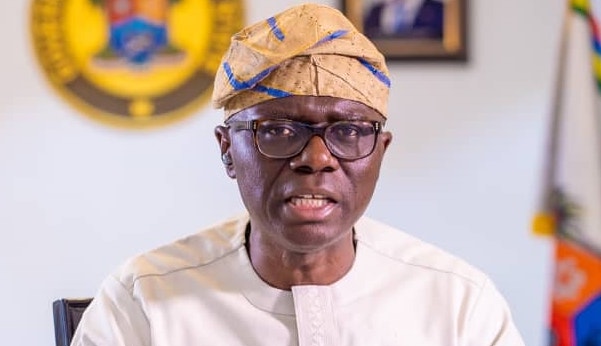
Lagos State Governor Babajide Sanwo-Olu has stated that the average cost of land in Ikeja is slightly above N3m per square metre, making it difficult for low-income earners to live around that environment. He said this during his acceptance speech after his investiture as an Honorary Fellow of the Nigerian Institute of Town Planners at the 57th Annual Conference and Annual General Meeting held in Ikeja, according to a statement.
The governor, who was represented by the Lagos State Commissioner for Physical Planning and Urban Development, Dr Oluyinka Olumide, said the land cost is why his administration has invested aggressively in rail transportation. “The average cost of land in Ikeja is slightly above N3m per square metre. So, it will be difficult for low-income earners to live around that environment. And in responding to the principles of planning, that’s why we have invested very aggressively in rail transportation, so that people can live in Agbado and commute daily to the central area of Lagos,” he said.
Sanwo-Olu stressed that his administration was building a state that must serve many generations to come. He said this required foresight, discipline and the courage to make planning decisions that might not always be convenient today but would prove necessary tomorrow.
The Issues
The governor’s figure highlights how steep housing costs have become in Lagos’s core areas. At over N3m per square metre, land in Ikeja is far out of reach for low-income earners, pushing them toward the outskirts and making transport a central part of the housing question.
The administration’s answer is to separate where people live from where they work, using rail to connect cheaper areas like Agbado to central Lagos. The approach depends on how reliable, affordable and widely available the rail service proves to be, and the Red Line, which has just been opened, is the first real test.
Lagos also faces the physical limit of its land. Sanwo-Olu noted the state has only 3,577 square kilometres to accommodate a growing population, expanding infrastructure, housing and environmental protection, which is why planning decisions carry such weight.
What’s Being Said
Sanwo-Olu described the fellowship as recognition and a reminder of unfinished work. “As our administration approaches the end of its tenure, I receive this fellowship as an affirmation of the work we have done, and a reminder of what we must still accomplish,” he said.
He said the government’s responsibility in the time left was to consolidate progress, strengthen the institutions that would sustain it, and keep Lagos’s development on a sound and orderly path long after they leave office. He assured the NITP that the state would continue to value its professional advice and partnership, noting that the administration would need the institute’s expertise.
On the challenges, he said they had shaped many decisions, “from our investments in rail transportation and road infrastructure to urban regeneration and improvement in physical planning.” He added: “Our objective has been to make Lagos a more organised, liveable, and prosperous city. We have just opened the Red Line train in the city. In Ikeja, workers are supposed to work there.”
What’s Next
Attention will turn to how the Red Line and other rail routes perform in moving commuters from areas like Agbado into central Lagos, and whether housing options for low-income earners expand along those corridors, With the administration nearing the end of its tenure, the focus will be on consolidating projects and institutions, and on continued collaboration with the town planners’ institute on planning and urban growth.
Bottom Line
Sanwo-Olu is acknowledging that Ikeja is priced beyond low-income earners and pointing to rail as the government’s answer, betting that better transport can make living further out workable as Lagos grows within limited land.