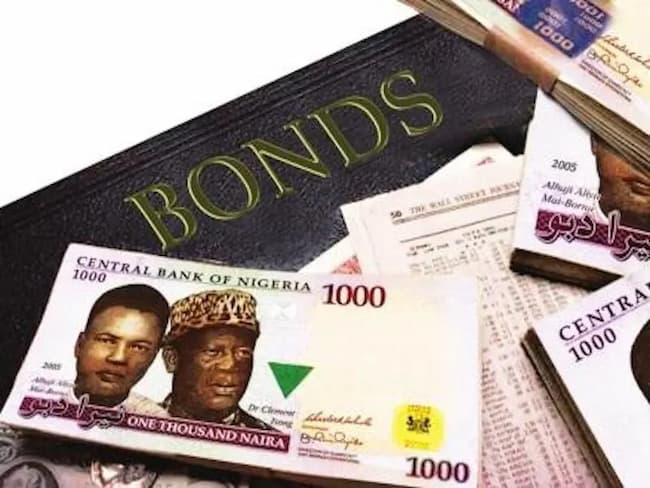
The Nigerian Federal Government bond market remained relatively calm in the secondary trading space, as investors held their positions in the absence of strong catalysts to drive market sentiment.
Market analysts reported that investors stayed cautious amid ongoing economic uncertainty, fluctuating returns, and intermittent profit-taking, resulting in muted activity across the week.
At the close of trading, the average yield on government bonds settled unchanged at 16.97%, reflecting limited demand in the market. Activity at the short end of the curve saw yields edge higher by 1 basis point (bp), largely influenced by profit-taking on the March 2027 bonds, which gained 2bps. However, mid and long-term maturities remained broadly stable.
In the mid-segment, yields contracted slightly by 3bps, driven by strong buying interest in the February 2034 papers, which saw a sharp decline of 24bps. Similarly, the 2031 and 2033 bonds witnessed renewed demand, leading to notable drops of 25bps and 40bps, respectively. Despite this, trading volumes were light.
Meanwhile, the Treasury bills market ended on a bearish note, as the average yield climbed by 8bps to 18.72%. The newly issued one-year paper was the most actively traded instrument, with yields on long-dated bills rising by 14bps amid heightened demand.
Overall, activity in the bond market was subdued for most of the week, with early buying interest concentrated in the 2029, 2031, 2033, and 2053 maturities. Analysts predict that yields are likely to stay elevated in the short term, with a quiet start to the coming week.
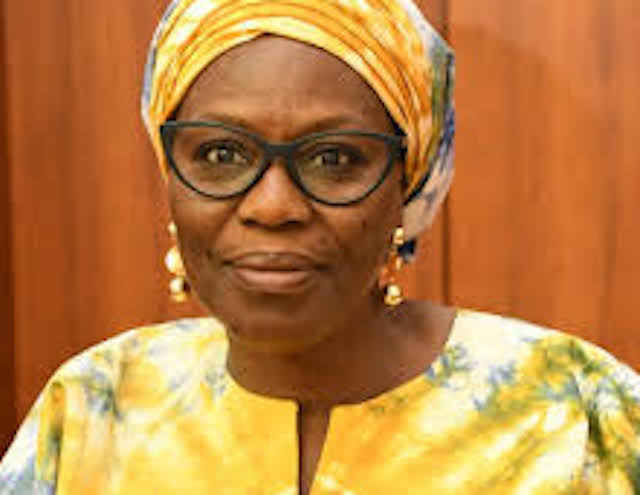
The Federal Capital Territory Administration (FCTA) has appointed Mrs. Nancy Sabanti Nathan as Acting Head of Service following the death of Mrs. Grace Adayilo, the immediate past officeholder.
The announcement was contained in a statement issued on Tuesday by Lere Olayinka, Senior Special Assistant on Public Communications to the FCT Minister.
Adayilo, who died last Monday, had made history in October 2024 when President Bola Tinubu appointed her as the first female and first indigenous Head of Service of the FCTA.
According to the statement, Nathan will serve in an acting capacity “pending the appointment of a substantive Head of Service.”
“Mrs. Nancy Sabanti Nathan, mni, has been appointed as Acting Head of Service of the Federal Capital Territory Administration (FCTA),” the statement read. “Until her appointment, she was the Permanent Secretary, Youth Development Secretariat of the FCTA. She had also served as Director of Finance and Administration in the Office of the Honourable Minister of the FCT before her elevation to Permanent Secretary. The appointment takes immediate effect.”
If confirmed, Nathan would become the second woman to hold the post since the establishment of the FCT Civil Service Commission in October 2023.
Nathan, a seasoned administrator, brings years of experience in public service, having overseen both financial administration and youth development portfolios within the FCTA.
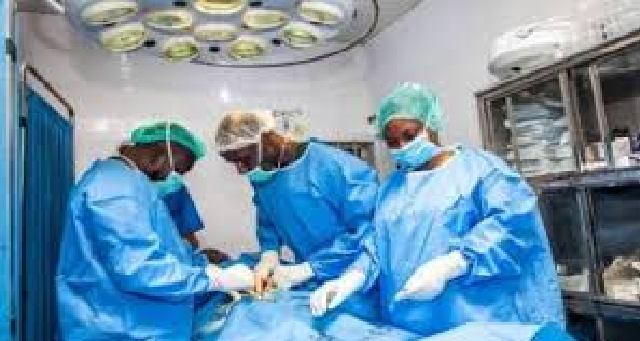
The Federal Government has kicked off the nationwide distribution of free Maternal and Neonatal Health (MNH) commodities valued at N2.9 billion, in a bid to strengthen maternal and child healthcare services across Nigeria.
The official flag-off ceremony, held in Abuja on Monday, was presided over by Dr. Muyi Aina, the Executive Director of the National Primary Health Care Development Agency (NPHCDA). He stressed that the initiative was designed to reduce preventable maternal and infant deaths by improving access to essential healthcare.
According to Dr. Aina, the programme is a direct reflection of the government’s commitment to tackling maternal mortality and providing women and children with equitable access to life-saving interventions.
Nationwide Implementation Plan
Dr. Aina revealed that the commodities will be distributed to Primary Health Care (PHC) facilities across selected states, beginning with ten states that record the highest rates of maternal and child mortality.
“This initiative is in line with President Bola Tinubu’s Renewed Hope Agenda, which prioritizes the health and well-being of women and children as a cornerstone for national development,” Aina noted.
He added that while the Federal Government has laid the foundation, states are expected to build on the intervention by integrating it into their health frameworks for long-term sustainability.
Targeted States and LGAs
The programme is initially targeting 80 Local Government Areas (LGAs) with the most critical maternal health challenges. Commodities will be provided to mothers and newborns free of charge, ensuring no financial barriers to access.
Distribution has been structured regionally, with the Northwest receiving 60% of the supplies, the Northeast 34%, while the remaining allocations will be shared between the North Central and Southeast.
Beyond distributing commodities, the intervention includes the strengthening of PHC facilities, upgrading of healthcare infrastructure, and the training of frontline health workers to deliver quality maternal and child health services.
Stakeholders Commend Initiative
Dr. Dayo Adeyanju, National Coordinator of the Maternal and Newborn Mortality Reduction Innovation and Initiatives (MAMII), described the move as a major step towards reducing preventable maternal and neonatal deaths.
He emphasized the need for state governments to commit funds and integrate MNH programmes into their annual health budgets.
“Far too many Nigerian women lose their lives to causes that could be prevented. Even one maternal death is one too many,” Adeyanju remarked.
Representatives from international partners, including the World Health Organisation (WHO), UNICEF, UNFPA, and the Bill & Melinda Gates Foundation, expressed their support for the Federal Government’s efforts. WHO’s representative, Dr. Mary Brantwo, confirmed that maternal and neonatal health data will now be tracked annually to monitor Nigeria’s progress.
Items in the Intervention Package
The distributed health commodities include delivery packs, antenatal medications, nutritional supplements, insecticide-treated mosquito nets, family planning kits, and essential medicines tailored for maternal and neonatal care.
Nigeria’s Maternal Health Burden
Nigeria continues to face alarming maternal health statistics, accounting for nearly 20% of global maternal deaths, according to WHO estimates.
The maternal mortality ratio in some regions surpasses 1,000 deaths per 100,000 live births — among the highest in the world. Each year, thousands of newborns die within their first 28 days of life, mainly due to preventable causes such as birth complications, infections, preterm delivery, and inadequate skilled birth attendance.
Rural communities in the Northwest and Northeast remain the most affected, with limited access to healthcare facilities, trained health professionals, and emergency services. Less than half of births nationwide are attended by skilled health workers, leaving many women to depend on traditional birth attendants or home deliveries due to financial, cultural, or geographical barriers.
The Federal Government maintains that this new intervention is a renewed commitment to addressing these challenges and building a stronger healthcare system for mothers and children across Nigeria.
Tensions are rising over the Federal Government’s plan to introduce a five per cent surcharge on petroleum products, with the Trade Union Congress (TUC) threatening a nationwide strike and members of the Organised Private Sector (OPS) warning that the levy would further stoke inflation and deepen economic hardship.
The TUC on Monday issued a two-week ultimatum to the government to withdraw the policy or face “total nationwide resistance.” The union’s leaders, Festus Osifo and N.A. Toro, in a statement, described the proposal as “economic wickedness” that would compound the struggles of Nigerians already reeling from subsidy removal, rising inflation and a weakened currency.
“The government cannot continue to use Nigerians as sacrificial lambs for its economic experiments. Instead of offering relief, jobs and solutions, it has chosen to further squeeze citizens dry. This is unacceptable,” the union declared.
The Congress said it had begun mobilising affiliates, civil society groups, professional associations, student unions, and faith-based organisations for coordinated action, stressing that strike action remained firmly on the table if the government failed to back down.
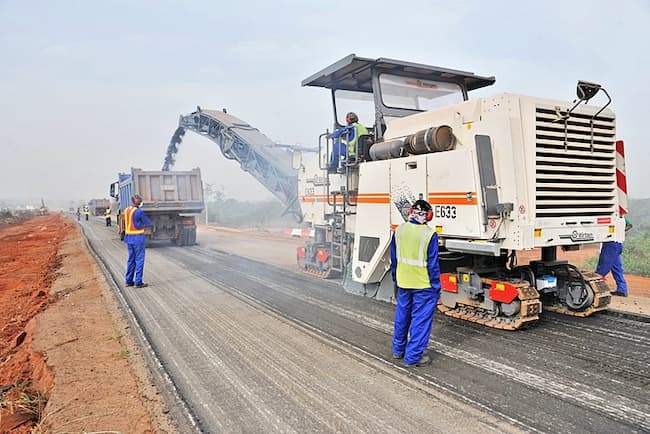
The levy, first introduced under the Federal Roads Maintenance Agency (FERMA) Act of 2002 and amended in 2007, would impose a five per cent user charge on petrol and diesel, with proceeds earmarked for federal and state road maintenance agencies. It excludes cleaner fuels such as cooking gas, kerosene, and compressed natural gas.
Private Sector Pushback
The OPS has also rejected the plan, warning that it would worsen inflation and cripple already struggling businesses. President of the Lagos Chamber of Commerce and Industry (LCCI), Gabriel Idahosa, said the surcharge, if implemented, would be passed directly to consumers, with the transport sector bearing the worst impact.
“Many people already use their cars minimally. This tax will put more pressure on public transportation and lead to higher costs for commuters,” he noted, cautioning that enforcement discrepancies among fuel marketers could distort pricing further.
While predicting the increase may not be dramatic in absolute terms, Idahosa warned transport operators could exploit the policy to raise fares disproportionately, fuelling broader inflation. He urged the government to accelerate investment in alternatives such as compressed natural gas, noting that adoption remains minimal due to inadequate facilities.
Similarly, President of the Association of Small Business Owners of Nigeria (ASBON), Dr. Femi Egbesola, described the tax as another blow to businesses already overwhelmed by multiple levies. “Poverty is increasing daily. Businesses are shutting down. The government should be providing relief, not squeezing the last kobo from citizens,” he said.
Egbesola acknowledged macroeconomic gains under President Bola Tinubu’s administration but argued that ordinary Nigerians had yet to feel any real benefit. He called for targeted interventions and tax reliefs to cushion households and enterprises.
National Vice President of the National Association of Small-Scale Industrialists, Segun Kuti-George, also condemned the policy, calling it “one tax too many.” He urged the government to explore innovative revenue options beyond taxation, warning that another fuel levy risked igniting fresh inflationary pressures.
Despite mounting opposition, officials maintain that the surcharge forms part of broader fiscal reforms intended to raise dedicated funds for Nigeria’s crumbling road infrastructure. However, critics insist that the timing is wrong, with many Nigerians already pushed deeper into poverty.
The Federal Government has justified its proposed 5% fuel surcharge, insisting the policy is not intended to overburden Nigerians but to provide a dedicated fund for road infrastructure across the country.
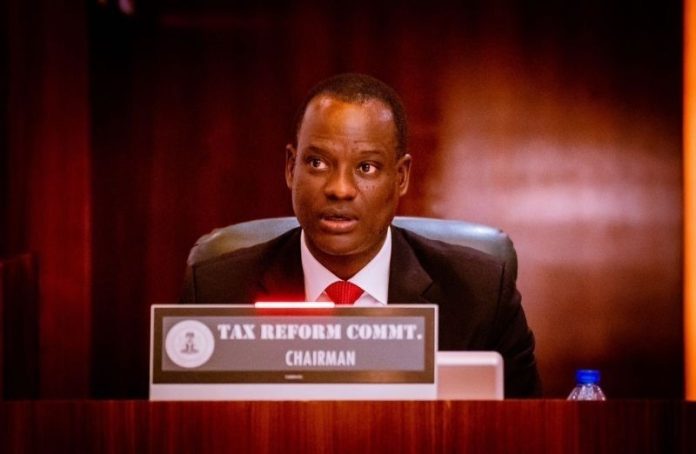
Speaking on Channels Television’s Morning Brief on Tuesday, Taiwo Oyedele, Chairman of the Presidential Committee on Fiscal Policy and Tax Reforms, explained that while public concerns about inflation are valid, the surcharge is necessary to tackle Nigeria’s deteriorating road network.
The surcharge, contained in the newly enacted Nigeria Tax Act 2025, is scheduled to take effect in January 2026. The plan has triggered backlash, with the Trade Union Congress threatening a nationwide strike unless the government reverses the measure.
Oyedele acknowledged the inflationary fears but argued that poor road conditions already contribute significantly to higher costs of goods and transport.
“Nigeria has about 200,000 kilometers of roads, yet only around 60,000 are in acceptable condition,” he said. “This poor state of infrastructure is a major driver of the high cost of moving people and goods, and ultimately fuels inflation.”
He pointed to wide discrepancies between rural and urban food prices, linking them to transport costs. “Sometimes the difference is as high as 5%, compared to less than 1% in most countries. Poor roads and multiple levies along transport routes are key culprits,” he noted.
Addressing criticism that the tax is unnecessary after fuel subsidy removal, Oyedele stressed that the surcharge was first introduced in 2007 but shelved due to subsidies. He maintained that revenues saved from subsidy removal alone are insufficient to bridge Nigeria’s infrastructure deficit.
He added that timing would be crucial in implementing the policy to cushion citizens. “If the naira appreciates by around 5%, or if global crude prices fall by a similar margin, introducing the surcharge at that point will minimize its impact on pump prices,” he said.
Oyedele emphasized that funds raised will be ring-fenced for repairing and upgrading roads. “This will help reduce transportation costs, ease inflationary pressures, and improve safety,” he said.
The committee chair also highlighted the effectiveness of the Road Infrastructure Tax Credit Scheme, which has enabled private firms like Dangote, Lafarge, NLNG, and MTN to rehabilitate roads in exchange for tax incentives. He suggested a similar collaborative model could apply to the fuel surcharge.
He assured Nigerians that the government would monitor the policy closely. “If, after implementation, it does not serve its intended purpose, mechanisms exist for the National Assembly to amend or repeal the law,” he added.
Oil prices extended their gains on Tuesday, rising by more than 0.80% for a second straight session, rebounding from last week’s lowest levels since June.
The rally was fueled by heightened geopolitical concerns, shifting OPEC+ supply strategies, and growing expectations of a more accommodative stance from the U.S. Federal Reserve, according to Samer Hasn, Senior Market Analyst at XS.com.
Geopolitical developments remain central to the market mood. The Pentagon confirmed that two Venezuelan military jets approached a U.S. Navy vessel in international waters at a dangerously close distance, escalating already tense U.S.–Venezuela relations.
This encounter came just days after President Donald Trump authorized a strike in the region, killing suspected narcotics traffickers. The move is part of Washington’s broader campaign to curb drug smuggling and increase pressure on Nicolás Maduro’s government. Reports suggest Trump is weighing a wider military campaign, including potential operations inside Venezuela, sparking renewed fears of instability in the world’s largest oil reserve holder.
Earlier deployments of three U.S. warships this month prompted speculation about a possible invasion, though analysts described the show of force as largely symbolic, aimed at unsettling Maduro’s inner circle while boosting Trump’s domestic political standing. Still, the risk of miscalculation remains high, keeping geopolitical premiums firmly embedded in oil markets.
On supply, crude futures snapped a three-day losing streak after OPEC+ confirmed plans to proceed with easing voluntary cuts in October, adding about 137,000 barrels per day. Analysts highlighted that with additional compensation cuts for overproducing members, the net effect will be modest, suggesting OPEC+ is maintaining a cautious, flexible posture to steady the market.
U.S. sanctions policy toward Venezuela continues to influence global oil trade flows. Earlier this year, Washington revoked Chevron’s license to operate in the country and introduced a 25% tariff on imports from nations buying Venezuelan crude, a move interpreted as targeting China. Analysts argue that these actions reflect an effort to reduce Maduro’s revenue while redirecting oil markets to U.S. advantage.
Meanwhile, Federal Reserve expectations are lending further support. The CME FedWatch Tool now indicates an 88% chance of a 25-basis-point rate cut in September, alongside an 11% chance of a 50-point cut. Markets are also pricing in up to 75 basis points of cumulative easing by year-end, spurred by weaker U.S. labor data. Lower interest rates typically bolster oil demand by improving financial conditions.
However, demand-side concerns persist. China’s latest trade data revealed exports rising just 4.4% in August, slowing from 7.2% in July and falling short of forecasts. A weaker trade balance underscored lingering global demand challenges, tempering optimism for a sustained oil price rally.
China’s Oil Imports Edge Higher
According to preliminary data from China’s General Administration of Customs, the country imported about 49.5 million tons of crude in August, a 4.8% increase from the previous month and 0.8% higher year-on-year. Between January and August, imports totaled 376 million tons, up 2.5% from the same period in 2024.
Analysts attribute the rise partly to post-maintenance refinery operations, as China’s more than 80 refineries—mostly state-run—continue to run at high processing rates. With an annual refining capacity of around 956 million tons, China remains the world’s largest crude buyer, meaning any shifts in its demand outlook carry global consequences.
Qatar and Syria Boost Energy Cooperation
On the diplomatic front, Qatar’s Energy Minister Saad bin Sherida Al-Kaabi met his Syrian counterpart, Mohammed Al-Bashir, in Doha on Monday to discuss strengthening ties in oil and gas.
Talks centered on exchanging expertise, joint project investment, and strategies to modernize Syria’s energy sector, according to the Syrian Arab News Agency (SANA). The ministers emphasized ongoing coordination to deepen cooperation in energy infrastructure.
Since the fall of Bashar al-Assad in late 2024 and the rise of President Ahmed al-Sharaa’s administration, Syria has sought new international partnerships. Qatar reopened its embassy in Damascus in December 2024 and has since strengthened political and economic relations, highlighted by Sharaa’s April 2025 visit to Doha.
The Nigeria Customs Service (NCS), Ondo/Ekiti Area Command, on Wednesday, 3 September 2025, marked a new chapter in its leadership as Comptroller Queen Obazee officially assumed office as the 28th Customs Area Controller.
This was disclosed in a statement by the Command’s Public Relations Officer, Deputy Superintendent of Customs (DSC) Aondoakura Dzungwenen.
Addressing officers and stakeholders at the Command’s headquarters in Akure, Obazee outlined her vision, which is built around four key areas: revenue assurance, security and supply-chain protection, anti-smuggling supremacy, and trade facilitation excellence.
Our focus will be on four strategic pillars: revenue assurance, security and supply-chain protection, anti-smuggling supremacy, and trade facilitation excellence. We will institutionalise a zero-leakage culture, enforce discipline, and ensure intelligence-led operations,” she declared.
Speaking further, Comptroller Obazee assured stakeholders of a more facilitative trade environment. “We will deepen industry outreach, reward compliance, and ensure that our operations are planned for impact, executed professionally, and reviewed daily for corrective action,” she said.
Welcoming her on behalf of the officers and men, Acting Deputy Comptroller of Administration, Assistant Comptroller Moses Uchegbu, pledged renewed loyalty to the Service’s mission under her leadership. He expressed confidence that the Command would continue to thrive with her at the helm.
“With your assumption of duty, we are committed to sustaining the momentum already built and working tirelessly to meet expectations,” Uchegbu affirmed.
The ceremony closed with goodwill messages, setting the tone for a tenure expected to strengthen Ondo and Ekiti’s revenue generation, security, and trade facilitation.
The Nigeria Customs Service, Port Harcourt Area 1 Command, has received Comptroller Salamatu Atuluku as its first female Area Controller. She officially assumed duty on Thursday, 4 September 2025, at Customs Processing Centre, Port Harcourt.
The command’s spokesperson, Assistant Superintendent of Customs II, Barilule Aanee, in a press statement signed on Friday, 5 September 2025, said Comptroller Atuluku’s appointment underscores the Service’s commitment to inclusivity, excellence, and transformational leadership.
In his farewell address, outgoing Customs Area Controller, Comptroller Mustapha Hashim, highlighted the Command’s revenue achievements during his tenure. According to him, revenue collection rose from ₦11.8 billion when he assumed office in October 2023 to ₦116.5 billion by the end of that year, a 26.18% increase compared to 2022. In 2024, the Command surpassed ₦200 billion, representing a 72.41% rise over the 2023 figures. As of August 2025, the Command had already collected ₦187 billion, leaving just ₦29 billion to meet its annual target with four months to spare.
Comptroller Hashim attributed these milestones to teamwork, commitment, and strong stakeholder support. He expressed gratitude to officers and stakeholders and urged them to extend the same cooperation to his successor, stressing that while leadership changes, the mandate of national service remains constant.
In her maiden speech, Comptroller Atuluku thanked the Comptroller-General of Customs, Bashir Adewale Adeniyi, and his management team for entrusting her with the role. She commended her predecessor for laying a solid foundation in revenue generation, trade facilitation, and stakeholder engagement and pledged to build on these successes with fairness, openness, and teamwork.
“Stakeholders are our partners in progress,” Atuluku said, describing the press as a vital bridge of accountability and transparency between Customs and the public.
The Federal Government has defended its plan to introduce a 5 per cent fuel surcharge from January 2026, insisting the measure is designed to fund road infrastructure rather than worsen the financial strain on Nigerians.
Chairman of the Presidential Committee on Fiscal Policy and Tax Reforms, Taiwo Oyedele, explained that the surcharge, introduced under the newly enacted Nigeria Tax Act 2025, would be strictly dedicated to repairing and maintaining the country’s dilapidated road network.
Speaking on Channels Television’s Morning Brief on Tuesday, Oyedele acknowledged concerns that the levy could fuel inflation but argued that better road infrastructure would, in the long run, reduce the cost of moving goods and people.
“I know everybody is concerned about the impact on inflation; I’m concerned myself,” he said. “But Nigeria has about 200,000 kilometres of roads, and only about 60,000 are in good condition. That is why transporting goods and people remains costly and unsafe. Fixing our roads is critical to addressing these challenges.”
The policy has, however, stirred public anxiety, with the Trade Union Congress threatening a nationwide strike within two weeks unless the tax is scrapped.
Oyedele linked the state of Nigeria’s highways directly to inflationary pressures, noting that food prices in rural areas are often up to five per cent higher than in urban centres — a disparity rarely above one per cent in most countries.
He further clarified that the surcharge was first introduced in 2007 but suspended due to the government’s fuel subsidy regime. With subsidy removal now in effect, he said revenues from that alone are insufficient to close Nigeria’s huge infrastructure gap.
“Even with subsidy removal, the gap we have in terms of infrastructure cannot be bridged by those revenues alone,” he stressed.
According to him, the surcharge would be implemented carefully to minimise hardship. Options under consideration include aligning the tax with periods of naira appreciation or falling crude oil prices to ensure pump prices remain stable.
“The money will be ring-fenced and focused solely on fixing roads, so Nigerians can feel the direct benefits through lower transport costs and cheaper goods,” he assured.
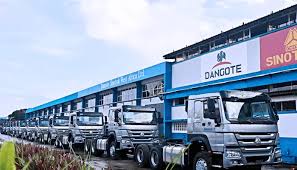
Oyedele also highlighted the success of the Road Infrastructure Tax Credit Scheme, which has seen companies such as Dangote, MTN, Lafarge and NLNG finance critical road projects. He said similar private-sector collaboration could be applied to ensure efficient use of the new funds.
While urging Nigerians to remain open-minded, the tax reform chief noted that the law provides mechanisms to reverse the policy if it fails to deliver.
“If it doesn’t work for the country, the National Assembly has the process to remove it,” he said.
The Nigerian stock market closed August with a modest 0.31% gain. Not spectacular, but considering the late-month selloffs that dragged some heavyweight stocks, many investors still found plenty of reasons to smile.
Tracked by the All-Share Index, the market kicked off at 139,863.5 points, sprinted past 146,000 in the first two weeks, only to lose steam as oil, gas, and cement giants stumbled. By the final week, the index had shed over 4,000 points, erasing much of the early momentum.
But here’s the interesting part—while big caps were nursing wounds, penny and mid-cap names, especially in the insurance space, came alive. For investors who had the patience to hold or the guts to buy early, the returns were nothing short of remarkable.
Agribusiness isn’t usually where you expect fireworks, but Ellah Lakes Plc has been full of surprises lately.
Began August at ₦9.21
Hit a record high of ₦17.65 by August 13
Closed the month lower after a sharp pullback
The company’s CEO revealed plans mid-month to expand oil palm plantations by 1,500 hectares and allocate another 100 hectares for livestock. That bit of forward-looking strategy, combined with its strong June rally, helped Ellah Lakes deliver a 346% year-to-date performance.
It wasn’t all smooth sailing—volatility was the keyword—but over 440 million shares traded in August tells you one thing: investors are paying attention.
9. Universal Insurance (53.85%)
Universal Insurance Plc rode the insurance wave beautifully.
Started the month at ₦0.78
Broke the ₦1.00 barrier
Closed August at ₦1.20
Trading activity was strong—2 billion shares exchanged hands—as investors positioned around the new Nigerian Insurance Industry Reform Act (NIIRA). The law raised capital requirements, expanded product lines, and encouraged digital adoption, all of which injected fresh optimism into the sector.
Year-to-date, Universal sits on a solid 81.8% gain
8. Linkage Assurance (55.17%)
Linkage Assurance Plc wasn’t content with just riding the wave—it carved its own lane.
Started at ₦1.45
Surged past ₦2.00, peaking at ₦2.72 mid-month
Settled at ₦2.25
The rally was underpinned by strong H1 2025 numbers:
Insurance revenue: ₦12.5 billion (vs ₦10.7 billion in H1 2024)
Premiums: ₦15.9 billion
Claims: ₦2.8 billion
With those fundamentals, Linkage’s 128.81% year-to-date performance doesn’t feel accidental.
7. Coronation Insurance (56.71%)
Coronation Insurance Plc delivered one of August’s most volatile but rewarding rides.
Opened at ₦2.31
Rocketed to ₦4.47 before sliding back
Closed at ₦3.62
H1 2025 results boosted sentiment:
Insurance revenue: ₦32.9 billion (vs ₦21.3 billion last year)
Premiums: ₦26 billion
Gross claims: ₦5.4 billion
Investors who timed this right walked away with a 56.71% August return and a 60.9% year-to-date gain.
6. NCR (Nigeria) Plc (59.31%)
Not all the action was in insurance. NCR Nigeria Plc, the fintech and tech infrastructure provider, reminded the market it’s still in play.
Started at ₦7.25
Crossed into double digits
Closed at ₦11.55
Investors rewarded NCR after its H1 2025 turnaround:
Pre-tax profit: ₦44.6 million
A huge swing from a ₦1.4 billion loss in H1 2024
That kind of reversal explains why the stock is up 131% year-to-date.
5. Regency Alliance (63.75%)
Regency Alliance Insurance Plc turned heads with a nearly 64% jump in August.
Started at ₦0.80
Climbed to ₦1.67 mid-month
Settled at ₦1.31
The company’s forecast for Q3 2025—₦1.06 billion pre-tax profit on expected ₦5.8 billion revenue—is likely keeping investors bullish. Year-to-date, Regency has advanced 74.67%.
4. Guinea Insurance (65.12%)
Guinea Insurance Plc powered through the psychological ₦1 barrier with conviction.
Opened at ₦0.86
Topped out at ₦1.77
Closed at ₦1.42
H1 2025 highlights:
Insurance revenue: ₦1.4 billion (vs ₦1.2 billion in 2024)
Premiums: ₦1.6 billion (+32% YoY)
Gross claims: ₦405.2 million
Investors who spotted this one early are now enjoying a 75.31% year-to-date return.
3. Veritas Kapital Assurance (65.35%)
Veritas Kapital’s August rally was another NIIRA-fueled run.
Began at ₦1.27
Exploded to ₦2.79 mid-month
Closed at ₦2.10
H1 2025 results added credibility:
Insurance revenue: ₦12.5 billion (up from ₦9.9 billion)
Premiums: ₦13 billion
Claims: ₦1.04 billion
The stock’s now at a 54.4% year-to-date gain, with August providing the bulk of the turnaround.
2. AIICO Insurance (91.47%)
AIICO Insurance Plc nearly doubled in August alone—an astounding 91.47% surge.
Started at ₦2.11
Rallied to ₦4.65 mid-August
Closed strong at ₦4.04
Its H1 2025 performance helped cement confidence:
Insurance revenue: ₦65.4 billion (+34%)
Premiums: ₦94 billion (+8.17%)
Claims: ₦43.3 billion
That puts AIICO at 182.5% year-to-date.
1. Mutual Benefits Assurance (114.29%)
Mutual Benefits Assurance Plc stole the show—no contest.
Opened at ₦1.82
Ripped past ₦2, then ₦3, then ₦4.45** by August 25
Closed at ₦3.90, with 838 million shares traded
The financials explain the frenzy:
Insurance revenue: ₦41.1 billion (+44.58%)
Premiums: ₦47.2 billion (+38.09%)
Claims: ₦22 billion, nearly double last year
Year-to-date? A staggering 539.3% return.
Wrapping It Up
August might have looked “muted” at first glance, but dig a little deeper and the story changes. While cement and oil weighed down the index, the insurance sector roared to life, helped along by regulatory reform and improving fundamentals.
For traders and analysts, the lesson’s clear: don’t just watch the giants. Sometimes, the real fireworks are in the mid-caps and penny stocks—the ones most people dismiss as background noise until they suddenly aren’t. And you know what? September might just have a few more surprises waiting in the wings.
Public opinion has increasingly shifted in favour of the Dangote Petroleum Refinery as it faces resistance from the Nigeria Union of Petroleum and Natural Gas Workers (NUPENG) over its plan to introduce 4,000 Compressed Natural Gas (CNG)-powered trucks into the fuel distribution network.
The refinery’s move, which aligns with Nigeria’s push towards cleaner energy alternatives, has become the subject of heated debate after NUPENG declared its intention to embark on a nationwide strike in protest. Social media platforms including X, Instagram, Facebook, and LinkedIn have since been dominated by discussions, with many Nigerians voicing support for the refinery and its push for efficiency-driven fuel logistics.
For several citizens, this confrontation is not merely a clash between a labour union and a private business. Instead, it symbolizes a broader struggle for the future of Nigeria’s energy distribution, economic growth, and the balance of power within the fuel industry.
Public Sentiment Tilts Towards Dangote
On X, a number of users expressed their disapproval of what they described as NUPENG’s disruptive tendencies. One user, @olat187, posted: “Nigerians stand with @DangoteGroup. @officialNUPENG9 has been making the lives of Nigerians unbearable for years.”
Another commentator, James O., emphasized the reliance of ordinary Nigerians on the refinery, saying: “The only business leader and saviour we have is @DangoteGroup. Nigerians are fully behind you. If they like, they should go on strike; gone are those days. Nigerians are growing beyond all this.”
Analysts and Experts Criticize Union’s Stance
Energy professionals have also joined the conversation, many of them faulting the union’s opposition to the refinery’s innovation. Prof. Olushola Bamidele illustrated the issue with a vivid analogy:
“If I decide to bypass middlemen and sell my goods directly to customers, does that give them the right to force me to stop innovating? Shouldn’t they find a way to adapt instead of blocking progress?”
Similarly, Dr. Tosan Harriman argued that the union’s resistance reflects self-interest rather than concern for Nigerians, stating: “It is clear that NUPENG is resisting change due to its restricted role in today’s evolving energy dynamics. The focus has never been about the people.”
Accusations of Manipulation and Sabotage
Other citizens accused the union of attempting to hold the country hostage. X user @Joguns remarked: “Dangote Refinery is a private business. Just as private universities aren’t bound by ASUU strikes, Dangote should have the freedom to run his business for the benefit of Nigerians.”
Suspicion of foul play also surfaced. Some online commentators speculated that alleged truck accidents linked to the refinery could have been orchestrated as acts of sabotage.
On Facebook, Gbenga Emmanuel suggested a long-term solution: “This is the time for Dangote to encourage private investors to establish filling stations nationwide that will remain loyal to the refinery’s operations.”
Fears of Foreign Influence
The conversation also took a geopolitical dimension, with some Nigerians suggesting that foreign interests may be influencing union actions.
Ebere Anosike argued: “It looks like NLC and NUPENG are being used to undermine Dangote Refinery and weaken Nigeria’s economy in order to protect foreign refineries. If true, this borders on economic sabotage, and it must be investigated.”
Growing Momentum for Change
Social media users across platforms stressed that unions should not block progress at the expense of the people. On Instagram, Adesuyi noted: “For years, NUPENG has frustrated Nigerians. Now that competition has arrived, they can’t handle it. But Nigerians will support Dangote.”
Logistics analysts also highlighted the importance of technological advancement. “Unions should not hold the country hostage. Dangote’s move represents innovation, and the nation should embrace progress instead of protest,” said @NaijaLogistics on X.
A LinkedIn contributor summed up the debate by noting: “Yes, Dangote’s approach is disruptive. But history shows that every revolution faces resistance. What Dangote is doing will one day be studied in global business schools.”
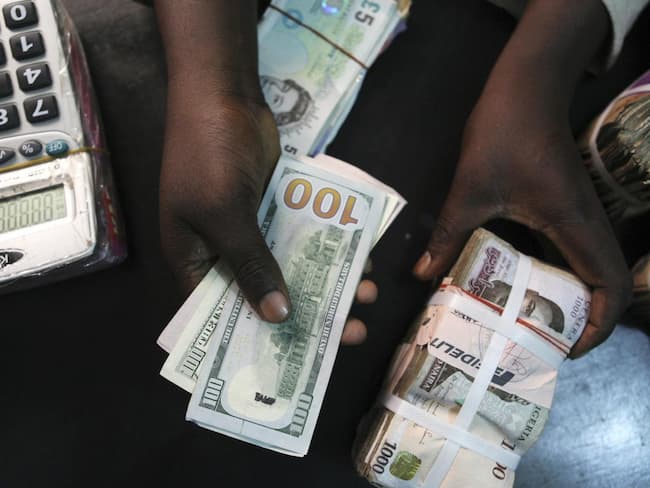
The exchange rate between the Naira and the US dollar, according to the data released on the FMDQ Security Exchange, the official forex trading portal, showed that the naira closed at 1496.00 per $1 on Tuesday, September 9th , 2025. The naira traded as high as 1508.00 to the dollar at the investors and exporters (I&E) window on Monday.
Dollar to naira exchange rate today black market (Aboki dollar rate):
The exchange rate for a dollar to naira at Lagos Parallel Market (Black Market) players buy a dollar for ₦1518 and sell at ₦1510 on Monday 8th September, 2025, according to sources at Bureau De Change (BDC).
Please note that the Central Bank of Nigeria (CBN) does not recognize the parallel market (black market), as it has directed individuals who want to engage in Forex to approach their respective banks.
Dollar to Naira Black Market Rate Today
Dollar to Naira (USD to NGN)
Black Market Exchange Rate Today
Buying Rate
₦1516
Selling Rate
₦1496
Dollar to Naira CBN Rate Today
Dollar to Naira (USD to NGN)
CBN Rate Today
Highest Rate
₦1513
Lowest Rate
₦1508
Please note that the rates you buy or sell forex may be different from what is captured in this article because prices vary.
Global equities began the week on an upward swing as the U.S. dollar weakened broadly, despite edging higher against the Japanese yen. Investor sentiment was largely influenced by ongoing political uncertainties across several major economies, according to Reuters reports.
In Argentina, the ruling party under President Javier Milei suffered a major electoral setback in Buenos Aires province, sending the peso to a historic low with losses of up to 7.5 per cent. The shock result also drove Argentine stocks down by more than 10 per cent, intensifying economic instability.
Japan also faced political turbulence after the resignation of Prime Minister Shigeru Ishiba, which triggered a fall in the yen as markets braced for the likelihood of a more dovish leadership.
Meanwhile, France’s political climate remained uncertain as Prime Minister François Bayrou risked losing his position, sparking fresh concerns about policy stagnation in the eurozone’s second-largest economy.
In Indonesia, the stock market surrendered early gains to end lower despite a stronger rupiah, following the unexpected removal of Finance Minister Sri Mulyani Indrawati in a cabinet reshuffle.
Investors also responded to expectations that the U.S. Federal Reserve could move to cut interest rates soon, after August’s labour data came in weaker than anticipated. This contributed to a fourth straight day of declines in Treasury yields.
MSCI’s index tracking global stocks climbed 0.35 per cent to 959.07, while the pan-European STOXX 600 index gained 0.28 per cent. Emerging market equities advanced 0.58 per cent, buoyed by improved risk appetite.
In Asia, MSCI’s broadest index of Asia-Pacific shares outside Japan rose 0.67 per cent, while Japan’s Nikkei index jumped 1.45 per cent to close at 43,643.81 points.
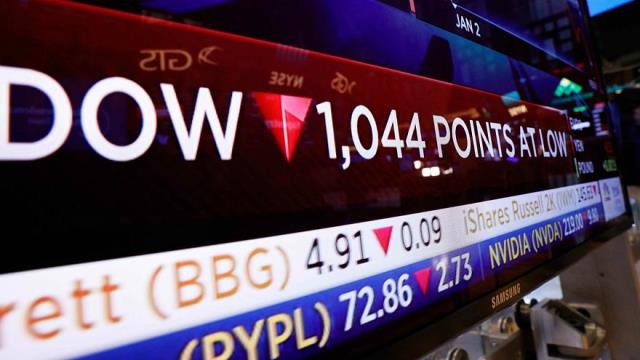
On Wall Street, performance was mixed. The Dow Jones Industrial Average dipped slightly, while the S&P 500 and Nasdaq added 0.31 per cent and 0.82 per cent, respectively, as traders awaited crucial economic reports scheduled later in the week.
Commodity markets also saw notable movements. Oil prices edged higher, while gold surged past $3,600 an ounce, supported by rising speculation that the Fed could announce an interest rate cut in its next meeting.
Analysts say global investors are carefully weighing economic optimism against heightened political risk in several regions. Additionally, the weakening dollar is seen as a catalyst boosting returns in foreign stock markets.
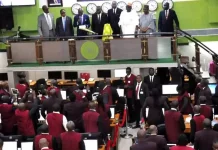
The Nigerian Exchange (NGX) opened the new trading week on a bullish trajectory, recording a significant gain of N263 billion in market capitalisation, as investor sentiment strengthened in consumer goods and insurance equities. Leading the rally were PZ Cussons Nigeria Plc and University Press Plc, which saw impressive gains in Monday’s session.
At the close of trading, the market capitalisation rose to N88.2 trillion, up from N87.9 trillion in the previous session. Similarly, the All-Share Index (ASI) appreciated by 414.74 points, or 0.3 per cent, settling at 139,394.75 points.
Trading activity showed a total of 947.83 million shares worth N17.96 billion exchanged across 36,006 deals. While the volume of shares traded dropped by 48 per cent compared to the last session, transaction value increased by 12 per cent, with the number of deals also up by 46 per cent.
Market breadth reflected bullish sentiment, closing with 41 gainers against 18 losers. PZ Cussons Nigeria and University Press Plc topped the chart, each gaining 10 per cent, to close at N35.20 and N5.50 per share, respectively. Ellah Lakes Plc appreciated by 9.94 per cent to N14.27, while Legend Internet advanced 9.90 per cent to N5.44.
On the other hand, Nigerian Enamelware Plc led the day’s losers, dipping 10 per cent to N35.10 per share. Industrial and Medical Gases Nigeria Plc also shed 10 per cent to N33.30, alongside Union Dicon Salt Plc and Thomas Wyatt Nigeria Plc, both losing 10 per cent to settle at N10.80 and N2.70, respectively.
In terms of volume, FCMB Group Plc dominated trading with 460.95 million shares worth N4.73 billion. Universal Insurance followed with 42.22 million shares valued at N53.39 million, while Royal Exchange Plc accounted for 35.22 million shares worth N72.49 million.
By value, FCMB also topped the chart with N4.73 billion, followed by Zenith Bank (N1.73 billion), GTCO (N1.60 billion), Dangote Sugar (N1.41 billion), and Nestle Nigeria (N930.13 million).
Sectoral indices reflected mixed performance. The NGX Insurance Index led with a 3.16 per cent gain, while the Consumer Goods Index rose 0.6 per cent. The Main Board Index appreciated by 0.54 per cent, the Top 30 Index advanced 0.11 per cent, and the Industrial Index closed slightly higher at 0.02 per cent. Meanwhile, the Oil and Gas Index closed flat.
Despite this positive start, the Exchange posted a weekly loss of 0.64 per cent and a four-week decline of 4.36 per cent, though year-to-date gains remain strong at 35.43 per cent, highlighting continued interest in blue-chip stocks.
This rebound comes after the market ended last week in the red, with investors losing N833 billion in a holiday-shortened four-day trading session due to the Eid el-Maulud celebration.
Nigerian Govt Spends N60bn Annually On Pipeline Repairs
Nigeria is set to take a central role at the upcoming global gas summit in Milan, Italy, from September 9 to 12, where it will lead a delegation of six African nations.
Alongside Nigeria, other participating African countries include Algeria, Egypt, Morocco, Mauritius, Libya, and Congo. They will join delegates from more than 143 countries across Asia, Europe, North America, and South America at the Gastech Exhibition and Conference — one of the world’s most influential gatherings for the energy sector.
The summit will bring together government leaders, top industry CEOs, policymakers, and innovators to address urgent global energy challenges and forge strategic partnerships to accelerate sustainable solutions.
Nigeria’s delegation will present its national gas strategy across four core areas: natural gas and LNG development, artificial intelligence-driven energy innovations, climate technology, and hydrogen as a clean fuel alternative.
According to Mrs. Anne-Marie Palmer-Ikuku, Manager of Corporate Communications and Public Affairs at Nigeria Liquefied Natural Gas (NLNG), the company will have a strong presence at the event, with senior executives participating in high-level discussions.
NLNG’s Managing Director, Dr. Philip Mshelbila, is scheduled to speak on September 11 during a panel on “Advancing Progress on Methane Abatement through Strategic Cooperation and the Mobilisation of Finance and Technologies.” He is expected to highlight NLNG’s leadership in climate action, sustainability, and collaborative initiatives to cut methane emissions in line with global decarbonization goals.
Deputy Managing Director, Mr. Olakunle Osobu, will contribute to a panel session on “Operational Excellence through the Application of Artificial Intelligence Technologies,” while the General Manager for External Relations and Sustainable Development, Mrs. Sophia Horsfall, will address “Nurturing the Workforce of Tomorrow through Upskilling and Retention Strategies.”
Other NLNG representatives, including General Manager of Production, Mr. Nnamdi Anowi, will engage in the Gastech Future Leaders session, offering insights to young professionals exploring careers in Nigeria’s energy industry.
Nigeria’s official delegation to the summit will feature key government figures such as Mr. Ekperikpe Ekpo, Minister of State for Petroleum Resources (Gas); Chief Adebayo Adelabu, Minister of Power; and Senator John Enoh, Minister of State for Industry. Also in attendance will be Mr. Farouk Ahmed, Chief Executive Officer of the Nigerian Midstream & Downstream Petroleum Regulatory Authority (NMDPRA), among others.
The conference represents an opportunity for Nigeria to strengthen its energy diplomacy, deepen partnerships, and advance its ambitions for a low-carbon, resilient future.
The Nigerian naira appreciated to ₦1,506 per U.S. dollar at the official market, buoyed by an increase in the country’s foreign reserves, which reached $41.5 billion.
According to the Central Bank of Nigeria (CBN), the official FX spot rate closed at ₦1,506.84/$1 on Monday, supported by steady dollar inflows and reduced demand pressures. This marked a notable improvement from last week’s ₦1,514.86/$1 exchange rate.
Currency analysts attributed the strengthening to improved U.S. dollar liquidity in the market, suggesting that the naira could remain relatively stable in the short term despite global economic headwinds and fluctuations in the U.S. dollar index.
Last week, the local currency appreciated by ₦16.70 to close at ₦1,514.87/$1 in the Nigerian Autonomous Foreign Exchange Market (NAFEM). Meanwhile, in the parallel market, the exchange rate held steady at ₦1,540/$1.
Market data showed total FX inflows amounted to $567.2 million during the week, down from $706.7 million recorded the previous week. Foreign Portfolio Investments (FPIs) were the largest contributors, bringing in $184.1 million (32.5%). The CBN also intervened with $173.1 million (30.5%), while exporters and non-bank corporates contributed 16.6% and 16.2%, respectively. Other inflows accounted for 4.3%.
Nigeria’s external reserves rose to $41.499 billion, supported by hydrocarbon revenues and other foreign sources despite volatility in global oil prices.
Brent crude oil prices slipped 3.85% last week, closing at $65.5 per barrel compared to $68.12 in the prior week. This decline brought the year-to-date loss to 12.25%, with the 2025 average now at $69.98 per barrel — about 12.37% lower than in 2024.
Oil prices were initially boosted by concerns over new U.S. sanctions on Iranian shipments and steady Asian demand. However, the rally reversed after a weaker U.S. jobs report raised fears of slowing global oil consumption. Rising U.S. crude inventories and speculation of additional OPEC+ supply also weighed heavily on market sentiment.
Looking ahead, analysts expect continued volatility in oil prices, with the balance between global demand signals and supply adjustments by major producers shaping the market trajectory. Nigeria’s currency stability, they warn, will remain closely tied to developments in the global energy market and dollar inflows.
Interswitch Group, one of Africa’s leading integrated payments and digital commerce companies, recently hosted a high-level delegation from the British Deputy High Commission and the UK Government’s Department for Business and Trade (DBT) at its headquarters in Victoria Island, Lagos.
The visiting delegation, which was led by the British Deputy High Commissioner, Mr. Jonny Baxter, alongside the UK’s Trade Envoy to Nigeria, Florence Eshalomi MP; Director General – Investments in Africa, Ceri Smith; His Majesty’s Deputy Trade Commissioner in Africa, Ben Ainsley; Country Director, Department for Business and Trade, Mark Smithson; Deputy Country Director/Investment Officer, Morayo Adekunle; and Private Secretary to the DG Investments, James Harding.
On the Interswitch side, the delegation was received by Mitchell Elegbe, Founder and Group Managing Director, Interswitch Group, joined by senior executives including Akeem Lawal Managing Director, Payment Processing and Switching (Interswitch Purepay) John Maguire, Group Chief Financial Officer; Chinyere Don-Okhuofu, Managing Director, Interswitch Industry Ecosystems (Interswitch Indeco); Vincent Ogbunude; Managing Director, Payment Tokens (Verve International); Ndifreke Nkose Executive Vice President, Strategy & Chief of Staff, and Adaobi Okerekeocha, Chief Innovation Officer.
Discussions during the visit centred on strengthening bilateral trade ties, exploring potential collaboration opportunities, and identifying avenues for partnership to support Interswitch’s international growth and expansion plans.
Speaking during the engagement, Mitchell Elegbe, Founder & GMD of Interswitch Group, highlighted the significance of partnerships in driving innovation and financial inclusion across Africa’s digital payments ecosystem.
“As we continue to scale our operations and deepen our impact across the continent, collaborations with global partners like the UK present invaluable opportunities to accelerate growth, expand access, and deliver transformative financial solutions,” he said.
The UK delegation also emphasized the UK government’s commitment to supporting strategic investments in Nigeria and fostering stronger trade relations between both countries, particularly in sectors such as technology, financial services, and digital infrastructure.
The visit underscores Interswitch’s role as a key player in Africa’s rapidly evolving digital economy and reaffirms the importance of international collaboration in unlocking sustainable economic growth.
The Central Bank of Nigeria (CBN) provided 30.5% of U.S. dollar inflows into the official foreign exchange (FX) market last week, a move that contributed to the strengthening of the naira.
The apex bank’s sustained interventions continue to influence the direction of the exchange rate, while investor confidence has remained firm amid the steady inflow of foreign exchange. Analysts have linked this resilience to the recent growth in Nigeria’s external reserves, which serve as a buffer to the CBN’s efforts in stabilizing the naira.
As part of its measures to boost dollar supply, the CBN issued Open Market Operation (OMO) bills to foreign portfolio investors in a bid to attract hard currency. Market data showed that inflows into the official FX window have been on a mild decline, although demand pressures for the dollar were described as minimal despite occasional surges.
According to Coronation Merchant Bank’s research report, total FX inflows closed the week at $567.2 million, compared to $706.7 million recorded in the previous week. The report highlighted that foreign portfolio investors led inflows with $184.1 million, representing 32.5% of the market’s total.
The CBN followed closely, injecting $173.1 million, which accounted for 30.5% of inflows into the official market. Exporters contributed 16.6% of inflows, while non-bank corporates accounted for 16.2%. Other sources made up the remaining 4.3%.
Meanwhile, the naira appreciated by 1.10% to close at ₦1,514.87 per U.S. dollar in the Nigerian Autonomous Foreign Exchange Market (NAFEM). In the parallel market, the currency remained stable at ₦1,540 per dollar, leaving a spread of ₦26.
With the CBN actively supporting liquidity in the market and external reserves on the rise, analysts believe Nigeria’s exchange rate stability will continue to improve in the short to medium term.
The Nigerian Exchange (NGX) began the week on a bullish note as the All-Share Index (ASI) advanced by 0.30% on Monday, resulting in a gain of over ₦262 billion in investors’ portfolio value.
The market’s positive performance was largely driven by renewed bargain hunting in previously oversold medium and large-cap stocks across key sectors. Analysts noted that investors returned from the holiday period with strong interest in equities such as PZ, ELLAHLAKES, AIICO, TRANSPOWER, and DANGSUGAR.
At the close of trading, the ASI added 414.74 points to settle at 139,394.75. Market capitalisation followed the same trajectory, climbing to ₦88.20 trillion. Despite the gains, activity on the floor of the exchange was mixed, with trade volumes declining by 47.50%, while total value of transactions rose by 14.50%.
Data from Atlass Portfolio Limited revealed that 947.87 million units of shares worth ₦17.97 billion were exchanged in 36,036 deals. FCMB led both in volume and value, accounting for 48.68% of shares traded and 26.38% of market value, respectively. Other active stocks included UNIVINSURE, ROYALEX, ZENITHBANK, and FIRSTHOLDCO.
On the gainers’ chart, PZ and UPL topped with a 10% price appreciation each. They were followed closely by ELLAHLAKES (+9.94%), LEGENDINT (+9.90%), NCR (+9.84%), and AIICO (+9.74%). In total, 41 stocks appreciated.
However, 17 equities closed in the red. IMG, ENAMELWA, THOMASWY, and UNIONDICON all shed 10% each, while ETERNA lost 9.36%, TRANSCORP declined by 7.34%, FIRSTHOLDCO dipped 5.57%, and LIVESTOCK dropped 4.52%.
Sectoral performance was largely positive. Insurance stocks gained 3.16%, consumer goods advanced by 0.60%, and industrial goods edged higher by 0.02%. The banking index was the only laggard, down by 0.53%, while the oil and gas sector closed flat.
With the bullish breadth of 41 gainers against 17 losers, analysts say the NGX is set to sustain a positive trend if bargain hunting continues in the coming sessions.
When FIFA announced that the 2026 World Cup would be the biggest tournament yet—48 teams, hosted across Canada, Mexico, and the United States—the footballing world braced for a spectacle unlike anything seen before. With expanded slots, new nations breaking through, and old giants fighting for redemption, qualifying has already been a rollercoaster of emotions.
So far, 17 nations have punched their golden ticket to North America. Some were expected, others surprised everyone, and a few historic firsts have added flavor to the journey. But with dreams realized, there are also heartbreaks—79 nations already know they won’t be boarding the plane.
Let’s walk through the teams that have secured their places, how they did it, and what the expanded format could mean for the global game.
The Hosts: A Trio With Different Stories
Canada – Back-to-Back at Last
Canada are making history by appearing in consecutive World Cups for the first time ever. Their only previous outings—1986 in Mexico and 2022 in Qatar—both ended in group-stage exits without a win. But this Canadian side is not the same old story. With Alphonso Davies, Jonathan David, and a new wave of young talent, the Maple Leafs want more than just participation. Their home advantage could give them that extra edge.
Mexico – The Evergreen Hosts
If hosting World Cups was a competition of its own, Mexico would be champions. 2026 will mark El Tri’s third time welcoming the globe, after iconic tournaments in 1970 and 1986. The pressure? Immense. Mexico have reached the quarterfinals twice, both on home soil. Fans will expect nothing less—and maybe hope for a first-ever semifinal.
USA – Eyes on Progress
For the U.S., football (or soccer, if you must) is more than just a sport; it’s a growing cultural force. The U.S. returns as co-hosts for the second time since 1994, but the team itself has matured. A talented squad led by Christian Pulisic and Weston McKennie wants to surpass their Round of 16 finish in Qatar. Remember their semifinal appearance in 1930? Too long ago—American fans crave a modern breakthrough.
Asia Rising: AFC’s Contenders
Japan – The Consistent Samurai Blue
Japan coasted through qualification, booking their ticket with three games to spare. This will be their eighth consecutive World Cup. Known for technical discipline and relentless energy, Japan are no longer just participants—they’re genuine contenders to make deep runs, as seen in Qatar when they stunned Germany and Spain.
IR Iran – Drama to the End
Iran never seem to qualify the easy way. Against Uzbekistan, they twice had to come from behind before salvaging a 2-2 draw that sealed their spot. This will be their fourth successive appearance, a testament to their growing consistency in Asian football.
Korea Republic – A Football Staple
South Korea simply refuse to miss World Cups. Their 2-0 win over Iraq confirmed an 11th straight appearance, making them Asia’s most consistent representative. Everyone remembers their fairytale semifinal run in 2002—could they surprise the world again?
Australia – Fighting Till the End
The Socceroos booked a sixth consecutive World Cup spot with a gritty comeback against Saudi Arabia. They’re no strangers to tough qualifiers, but the bigger question is whether they can move past the Round of 16 ceiling that has haunted them.
Uzbekistan – A Dream Realized
This one is historic. Uzbekistan have qualified for the World Cup for the very first time. After years of near-misses, heartbreaks, and being labeled Asian football’s eternal bridesmaid, the dream is finally reality. Expect emotional scenes when they step onto the pitch in North America.
Jordan – Breaking New Ground
Another first-timer—Jordan’s victory over Oman, coupled with Iraq’s defeat, sealed their maiden ticket. Their footballing journey has often been overshadowed by regional giants, but in 2026, Jordan will get their chance on the global stage.
South America’s Giants and Surprise Packages
Argentina – Champions Defend Their Crown
The reigning champions wasted no time. Argentina clinched qualification when Bolivia and Uruguay shared a goalless draw, confirming their spot. Lionel Messi may or may not be there, but the Albiceleste are arriving as kings of the world.
Brazil – Always There
If there’s one constant in life, it’s Brazil at the World Cup. Ancelotti’s men secured qualification with a tight 1-0 win over Paraguay, keeping their 100% record of attending every edition alive. For a nation with five titles, expectation is always sky-high.
Uruguay – Bielsa’s New Era
Under Marcelo Bielsa, Uruguay look fierce again. A convincing 3-0 win against Peru sealed their place, making it their fifth consecutive appearance. With Darwin Núñez and Federico Valverde leading the charge, La Celeste are not just showing up—they’re gunning for glory.
Colombia – Back From the Cold
Colombia missed Qatar, and the absence was felt. But they’ve returned in style, hammering Bolivia 3-0 to clinch their place. With James Rodríguez and a fresh generation of stars, Los Cafeteros want to revive the spirit of 2014, when they danced into the quarterfinals.
Paraguay – Finally Back
For the first time since 2010, Paraguay are back. A goalless draw with Ecuador sealed it. Their return feels like a homecoming for South America’s traditional powerhouses.
Ecuador – Quiet but Consistent
Ecuador don’t always make headlines, but they’re quietly becoming regulars. Their draw in Lima confirmed another ticket, making it their fifth appearance this century.
The Atlas Lions made history in Qatar as the first African semifinalists. Now, they’re back with an emphatic 5-0 thrashing of Niger to become the first African team confirmed for 2026. Morocco’s mix of European-based stars and tactical discipline makes them one of Africa’s brightest hopes again.
Oceania’s Representative
New Zealand – The All Whites Return
New Zealand overcame New Caledonia 3-0 to book their place. This will be their third appearance after 1982 and 2010. While Oceania qualifiers often struggle on the global stage, New Zealand’s resilience and growing professionalism shouldn’t be underestimated.
Teams That Fell Short
While 17 nations celebrate, 79 others are left with heartbreak. Heavyweights like Chile and China crashed out, reminding us that reputation alone doesn’t win qualification. For fans in Dhaka, Santiago, or Hanoi, the dream now shifts to 2030.
Among the eliminated:
South America: Chile, Peru
Asia: China PR, India, Vietnam, and 29 more
Africa: Kenya, Congo, Togo, among others
Oceania: Fiji, Tahiti, Tonga
Concacaf minnows: Bahamas, Puerto Rico, US Virgin Islands
Each elimination tells a story—some of missed chances, others of wider struggles in football development.
With 48 spots, the qualification road isn’t finished. Europe’s giants still need to fight it out for 16 places, and several playoff spots remain. The expanded format also means more debutants could emerge, turning the World Cup into an even more global celebration.
And honestly, isn’t that the beauty of football? The World Cup isn’t just about winners and losers—it’s about dreams. From Canada’s back-to-back appearance to Uzbekistan’s long-awaited breakthrough, every team that makes it reshapes the narrative of the world’s game.
2026 is shaping up to be historic. Bigger, louder, more diverse. And whether your team is in or watching from the sidelines, one thing is certain: the world will be watching.