







Home Blog Page 84

Nigeria Eurobond Yields Dip Below 8% Amid Bargain Hunting

DMO Set To Auction N150bn Bond On FG's Behalf

Foreign portfolio investors ramped up purchases of Nigeria’s U.S. dollar-denominated sovereign bonds last week, supported by expectations of a U.S. Federal Reserve rate cut.

The Nigerian Eurobond segment ended the week on a strong note, buoyed by broad-based demand across the curve. Average yields fell by 15 basis points week-on-week to 7.86%, as investors sought higher returns from emerging markets against the backdrop of weakening U.S. economic data.

Nigeria’s dollar bonds currently offer about 8% annual returns—double the yield on 10-year U.S. Treasuries and broadly in line with peer African issuers. Investment banking firm Cowry Asset Limited noted that demand was strongest for mid- to long-dated maturities, reflecting appetite for duration amid falling U.S. Treasury yields.

AIICO Capital Limited highlighted that African Eurobonds traded mixed through the week but ended firmer as attention turned to the Fed’s September policy meeting. Early gains in Nigerian paper were driven by weaker U.S. payroll figures and mounting confidence in a rate cut, with markets fully pricing in a 25-basis-point reduction and assigning a slim probability to a deeper 50-basis-point move.

While sentiment wavered midweek following sharp downward revisions to U.S. job growth, softer wholesale inflation and cooling producer prices reinforced expectations of monetary easing. By Thursday, U.S. CPI data showed headline inflation rising to 2.9% year-on-year, while jobless claims climbed, strengthening conviction that the Fed will act.

Investors also tracked geopolitical risks, including heightened U.S.–Russia tensions and renewed tariff proposals by former President Trump. Despite these uncertainties, Nigerian Eurobonds closed the week firmer, with mid-yields consolidating around 7.9%.

Markets are now pricing over a 90% chance of a 25-basis-point cut at the Fed’s September meeting and see roughly 75% odds of three rate cuts in total by year-end, reinforcing expectations of sustained appetite for higher-yielding emerging-market assets.
Naira Gains Momentum On Strong FX Inflows, CBN Support

Federation Account Amasses Over ₦5trn In 6months- RMAFC

Sustained foreign exchange inflows and interventions by the Central Bank of Nigeria (CBN) are helping to keep the naira on course to test the next threshold. Market data suggest growing optimism that the currency could break the psychological barrier of N1,500 per dollar.

The local currency traded briefly below the psychological level of N1500 per dollar last week as the authority continued to fund the liquidity gap in the forex market.

A slew of analysts predict the naira will keep the momentum in the short term, though exchange rates expectations differ between N1500 to N1600 range per dollar at the official market.

Last week, the naira traded stronger throughout, supported by ample dollar liquidity from foreign portfolio investors (FPIs), oil exporters, and other offshore flows.

Early in the week, trades closed between N1500–N1514/$, with expectations tilted toward continued appreciation. Midweek, the CBN stepped in with moderate interventions, selling $29 million across sessions, Cordros Capital Limited reported.

The sufficient FX liquidity inflows further anchored naira exchange rates lower. AIICO Capital Limited said in a noted that fixing improved consistently, appreciating from N1507.89/$ to N1503.11/$.

Later in the week, activity slowed, spreads tightened, and demand modestly improved as sell pressure eased, though liquidity conditions remained favorable.

By week’s close, trades ranged between N1498.00–N1503.50/$, with the naira appreciating overall by 88.25 bps week on week to N1,501.4991 per dollar on Friday.

Updated FX revealed that gross external reserves rose $125.55 million to $41.66 billion. In the near term, the FX market is expected to maintain its current stability, AIICO Capital Limited reported.

Oil prices climbed Friday after a Ukrainian drone strike halted exports from Russia’s largest western port, though U.S. demand concerns capped gains.

Brent rose 0.93% to $66.99, and WTI gained 0.51% to $62.69. Gold advanced 0.4% to $3,648.55, near record highs, supported by weak U.S. labour data and Fed rate-cut bets.

Futures settled 0.3% higher at $3,686.40, marking a fourth straight weekly gain. Markets are closely monitoring potential sanctions or tariffs from the Trump administration targeting Indian and Chinese imports of Russian crude oil. 

Forex Majors Strengthen As U.S. Dollar Slides Before Fed Decision

Dollars

Major global currencies advanced against the U.S. dollar as investors positioned themselves for possible Federal Reserve rate cuts next week amid weak U.S. labour market data.

The greenback struggled throughout the week, pressured by disappointing economic indicators and renewed trade tensions. Market data showed:

  • The dollar slipped 0.17% to 147.22 yen
  • Fell 0.22% to 1.3834 Canadian dollars
  • The euro climbed 0.34% to $1.1734
  • Sterling gained 0.32% to $1.3572

The pound’s rally comes ahead of the Bank of England’s policy decision, while the euro held near a seven-week high around $1.17 after the UK economy reported zero growth in July.

In the U.S., jobless claims jumped to their highest level in nearly four years, overshadowing persistently high inflation of 2.9%. This labour-market weakness has intensified expectations of a Fed rate cut at the September 18 Federal Open Market Committee (FOMC) meeting.

Despite inflationary risks from tariffs and trade frictions, markets increasingly believe a cut is imminent, encouraging risk-taking across forex and commodities.

Gold has also seen a surge in bullish bets, with investors hedging against dollar weakness and concerns over Fed policy independence.

With traders bracing for the Fed’s upcoming decision, volatility in forex markets is expected to intensify in the coming days.

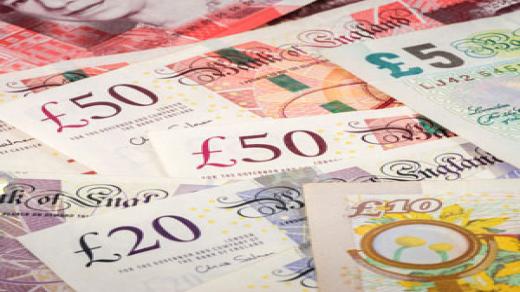
British Pound Holds Steady At $1.35 As Rate Cut Confidence Wavers

The British pound steadied near $1.35 ahead of next week’s Bank of England (BoE) monetary policy decision, following disappointing economic data that showed weakness at the start of the third quarter.

Official figures revealed that the UK economy stagnated in July, while industrial production unexpectedly declined by 0.9%, raising concerns that tax hikes and tariffs are weighing on consumer and business activity.

Chancellor Rachel Reeves is preparing to unveil fresh tax measures in November to address a widening budget deficit, further stoking uncertainty.

The BoE’s Monetary Policy Committee is expected to keep interest rates unchanged at 4.00% during its September meeting, following its rate cut in August. However, analysts anticipate another divided vote, with some members pushing for a further 25 basis points cut due to labour market slack.

Stefan Koopman, Senior Macro Strategist at RaboResearch, noted:

“We expect a hold in September, but conviction for a November rate cut is fading given sticky inflation, despite growing labour market weakness.”

Sterling continues to benefit from the BoE’s hawkish stance, which has preserved its appeal as one of the few major currencies yielding 4% returns on one-week deposits.

However, investor sentiment remains cautious as the UK still bears the highest sovereign borrowing costs in the G7. Concerns persist around inflation stickiness, rising public debt, and doubts about productivity-driven growth.

With inflation having doubled year-on-year due to energy price pass-throughs, markets are increasingly focused on the BoE’s November 6 meeting, which comes just before the government’s budget presentation.

Analysts believe the September meeting is unlikely to spark major volatility for sterling, but pressure could build later in the year as fiscal and monetary policy decisions converge.

Court Grants EFCC Order To Detain Sujimoto Luxury CEO Over N5.7bn Contract Scandal

The Economic and Financial Crimes Commission (EFCC) has obtained a court order permitting the detention of the Chief Executive Officer of Sujimoto Luxury Construction Limited, Sijibomi Ogundele, over allegations linked to an abandoned N5.7 billion contract.

Mr. Ogundele is accused of failing to execute the state-approved project, refusing to return to site, and ignoring repeated calls for accountability. After allegedly snubbing several EFCC invitations, the anti-graft agency declared him wanted on September 5.

Before turning himself in, the luxury real estate mogul defended himself on social media, insisting that inflation and the underpricing of the project made execution impossible.

The Enugu State Government, however, maintains that Ogundele received N5.7 billion as 50% mobilisation fee for the construction of 22 Smart Green Schools within six months but failed to deliver.

“The state government released ₦5,762,565,475.25 as mobilisation to fast-track the project. Instead of delivering, Ogundele engaged unqualified workers, produced substandard work, and later abandoned the sites,” the government stated.

A joint inspection by the Ministry of Works and EFCC in May 2025 revealed little or no progress at the sites nearly a year after the contract was awarded. Most sites were only at foundation or blockwork stages.

Following Ogundele’s alleged disappearance, the state reassigned the projects to other contractors who are reportedly meeting deadlines and delivering quality work.

The EFCC, which had already frozen Sujimoto Luxury’s accounts, confirmed that Ogundele would face interrogation with senior Enugu State officials next week.

“He is expected to either account for the N5.7 billion or refund it. The case looks straightforward,” an EFCC insider disclosed.

The matter remains under active investigation as the commission intensifies efforts to recover the alleged diverted funds.

Six Nigerian Banks Cross CBN Recapitalization Threshold Ahead Of Deadline

With six months to the Central Bank of Nigeria’s (CBN) recapitalization deadline, six of the 13 listed banks on the Nigerian Exchange (NGX) have already met the new capital benchmarks.

The lenders include Access Bank, Zenith Bank, Guaranty Trust Bank (GTBank), Wema Bank, Jaiz Bank, and Stanbic IBTC.

In March 2024, the CBN announced sweeping recapitalization measures requiring commercial banks with international authorization to raise their capital base to ₦500 billion, while those with national licenses must attain ₦200 billion. Regional banks were mandated to reach ₦50 billion, and non-interest banks with national and regional licenses must achieve ₦20 billion and ₦10 billion respectively. Compliance is due by March 2026.

Access Bank

Access Bank Holdings became the first Tier-1 bank to surpass the ₦500 billion requirement, securing approvals for a ₦351 billion rights issue in December 2024. This raised its share capital and premium to ₦594.90 billion, with shares outstanding climbing to 53.31 billion.

Zenith Bank

Zenith Bank’s audited 2024 financials showed capital and premium of ₦614.65 billion, well above the CBN threshold. The bank added 9.67 billion new shares, bringing its total shares outstanding to 41.07 billion.

GTBank

Guaranty Trust Holding Company (GTCO) confirmed compliance in August 2025, reporting an increase in share capital from ₦138.19 billion in 2023 to ₦504.03 billion. This was achieved through a ₦365.85 billion capital raise, with shares outstanding rising by 6.99 billion units.

Stanbic IBTC

Stanbic IBTC met the ₦200 billion requirement through a ₦148.7 billion rights issue in June 2025, boosting share capital and premium above the threshold. Shares outstanding increased from 12.96 billion to 15.90 billion.

Wema Bank

Wema Bank announced in September 2025 that it had crossed the ₦200 billion mark, following a ₦150 billion rights issue. Its capital base now stands at ₦214.7 billion, up from ₦15.13 billion in 2023.

Jaiz Bank

Nigeria’s only listed non-interest bank, Jaiz Bank, achieved its ₦20 billion recapitalization target, with its H1 2025 report showing a rise to ₦28.67 billion in share capital and premium, up from ₦18.62 billion in 2023.

Collectively, the six banks have raised approximately ₦1.4 trillion in fresh capital while expanding their share base by more than 55 billion units.

Other lenders, including UBA and First Bank, are still in the process of raising the required funds through rights issues and private placements.

The recapitalization drive is viewed as a crucial step toward strengthening Nigeria’s banking sector, enhancing resilience, and boosting investor confidence ahead of the 2026 deadline.

Abdulsamad Rabiu Set To Earn ₦216 Billion Dividend From BUA Foods

BUA Foods Leads 17 Gainers As NGX Market Capitalization Dip

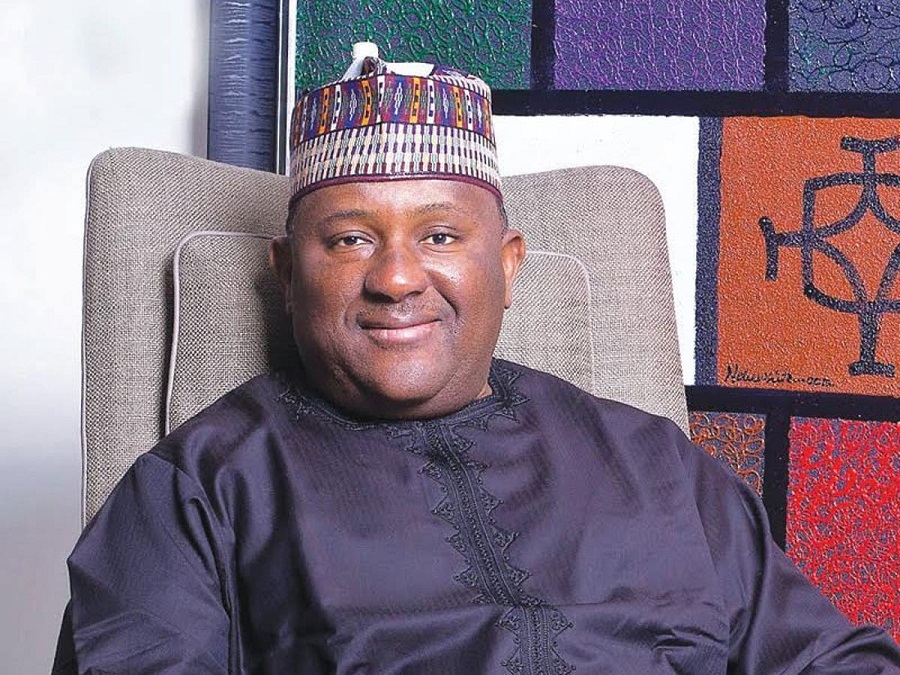
Billionaire industrialist Abdulsamad Rabiu is set to receive ₦216.7 billion in dividends following shareholder approval at the fourth Annual General Meeting (AGM) of BUA Foods Plc, reinforcing his dominant role in Nigeria’s food and industrial sector.

The AGM, held at the Transcorp Hilton Hotel in Abuja, approved a dividend of ₦13 per share for the financial year ending December 31, 2024. With Rabiu controlling 16.67 billion shares, his payout underscores his position as the single largest beneficiary.

Rabiu, who also controls a majority stake in BUA Cement Plc, continues to consolidate his position as one of Africa’s wealthiest businessmen. According to recent filings with the Nigerian Exchange, Rabiu owns 95 percent of BUA Foods and 98.2 percent of BUA Cement, making him one of the most powerful figures in Nigeria’s consumer and industrial markets.

At the AGM, shareholders also re-elected directors Kabiru Rabiu and Chimaobi Madukwe, approved auditor remuneration, and appointed members to the statutory audit committee. They further authorized recurrent related-party transactions, aligning with Nigerian Exchange Limited regulations.

Rabiu’s dividend windfall comes at a time of surging investor appetite for BUA stocks, which boosted his wealth by ₦2.7 trillion in August alone, according to Nairalytics data. His net worth currently stands at $7.2 billion.

The billionaire’s rise stems from decades of strategic investments and consolidation, notably his 2020 merger of Obu Cement with Cement Co. of Northern Nigeria to form BUA Cement Plc. Today, BUA’s cement and food businesses form the backbone of his empire, ensuring strong returns despite Nigeria’s inflationary and currency challenges.

The ₦216 billion dividend highlights not only Rabiu’s commanding stake but also the growing profitability of BUA Foods, which remains a key player in Nigeria’s consumer goods industry.

BBNaija Season 10: Denari And Tracy Exit As Evictions Shake Up House

The Big Brother Naija Season 10 reality show delivered fresh drama on Sunday as housemates Denari and Tracy were evicted during the live eviction show in Lagos.

The electrifying event, anchored by host Ebuka Obi-Uchendu, kept audiences engaged as fans anticipated which contestants would be leaving the house.

Denari was first to exit, with Ebuka jokingly attributing his eviction to his fondness for fellow housemate Doris. On stage, Denari revealed that he was keen on pursuing careers in acting and music while teasing that he could even host Big Brother Naija himself—a comment that drew laughter from viewers.

Tracy soon followed as the second evictee of the night. Before her exit, Ebuka criticised the housemates’ underwhelming performance in their weekly wager and questioned Thelma’s leadership style as Head of House. Thelma defended her approach, insisting she was not in the house to foster friendships but to play her own game.

In her post-eviction chat, Tracy admitted she was emotionally drained, describing her stay as filled with “ups and downs.” Nonetheless, she expressed gratitude for the experience, adding that her future plans remain open.

Ebuka also highlighted Tracy’s close bond with fellow housemate Zita, referring to their “sismance” as one of the notable dynamics in the house.

The eviction of Denari and Tracy adds another twist to the highly competitive show, which continues to captivate audiences across Nigeria and beyond. Fans are now waiting to see who will be the next to leave the house and how alliances among the remaining housemates will shift in the coming weeks.

US Reduces Nigerian Imports By Over 40% Amid Tariff Tensions

Importers, Exporters Will Benefit From Dry Ports –FG

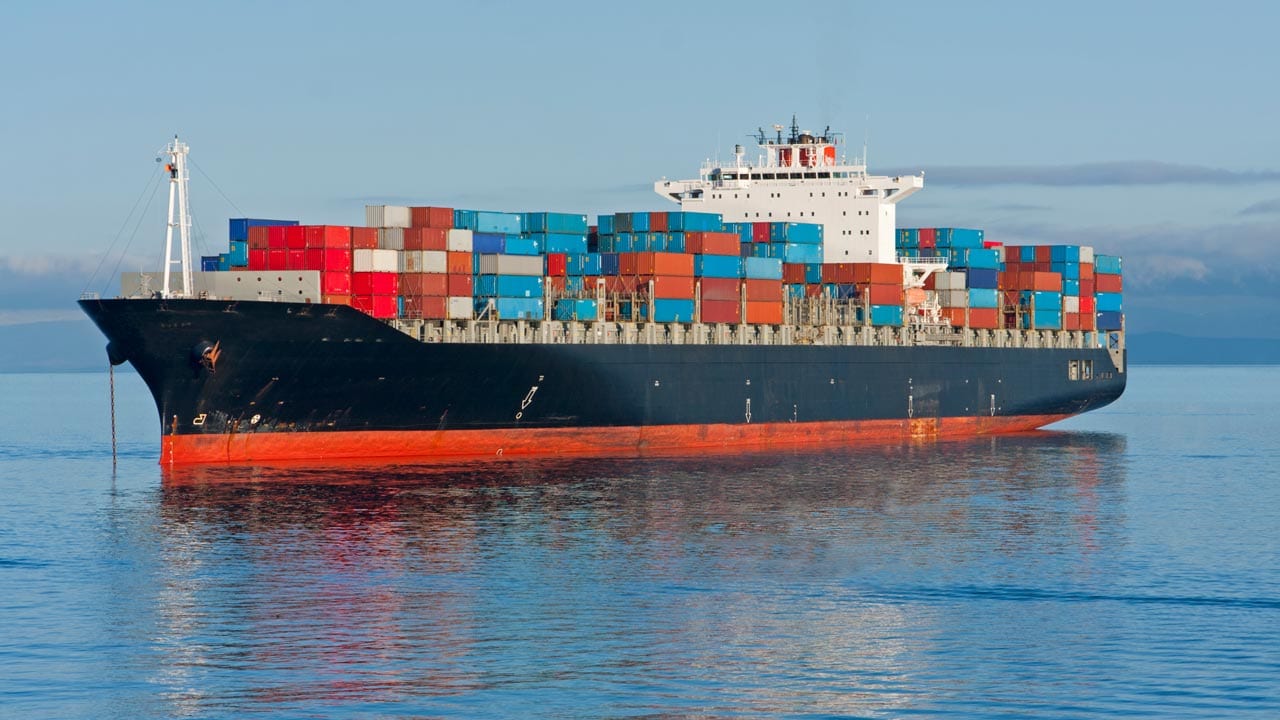
The United States has slashed its imports from Nigeria by more than 40 percent in a single month, signaling renewed strain in the trade relationship between both nations.

Latest trade data released by the US Census Bureau and the Bureau of Economic Analysis shows that imports of Nigerian products dropped sharply from $639 million in June 2025 to $379 million in July—a 41 percent fall within 30 days.

The decline was matched by a simultaneous reduction in US exports to Nigeria, which fell from $919 million in June to $584 million in July. Despite this contraction, Washington still recorded a $206 million trade surplus in July, though lower than the $280 million surplus in June.

From January to July 2025, America exported $3.92 billion worth of goods to Nigeria while importing $3.14 billion in return, leaving a cumulative surplus of $781 million. July’s steep collapse, however, highlights Nigeria’s weakening foothold in its once-strong surplus position with the US.

Broader African trade figures reveal a contrasting trend. US imports from Africa jumped to $4.47 billion in July, up from $3.67 billion in June, while exports slipped slightly from $3.37 billion to $3.30 billion. This shift widened Washington’s trade deficit with Africa to $1.17 billion, compared with $302 million the month before.

On a country level, trade results were mixed. Egypt maintained a surplus for the US, with $847 million in exports against $290 million in imports. In contrast, South Africa deepened Washington’s deficit as imports surged to $1.99 billion while exports were just $565 million.

For Nigeria, the steep drop in exports coincided with fresh tariff measures introduced by President Donald Trump. In late July, Trump signed an executive order lifting tariffs on Nigerian goods from 14 percent to 15 percent under his “reciprocal” trade regime. While crude oil, Nigeria’s primary export, was partially exempt, non-oil goods have been hit harder, discouraging import demand from US buyers.

Nigeria’s Minister of Industry, Trade and Investment, Jumoke Oduwole, noted that Nigeria would not respond hastily but would continue pursuing reforms and diversification. She emphasized the government’s focus on boosting non-oil exports, which grew by 24 percent year-on-year in Q1 2025, while expanding opportunities through the African Continental Free Trade Area and partnerships with Brazil, China, and the UAE.

Economists remain divided on the implications. Dr Aliyu Ilias of CSA Advisory argued that the tariffs provide an opportunity for Nigeria to explore new trade partners, particularly within BRICS. Similarly, Dr Muda Yusuf of the Centre for the Promotion of Private Enterprise downplayed the overall impact, stressing that Nigeria’s trade volume with the US is limited and dominated by crude oil.

While Nigeria’s exports to the US are shrinking, experts suggest this setback could accelerate much-needed diversification. For now, July’s figures highlight the vulnerability of Nigeria’s export structure but also present a chance to redefine global trade partnerships.

EPL: Amorim Stands Firm On Tactics Despite Manchester United’s Struggles

Manchester United’s under-pressure manager, Ruben Amorim, has vowed not to abandon his tactical philosophy despite a humiliating 3-0 defeat to Manchester City in the Manchester derby.

The Red Devils have endured a rocky start to the Premier League season, earning only four points from their opening four games while also crashing out of the League Cup at the hands of fourth-tier Grimsby.

Since Amorim’s appointment in November last year, United have won just eight of 31 Premier League matches, finishing 15th last season. When questioned about his insistence on the 3-4-3 formation, Amorim bristled at the suggestion of changing strategy.

“I accept the criticism, and I know this is not the record Manchester United deserves,” Amorim said. “But I’m not going to change my system. If changes are needed, then it is the players that must adapt. I’ll only change my philosophy if I decide to, not because of pressure.”

Despite United’s poor run, the club’s hierarchy has so far maintained faith in the Portuguese coach. However, after splashing out £200 million on new attacking reinforcements, patience is beginning to wear thin.

United’s attacking woes persist, with just four league goals this season—two of them own-goals from opponents and another from the penalty spot. New striker Benjamin Sesko, signed for £74 million, struggled to make an impact in the derby, while Matheus Cunha missed out due to injury.

Amorim insisted he remains committed to turning things around: “I’m giving everything for this club. I suffer more than the fans when we lose. Until I’m here, I’ll keep fighting to bring results.”

Meanwhile, City manager Pep Guardiola expressed optimism that the derby win could reignite his side’s campaign. “Winning a derby always lifts the team. You see the joy in the fans’ faces—it helps build momentum. But we still have to improve,” Guardiola said.

United, who were ahead of City in the table for the first time in five years before the clash, now face a tough road ahead as pressure mounts on Amorim to deliver results.

Excess Liquidity Surpasses N2 Trillion, Stabilises Market Rates

The Nigerian money market witnessed relative stability last week as rates stayed below 27%, largely supported by the significant liquidity boost within the financial system. Analysts attribute this to heavy inflows from matured Treasury bills, OMO instruments, and Remita funding.

Fresh data from AIICO Capital Limited revealed that banking sector liquidity closed at N2.085 trillion on Friday, marking a N446 billion increase from the previous week’s N1.639 trillion.

The week’s liquidity surge was driven by inflows of N184.75 billion from maturing Nigerian Treasury bills and N45.50 billion from expiring OMO instruments. Remita inflows further elevated system liquidity, counterbalancing the impact of CRR debits and FX settlement outflows.

Market watchers highlighted that the Central Bank of Nigeria (CBN) refrained from implementing liquidity-absorbing measures during the period. As a result, the system’s net long position strengthened to N1.95 trillion, up from N1.47 trillion in the prior week, according to Cordros Capital Limited.

Short-term rates reflected the buoyancy, with the open repo rate (OPR) holding steady at 26.50% while the overnight lending rate eased slightly to 26.96%. Activity in the Treasury bills market remained muted, with modest transactions on select maturities capped by limited offers.

Looking ahead, analysts warn that interest rates could climb if the CBN embarks on aggressive liquidity mop-ups through OMO auctions.

CBN to Resume OMO, Treasury Bills Auction

For the new trading week, all eyes are on the CBN as it prepares to issue fresh OMO instruments at the primary auction amidst maturing obligations. The market is set to receive N378 billion in inflows from expiring OMO and Treasury bills combined.

The apex bank has lined up Nigerian Treasury bills worth N290 billion for sale to investors at the primary market auction.

Interestingly, the CBN abstained from conducting OMO auctions last week despite heavy maturities, a move that sustained excess liquidity within the system. According to Cowry Asset Management, the week ahead will witness an additional N300 billion OMO repayment alongside N78 billion Treasury bill maturities, further boosting system liquidity.

MTN Nigeria And Airtel Africa Tighten Grip On Telecom Industry With 86% Market Share

The Nigerian telecommunications market remains heavily dominated by MTN Nigeria and Airtel Africa, with the two operators jointly controlling 86.12% of the industry, according to new data from the Nigerian Communications Commission (NCC).

Figures released for July show MTN holding the largest market share at 52.7%, with 89.14 million subscribers, while Airtel Nigeria followed with 33.4%, representing 56.52 million subscribers. Together, the two companies tower over their rivals Globacom, which holds 12.3% (20.74 million subscribers), and 9mobile, which lags behind with just 1.6% (2.73 million subscribers).

Despite their dominance, the sector recorded a contraction during the period, as active telephony subscriptions dropped by 1.4% month-on-month to 169.33 million, down from 171.73 million in June. Analysts at Cordros Capital Limited attributed the decline largely to corrections in reporting discrepancies by one of the major operators.

Internet subscriptions also fell by 2.1% month-on-month, reaching 138.22 million compared to 141.17 million in June. On a year-on-year basis, the industry witnessed deeper cuts, with telephony and internet subscriptions dropping by 20.4% and 11.3% respectively, reflecting the impact of SIM disconnections linked to compulsory National Identification Number (NIN) compliance and ongoing data adjustments.

On the Nigerian Exchange, MTN Nigeria Plc and Airtel Africa Plc jointly maintained a market capitalization of N17.816 trillion. Airtel Africa’s 3.758 billion outstanding shares were valued at N8.683 trillion, trading at N2,310.50 per unit, while MTN Nigeria’s 20.995 billion shares closed at N9.138 trillion at N435 per unit.

Industry analysts believe subscriber growth is likely to rebound as SIM reactivation initiatives gain traction and regulatory compliance pressures ease. They project that MTN and Airtel will lead the recovery, leveraging their extensive distribution networks and strong market presence.

Nigeria’s Inflation Rate Expected To Ease As Analysts Project August Decline

Nigeria's Inflation

Nigeria’s inflation rate is expected to post a marginal decline, with data scheduled for release on Monday anticipated to show easing pressures on consumer prices.

Economic analysts from Coronation Merchant Bank said the decline would likely be driven by improved foreign exchange stability, ongoing harvest season supplies, and moderating food prices.

The bank projected that headline inflation for August will fall to 21.45% year-on-year, compared to 21.88% in July, while month-on-month inflation is expected to ease slightly to 1.74%.

According to Coronation Research, four key factors underpin this outlook:

  1. Increased food supply from early harvests, particularly maize, vegetables, pumpkins, and groundnuts, reducing price pressures in the South and Middle Belt.
  2. A moderation in imported food inflation, supported by a stable naira, which appreciated by 0.44% to ₦1,531.57/$1 in August.
  3. Declining energy costs, helping to lower production and transport expenses.
  4. Stronger foreign reserves, which rose by $1.91 billion to $41.27 billion, improving FX liquidity and sustaining market confidence.

However, analysts also warned of potential risks that could limit the pace of disinflation. These include a possible rise in petrol prices amid ongoing disputes between Dangote Refinery and NUPENG, as well as the risk of flooding, which could damage farmlands and disrupt supply chains.

Structural challenges such as poor road networks and limited storage facilities could also hinder improvements in food supply and distribution.

Despite these concerns, Coronation Research said the trend of easing inflation is expected to continue in the near term, supported by reforms in the foreign exchange market and seasonal food supply increases.

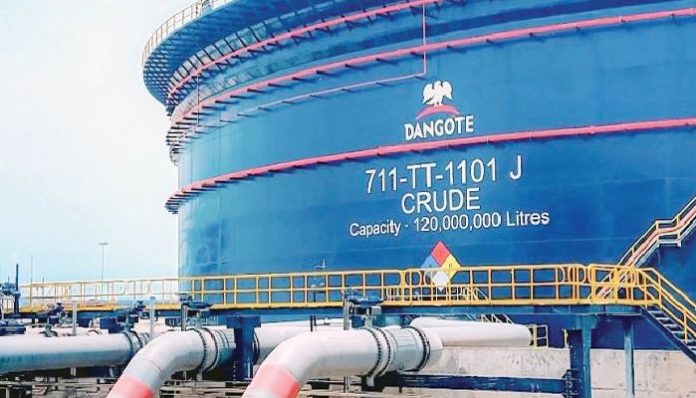
Dangote Refinery Accused Of Selling Petrol N65 Cheaper Abroad Than In Nigeria

Fresh controversy has erupted in Nigeria’s downstream oil sector as fuel importers allege that the Dangote Petroleum Refinery sells petrol to international traders at prices significantly lower than what it offers to Nigerian marketers.

According to the Depot and Petroleum Products Marketers Association of Nigeria (DAPPMAN) and the Petroleum Products Retail Outlet Owners Association of Nigeria (PETROAN), the refinery provides foreign buyers with discounts of up to N65 per litre compared to domestic marketers.

The allegations surfaced just as Dangote announced a reduction in its petrol price, lowering pump rates from N865 per litre to N841 in Lagos and the South West, and to N851 in Abuja, Edo, and Kwara, alongside the rollout of its direct fuel distribution scheme.

Speaking in an interview, DAPPMAN Executive Secretary, Olufemi Adewole, claimed that members of the association had purchased petrol from traders in Lomé, Togo — who originally sourced the product from Dangote — at rates cheaper than those offered directly to Nigerian marketers.

Adewole stated that efforts to secure products directly from the refinery often proved unprofitable due to higher pricing and restrictive conditions. “Dangote is selling to international traders at N65 cheaper than what he sells to us. Some of our members end up buying from those traders and still bring the product back into Nigeria,” he alleged.

He further criticized Dangote’s strategy of reducing prices whenever competing importers bring cargoes into the country, suggesting it was a deliberate attempt to destabilize the market.

PETROAN’s President, Billy Gillis-Harry, backed DAPPMAN’s claims, saying, “It is true, Dangote’s petrol is cheaper in Lomé than in Nigeria. DAPPMAN is correct.”

However, Dangote Refinery dismissed the accusations, with a company spokesperson suggesting that industry unions, including the Nigerian Union of Petroleum and Natural Gas Workers (NUPENG), were being influenced by DAPPMAN. The spokesperson insisted that the refinery’s free delivery programme, set to begin on Monday, would make fuel more affordable nationwide.

DAPPMAN countered, stating that the so-called “free delivery” still required marketers to lift at least 25% of their allocations using Dangote-owned trucks, adding extra costs.

Adewole also stressed that Nigeria’s downstream sector should not depend solely on Dangote’s facility, noting that the refinery currently contributes only about 30–35% of the nation’s fuel demand, with the balance met by importers under the supervision of the Nigerian Midstream and Downstream Petroleum Regulatory Authority (NMDPRA).

The refinery, meanwhile, announced it would deploy compressed natural gas-powered trucks as part of its logistics programme, with gantry prices expected to fall to N820 per litre, leading to lower pump prices in key states.

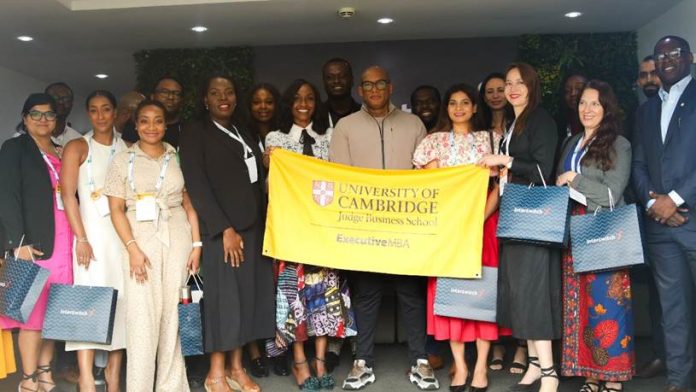
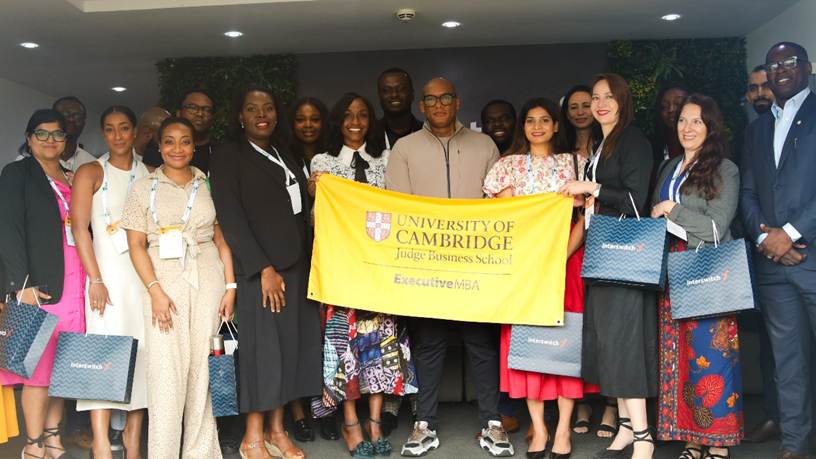
Interswitch Group Hosts Student Delegation From Cambridge Judge Business School

Interswitch Group, leading African technology company focused on creating solutions that enable individuals and communities prosper, recently hosted a delegation of Executive MBA students from the University of Cambridge Judge Business School (CJBS) at its headquarters in Victoria Island, Lagos.

The delegation visited Interswitch as part of its student-led Nigeria Trek, to gain first-hand insights into the technology company’s 23-year journey of driving payment innovation and financial inclusion across Africa. The engagement spotlighted Interswitch’s evolution from a transaction switch to a diversified technology company, its role in building Africa’s digital payments infrastructure, and the opportunities that lie ahead in deepening financial inclusion across the continent.

Speaking during the session, Mitchell Elegbe, Founder and GMD of Interswitch Group, emphasized the importance of knowledge exchange and cross-border collaboration in building sustainable businesses.

It is an honour to welcome the CJBS 2025 delegation to Interswitch. Beyond showcasing our story, this engagement provides an avenue for candid conversations about Africa’s payments ecosystem, its unique opportunities, and the innovations shaping the future. Hosting the distinguished delegation is not only a chance to share our journey, but also a platform to engage with the next generation of global business leaders. We believe that interactions like this foster mutual learning, broaden perspectives, and spotlight the transformative potential of African innovation on the global stage.”

During the interactive session with Elegbe, he shared deep insights on building collaborative solutions across sectors alongside the robust systems that power seamless digital transactions across the continent. Rounding off the discussions, Oremeyi Akah, Chief Customer Officer at Interswitch, highlighted the company’s focus on operational excellence, governance, and sustainable growth. Also, in attendance to welcome the delegation was Cherry Eromosele, Executive Vice President, Group Marketing and Communications.

This visit comes on the back of Elegbe’s courtesy call to the Cambridge Judge Business School earlier this year to discuss collaborative opportunities and consolidate Interswitch’s evolving relationship with the prestigious institution.

The CJBS delegation described the visit as an invaluable opportunity to witness firsthand how an African company has grown to become a continental leader in technology and payments, while also gaining valuable insights into the dynamics of doing business in Africa.

Overall, the visit underscores Interswitch’s position as a trailblazer in Africa’s digital economy and reaffirms the value of academic and industry partnerships in shaping the future of global business and innovation.

Data And Innovation Key To Growth, NAICOM Tells Insurers

NAICOM Revokes 2 Insurance Firms License

The National Insurance Commission (NAICOM) has called on operators in Nigeria’s insurance industry to adopt data-driven practices, innovative business models, and strategic partnerships to ensure long-term sustainability.

Commissioner for Insurance and Chief Executive Officer of NAICOM, Mr. Olusegun Omosehin, made the appeal on Thursday at the 2025 Insurance Professionals Forum of the Chartered Insurance Institute of Nigeria (CIIN) in Abeokuta, Ogun State. The forum was themed “Nurturing the Insurance Industry for Sustainable Growth.”

Omosehin stressed that the industry must leverage data insights to identify opportunities, enhance resilience, and improve competitiveness. He also urged professionals to embrace change leadership, operational excellence, and trust-building.

“The need to develop a robust, sustainable, and inclusive insurance industry has become increasingly paramount,” he said, adding that innovation, regulatory strengthening, and market penetration initiatives are critical for deepening industry impact.

The commissioner highlighted the recently signed Nigerian Insurance Industry Reform Act (NIIRA 2025) as a turning point for the sector, describing it as a “long walk to freedom.” He noted that its success would depend on operators’ commitment to implementation, compliance, and continuous improvement.

Omosehin also advised insurers to invest in professional development, adopt digital technologies, and embrace knowledge-sharing to remain competitive. “Ultimately, our goal is to position insurance as a pillar of national development, safeguarding lives, assets, and livelihoods while fostering economic resilience,” he added.

Governor Dapo Abiodun of Ogun State, represented by the Secretary to the State Government, Mr. Tokunbo Talabi, urged operators to uphold integrity and rebuild public trust, noting the industry’s reputation challenges. He commended the NIIRA’s customer retention fund provision as a positive step towards accountability.

Earlier, CIIN President Mrs. Yetunde Ilori expressed confidence in the NIIRA’s potential to unlock growth in the sector and encouraged operators to collaborate on its seamless implementation. She suggested documenting the contributions of stakeholders involved in the reform process for posterity.

Dangote To Begin Free Fuel Distribution On Monday

The Dangote Refinery will commence its free fuel distribution scheme on Monday, beginning with Lagos, the South-West, the Federal Capital Territory, Kwara, Delta, Rivers, and Edo States.

According to a statement by the company’s spokesman, Anthony Chiejina, petrol pump prices will also be reduced to ₦841 per litre in Lagos and the South-West, and ₦851 per litre in Abuja, Edo, Kwara, Rivers, and Delta States.

The free distribution programme, initially scheduled for August, was delayed due to logistics challenges in China. The refinery has since received over 1,000 trucks to support the rollout.

Additional states are expected to benefit as more trucks arrive in the country. To strengthen logistics and cut costs, the company recently launched a large-scale roll-out of compressed natural gas (CNG)-powered trucks.

“Even though we recently noticed how CNG prices doubled a week ago, that will not deter our 10,000 CNG truck roll-out this year,” the company stated.

Resident Doctors Begin Five-Day Strike Action

Brain Drain: Over 2,000 Doctors Relocated - NARD

The Nigerian Association of Resident Doctors (NARD) on Friday commenced a five-day warning strike after the Federal Government failed to meet its long-standing demands on unpaid allowances, salary arrears, and welfare concerns.

In a statement signed by its Secretary-General, Dr. Oluwasola Odunbaku, NARD confirmed that the strike began at 8:00 a.m. across federal and state hospitals. “All Centre leadership is expected to guide their members accordingly. Further updates will be communicated to NEC members in due course,” the message read.

Resident doctors, who form the backbone of Nigeria’s public health system, provide a significant share of clinical services. Their withdrawal of service often cripples healthcare delivery nationwide, leaving patients stranded and hospitals overstretched.

The grievances include the non-release of the 2025 Medical Residency Training Fund, payment of five months’ arrears from the revised Consolidated Medical Salary Structure, and outstanding specialist and hazard allowances.

NARD said the decision to strike followed a six-hour virtual meeting of its Extraordinary National Executive Council, held after the expiration of a July ultimatum that was extended by 10 days and later by 24 hours, which lapsed on September 11.

The association accused the government of failing to address “critical welfare issues” despite repeated deadlines, saying it had been left with no choice but to embark on industrial action.

CSCS, NGX Move To Two-Day Settlement Period

The Central Securities Clearing System (CSCS) Plc and the Nigerian Exchange Limited (NGX) announced on Wednesday that Nigeria’s capital market will transition to a two-day securities settlement cycle (T+2), effective November 28, 2025.

The move is designed to enhance market efficiency, reduce counterparty risk, and align Nigeria’s capital market with global standards.

Speaking at a stakeholder webinar themed “Advancing Market Efficiency through Two-Day Settlement,” Bola Ajomale, Executive Commissioner (Operations) at the Securities and Exchange Commission, said the regulator plans to move further to a T+1 cycle in 2026 and ultimately same-day settlement. “We urge all market participants to prepare for this shift and adequately engage their clients. This initiative is a critical component of our broader reforms aimed at enhancing global competitiveness,” he stated.

Adeyinka Shonekan, Executive Director representing the CSCS Managing Director/CEO, said a stakeholder-driven committee has carried out gap analysis and benchmarking to ensure a seamless transition. “Our priority is to deliver a smooth experience for all market operators,” she added.

Jude Chiemeka, CEO of NGX, noted that the Exchange had conducted market-wide simulations, proactive communications, and put in place support systems to ensure readiness for the November rollout. Other market platforms, including the Lagos Commodities and Futures Exchange and NASD Plc, also confirmed their preparedness through testing, training, and stakeholder engagement.

Onome Komolafe, Divisional Head of CSCS Depository, said the institution had upgraded infrastructure, reviewed processes, and strengthened its risk management and compliance framework to support the new regime.

Analysts say the shift to T+2 will modernise Nigeria’s capital market infrastructure, cut operational inefficiencies, and boost investor confidence.

UK Economy Flat In July Amid Stagnation Concerns

Britain’s economy flatlined in July, official data showed Friday, compounding a turbulent week for Prime Minister Keir Starmer’s Labour government.

Gross domestic product (GDP) showed no growth after expanding 0.4% in June, according to the Office for National Statistics. The flat reading, though in line with expectations, underlined the government’s struggle to revive momentum ahead of its annual budget in late November.

The Labour administration has faced fresh political turmoil, with Deputy Prime Minister Angela Rayner resigning over unpaid property tax and Starmer dismissing UK ambassador to Washington Peter Mandelson after renewed scrutiny of his ties to convicted sex offender Jeffrey Epstein.

“We know there’s more to do to boost growth, because whilst our economy isn’t broken, it does feel stuck,” a Treasury spokesperson acknowledged.

Data showed a 1.3% fall in production offset gains in services and construction. “The stagnation in real GDP in July shows that the economy is still struggling to gain decent momentum in the face of the drag from previous hikes in taxes and possible further tax rises to come,” said Paul Dales, chief UK economist at Capital Economics.

BizWatchNigeria.Ng
Privacy Overview

This website uses cookies so that we can provide you with the best user experience possible. Cookie information is stored in your browser and performs functions such as recognising you when you return to our website and helping our team to understand which sections of the website you find most interesting and useful.