




Home Blog Page 80

Adeleke inaugurates Ile-Ife flyover, urges peaceful conduct ahead of election

Key points

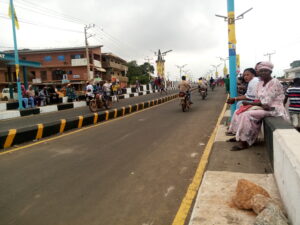
  • Osun Gov. Ademola Adeleke inaugurated the first flyover in Ile-Ife at Lagere Junction.
  • He also commissioned the dualised Mayfair Roundabout and Palace Junction Road.
  • The projects were designed to ease traffic congestion and improve movement in the ancient city.
  • Adeleke urged residents and political supporters to shun violence before, during and after the Aug. 15 governorship election.
  • Ooni of Ife, Oba Adeyeye Ogunwusi, commended the governor for executing the projects, describing them as unprecedented in the city.
  • The Ogunsua of Modakeke, Oba Joseph Toriola, also praised Adeleke’s administration for addressing development requests from stakeholders.

Main Story

Osun Gov. Ademola Adeleke on Monday inaugurated the first flyover in Ile-Ife, located at Lagere Junction, as part of his administration’s efforts to improve infrastructure and ease traffic congestion in the ancient city.

Adeleke also inaugurated the dualisation of Mayfair Roundabout and Palace Junction Road in Ile-Ife.

The News Agency of Nigeria (NAN) reports that the flyover was flagged off in May 2024 and constructed to ease traffic congestion around the busy Lagere axis.

The inauguration came days before the Aug. 15 governorship election, with Adeleke using the occasion to appeal to residents, political parties and their supporters to embrace peace throughout the electoral process.

He urged voters to exercise their franchise peacefully and allow their votes to determine the outcome of the election, while also encouraging them to remain vigilant and monitor the distribution of electoral materials from polling units to collation centres.

Adeleke said his administration had deliberately avoided retaliatory actions despite alleged provocations from political opponents, stressing that peace and stability remained important to the development of the state.

The Issues

The major issues surrounding the development are traffic congestion, infrastructure deficits and the need to sustain peaceful democratic participation ahead of the Aug. 15 governorship election.

While the newly inaugurated infrastructure is expected to improve traffic flow and connectivity in Ile-Ife, the governor also emphasised the responsibility of residents to protect the peace and ensure that the electoral process is not disrupted by violence.

What’s Being Said

Ademola Adeleke, Governor of Osun

“Don’t fight them. Use your vote to speak. Be vigilant and monitor the electoral process. Our victory will be determined by the people and God.”

Adeleke also assured residents that his administration would continue to deliver developmental projects across the state.

Oba Adeyeye Ogunwusi, Ooni of Ife

The Ooni commended Adeleke for what he described as a transformation of Ile-Ife through the construction of the flyover and the dualisation of the road leading to the palace.

“I thanked the governor for this road and bridge which we have never seen before. The governor surprised us and uplifted Ile-Ife.”

The traditional ruler, who described himself as a father to all political interests, said public officials who performed well deserved commendation irrespective of their political affiliations.

Oba Joseph Toriola, Ogunsua of Modakeke

The Ogunsua also commended Adeleke for paying attention to the development of Modakeke and addressing several requests presented by stakeholders.

“We want more of you, Mr Governor. We want you to continue in office. Our people are ready to further show support for you.”

What’s Next

With the flyover and road projects now inaugurated, the focus will shift to their impact on traffic movement and connectivity within Ile-Ife.

Beyond infrastructure, attention will also turn to the Aug. 15 governorship election, with the governor calling on residents and political actors to maintain peace and ensure that the electoral process is conducted without violence.

Bottom Line

The inauguration of Ile-Ife’s first flyover and other road projects marks a major infrastructure milestone for the ancient city, while Adeleke’s appeal for peaceful participation highlights the importance of protecting the electoral process as Osun prepares for its Aug. 15 governorship election.

Neche wins HoH as BBNaija housemates face new week

By Boluwatife Oshadiya August 10, 2026

Key Points

  • Neche defeats Chimsom Chuka to become the second female Head of House this season
  • Nomy remains the bench warmer and is assigned toilet duties without assistance
  • Neche uses her Veto Power to remove Gerard from the house’s saved list

Main Story

Neche has emerged as the new Head of House (HoH) in Big Brother Naija Season 11 after defeating Chimsom Chuka in Monday’s endurance challenge, securing immunity from this week’s eviction.

The victory makes Neche the second female housemate to hold the HoH position this season, following Sheba’s reign last week. According to Africa Magic, the final HoH contest came down to Neche and Chimsom Chuka before Chimsom’s curved handle and pole gave way, handing Neche the win.

Earlier in the day, Cassi confronted Nomy in the HoH Lounge over comments she made in the presence of Goddessa. Nomy acknowledged the issue and apologised, while the pair continued discussing their relationships with other housemates and developments in the game.

The housemates also prepared for the week’s wager presentation and participated in a fitness activity before entering the Arena for the HoH Challenge.

Nomy’s position remained unchanged after she failed to comply with the rules during the previous HoH Challenge. Biggie instructed her to continue wearing her bench-warmer vest, remain on her designated bench and wash the toilets, while warning other housemates not to assist her.

The house later entered the conspiracy and nomination process. Bluethopia, Cassi and Gerard were initially selected by the house to be saved, but Neche subsequently exercised her Veto Power and removed Gerard from the list.

What’s Being Said

Biggie challenged the housemates’ strategy of repeatedly choosing to save themselves during the conspiracy session, asking: “If everyone keeps saving themselves, who will be left?”

What’s Next

  • Neche will lead the house as HoH for the new week and has immunity from eviction
  • Housemates facing possible eviction will be subject to the week’s voting process, with voting scheduled to close Thursday at 9:00 p.m. WAT
  • The next Sunday Live Eviction Show is scheduled for 7:00 p.m. WAT on Africa Magic Showcase and Africa Magic Family

Bottom Line

The Bottom Line: Neche’s HoH victory gives her both immunity and strategic influence at a critical stage of the competition. Her Veto decision has already altered the house’s initial safety list, making her position central to this week’s eviction dynamics.

NGX market cap tops n160tn as equities gain n1.91tn

NGX Records N256bn Loss Last Week

By Boluwatife Oshadiya | August 10, 2026

Key Points

  • NGX All-Share Index rises 1.21% to 248,529.75 points, lifting year-to-date return to 59.71%
  • Market capitalisation increases by ₦1.91 trillion to ₦160.42 trillion
  • FTGINSURE leads trading volume while FIRSTHOLDCO records the highest value traded

Main Story

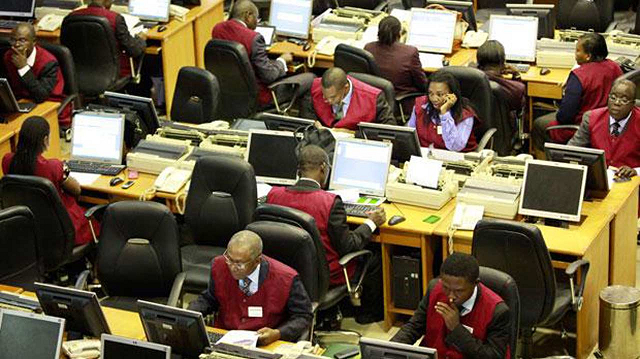
The Nigerian Exchange (NGX) opened the week higher on Monday as the market capitalisation rose by ₦1.91 trillion to ₦160.42 trillion, supported by buying interest in major stocks.

NGX market data showed that the All-Share Index (ASI) gained 1.21% to close at 248,529.75 points, taking its year-to-date return to 59.71%.

Despite the rise in the benchmark index, overall trading activity weakened. Total volume traded fell 48.16% to 787.1 million units, while transaction value declined 4.36% to ₦25.5 billion.

FTGINSURE accounted for the largest share of market volume, with 307.3 million units traded, representing 39.05% of total volume. FIRSTHOLDCO led by value, recording trades worth ₦5.1 billion, equivalent to 20.08% of total market value traded.

Market breadth remained bearish despite the headline gain, with 36 stocks declining against 23 gainers. FTGINSURE emerged as the session’s best-performing stock, rising 10.00%, while AVACAP recorded the largest decline at 10.00%.

The strongest positive contributions came from AIRTELAFRI, which gained 8.59%, INTBREW, up 6.36%, GTCO, which rose 1.56%, ACCESSCORP, which advanced 4.08%, and UBA, which gained 3.01%.

Sector performance was mixed but tilted towards declines. The Insurance Index fell 1.64%, the Banking Index declined 0.24%, Oil & Gas lost 0.09%, while Industrial Goods slipped 0.05%.

The Consumer Goods Index was the only major sectoral gainer, advancing 0.76%, supported by the 6.36% increase in INTBREW. The Commodity Index closed flat.

What’s Being Said

No direct stakeholder or analyst quote was included in the source material. A verified comment from the NGX, a market operator or an independent analyst should be added before publication to provide market interpretation.

What’s Next

Investors will watch whether the NGX can sustain the latest upward move after the market opened the week with a 1.21% gain.

Attention will also remain on market breadth and trading activity, particularly whether participation broadens beyond the stocks that drove Monday’s index performance.

Bottom Line

The Bottom Line: Monday’s ₦1.91 trillion increase in market capitalisation shows continued strength in the headline NGX indicators, but the weaker trading activity and negative market breadth point to a rally that was not broadly based.

UNIBEN launches Green Belt, innovation ecosystem to drive sustainability, tech skills

Key Points

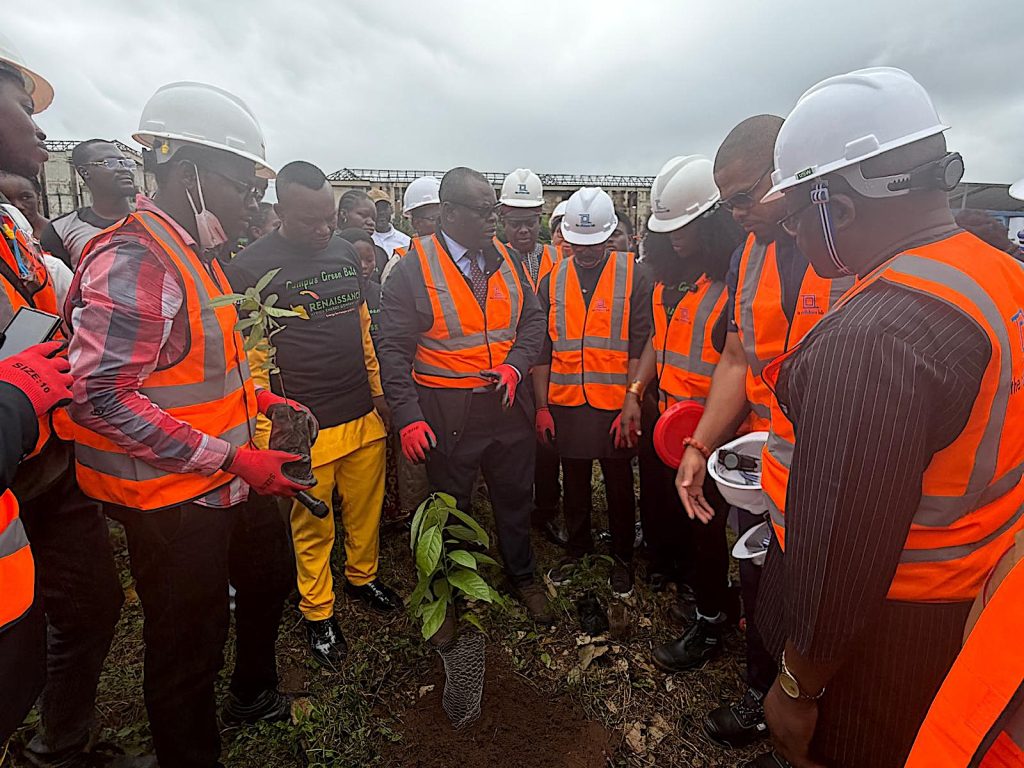
  • The University of Benin has launched its Campus Green Belt Initiative and unveiled a new innovation ecosystem.
  • The initiative combines environmental sustainability, technology training, research and community engagement.
  • Renaissance Africa Energy Group is sponsoring the project, while The Offshore Lab is delivering it.
  • The innovation ecosystem will include an ICT Centre, Deep Tech Hub, hardware laboratories and a Virtual Museum of Benin.

Main Story

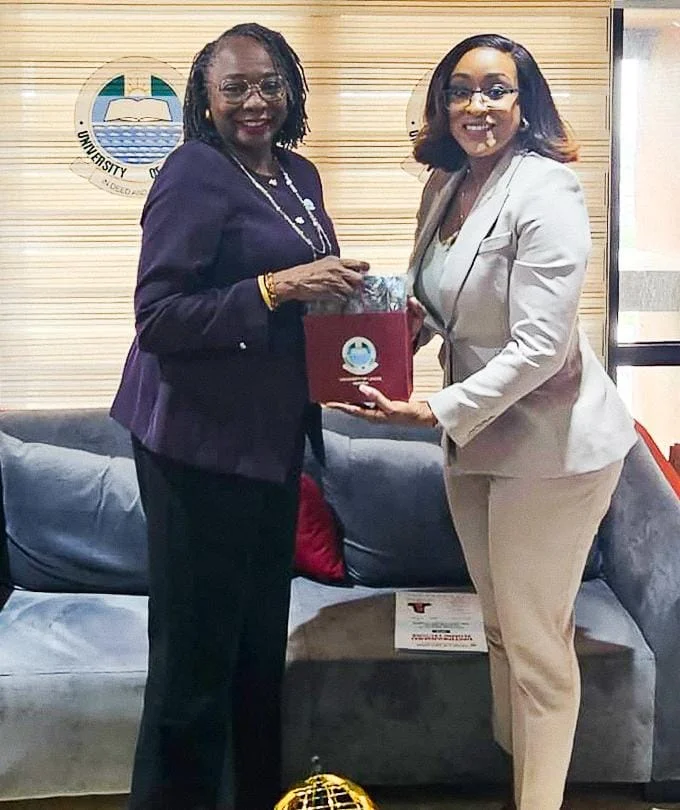
The University of Benin (UNIBEN) has launched a Campus Green Belt Initiative and unveiled plans for a multi-disciplinary innovation ecosystem as part of efforts to strengthen climate action, technology development and youth empowerment.

The initiative is sponsored by Renaissance Africa Energy Group and delivered by The Offshore Lab.

According to the university, the project is designed to expand the role of tertiary institutions beyond conventional learning by combining technology, environmental stewardship, practical research and community development.

The UNIBEN Campus Green Belt will serve as an experimental field site where students apply digital tools to ecological and agricultural challenges.

The initiative includes a new 1,000-tree orchard and a student-led Pioneer Club, providing a practical environment for students to apply data science, Internet of Things (IoT) environmental monitoring and sustainable agricultural practices.

UNIBEN said the initiative would make it the second node in a national Campus Green Belt network, following the establishment of the first site at Bauchi State University in 2024.

The field initiative will be linked to an innovation ecosystem designed to support research, digital skills development and entrepreneurship.

The planned facility will include an ICT Centre with 288 high-performance computing systems, a Deep Tech Hub equipped with artificial intelligence platforms and modular data centre capabilities, as well as hardware fabrication and product development laboratories.

The ecosystem will also feature a Virtual Museum of Benin aimed at preserving and showcasing Edo cultural history through digital and immersive public engagement.

The initiative will operate through a model linking technology, field applications and community engagement.

Students will use computational tools and data analytics to monitor the orchard, optimise resource use and test green technologies, while the Pioneer Club will support outreach to neighbouring smallholder farmers by sharing practical and data-driven agricultural knowledge.

The university said the connection between research and local farming communities was intended to support sustainable food systems and strengthen regional economic resilience.

The Vice Chancellor of UNIBEN, Prof. Edoba B. Omoregie, SAN, said the initiative aligned with the university’s broader transformation towards technology-driven and practical education.

Omoregie said the innovation ecosystem would expose students to advanced computing, artificial intelligence and hardware fabrication, while the Campus Green Belt would extend applied learning to environmental stewardship.

He added that the university had already planted more than 5,000 trees as part of its environmental efforts.

The General Manager, Nigerian Content Development, Renaissance Africa Energy Group, Mr Olanrewaju Olawuyi, said the company was proud to support an initiative combining technology infrastructure, youth participation and environmental action.

Olawuyi said similar investments across tertiary institutions could provide a practical model for young Nigerians to apply deep technology and sustainable agriculture to local industrialisation and community enterprise.

The Chief Executive Officer of The Offshore Lab, Emeka Obiwulu, said the project was designed to support a shift from passive learning towards practical production and sustainability.

He said the connection between technology, field testing and community outreach could provide a scalable model for production-focused education across Nigeria.

The Issues

The initiative seeks to address the gap between theoretical education and practical skills by creating facilities and programmes where students can apply technology to environmental, agricultural and industrial challenges.

What’s Being Said

“At the University of Benin, our transformation is deliberate: to build a world-class, student-centred University where teaching, research and skills acquisition are increasingly technology-driven, practical and responsive to emerging national and global trends.” – Prof. Edoba B. Omoregie, SAN, Vice Chancellor, University of Benin

“By closing the loop between technology, field testing, and community outreach, we are creating a scalable model for modern, production-focused education that can be replicated across the country.” – Emeka Obiwulu, Chief Executive Officer, The Offshore Lab

What’s Next

The new facilities and Campus Green Belt are expected to provide platforms for student training, applied research, environmental monitoring, hardware development, entrepreneurship and engagement with surrounding farming communities.

Bottom Line

UNIBEN is combining a 1,000-tree Campus Green Belt with advanced technology infrastructure to create a practical learning and innovation model linking education, sustainability, research and community development.

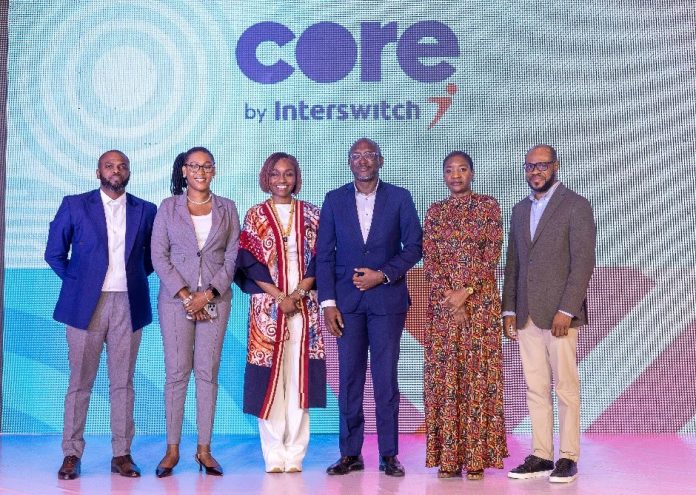
Core by Interswitch debuts to advance collaboration and operational excellence within financial services sector.

L-R; Olatunde Daranijo, Head, Product Development and Innovation, KPMG; Ekeoma Chidi Ugorji, Head, Operations, NIBSS; with some Senior Leadership members at Interswitch, Oremeyi Akah, Chief Customer Experience Officer; Akeem Lawal, MD, Payment Switching & Processing; Titilola Shogaolu, SVP, Business Operations, Commercial Inclusion; and Babafemi Ogungbamila, EVP, Group Operations & Technology at the Core by Interswitch event held at Landmark Event Centre, Victoria Island, recently.

Recognising that every successful digital payment depends on the expertise of operations professionals working behind the scenes, Interswitch, one of Africa’s leading integrated payments and digital commerce companies, recently hosted the inaugural edition of Core by Interswitch on Thursday, 23rd July 2026. The first-of-its-kind breakfast forum was designed to celebrate these professionals, foster industry collaboration and strengthen the operational excellence that drives seamless digital payment experiences.

Held at the Landmark Event Centre, Victoria Island, Lagos, the forum brought together more than 400 participants, including operations professionals and other stakeholders from microfinance banks, commercial banks, fintechs, Interswitch employees and other organisations across the financial services ecosystem.

Through expert presentations, panel discussions and networking sessions, participants explored practical ways to strengthen collaboration, address operational challenges and enhance service delivery across the payments ecosystem.

Designed to bridge the gap between the customer-facing experience and the operations that power every successful transaction, Core by Interswitch created a platform for meaningful conversations around dispute management, settlement and reconciliation, customer support, customer experience, third-party processing and FEP administration/monitoring. The discussions reinforced the critical role these functions play in ensuring secure, seamless and reliable digital payment experiences.

Speaking at the event, Babafemi Ogungbamila, Executive Vice President, Operations and Technology, Interswitch, said the forum reflects the company’s belief that exceptional customer experiences are built not only on innovative technology but also on the expertise, collaboration and commitment of the professionals who keep payment systems running every day.

“Every successful digital transaction is powered by professionals whose work often goes unseen but is fundamental to building trust in digital payments. Core by Interswitch was created to recognise their contribution, strengthen collaboration across the industry and create opportunities for shared learning that ultimately benefit financial institutions and the customers they serve. As digital payments continue to evolve, investing in the people and processes that power the technology is just as important as investing in the technology itself,” Ogungbamila said.

Participants also highlighted the growing importance of operational excellence in sustaining resilient payment infrastructure and meeting rising customer expectations. As digital financial services continue to expand across Africa, closer collaboration among financial institutions, fintechs and payment service providers will be essential to improving responsiveness, resolving operational challenges more effectively and delivering consistently reliable customer experiences.

Beyond recognising the professionals whose work often goes unnoticed, the inaugural forum underscored the value of creating stronger connections across the payments ecosystem. By creating a dedicated platform for knowledge sharing, collaboration and professional development, Core by Interswitch aims to build a more connected community of payments operations professionals equipped to respond to the evolving demands of the digital economy.

The inaugural edition of Core by Interswitch reflects the company’s broader commitment to strengthening Africa’s digital payments ecosystem by fostering collaboration, knowledge sharing and operational excellence across the financial services value chain. While technology remains central to financial innovation, its success ultimately depends on the people, processes and partnerships that ensure every transaction is secure, seamless and reliable.

As the payments landscape continues to evolve, initiatives such as Core by Interswitch will play an increasingly important role in equipping payments operations professionals with the insights, relationships and shared expertise needed to support a more resilient, collaborative and customer-focused digital payments ecosystem across Africa.

Fuel subsidy could have hit ₦53tn without Tinubu’s reform – NRS chair

Key points

  • NRS Chairman Zacch Adedeji says Nigeria’s petrol subsidy bill could have reached ₦53tn if the policy had remained.
  • He also estimated that the naira could have weakened to ₦3,500/$ under the subsidy regime.
  • Adedeji defended President Bola Tinubu’s subsidy removal and exchange-rate reforms.
  • He described subsidy removal as a major factor behind recent economic gains.
  • The policy has increased government revenue but continues to fuel concerns over cost-of-living pressures.

Main Story

The Chairman of the Nigeria Revenue Service (NRS), Zacch Adedeji, has said Nigeria’s petrol subsidy bill could have risen to about ₦53tn, with the naira weakening to ₦3,500 to the dollar, if the subsidy regime had remained in place.

Adedeji projected in an exclusive interview on Channels Television’s Sunday Politics, where he defended President Bola Tinubu’s economic reforms and argued that the removal of petrol subsidy had helped prevent deeper fiscal and foreign exchange pressures.

According to him, Tinubu inherited an economy burdened by an unsustainable subsidy regime, a weak oil sector and a narrow tax base, making reform necessary to restore the country’s financial stability.

The Issues

Adedeji maintained that retaining petrol subsidy would have placed an increasingly heavy burden on government finances, particularly amid volatility in global energy markets and geopolitical tensions.

He also defended the administration’s decision to unify the foreign exchange market, arguing that Nigerians should assess the reforms based on the economic conditions inherited by the government and the outcomes being recorded.

However, the removal of subsidy, announced by Tinubu in his inaugural address on May 29, 2023, triggered a sharp increase in petrol prices and contributed to higher transportation, food and production costs.

While the policy has boosted government revenues and increased allocations to the three tiers of government through the Federation Account, its impact on household purchasing power and living costs remains a major concern.

What’s Being Said

Adedeji described subsidy removal as a landmark decision, insisting that the policy was unsustainable and had persisted for decades.

“So, it is not a mistake; it is the best thing that has happened to this country. Subsidy was evil and had been with Nigeria for decades.”

He said the government’s reforms should be viewed against the potential consequences of maintaining the previous system.

Adedeji also challenged opposition figures preparing for the 2027 elections to present alternative solutions to the country’s economic challenges.

“Anybody who says he is coming to contest as president, just ask them, ‘What will you do differently?’”

What’s Next

The Federal Government is expected to continue implementing its fiscal, tax and foreign exchange reforms while seeking to translate increased public revenue into improved economic conditions for Nigerians.

The debate over subsidy removal is also likely to remain central to discussions ahead of the 2027 general elections, particularly as Nigerians weigh the government’s macroeconomic gains against persistent cost-of-living pressures.

Bottom Line

Adedeji says retaining petrol subsidy could have pushed the cost to ₦53tn and weakened the naira to ₦3,500/$, arguing that Tinubu’s reforms prevented a deeper fiscal crisis. While the reforms have strengthened government revenue, their wider impact on household welfare remains a key measure of their success.

NAPTIP secures 20 SGBV convictions, rescues 3,000

Key points

  • NAPTIP secured more than 20 SGBV convictions between January and August 2026.
  • Three of the convictions resulted in life imprisonment, with most cases involving rape.
  • The agency said it rescued more than 3,000 victims from critical situations during the period.
  • NAPTIP is strengthening collaboration with security agencies and relevant government institutions.
  • The agency has called for stronger investigative and victim-centred reporting of SGBV cases.

Main Story

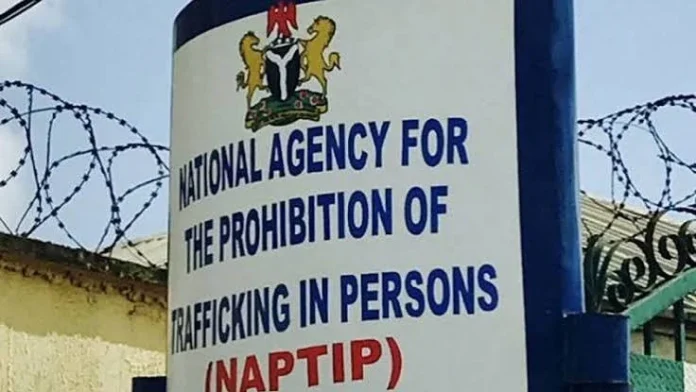
The National Agency for the Prohibition of Trafficking in Persons (NAPTIP) has secured more than 20 convictions for Sexual and Gender-Based Violence (SGBV) offences and rescued over 3,000 victims between January and August 2026.

The Head of Press and Public Relations Unit of NAPTIP, Vincent Adekoye, disclosed this in an interview with the News Agency of Nigeria on Monday in Abuja.

Adekoye said three of the convictions resulted in life imprisonment, adding that most of the prosecuted cases involved rape.

He said the agency had intensified efforts to rescue victims, arrest perpetrators and ensure that offenders were brought to justice.

The Issues

Despite increased enforcement, SGBV remains a major concern, with NAPTIP identifying the need for stronger prevention, reporting and institutional responses.

Adekoye said the agency had expanded its collaboration with the Nigeria Police Force, Nigeria Security and Civil Defence Corps and relevant ministries, departments and agencies to strengthen its response to SGBV.

He also stressed the importance of community engagement and training for frontline responders to improve early reporting and support for victims.

What’s Being Said

Adekoye urged perpetrators to desist from SGBV, warning that offenders could face prosecution under laws including the Violence Against Persons (Prohibition) Act and the Cybercrimes (Prohibition, Prevention, etc.) Amendment Act.

He also called on the media to take a more investigative approach to SGBV reporting rather than focusing solely on individual incidents.

“We want the media to ask why cases are rising and examine the roles of critical institutions, customs, norms, behaviours and habits in addressing the problem.”

Adekoye further urged journalists to adopt victim-centred reporting that safeguards survivors’ dignity, privacy and safety.

“We must protect the victims, ensure their dignity and privacy are protected, and help them regain trust in society.”

What’s Next

NAPTIP is expected to deepen collaboration with security agencies, government institutions and communities while expanding training for frontline responders.

The agency is also seeking stronger media partnerships following the inauguration of its SGBV Media Corps, aimed at promoting more responsible and investigative coverage of gender-based violence.

Bottom Line

NAPTIP’s latest figures highlight increased enforcement against SGBV, with more than 20 convictions and over 3,000 victims rescued in 2026. The agency, however, says sustained collaboration, stronger prevention and responsible media reporting remain critical to tackling the root causes of gender-based violence.

NERC dissolves Kaduna Disco board over N456.5bn debt

Keypoints

  • NERC dissolves Kaduna Electricity Distribution Plc board over prolonged financial and operational challenges.
  • KAEDC’s cumulative market obligations stood at N456.5bn as of May 2026.
  • Regulator appoints a seven-member interim board and administrator.
  • Afrexim Bank tasked with coordinating a transparent search for a new core investor.
  • NERC gives 12 months to complete the transition process.

Main Story

The Nigerian Electricity Regulatory Commission (NERC) has dissolved the board of Kaduna Electricity Distribution Plc (KAEDC) over cumulative market obligations of N456.5 billion and prolonged financial and operational challenges.

The decision, contained in Order No. NERC/2026/086, titled “Order on the Regulatory Intervention in Kaduna Electricity Distribution Plc Pursuant to the Electricity Act 2023,” took effect on Monday, August 10, 2026.

NERC said the intervention followed an inquiry and consultations with key stakeholders, including the Bureau of Public Enterprises (BPE), and was driven by KAEDC’s prolonged regulatory defaults, inadequate investment, weak operational performance and worsening financial position.

According to the regulator, KAEDC’s cumulative market obligations stood at approximately N456.5 billion as of May 2026, comprising N415.5 billion owed to the Nigerian Bulk Electricity Trading Plc and N41 billion due to the Nigerian Independent System Operator. The company also had N14.26 billion in other statutory and third-party obligations.

The commission said the company had accumulated an additional N118.6 billion in market debt since ASI Engineering Limited assumed control of its operations in June 2024, despite expectations that the takeover would improve its financial and operational performance.

NERC further disclosed that KAEDC paid only 41.93 per cent of its adjusted market invoices in 2025, resulting in a market shortfall of about N46.71 billion. It attributed the poor remittance performance largely to aggregate technical, commercial and collection losses of 71.88 per cent recorded during the year.

The regulator also faulted the company’s investment performance, saying it recorded only N2.48 billion in capital expenditure in 2025, against a minimum requirement of N24.51 billion. This represented just 10 per cent performance. Meter coverage also remained between 33.26 per cent and 35.54 per cent despite interventions to improve metering.

The Issues

NERC said KAEDC’s financial difficulties persisted despite about N6.58 billion in regulatory derogations granted between January 2024 and May 2026 and approximately N53.79 billion in Federal Government intervention funds disbursed since July 2018.

The commission warned that the company’s continued underperformance posed risks to electricity consumers, creditors, market stability and continuity of power distribution, describing its financial condition as a potential systemic risk to the Nigerian Electricity Supply Industry.

NERC also said ASI Engineering failed to meet its capital injection commitments and did not comply with conditions attached to its acquisition of a 60 per cent majority stake in KAEDC.

What’s Being Said

NERC said KAEDC had been in a “grave situation” characterised by prolonged defaults, inadequate investment, weak operational and commercial performance and insufficient assets relative to its liabilities.

The commission said further delay in addressing the situation could lead to “disruptive cessation of distribution services”, making regulatory intervention necessary to protect consumers and other stakeholders.

What’s Next

As part of the intervention, NERC dissolved the KAEDC board and removed all its directors from office. It appointed a seven-member interim board of special directors headed by Dr Abdullahi Garba.

The commission also appointed the incumbent Managing Director/Chief Executive Officer, Dr Abubakar Umar Hashidu, as administrator for an initial six-month term to oversee daily operations, ensure continuity of electricity services and safeguard the company’s assets and records.

NERC directed Afrexim Bank to coordinate an open, competitive and transparent process for selecting a replacement core investor for KAEDC. The preferred investor is expected to be presented to NERC for approval, with the process to be completed within 12 months unless the commission grants a written extension.

Bottom Line

NERC’s intervention marks a major regulatory action against KAEDC after years of mounting debt, weak remittances and inadequate investment. The regulator says the measures are aimed at preserving the distribution company as a going concern, protecting electricity consumers and facilitating its transition to a financially and operationally credible core investor.

Young South Africans rank Winnie Mandela Africa’s top female liberation fighter

Key Points

  • 51% of young South Africans named Winnie Madikizela-Mandela as Africa’s greatest female liberation fighter.
  • Albertina Sisulu and Helen Joseph followed with 6% and 5%, respectively.
  • Winnie Mandela was also the highest-ranked woman among leaders perceived to have sacrificed most for the anti-apartheid struggle, with 36%.
  • 89% of respondents described her as one of the greatest icons of the anti-apartheid movement.
  • 81% agreed that she made the greatest sacrifices among liberation leaders.
  • The findings were released on South Africa’s National Women’s Day, marking 70 years since the 1956 Women’s March.
  • The survey also found widespread concern among young South Africans about gender-based violence, women’s rights and the shortage of female leadership.

Main Story

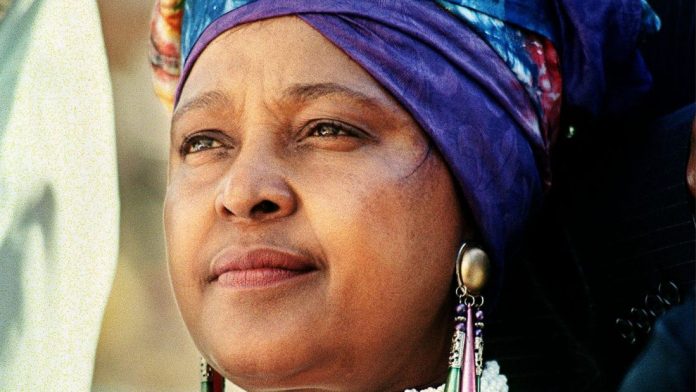
Winnie Madikizela-Mandela has emerged as the most recognised female liberation figure among young South Africans, with 51% naming her Africa’s greatest female liberation fighter in new findings from the Africa Youth Survey.

The findings, released on Monday, National Women’s Day in South Africa, show a wide margin between Madikizela-Mandela and other female liberation figures. Albertina Sisulu was named by 6% of respondents, while Helen Joseph received 5%.

The survey also ranked Madikizela-Mandela as the leading woman when respondents were asked to identify up to three people they believed sacrificed the most for the anti-apartheid movement.

She was selected by 36% of respondents, placing her behind former President Nelson Mandela, who received 61%, and one percentage point behind Steve Biko, who was selected by 37%.

The findings further indicate strong recognition of Madikizela-Mandela’s place in the anti-apartheid struggle. Eighty-nine per cent of respondents agreed that she was one of the greatest icons of the movement, including 58% who strongly agreed.

Similarly, 81% agreed that she sacrificed the most among leaders of the liberation struggle.

The survey also found that 84% of young South Africans described Madikizela-Mandela as a fallen hero who was prepared to sacrifice laws and lives in pursuit of revolution and redress, while 76% said her actions and legacy should be assessed within the context of the apartheid system.

The Issues

The findings highlight a continuing reassessment of South Africa’s liberation history among a generation born largely after the end of apartheid.

The survey data presents strong recognition of Madikizela-Mandela’s contribution while also reflecting the complexity surrounding her legacy. The findings show that young respondents are not necessarily viewing her through a purely celebratory lens, but are placing her actions within the political and social conditions of apartheid.

The results also come against the backdrop of continuing concerns about the position of women in contemporary South Africa.

Ninety-five per cent of respondents said they were concerned about gender-based violence and femicide, including 81% who described themselves as very concerned.

A further 93% expressed concern that women’s rights were not adequately protected, while 82% agreed that Africa still lacked sufficient female leaders and role models.

What’s Being Said

Ivor Ichikowitz, Founder and Commissioner of the Africa Youth Survey and Executive Producer of The Trials of Winnie Mandela, said the findings reflected how a younger generation was reassessing the country’s liberation history.

“Young South Africans see Winnie Mandela as a central protagonist in the liberation story, a woman who carried the struggle in public while paying an extraordinary private price.”

Ichikowitz said the findings suggested that young people were seeking a more comprehensive understanding of the liberation struggle rather than a simplified account of its key figures.

He also linked the findings to renewed public interest generated by The Trials of Winnie Mandela, a seven-part documentary series that premiered on Netflix in April 2026.

What’s Next

The findings form part of the Africa Youth Survey 2026, commissioned by the Ichikowitz Family Foundation and conducted by PSB Insights.

The 2026 survey interviewed 4,901 young Africans aged between 18 and 24 across 16 African countries in March 2026. According to the organisers, it is the largest edition of the recurring survey since its launch in 2020.

The survey has covered 28 African countries and more than 18,000 face-to-face interviews since its inception.

The latest findings are expected to contribute to continuing discussions about Africa’s liberation history, women’s leadership, gender-based violence and the views of the continent’s younger population.

Bottom Line

The Africa Youth Survey places Winnie Madikizela-Mandela firmly at the top of young South Africans’ ranking of female liberation figures, with 51% naming her Africa’s greatest female liberation fighter. The findings also show that admiration for her historical role exists alongside a broader demand among young South Africans for stronger female leadership, greater protection of women’s rights and action against gender-based violence.

Tobacco Bill: Groups warn proposed changes could widen youths’ access to nicotine

Key Points

  • Civil society and public-health groups have urged the National Assembly to withdraw the National Tobacco Control Act (Amendment) Bill 2025.
  • The groups say some provisions could expand advertising, promotion, retail display and online sales of emerging nicotine products.
  • They raised concerns over proposed rules covering vapes, heated tobacco products and nicotine pouches.
  • The coalition also questioned provisions on online sales, age verification, health warnings and ministerial exemptions.

The groups want a transparent review of the bill with stronger public-health safeguards.

Main Story

Civil society organisations, health advocates and public-interest groups have called for the withdrawal of the National Tobacco Control Act (Amendment) Bill 2025, warning that some proposed provisions could weaken existing safeguards against tobacco and nicotine exposure.

The groups, operating under the Nigeria Tobacco Control Community, raised concerns on Monday in Abuja during an event organised to oppose provisions of the proposed amendment.

The statement, read by the Executive Director of Corporate Accountability and Public Participation Africa (CAPPA), Akinbode Oluwafemi, said the coalition supported updating the National Tobacco Control Act 2015 and its 2019 Regulations to address emerging nicotine products.

However, the groups maintained that any amendment should strengthen existing protections rather than create additional avenues for tobacco and nicotine companies to market their products.

The coalition identified proposed provisions covering advertising, promotion, sponsorship, product sampling, retail display and online sales of non-combustible nicotine products as areas of concern.

It specifically faulted provisions that could permit advertising of such products in adult publications, at points of sale and on online platforms, as well as sponsorship of cultural, social and recreational events.

The groups also questioned the proposed definition of an adult publication as one with at least 50 per cent adult readership, arguing that the threshold could still expose children to tobacco and nicotine advertising.

Another major concern is the proposed allowance for online sales, remote orders and courier delivery of non-combustible nicotine products.

The coalition said age-verification mechanisms could be circumvented and questioned whether regulators had sufficient capacity to monitor online vendors, social media platforms, courier companies and delivery riders nationwide.

The Issues

The debate centres on how Nigeria should regulate emerging nicotine products while maintaining existing tobacco-control protections.

The groups are particularly concerned about the potential exposure of young people to products containing addictive nicotine through digital platforms, retail outlets and other channels.

They also opposed the proposed classification of heated tobacco products as non-combustible products, arguing that heating tobacco instead of burning it does not eliminate the presence of tobacco, nicotine or associated health risks.

The coalition further raised concerns about proposed reductions in health-warning requirements for some novel nicotine products.

It also questioned a provision that would give the Minister powers to exempt certain non-combustible products from some provisions of the law on undefined “public interest” grounds.

According to the groups, such discretionary powers could create opportunities for lobbying and regulatory capture.

What’s Being Said

The Executive Director of CAPPA, Akinbode Oluwafemi, said the coalition’s assessment was that the proposed amendment would weaken existing safeguards.

“This Bill does not protect Nigerians. It instead weakens existing safeguards and creates a wide-open market for tobacco and nicotine companies to thrive at the expense of public health,” the groups said.

Speaking for the Nigeria Tobacco Alliance, Olawale Makanjuola urged the Federal Ministry of Health and Social Welfare to intervene before the bill becomes law in its current form.

“Public health should be of importance to Nigeria. As members of the Tobacco Alliance, we are firmly against this bill,” Makanjuola said.

The coalition, however, acknowledged some provisions it considered positive, including the proposed extension of smoke-free zones to within 30 metres of schools and health facilities.

What’s Next

The Nigeria Tobacco Control Community wants the National Assembly to recall the bill and subject it to a transparent review focused on public-health protection.

The groups are also demanding the publication of committee reports, voting records and stakeholder submissions connected with the development of the consolidated bill.

They called on the Federal Ministry of Health and Social Welfare to clarify its position and urged President Bola Tinubu not to assent to the bill if it reaches his desk in its current form.

The debate comes as Nigeria’s tobacco-control framework faces the challenge of regulating newer products, including electronic cigarettes, heated tobacco products and nicotine pouches.

Bottom Line

The proposed amendment has triggered a fresh debate over Nigeria’s approach to emerging nicotine products. While advocates support updating the country’s tobacco-control framework, they want the process to preserve strict safeguards against youth exposure, particularly across online and retail channels.

147 Lagos structures face impact as Coastal Highway service lane advances

Key Points

  • 147 structures in Lagos are expected to be affected by the service lane of the Lagos-Calabar Coastal Highway.
  • Only five of the structures are slated for full demolition.
  • The remaining 142 structures are expected to experience minimal impact.
  • President Bola Tinubu said affected property owners would receive compensation where necessary.
  • The disclosure was made during the flag-off of rehabilitation works on Eko and Marine bridges and repairs to a flooded section of the Lagos-Ibadan Expressway.

Main Story

The Federal Government has disclosed that 147 structures in Lagos are expected to be affected by the construction of the service lane of the Lagos-Calabar Coastal Highway, with five of them scheduled for full demolition.

President Bola Tinubu disclosed this during a stakeholder engagement held alongside the flag-off of rehabilitation works on Eko and Marine bridges and repairs to a flooded section of the Lagos-Ibadan Expressway.

Represented by Lagos State Governor Babajide Sanwo-Olu, Tinubu said the remaining 142 structures would experience minimal impact from the construction works.

The figure was presented during the engagement by a representative of the AEC consortium, which is involved in the project.

Tinubu assured owners of affected properties that the Federal Government would provide compensation where necessary, while urging them to remain patient as the project progresses.

“It will be given to you at the right time,” the President said.

The President said the stakeholder engagement was organised to secure public support for the projects and facilitate their smooth and effective implementation.

He described Eko Bridge as one of the oldest bridges constructed after Nigeria’s independence and highlighted the importance of Marine Bridge as a major access route to Lagos seaports.

Tinubu also commended the Minister of Works, David Umahi, for his efforts in the development and rehabilitation of road infrastructure across the country.

He urged Lagos residents and other stakeholders to support infrastructure projects designed to improve transportation and connectivity, noting that some adjustments would be necessary to achieve long-term public benefits.

“For all of us to enjoy the full benefit of infrastructure, we have to shift a bit, so that it becomes an asset that will outlive all of us,” he said.

The Issues

The disclosure of the affected structures places property impact and compensation among the key issues surrounding the Lagos-Calabar Coastal Highway service lane.

While only five structures are expected to be completely demolished, 142 others are projected to experience some level of impact from the construction.

The Federal Government’s commitment to compensation where necessary is therefore central to managing the effect of the project on affected property owners.

The rehabilitation of Eko and Marine bridges also highlights the need to maintain critical transport infrastructure serving Lagos, particularly routes connected to the city’s major commercial and maritime corridors.

What’s Being Said

Tinubu said the government was open to constructive criticism but urged stakeholders to support infrastructure projects that were properly designed and executed.

He maintained that the projects were intended to deliver long-term benefits to Lagos residents and Nigerians generally.

“It is my honour to flag off all of these projects to the benefit of mankind, to our citizens in Lagos, to the benefit of all our people across the country,” he said.

What’s Next

The construction of the coastal highway service lane will proceed with the identified structures expected to be affected by the project.

The Federal Government is also expected to continue engagement with affected property owners and other stakeholders as implementation progresses.

Meanwhile, rehabilitation works on Eko and Marine bridges and repairs to the affected section of the Lagos-Ibadan Expressway are expected to improve the condition of the critical transport routes.

Bottom Line

The Federal Government says 147 structures will be affected by the Lagos-Calabar Coastal Highway service lane, but only five are expected to face full demolition. The government has also pledged compensation where necessary as it moves ahead with the coastal highway and other major infrastructure projects in Lagos.

Nigerian companies rake in N179.5 billion from T-bills, bank placements in H1 2026

Nigerian companies rake in N179.5 billion from T-bills, bank placements in H1 2026

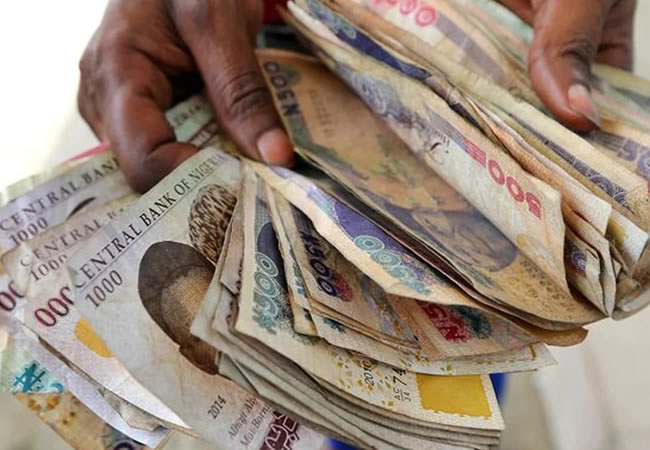
Nigerian listed companies raked in N179.5 billion in finance income in the first half of 2026, representing a 174% year-on-year increase from N65.6 billion in the same period of 2025.

The figure is based on the H1 2026 financial statements of 19 listed companies that recorded positive growth in finance income during the period.

Across the broader sample of all companies reviewed, total finance income surpassed N200 billion.

The finance income includes interest earned from fixed-income securities such as treasury bills, Federal Government of Nigeria (FGN) bonds, short-term bank deposits, and money market placements, reflecting the high-interest-rate environment Nigerian companies have operated in over the last few years.

What the data is saying

MTN Nigeria was the single largest earner of finance income in H1 2026, recording N46.8 billion. The telecoms company holds a combined liquid asset position of N874 billion, comprising N459 billion in cash and short-term deposits and another N415 billion in separately classified treasury bills and FGN bonds.

MTN purchased a net N240 billion in government bonds and treasury bills during the half year.

Dangote Cement collected N14.8 billion in interest, while its cash position doubled from N397.6 billion in December 2025 to N796.3 billion in June 2026, including N216.4 billion in short-term bank deposits.

Julius Berger Nigeria posted N9 billion in gross finance income, compared with a profit after tax of N6.1 billion, while Presco also generated N9 billion in finance income.

NASCON Allied Industries more than doubled its finance income to N5.3 billion, while Seplat Energy reported $9.1 million, up 10.3% from $8.3 million a year earlier.

Not every company benefited. BUA Cement’s finance income fell from N18.7 billion to N7.5 billion, while Oando’s dropped by N6.1 billion, highlighting how leveraged companies face the other side of high interest rates through increased finance costs.

The impact of high interest rates

The surge in finance income traces directly to the Central Bank of Nigeria’s Monetary Policy Rate, which stands at 27.5%. Nigeria’s inflation, which peaked above 34% in 2024 before moderating, prompted aggressive monetary tightening aimed at anchoring price expectations and making naira-denominated instruments more attractive.

The high-rate environment has resulted in a 91-day treasury bill market yielding above 20%, with longer-dated FGN bonds offering comparable or higher returns.

Cash-rich companies can deploy surplus liquidity into these instruments with minimal operational effort, while banks place corporate deposits into government securities and other instruments.

Deposit rates received by companies typically range from 18% to 22%, depending on tenor and amount.

For companies with both borrowings and substantial cash positions, finance income can partially offset increased borrowing costs.

The distinction between gross and net finance income is therefore important, as companies that have reduced debt and accumulated cash are better positioned to benefit from prevailing rates.

Meanwhile, manufacturers in the country have decried the current rate, saying the 26.5% is limiting the flow of credit to the sector.

According to the Director General of the Manufacturers Association of Nigeria (MAN), Segun Ajayi-Kadir, the CBN should reduce the MPR below 20% to improve access to credit for manufacturers.

Get up to speed

Total cash and short-term deposits held by the 35 listed companies reviewed grew by N437 billion to N5.41 trillion between December 2025 and June 2026. This represented an 8.8% increase in aggregate cash holdings.

For companies including Dangote Cement, BUA Cement, BUA Foods and NASCON, rising cash balances and finance income largely reflect surplus operating cash being deployed into short-term deposits.

BUA Foods placed N103 billion in new short-term investments during H1 2026, compared with none on its balance sheet in December 2025.

MTN’s reported cash balance decreased by N174 billion to N459 billion. Still, a net N240 billion was simultaneously transferred into longer-dated FGN treasury bills and bonds, increasing its total liquid asset base to N874 billion.

Nestle Nigeria’s cash fell 84% from N35.3 billion to N5.6 billion, despite reporting significant finance income, as part of its finance income included non-cash foreign exchange translation gains on euro-denominated intercompany liabilities.

The figures show that reported finance income does not necessarily translate into stronger cash positions, particularly where non-cash gains are included.

What you should know

The finance income data comes amid a mixed but largely positive trading period for Nigerian listed companies across sectors.

Cement was the standout sector, with Dangote Cement and BUA Cement recording combined revenue of N3.92 trillion, up 23.7% year on year, while combined pre-tax profit rose 47.1% to N1.68 trillion.

Consumer goods companies recorded combined revenue of N2.09 trillion, down 3.9%, but combined pre-tax profit rose 43% to N556.3 billion as finance income supplemented operating margins.

MTN Nigeria posted revenue of N2.99 trillion, up 25.9%, while the three listed breweries recorded combined revenue of N1.41 trillion and pre-tax profit of N269.4 billion.

Agribusiness companies Presco, Okomu Oil and HBM Nigeria recorded combined revenue of N198.8 billion, up approximately 59%, while combined pre-tax profit more than doubled to N122.2 billion.

Across industrials, pharmaceuticals, transport and aviation, and ICT/fintech, performance was more varied, underscoring how operating conditions and companies’ individual cash and debt positions continue to determine how much they benefit from Nigeria’s high-interest-rate environment.

NANS targets ₦200 from students, seeks NYSC link for dues collection

Lagos Has No Plans To Reduce NYSC Doctors' Allowance - Commissioner

Key points

  • NANS proposes an annual ₦200 dues payment for students.
  • The students’ body is considering a link between payment of the dues and NYSC mobilisation.
  • NANS wants to collect the dues directly from students instead of relying on SUGs and school managements.
  • The association says the proposed model is aimed at strengthening its financial independence and capacity to represent students.
  • Any new NYSC mobilisation requirement would have to be formally established by the relevant authorities.

Main Story

The National Association of Nigerian Students (NANS) is seeking to introduce a direct annual dues collection system under which students would pay ₦200 to the association, with its leadership considering a link between payment and mobilisation for the National Youth Service Corps (NYSC).

NANS National President, Akinteye Babatunde, disclosed the proposal in social media posts and a video explaining the association’s plans to reform its funding structure.

Babatunde said NANS was considering working with the NYSC and other agencies connected to students to facilitate direct collection of the annual dues.

“We will be working with NYSC and one of the criteria to be mobilised for camp is NANS dues receipt,” he said.

However, he did not disclose details of a formal agreement with the NYSC or state when the proposed arrangement would take effect.

The NANS president said the annual payment would be ₦200 per student and argued that the amount was small enough not to impose a significant additional financial burden on students.

“This is not an avenue to stress the students further because the due is as low as 200 Naira per student in a year,” he said.

According to Babatunde, the proposed system is intended to address funding challenges faced by NANS under the existing arrangement, where the association receives capitation through student union governments and institutions.

He alleged that between 80 and 90 per cent of student union governments were no longer in effective control of their dues, claiming that some institutions release only a portion of the funds collected.

Babatunde said the situation had weakened NANS financially and affected its ability to respond to student-related issues, despite the association continuing to intervene in cases across tertiary institutions.

He said NANS was therefore considering moving from the existing capitation arrangement to a platform that would allow students to pay their dues directly to the association.

“We are going towards [agencies] to cooperate with to get this due directly to the organisation, no more to the management, no more to the SUGs, but directly to the organisation,” he said.

Babatunde also argued that greater financial independence would allow NANS to engage government agencies more effectively without depending on politicians or government officials for funding.

“How do you want people to run to politicians or government to seek their support and when they have issues with the agencies, they still want to stand and fight those agencies?” he asked.

He said NANS had continued to handle student complaints and emergencies despite its funding challenges, citing thousands of complaints received by the association.

“When I speak to you, I have about 3,000, 4,000 emails of student complaints… genuine complaints,” he said.

He added that NANS had incurred expenses responding to emergencies involving students, including kidnapping cases and accidents involving its buses, despite having limited access to dues.

The Issues

The proposed link between NANS dues and NYSC mobilisation raises questions about whether payment to a student association can become a condition for participation in a statutory national service programme.

NANS’ announcement does not by itself establish a new NYSC mobilisation requirement. Any such arrangement would require formal approval and implementation through the appropriate institutional and legal processes.

The proposed direct collection system also shifts responsibility for NANS funding from student union structures to the association itself, potentially changing how student dues are administered across tertiary institutions.

NANS says the move is necessary because of alleged difficulties in accessing funds collected through existing structures.

What’s Being Said

NANS President, Akinteye Babatunde:

“This is not an avenue to stress the students further because the due is as low as 200 Naira per student in a year.”

Babatunde said the proposed payment system was designed to make NANS financially independent and improve its ability to represent students.

He also argued that students should contribute financially to an organisation from which they expect representation and support.

“How can you feel the impact correctly, if you are not putting your money where your mouth is? This is an organisation for all of us,” he said.

What’s Next

NANS plans to amend its laws and develop proposals to support the direct collection of the annual dues.

The association is also expected to engage relevant agencies and stakeholders on the proposed payment structure.

Whether payment of the ₦200 dues will eventually become a requirement for NYSC mobilisation remains subject to formal discussions, approval and confirmation by the relevant authorities.

Bottom Line

NANS is seeking a new funding model that would allow it to collect ₦200 annually from students directly, rather than depend on student union governments and school managements.

The proposed NYSC link could significantly expand the collection system if formally approved, but for now, NANS has not established payment of its dues as an official NYSC mobilisation requirement.

NRS Chairman: Tinubu reforms prevented deeper poverty, put 2026 revenue on N40trn path

Key points

  • NRS Chairman Zacch Adedeji says poverty could have been significantly worse without Tinubu’s economic reforms.
  • NRS collected about N15.8 trillion between January and May 2026, up from N10.6 trillion in the same period of 2025.
  • The revenue agency is targeting more than N40 trillion in revenue for 2026.
  • Adedeji cited stronger state finances, student loans, credit access and stock-market growth as benefits of the reforms.
  • IMF assessments have acknowledged improved macroeconomic stability while raising concerns about poverty, food insecurity and social protection.

Main Story

The Chairman of the Nigeria Revenue Service (NRS), Zacch Adedeji, has defended the Federal Government’s economic reforms, arguing that the number of Nigerians falling into poverty could have been substantially higher without the measures introduced under President Bola Tinubu.

Adedeji made the claim during an interview with Channels Television, where he argued that the impact of the administration’s policies should be assessed against the economic conditions inherited by the government rather than solely by current cost-of-living pressures.

Responding to concerns over rising poverty and food insecurity, the NRS chairman said the reforms had helped prevent a deeper deterioration in household welfare.

“If you remember where we are coming from, if we had not done what we were supposed to do, possibly double that population would have gone into poverty. I’m telling you that progress is what we should measure. Where are we coming from? That is the point I’m making,” Adedeji said.

He also pointed to the performance of government revenue as an indication of the effect of the reforms, saying the NRS generated almost as much revenue in the first half of 2026 as it collected throughout 2025.

The agency collected about N15.8 trillion between January and May 2026, compared with N10.6 trillion during the corresponding period of 2025. The NRS has projected revenue of more than N40 trillion for the full year.

Adedeji attributed the increase to tax reforms and stronger collections from major economic sectors, including petroleum and mining. He said collections had exceeded government projections even when revenue from newly introduced taxes was excluded.

According to him, stronger government revenue has improved the financial position of state governments, reducing their dependence on federal support for salaries and other obligations.

He also cited the student loan programme, expanded credit access for civil servants and the growth of the Nigerian equities market as evidence of increased economic opportunities under the reforms.

Adedeji noted that market capitalisation had increased from about N30 trillion to N150 trillion, while more than one million students had benefited from education loans.

The Issues

The central issue remains whether improvements in government revenue and macroeconomic indicators are translating into improved living conditions for households.

The International Monetary Fund has acknowledged improvements in Nigeria’s fiscal and external positions and greater macroeconomic resilience, but has also highlighted persistent poverty, food insecurity and cost-of-living pressures.

The Fund has warned that higher fuel, food and fertiliser prices could increase government revenues while simultaneously intensifying inflationary pressure on vulnerable households.

Another concern is the adequacy of Nigeria’s social protection system. The IMF has said existing mechanisms may not be sufficient to shield vulnerable households from the immediate effects of economic reforms.

This leaves the government facing the challenge of maintaining fiscal and macroeconomic gains while ensuring that the benefits of increased revenue translate into better household welfare.

What’s Being Said

NRS Chairman, Zacch Adedeji:

“If you remember where we are coming from, if we had not done what we were supposed to do, possibly double that population would have gone into poverty.”

Adedeji said the reforms should be assessed based on the economic conditions inherited by the administration and the progress recorded since then.

He also pointed to increased revenue, student loans, improved state finances, expanded credit and stock-market growth as indicators of economic progress.

What’s Next

The NRS is targeting more than N40 trillion in revenue for 2026, compared with N28.23 trillion collected in 2025.

The performance of the reforms will increasingly be measured not only by revenue mobilisation and macroeconomic stability but also by their impact on inflation, employment, household incomes, poverty and food security.

The government’s ability to convert higher public revenue into infrastructure, social investment and targeted support for vulnerable households will remain central to determining whether the gains cited by the NRS translate into broader economic welfare.

Bottom Line

The NRS says Tinubu’s reforms have strengthened government revenue and prevented a deeper deterioration in poverty, while international assessments continue to flag significant household-level pressures.

SEC launches nationwide drive to unlock unclaimed dividends, inherited investments

Key points

  • SEC launches nationwide campaign to help investors and beneficiaries recover unclaimed dividends and inherited investments.
  • Initiative targets challenges around probate, estate administration and documentation.
  • SEC says poor awareness and inadequate estate planning are contributing to the accumulation of dormant assets.
  • Commission seeks to strengthen investor protection and reconnect legitimate beneficiaries with financial assets.

Main Story

The Securities and Exchange Commission (SEC) has launched a nationwide awareness campaign to help investors and beneficiaries recover unclaimed dividends, dormant assets and investments inherited from deceased relatives.

The initiative, unveiled in Abuja through the Probate/Unclaimed Monies Awareness and Investor Clinic, is aimed at addressing challenges that prevent beneficiaries from accessing financial assets held in the capital market.

The campaign will educate investors, beneficiaries and estate executors on probate procedures, estate administration and the documentation required to claim shares, dividends and other investments left behind by deceased investors.

Speaking at the event, SEC Director-General, Dr Emomotimi Agama, said the Commission was addressing a long-standing challenge affecting families whose deceased relatives held investments in the capital market.

He said beneficiaries often encounter difficulties obtaining probate, letters of administration, death certificates and other documents required to establish their entitlement to inherited financial assets.

Agama noted that the complexity of estate administration frequently leaves legitimate investments inaccessible for extended periods, despite the existence of identifiable beneficiaries.

He described unclaimed dividends and dormant assets as a significant concern for the Nigerian capital market because funds belonging to individuals and families remain disconnected from their rightful owners.

The SEC DG said the Commission would continue to deploy policy reforms, investor education and stakeholder engagement to improve access to inherited investments and strengthen investor protection.

He added that the awareness campaign would help members of the public understand probate requirements, estate administration and the procedures for recovering unclaimed monies.

The Issues

A major challenge identified by stakeholders is the limited awareness among beneficiaries about investments held by deceased relatives.

Some beneficiaries may also be unaware that shares, dividends and other financial assets form part of a deceased person’s estate and can be transferred to legitimate heirs.

The absence of adequate estate planning can further complicate the process, while difficulties in obtaining the necessary legal and administrative documents may delay claims.

These challenges contribute to financial assets remaining dormant even when legitimate beneficiaries are available to claim them.

What’s Being Said

SEC Director-General, Dr Emomotimi Agama:

“Across our market, unclaimed dividends and dormant assets represent real money—money that belongs to real families, sitting idle, disconnected from the people it was meant to serve.”

Agama said the SEC was committed to bridging the gap through policy reforms, investor education and sustained engagement with investors, beneficiaries and other stakeholders.

Acting CEO, Meristem Registrars and Probate Services Ltd., Ms Nkechinyelu Okoye:

Okoye identified poor awareness and inadequate estate planning as major factors behind the accumulation of unclaimed financial assets.

She said some beneficiaries were unaware of their deceased relatives’ investments, while others lacked knowledge of the documentation and legal procedures required to establish their entitlement and complete claims.

What’s Next

The SEC is expected to intensify public awareness on probate and estate administration while engaging investors, beneficiaries, registrars and other stakeholders on the recovery process.

The campaign is also expected to provide members of the public with clearer information on the steps and documentation required to access inherited investments and unclaimed monies.

Bottom Line

The SEC’s nationwide campaign is designed to reconnect dormant capital-market assets with their rightful owners while addressing the documentation, awareness and estate-administration challenges that have kept many dividends and inherited investments unclaimed.

Nigeria can still qualify for 2027 women’s world cup- Here’s how

By Boluwatife Oshadiya | August 10, 2026

Key Points

  • Cameroon’s 1-0 quarter-final win over Nigeria at WAFCON 2026 ended the Super Falcons’ title defence and automatic World Cup qualification
  • Four WAFCON semi-finalists (Algeria, Cameroon, Malawi, Morocco) secure Africa’s direct tickets to the 32-team tournament in Brazil
  • Nigeria joins South Africa, Ghana and Côte d’Ivoire in African play-offs for two intercontinental spots
  • Super Falcons face South Africa on Thursday; winners advance to FIFA’s two-phase Play-Off Tournament
  • Success requires winning the African play-off then navigating the intercontinental pathway in late 2026 and early 2027

Main Story

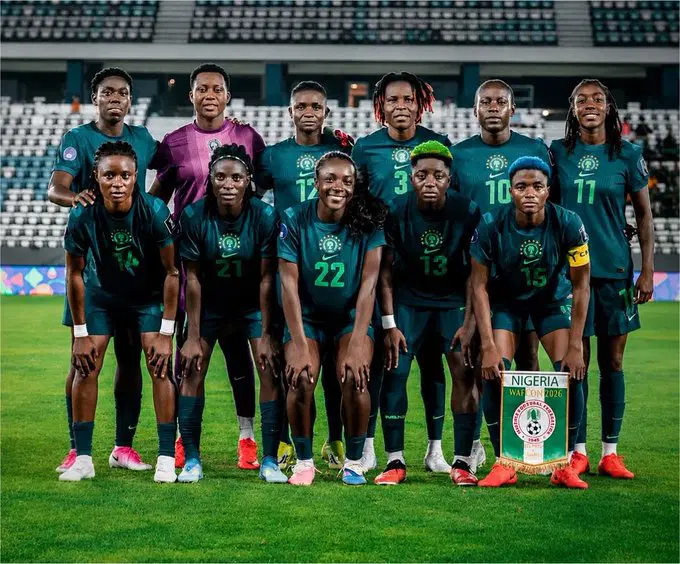
Nigeria’s Super Falcons suffered a 1-0 quarter-final defeat to Cameroon at the 2026 Women’s Africa Cup of Nations in Casablanca on 9 August, ending their bid to defend the continental title and missing automatic qualification for the 2027 FIFA Women’s World Cup.

Nineteen-year-old Myriam Nyadjou’s long-range free-kick in the 19th minute proved decisive. Cameroon goalkeeper Michaely Bihina produced a series of important saves as Nigeria created multiple chances but failed to convert. The result marked Nigeria’s earliest exit at a WAFCON finals and the first time the ten-time champions failed to reach the semi-finals.

The 2026 WAFCON doubles as Africa’s qualifying pathway for the expanded 32-team Women’s World Cup, which Brazil will host from 24 June to 25 July 2027. The four teams that reach the semi-finals — Algeria, Cameroon, Malawi and Morocco — earn Africa’s four direct places.

The four quarter-final losers still have a route. Nigeria, South Africa, Ghana and Côte d’Ivoire will contest African play-offs. Nigeria face South Africa on Thursday (13 August). The winners of the two ties (Nigeria–South Africa and Ghana–Côte d’Ivoire) advance as Africa’s two representatives to FIFA’s inter-confederation Play-Off Tournament.

Here is how the Super Falcons can still reach Brazil:

  1. Win the African play-off Nigeria must defeat South Africa to claim one of the two continental places allocated to the Play-Off Tournament. Defeat ends qualification hopes immediately.
  2. Advance through the intercontinental Play-Off Tournament The two African qualifiers join eight other nations (two each from AFC, Concacaf and CONMEBOL, plus one each from OFC and UEFA) in a ten-team competition.
  3. Win their assigned pathway FIFA’s format splits the tournament into two phases. The first phase (November–December 2026) features six teams ranked by the latest FIFA/Coca-Cola Women’s World Ranking: two from AFC, two from CAF, one from CONMEBOL and one from OFC. Two teams advance. The final phase (February 2027) brings those two together with two Concacaf sides, one CONMEBOL side and one UEFA side. The six teams are drawn into three pathways. A single knockout match in each pathway decides the three remaining World Cup places. Teams from the same confederation cannot be drawn against each other.

FIFA confirmed: “The six teams will be drawn into three paths, with a direct knockout match to determine the final three teams qualifying for the FIFA Women’s World Cup 2027. Teams from the same confederation will not be permitted to be drawn in the same pathway.”

The Issues

Nigeria has appeared at every FIFA Women’s World Cup since the inaugural 1991 edition — a unique unbroken record among African sides. Missing the 2027 tournament would end that streak and represent a significant setback for a programme that has long set the continental standard.

The expanded 32-team format and revised qualification structure give Africa a theoretical maximum of six teams at the finals (four direct plus two via play-offs). This is an improvement on previous cycles, yet the pathway for the quarter-final losers is longer, more complex and carries greater risk. Success requires two further knockout victories spaced months apart, against potentially stronger opposition from other confederations, with no home advantage guaranteed in the centralised play-off venues.

The Super Falcons’ recent form at WAFCON — an opening-group loss to Malawi followed by recovery wins over Zambia and Egypt — already signalled vulnerability. Failure to convert clear chances against Cameroon compounded the problem. Structural questions around clinical finishing, squad depth and preparation under pressure now sit alongside the immediate sporting challenge of the play-off route.

What’s Being Said

Super Falcons head coach Justin Madugu accepted responsibility after the Cameroon defeat and pointed to the second chance still available.

“The ladies did the best that they could do but that’s the way the game could go. We apologise and I take responsibility for that,” Madugu said. “But we still have a second chance and we will do our best to see what comes out of it.”

He added that Nigeria created more clear opportunities against Cameroon than in previous tournament matches yet lacked the required precision: “In all the games they played, they never created the type of chances they created today but it’s just that the conversion was not right and we were not precise and clinical with our finishing.”

FIFA’s official description of the Play-Off Tournament underscores the multi-stage nature of the remaining route and the protection against same-confederation match-ups in the final phase.

What’s Next

  • Thursday 13 August: Nigeria vs South Africa in the African play-off (Casablanca). Winner progresses; loser is eliminated from World Cup contention.
  • Parallel African play-off: Ghana vs Côte d’Ivoire. The two winners become Africa’s representatives in the inter-confederation tournament.
  • November–December 2026: First phase of the FIFA Play-Off Tournament (centralised venue, six teams).
  • February 2027: Final phase (centralised venue). Three pathway winners qualify for Brazil 2027.
  • WAFCON semi-finals take place on 12–13 August, with the final scheduled for 16 August. Those matches determine the continental champion but no longer affect Nigeria’s World Cup path.

The Bottom Line: The Super Falcons’ earliest WAFCON exit in modern history has closed the direct door to Brazil but left a narrow, multi-stage corridor open. Qualification is still mathematically possible, yet it now demands two further high-stakes knockout wins across different competition windows and against broader international opposition. Nigeria’s unbroken World Cup record since 1991 hangs on their ability to regroup quickly, convert the chances that deserted them against Cameroon, and navigate a pathway designed to be unforgiving.

NAF airstrikes kill 10 ISWAP fighters, including key commander, in Borno

Key points

  • Nigerian Air Force airstrikes have reportedly killed 10 ISWAP fighters in Borno State.
  • The operation targeted suspected terrorists in the Sambisa Forest following intelligence on their movements.
  • Among those reportedly killed was ISWAP commander Abu Khalid Al Muhajir.
  • NAF said the operation could disrupt the group’s movement, leadership protection and coordination across its enclaves.

Main Story

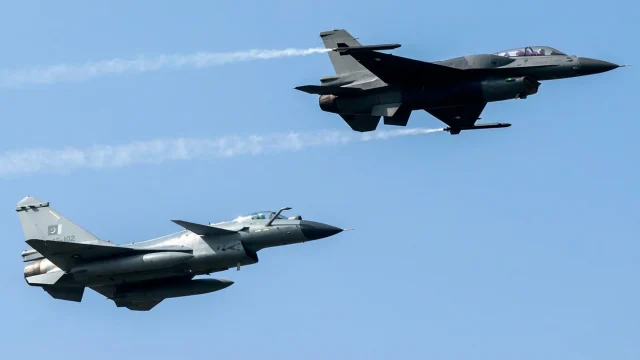
The Nigerian Air Force (NAF) has reported the neutralisation of nine Islamic State West Africa Province (ISWAP) fighters, including a key commander, during an air operation in the Sambisa Forest area of Borno State.

The operation was conducted on Saturday, August 8, 2026, following intelligence on the movement and activities of suspected terrorists within the forest.

In a statement, NAF Director of Information and Public Relations, Air Commodore Ehimen Ejodame, said post-operation intelligence confirmed that nine fighters were killed, while several others sustained injuries.

Among those reportedly killed was Abu Khalid Al Muhajir, whom the NAF identified as an ISWAP commander responsible for facilitating the movement and providing security for senior members of the terrorist group.

Ejodame said the commander’s reported knowledge of routes, terrain and tactical movements linking terrorist enclaves in and around the Sambisa Forest made his elimination significant to the ongoing counterterrorism campaign.

The Operation

The NAF deployed a Remotely Piloted Aircraft to conduct persistent Intelligence, Surveillance and Reconnaissance over the area.

The surveillance platform identified and tracked a group of suspected terrorists moving towards a hideout before the target was confirmed and engaged in a precision airstrike.

According to the NAF, subsequent battle damage assessment showed significant effects on the targeted compound, with several terrorists neutralised.

Intelligence gathered after the operation also indicated that some of the affected fighters were linked to elements suspected of involvement in a recent ambush on Nigerian troops along the Bita-Yamtage axis in Gwoza Local Government Area.

The Issues

The operation comes amid continued counterterrorism efforts in northeastern Nigeria, where terrorist groups have maintained networks across difficult terrain and remote forest areas.

For security forces, the ability to track terrorist movements before fighters reach operational positions remains critical to preventing attacks on troops and vulnerable communities.

The NAF said the integration of persistent surveillance with precision strike capabilities is strengthening its ability to identify, track and engage terrorist elements before they can regroup or threaten friendly forces.

The reported death of a commander responsible for protecting and moving senior ISWAP members could also affect the group’s internal mobility and coordination.

What’s Being Said

Ejodame described the reported elimination of Abu Khalid Al Muhajir as a significant setback for ISWAP because of his alleged role in facilitating the movement and protection of high-value members.

He said the operation was expected to disrupt the group’s leadership protection arrangements, movement of senior personnel and coordination across its enclaves.

“The Nigerian Air Force will continue to sustain intelligence-led and precision air operations in close coordination with surface forces,” Ejodame said.

According to him, the objective is to degrade terrorist capabilities, restrict their freedom of movement and create a safer environment for communities affected by insecurity in the North-East.

What’s Next

The NAF is expected to maintain intelligence-led air operations in coordination with ground forces across terrorist-affected areas of the North-East.

Further surveillance and precision operations could focus on disrupting terrorist movement corridors, command structures and logistical networks.

The effectiveness of the latest operation will ultimately depend on sustained intelligence gathering and coordination between air and surface forces to prevent surviving fighters from regrouping.

Bottom Line

The reported neutralisation of nine ISWAP fighters and commander Abu Khalid Al Muhajir represents another intelligence-led operation against terrorist networks in Borno. Beyond the immediate casualties, the NAF says the strike is intended to disrupt ISWAP’s leadership protection system, mobility and operational coordination in the Sambisa Forest and surrounding areas.

Money market rates diverge as liquidity rises 36% to ₦4.08tn

How Much Money Is Spent On Groceries In Nigeria, Other Countries?

By Boluwatife Oshadiya | August 10, 2026

Key Points

  • Financial system liquidity rises 36% week-on-week to ₦4.08 trillion from ₦3.00 trillion
  • OPR holds at 22.00% while overnight rate falls four basis points to 22.10%
  • Primary market repayments and stronger Standing Deposit Facility placements drive the liquidity surplus

Main Story

Nigeria’s financial system liquidity rose 36% week-on-week to ₦4.08 trillion from ₦3.00 trillion, easing short-term funding pressures and leaving money market rates mixed, according to Cowry Asset Management Limited.

The liquidity increase was driven primarily by ₦2.45 trillion in primary market repayments and stronger bank placements of about ₦2.60 trillion at the Central Bank of Nigeria’s (CBN) Standing Deposit Facility (SDF), according to market data cited by Cowry Asset.

The combined inflows lifted the opening net surplus balance above ₦5.00 trillion, strengthening liquidity conditions across the banking system. Despite the surplus, the CBN continued its liquidity management operations through Open Market Operations (OMO) auctions.

The Open Repo Rate (OPR) remained unchanged at 22.00%, while the overnight (OVN) rate declined by four basis points to 22.10%, reflecting the improved liquidity position and reduced immediate funding pressure.

The Nigerian Interbank Offered Rate (NIBOR) curve also moderated across maturities during the review period. The movement indicates that stronger system liquidity is feeding through to interbank funding conditions even as the CBN maintains a restrictive monetary policy stance.

Banks also increased demand at the CBN’s OMO bills auction, where an average spot rate of about 20% was offered to market participants. The activity points to continued investor demand for short-term naira-denominated instruments and provides the central bank with an avenue to absorb surplus liquidity.

Market funding conditions nevertheless remained relatively stable during the period, with the increase in liquidity yet to trigger a corresponding sharp decline in benchmark funding rates.

What’s Being Said

Cowry Asset Management Limited attributed the improvement in system liquidity primarily to the ₦2.45 trillion in primary market repayments and increased placements at the CBN’s SDF window.

The firm’s assessment indicates that the stronger liquidity position has reduced short-term funding pressure, although ongoing CBN liquidity operations remain important in determining the direction of money market rates.

What’s Next

  • OMO bills are expected to provide another channel for the CBN to absorb excess liquidity from the banking system
  • A midweek Treasury Bills auction is also expected to further reduce surplus liquidity
  • Interbank funding rates are expected to remain broadly range-bound in the near term if current liquidity conditions persist

Bottom Line

The Bottom Line: The sharp increase in system liquidity is easing immediate funding pressure without triggering a major decline in benchmark rates. The direction of money market rates will increasingly depend on how effectively upcoming OMO and Treasury Bills auctions absorb the surplus.

Nigerian, Chinese authors deepen cultural ties through literature

If you need alpha channel video to remove the background, iStock video ID: 1418733874

By Boluwatife Oshadiya | August 10, 2026

Key Points

  • Nigerian and Chinese writers agree to pursue literary collaborations to strengthen cultural understanding between both countries
  • ANA Abuja hosts Chinese novelist and poet Zhu Shanpo at its August Reading and Writers Dialogue in Abuja
  • Participants call for literary exchanges, translation projects and cultural partnerships between Nigerian and Chinese authors

Main Story

Nigerian and Chinese authors have expressed readiness to collaborate on literary projects, translations and cultural exchanges to strengthen ties and deepen mutual understanding between both countries.

The writers made the commitment at the August Reading and Writers Dialogue organised by the Abuja chapter of the Association of Nigerian Authors (ANA) at the Mamman Vatsa Writers Village.

The dialogue, themed “The Influence of Literature on Human Progress in China and Nigeria,” featured renowned Chinese novelist and poet Zhu Shanpo as guest writer and brought together authors, students and literary enthusiasts from both countries.

Chairman of ANA Abuja, Chukwudi Eze, described the event as a convergence of two major literary and cultural traditions, saying literature can preserve history, bridge cultural differences and encourage understanding between peoples.

“Long before diplomacy found expression in treaties, literature was already fostering understanding between peoples. It reminds us that while languages may differ, our hopes, struggles, dreams, and aspirations remain remarkably alike,” Eze said.

He said the dialogue reflected the growing relationship between ANA Abuja and the Embassy of the People’s Republic of China, while expressing hope that the engagement would lead to new research, literary collaborations, translation projects and sustained exchanges.

Shanpo said contemporary writers from both countries should work together and exchange ideas to strengthen cultural ties. He also highlighted the international influence of Nigerian literature, particularly the works of Nobel laureate Wole Soyinka and Chinua Achebe.

“Apart from sports, I am more interested in Nigerian literature, because I know that Nigerian literature has a very strong presence in the western world,” Shanpo said.

The event also featured a panel discussion moderated by writer and Professor of Communication and Cultural Studies Udenta O. Udenta. The panel included author and human rights activist Shehu Sani, Professor Razinat Mohammed and Yuan Jianxing, Director of the China Cultural Centre in Nigeria.

Jianxing said literature could bridge cultural divides by allowing societies to share historical narratives and called for greater cooperation through cultural and academic exchanges and capacity-building initiatives.

The event concluded with awards presented to student writers and poets.

What’s Being Said

“Today, ANA Abuja is proud to stand at the forefront of that noble tradition by creating a platform where Chinese and Nigerian literary voices can engage in meaningful dialogue, exchange ideas, and build lasting friendships,” said Chukwudi Eze, Chairman, ANA Abuja.

“Contemporary literary voices in China and Nigeria need to work together and share ideas that will strengthen cultural ties between them,” said Zhu Shanpo, Chinese novelist and poet.

What’s Next

  • ANA Abuja and Chinese literary stakeholders are expected to pursue further literary and cultural exchanges following the dialogue
  • Proposed areas of collaboration include translation projects, joint research, literary exchanges and academic or cultural capacity-building initiatives

Bottom Line

The Bottom Line: The Abuja dialogue positions literature as a practical channel for strengthening Nigeria-China people-to-people relations beyond formal diplomatic engagement. The emphasis on translation, collaboration and cultural exchange could give writers and literary institutions a more sustained role in deepening bilateral understanding.

NDPHC seeks electricity infrastructure optimisation to drive economic growth

Key Points

  • NDPHC says optimising electricity infrastructure is critical to Nigeria’s socio-economic development.
  • Adighije identifies reliable power as essential for investment, industrialisation and job creation.
  • She says the Electricity Act 2023 has opened new opportunities for sub-national electricity markets.
  • NDPHC is repositioning to improve asset value through efficiency, governance and strategic partnerships.

Main Story

The Managing Director of Niger Delta Power Holding Company (NDPHC), Jennifer Adighije, has called for greater optimisation of Nigeria’s electricity infrastructure to unlock investment, industrialisation and wider socio-economic development.

Adighije made the call at a Distinguished Alumni Lecture organised by the Department of Electrical and Electronics Engineering, University of Lagos (UNILAG), where she said the country’s ability to achieve sustainable economic growth would depend significantly on the reliability and affordability of its electricity supply.

Speaking on the theme, “Optimising Electricity for Powering Nigeria’s New Socio-Economic Frontiers,” she described electricity as a major determinant of economic competitiveness, noting that countries with dependable power systems were better positioned to attract investment, create jobs and expand industrial activity.

She said ongoing reforms in the electricity sector provided an opportunity to improve access and service delivery while creating conditions for increased private-sector investment.

Adighije identified the Electricity Act 2023 as a significant development in the sector, particularly because it allows states to establish and regulate their own electricity markets.

According to her, the legislation is creating opportunities for competition, innovation and investment while supporting the development of sub-national electricity markets.

She said NDPHC was also repositioning its operations to maximise the value of its assets through improved operational efficiency, stronger governance and strategic partnerships.

Adighije said the company remained committed to supporting the transformation of the electricity supply industry through better asset management and infrastructure optimisation.

Looking ahead, she said emerging technologies would increasingly shape Nigeria’s electricity system, pointing to artificial intelligence, automation, battery storage, smart metering and advanced power electronics as areas that would influence the sector’s future.

She urged engineering students to maintain a culture of continuous learning, professionalism and discipline, stressing that engineering should remain focused on solving societal problems.

“Engineering should be viewed as a vocation dedicated to solving societal challenges and building infrastructure that supports economic growth,” she said.

Adighije expressed confidence that Nigeria’s electricity sector was entering a period characterised by reform, innovation, collaboration and increased investment.

She said optimising the electricity system would be essential to meeting the needs of households, businesses and industries while helping the country realise its economic potential.

The Vice-Chancellor of UNILAG, Prof. Folasade Ogunsola, described the lecture as a celebration of institutional excellence and collaboration.

Ogunsola praised Adighije as a distinguished alumna and said the rapid technological changes associated with the Fourth Industrial Revolution made closer collaboration between academia, industry and government increasingly important.

The lecture brought together academics, industry professionals, students and other stakeholders to discuss electricity reforms, technological innovation and the role of engineering in economic development.

The Issues

Nigeria’s electricity challenge is not only about generating more power but also about making better use of existing infrastructure. Adighije’s position places asset optimisation, improved governance and emerging technologies at the centre of efforts to make the electricity sector more productive and economically impactful.

What’s Being Said

Adighije says reliable and affordable electricity is fundamental to investment, industrialisation, employment and sustainable growth, while the Electricity Act 2023 has created new opportunities for private-sector participation and state-level electricity markets.

What’s Next

NDPHC is expected to continue efforts to improve the efficiency and value of its electricity assets while supporting wider sector reforms and partnerships. Emerging technologies such as battery storage, smart metering and automation are also expected to play a growing role in the sector.

Bottom Line

NDPHC believes Nigeria can extract greater economic value from its electricity system by optimising infrastructure, improving efficiency and using reforms and technology to attract more investment.