





Key Points
- Enugu State has commenced construction of three new 33KV feeders from the Ugwuaji Transmission Station.
- The project will serve communities in Nkanu East, Nkanu West, Aninri and Awgu.
- The state says some affected communities have been without electricity for more than 20 years.
- The government is targeting improved supply through new feeders, injection substations, smart meters and automation.
Main Story
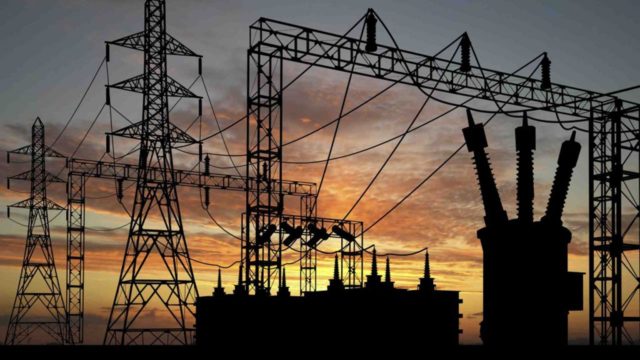
The Enugu State Government has commenced construction of three new 33KV feeders to improve electricity supply to communities in four Local Government Areas of the state.
The project, which is being developed from the Ugwuaji Transmission Station, will serve communities in Nkanu East, Nkanu West, Aninri and Awgu.
The inauguration followed a stakeholders’ meeting on electricity held at the International Conference Centre, Enugu, on Saturday.
The Managing Director and Chief Executive Officer of the Enugu State Electrification Agency (ESEA), Mr Christopher Ezeoha, said the project was designed to address longstanding electricity challenges in the affected communities.
Ezeoha said Nkanu East and Nkanu West had been underserved because a single feeder currently supplies a large area.
He explained that the Amechi 33KV feeder serves eight council areas, including five in Enugu State and three in Ebonyi State, covering more than 640 kilometres.
According to him, the length of the feeder makes it difficult to identify and resolve faults when they occur, resulting in prolonged power outages.
Ezeoha said some communities, including Nkerifi, Nara and Mburubu, had not had electricity for more than 20 years.
He said the state government had directed the agency to restore electricity to the affected communities but determined that restoring the existing feeder alone would not solve the problem.
Ezeoha said the government would break the long feeder into shorter sections by constructing about three new feeders of roughly 200 kilometres or less each.
He said injection substations would also be installed to transform electricity from 33KV to 11KV and improve the reliability of supply to communities.
Ezeoha said the government expected the project to provide an average of more than 20 hours of electricity daily to the affected communities.
He said the initiative would not be limited to the four LGAs, adding that similar interventions would be extended to other parts of the state, including Nsukka and Uzo-Uwani.
The ESEA chief executive said the state government was also preparing its electricity distribution infrastructure to evacuate power from a proposed 630-megawatt generation facility being developed in the state.
According to him, the long-term objective of the government was to provide reliable electricity supply for 24 hours a day, seven days a week.
Ezeoha said the government also planned to deploy smart prepaid meters and automation technology to improve accountability and enable quick detection and resolution of faults.
He said a Supervisory Control and Data Acquisition (SCADA) system would enable the agency to identify the location of faults almost immediately, allowing technical personnel to respond directly to affected areas rather than searching along hundreds of kilometres of transmission lines.
The ESEA boss appealed to communities to protect electrical infrastructure against vandalism, stressing that the success of the investment depended on collective ownership and protection of the facilities.
The General Manager of the Transmission Company of Nigeria (TCN), Enugu, Dr Tom Inugonum, commended the state government for its efforts to improve electricity supply.
Inugonum said the TCN Enugu region controls transmission infrastructure covering between six and eight states, adding that improved cooperation with the Enugu State Government would help address the state’s power challenges.
He said Enugu receives electricity from three major sources and has several transmission lines serving different parts of the state.
According to him, some transmission and substation projects in the region remain incomplete, limiting the capacity of the power system.
Inugonum also expressed concern over the vandalism of transmission infrastructure, citing the value of substations and other facilities that could be lost if they were not adequately protected.
The State Commissioner for Energy, Mr Enyinna Ogbonna, said electricity was one of the major priorities of Gov. Peter Mbah’s administration.
Ogbonna said reliable electricity was critical to driving the state’s economy and achieving the administration’s target of increasing Enugu’s Gross Domestic Product from about 4.4 billion dollars to 30 billion dollars.
The President-General of Isi-Amagunze, Mr Okey Nwatu, called for greater community involvement in protecting electricity infrastructure.
Nwatu said transformers, cables, switches and other electrical facilities were critical infrastructure that communities must protect to sustain electricity supply.
The Issues
The project is aimed at addressing the limitations of Enugu’s existing electricity distribution infrastructure, particularly the long Amechi feeder, which the state says makes fault detection and repairs difficult and contributes to prolonged outages.
What’s Being Said
“By the time we finish this work, we hope to give them an average of more than 20 hours of daily power supply. That’s what the government has directed us to do.” – Christopher Ezeoha, Managing Director and Chief Executive Officer, ESEA
What’s Next
The state government plans to extend similar electricity interventions to other parts of Enugu, including Nsukka and Uzo-Uwani, while preparing its distribution infrastructure for the proposed 630-megawatt generation facility.
Bottom Line
Enugu is expanding and restructuring its electricity distribution infrastructure through new 33KV feeders, injection substations and planned automation as it seeks to improve supply reliability and restore electricity to communities facing prolonged outages.