Five people died in a multiple crash on the Enugu-Onitsha Expressway.
Eighteen others were injured in the accident involving three vehicles.
FRSC blames preliminary findings on wrongful overtaking and speed violation.
Main Story
Five people were killed and 18 others injured in a multiple accident on the Enugu-Onitsha Expressway in Enugu State on Thursday.
The Federal Road Safety Corps (FRSC) confirmed the crash, which occurred at about 3:18 p.m. near the LNG Plant at Ugwu-Onyeama.
FRSC Route Commander, Theophilus Okoduwa, who is also the Enugu State Sector Command Public Enlightenment Officer, told the News Agency of Nigeria (NAN) in Enugu that 25 people were involved in the accident.
The victims comprised 13 males and 12 females. The five fatalities were four males and one female, while the 18 injured victims comprised seven males and 11 females.
Okoduwa said the crash involved a Dongfeng trailer, a Mitsubishi L300 commercial bus and a Honda car.
He said FRSC personnel, patrol vehicles and an ICU ambulance arrived at the scene within nine minutes of the incident being reported at about 3:25 p.m.
The Issues
The crash caused an obstruction on the expressway, prompting the FRSC to divert traffic while efforts were made to remove the wreckage.
The injured victims were taken to Tex Hospital at 9th Mile Corner for immediate medical treatment.
Okoduwa said the remains of the five deceased victims were deposited at Ekochin Morgue, 9th Mile, after medical officials confirmed their deaths.
Preliminary findings indicated that wrongful overtaking and speed violation might have contributed to the crash.
What’s Being Said
“Within nine minutes of reporting the incident to the FRSC Sector Command at about 3:25p.m, our officers and marshals as well as patrol vehicles and ICU ambulance arrived at the scene,” Okoduwa said.
“The injured victims were taken to nearby Tex Hospital, 9th Mile Corner, for immediate medical attention while after confirmation from medical officials, the remains of the five deceased were deposited at Ekochin Morgue, 9th Mile,” he said.
What’s Next
FRSC personnel are continuing efforts to clear the expressway of the wreckage and restore normal traffic flow.
The corps is also expected to continue investigating the circumstances surrounding the crash, with preliminary findings pointing to wrongful overtaking and speeding as possible contributing factors.
Bottom Line
Five people died and 18 were injured after a trailer, commercial bus and car collided on the Enugu-Onitsha Expressway. FRSC’s preliminary investigation points to wrongful overtaking and speed violation as possible causes.
NIA inaugurates technical committees on agricultural insurance and reinsurance.
The committees increase the association’s technical committees to 16.
NIA says the move will strengthen technical capacity and industry standards.
Main Story
The Nigerian Insurers Association (NIA) has inaugurated technical committees on agricultural insurance and reinsurance as part of efforts to strengthen professional expertise and promote best practices in the industry.
The association disclosed this in a statement on Thursday, saying the inauguration brought its number of technical committees to 16.
NIA Director-General, Mrs Bola Odukale, said the committees were established in response to calls from members of the association’s Governing Council and other stakeholders for dedicated platforms to address emerging issues across key insurance segments.
She said the Agricultural Insurance Technical Committee would promote best practices and improve members’ capacity in underwriting and claims management.
According to Odukale, the Reinsurance Technical Committee would similarly address issues and practices in reinsurance while strengthening members’ technical capacity in underwriting and claims management.
She urged members of both committees to contribute to improving technical standards and supporting sustainable development of the insurance industry.
The Issues
The committees are expected to provide specialised platforms for addressing technical and emerging issues in agricultural insurance and reinsurance.
Before the elections, members were briefed on their responsibilities and expected contributions to the growth of the industry.
Leonard Okoroafor of AIICO Insurance Plc was elected Chairman of the Agricultural Insurance Technical Committee, with Baron Omiji of Guinea Insurance Plc as Deputy Chairman.
Adebayo Olukolajo of Leadway Assurance emerged Secretary, while Ndidi Olagunju of Industrial and General Insurance became Assistant Secretary.
For the Reinsurance Technical Committee, Helen Osadunkwu of Cornerstone Insurance Plc was elected Chairman, while Ochuko Efenure of Zenith Insurance Plc became Deputy Chairman.
Uwem Offong of NSIA Insurance was elected Secretary, while Otoikhila Godskingdom of Emple Insurance emerged Assistant Secretary.
What’s Being Said
“The committees are essential platforms for advancing Nigeria’s insurance industry,” Odukale said.
Odukale urged members to contribute meaningfully towards strengthening technical standards and advancing sustainable industry development.
What’s Next
The NIA said it would continue to strengthen technical capacity, promote collaboration and encourage professional standards across the insurance industry.
The association said the new committees would support sustainable growth and development within the sector.
Bottom Line
The NIA has expanded its technical committee structure to 16 with dedicated bodies for agricultural insurance and reinsurance, giving the two segments specialised platforms for capacity development and industry standards.
UNICEF says 20 million children aged 12 to 17 experienced technology-facilitated sexual exploitation across 21 countries.
Nearly 60 per cent of cases occurred on social media platforms.
More than 40 per cent of cases were never disclosed, while fewer than one per cent reached authorities.
Main Story
About 20 million children aged 12 to 17 across 21 countries experienced technology-facilitated sexual exploitation, according to a new report by the United Nations Children’s Fund (UNICEF).
The report, released on Thursday, said the figure represented about one in five children in the age group studied.
Social media platforms, including Facebook, Instagram, Snapchat, TikTok and WhatsApp, accounted for nearly 60 per cent of recorded cases.
UNICEF said more than 15 million children were exposed to unwanted sexual content, while nine million were pressured into sexual conversations or sharing sexual images.
Another four million had sexual images of themselves distributed without their consent.
Catherine Russell, UNICEF Executive Director, said the findings showed the scale of abuse occurring in digital spaces where children learn, play and communicate.
“More than 20 million children across the countries studied were subjected to unwanted explicit sexual content or exploitation online,” Russell said.
The Issues
The report found that online games were also used to facilitate abuse, accounting for 14 per cent of recorded exploitation cases.
According to UNICEF, perpetrators often exploited features of online platforms and games to build trust with children, while anonymity made it easier to carry out abuse.
The report said 38 per cent of children first encountered perpetrators online, while 57 per cent of cases across the 21 countries involved people known to the children, including peers, friends and family members.
In Montenegro, more than 80 per cent of reported exploitation cases involved social media platforms.
The effects extended beyond the immediate abuse. Children interviewed by researchers reported fear, shame, confusion and isolation, alongside damage to their emotional wellbeing, sense of safety and ability to trust others.
UNICEF said children who experienced technology-facilitated sexual exploitation were four times more likely to report suicidal thoughts, behaviours and self-harm.
The report also found significantly higher levels of anxiety among affected children, while Pakistan recorded more than seven times the risk of self-harm among exploited children.
What’s Being Said
“These experiences cause profound emotional and mental distress. Many children suffer in silence, unsure where to turn for help. We cannot look away,” Russell said.
“I didn’t know how to react. I felt a little in shock,” a young woman from the Dominican Republic said, recalling how private images of her were circulated without her consent when she was 14.
What’s Next
UNICEF said more than 40 per cent of technology-facilitated abuse cases were never disclosed, with fewer than one per cent reported to authorities.
The agency said children most commonly chose not to disclose abuse because they were uncertain about whom to tell.
Russell called on governments and technology companies to strengthen safeguards against sexual exploitation and abuse on digital platforms and ensure children have accessible channels for seeking help and reporting abuse.
Bottom Line
UNICEF says millions of children are being exposed to sexual exploitation through social media, online games and other digital spaces, while most cases remain undisclosed or unreported. The agency is calling for stronger protection measures from governments and technology companies.
UN General Assembly approves merger of UNITAR and UNSSC.
New UN Institute for Capability and Learning Innovation begins in January 2027.
Transition will run through 2026 while existing programmes and services continue.
Main Story
The United Nations General Assembly has approved the merger of two UN learning and training institutions, paving the way for a new body to begin operations in January 2027.
The 193-member Assembly adopted a resolution on Thursday approving the integration of the UN Institute for Training and Research (UNITAR) into the UN System Staff College (UNSSC), including Nigeria.
Under the resolution, the two institutions will be brought together to establish the UN Institute for Capability and Learning Innovation (UNICLI).
The move forms part of the wider UN80 Initiative, which seeks to make the UN system more coherent, effective and responsive to emerging global challenges.
UNICLI will combine UNITAR’s work supporting governments, diplomats and public institutions with UNSSC’s expertise in training, leadership development and knowledge-sharing for UN personnel.
Michelle Gyles-McDonnough, UN Assistant Secretary-General and Executive Director of UNITAR, said the new institution would help strengthen the capacity of the UN system and its Member States.
“Member States and the United Nations system are facing increasingly complex and interconnected challenges,” she said.
“The UN must continue to evolve, building stronger capabilities, fostering innovation, and enhancing institutional effectiveness to turn global commitments into tangible results.”
The Issues
The merger is intended to create a single platform for learning and capability development across the UN system and its Member States.
The United Nations said the arrangement would make it easier for Member States, UN entities and partners to access expertise and support, while reducing duplication and fragmentation between the existing institutions.
Miguel Panadero, Acting Director of UNSSC, said combining the institutions’ expertise would strengthen the UN’s capability-development function.
“By integrating UNSSC’s and UNITAR’s expertise in providing training for the UN system and Member States respectively, the new entity will be better positioned to provide a stronger, more coherent capability development function,” Panadero said.
What’s Being Said
“The Secretary-General welcomes the decision, which recognises that capability and development, continuous learning, and innovation are not ancillary functions, but strategic drivers of the UN’s effectiveness and reform, and impact for Member States,” Stéphane Dujarric, UN spokesman, said.
“The UN chief invites Member States, the UN entities, partners, and all stakeholders to join in shaping the new entity’s future and strengthening its contribution to a more sustainable, inclusive, and resilient world,” Dujarric added.
What’s Next
The transition to UNICLI will be carried out in phases through the end of 2026 to maintain continuity of programmes, partnerships and services.
Until the transition is completed, UNITAR and UNSSC will continue to operate under their existing arrangements.
UNICLI will be headquartered in Geneva, while Turin will remain a UN learning campus and centre for leadership development. Existing operations in Bonn, Hiroshima, Madrid and New York will also continue.
Bottom Line
The General Assembly’s decision consolidates the UN’s two learning and training institutions into a new organisation focused on capability development, continuous learning and innovation, with UNICLI scheduled to begin operations in January 2027.
University of Ilorin professor calls for strategic investment in sustainable aquaculture.
Research into alternative fish-feed ingredients could reduce reliance on imports.
Functional aquafeeds could improve fish health, reduce antibiotic misuse and raise productivity.
Main Story
The Federal Government has been urged to make sustainable aquaculture a strategic component of Nigeria’s food security agenda through increased investment in research, innovation and local technology development.
Prof. Wasiu Jimoh of the Department of Aquaculture and Fisheries, University of Ilorin, made the call on Thursday during the university’s 306th Inaugural Lecture in Ilorin.
Speaking on the theme, ‘Green Feeds, Healthy Fish: Enhancing Aquaculture Productivity’, Jimoh said greater investment in the sector would support the development of a resilient and globally competitive aquaculture industry.
He said investment should focus on research, human capacity development, innovation and the commercialisation of locally developed technologies.
“Investment in aquaculture will accelerate the transition towards a resilient, environmentally sustainable, and globally competitive industry,” Jimoh said.
According to him, a stronger aquaculture sector would create employment, reduce dependence on imports and contribute to national economic development.
He said achieving the sector’s potential was also important for food and nutrition sovereignty, dignified employment and sustainable livelihoods for present and future generations.
The Issues
Jimoh’s argument centres on improving the sustainability and economic viability of fish production, particularly by reducing dependence on conventional feed ingredients.
He said his research had explored plant-based proteins, phytogenic additives and circular-economy principles as alternatives to conventional fish-feed ingredients.
“These efforts aimed to reduce dependence on fishmeal and soybean meal, optimise nutrient utilisation, enhance fish health, and improve economic sustainability for fish farmers,” he said.
He also called for greater collaboration among feed manufacturers, veterinary professionals, fish-health specialists and regulatory agencies to formulate, certify and promote functional aquafeeds.
What’s Being Said
“Strategic implementation of this framework will drive fundamental transformation. Aquaculture will become a resilient, environmentally restorative, and economically strong sector,” Jimoh said.
“Investment in aquaculture will accelerate the transition towards a resilient, environmentally sustainable, and globally competitive industry,” Jimoh said.
What’s Next
Jimoh urged fish farmers to routinely use aquafeeds containing probiotics, prebiotics, synbiotics and natural immunostimulants.
He said wider adoption of such feeds would strengthen disease prevention, reduce antibiotic misuse and improve fish welfare and aquaculture productivity.
He also called for continued investment in research, skills development and the commercialisation of locally developed aquaculture technologies.
Bottom Line
Jimoh wants sustainable aquaculture treated as a strategic food-security and economic-development sector, supported by stronger investment in research, local technology and improved fish-feed systems.
Lagos adviser calls for Nigeria to lead Africa in digital finance and tokenised assets.
He says regulation, infrastructure and trust are needed to attract global capital.
Lagos is urged to position itself as a hub for cross-border settlements.
Main Story
Nigeria should position itself as a leader in Africa’s digital finance, tokenised assets and cross-border financial settlement, Mr Ganiyu Oseni, Special Adviser on Technology, Broadband and Innovation to the Lagos State Governor, has said.
Oseni made the call on Thursday at the close of GITEX Nigeria, a three-day digital finance summit held in Lagos.
He said Nigeria should move beyond adopting technologies developed elsewhere and focus on developing home-grown solutions capable of competing across Africa and globally.
According to him, the country has the talent, technology ecosystem and market size required to build innovative digital financial services, but must strengthen its regulatory and trust systems to attract global capital.
Oseni said Nigeria had already demonstrated its ability to operate digital financial services at scale, with billions of transactions processed through its financial system.
He said the key question was no longer whether Africa’s financial system would become digital, but whether African countries would build and own the systems or remain dependent on external platforms.
The Issues
Oseni identified connectivity, power, identity and talent as four critical foundations for a digital economy.
He said Nigeria had made progress in fibre infrastructure, computing and data-centre capacity, digital identity and research and development across universities.
He also highlighted the Investments and Securities Act 2025, which brought digital and virtual assets within the capital-market framework.
According to him, the development provides an opportunity for Nigeria to establish a regulated market where Nigerian assets can be tokenised and made accessible to investors.
“Two years ago, that sentence should have been aspirational. Today, it’s a filing requirement,” he said.
Oseni said the expansion of global stablecoin and tokenisation markets meant countries that established themselves early as venues for digital-asset transactions could benefit from fees, employment, data and investment.
He called for greater regulatory coordination among Nigerian institutions to provide clear rules and reduce uncertainty for investors.
What’s Being Said
“Two years ago, that sentence should have been aspirational. Today, it’s a filing requirement.” – Ganiyu Oseni, Special Adviser on Technology, Broadband and Innovation to the Lagos State Governor.
“Monetising and digitising land and title records is therefore, not a housing reform. It’s a capital markets reform.” – Ganiyu Oseni.
“We would rather have your capital than your admiration, and we would rather have your operational presence than your capital.” – Ganiyu Oseni.
“Lagos should position itself as the place where those transactions are settled.” – Ganiyu Oseni.
What’s Next
Oseni called for continued investment in fibre, power and computing infrastructure, saying these should be developed and priced competitively with other leading digital-finance jurisdictions.
He also urged the digitisation and verification of government records and real-world assets, including land titles, property records and infrastructure concessions, to make them potentially investable.
He said governments should become early users of digital financial infrastructure through government payments, transportation systems and procurement processes.
According to Oseni, government adoption could help take digital-finance solutions beyond pilot projects and support the development of sustainable industries.
He urged innovators and investors to build within Nigeria’s regulatory framework and use the country as a base for expansion into other African markets.
Bottom Line
Lagos is urging Nigeria to move from being a consumer of digital financial technology to becoming a builder and owner of systems serving African and global markets. Oseni says stronger regulation, infrastructure and digitisation of assets could help position Lagos as a hub for digital-asset transactions and cross-border settlements.
• Walmart tops the list — a $1,000 investment at its 1970 IPO is now worth over $38.9 million after 12 stock splits
• Coca-Cola has outperformed every tech giant on this list, turning a $40 IPO share into 9,216 shares now worth about $830,000
• Nvidia’s IPO price was $12 in 1999 — the same year the dot-com bubble was inflating — and it still only ranks fifth, behind McDonald’s
• The study tracked 18 well-known companies from their IPO date, accounting for every stock split since, to compute true investor returns
• SpaceX — now 11 weeks into public trading — and OpenAI’s pending listing have renewed attention on which IPOs actually reward patience over decades
MAIN STORY
With SpaceX now 11 weeks into public trading — and OpenAI’s listing still ahead — a new August 2026 study by online trading platform Taurex has ranked the landmark IPOs that have delivered the most money to early investors when every stock split since listing is properly accounted for. The findings upend several widely-held assumptions about which companies have created the most wealth.
The research tracked 18 well-known publicly listed companies from their original IPO date through to August 26, 2026. For each company, Taurex recorded the official offer price on the first day of trading, then calculated every stock split since, and multiplied those ratios to determine how many shares one IPO share has become today. Companies were then ranked by what a $1,000 stake bought at the offer price would now be worth — revealing which ones rewarded early investors the most.
The methodology matters. Most headline return figures for iconic stocks divide today’s price by the IPO offer price and stop there. That approach systematically undercounts the returns of companies that have split their stock many times, which are disproportionately the companies that have grown most aggressively over the longest periods. Walmart, for instance, routinely appears unremarkable on standard return tables — but once its 12 stock splits are factored in, it becomes the single most profitable IPO in United States history.
Here is a look at the ten companies that delivered the biggest split-adjusted returns since their IPO.
1. Walmart Inc. — $38,852,422
IPO Date: October 1, 1970 | IPO Offer Price: $16.50 | Cumulative Split Factor: 6,144x | Value of $1,000 at IPO: $38,852,422
Walmart has made early investors more money than any other major IPO in American history. The retailer went public in October 1970 at $16.50 a share when it was operating just 38 stores and generating $44 million in annual sales — a fraction of the $713 billion business it is today. Twelve stock splits later, that same original share has multiplied into 6,144 shares, worth around $641,000 at current prices. Spread $1,000 across that day’s offer price, and the stake now sits at roughly $38.9 million, a return of 38,852 times the initial investment.
What makes this result unusual is that Walmart rarely appears in rankings like this one. The reason is simple: conventional return tables divide today’s price by the 1970 offer price and produce a figure around 532%, which sounds impressive but is wrong by a factor of thousands. The correct number — accounting for twelve splits spread across five decades, including three in the 1970s, five in the 1980s, two in the 1990s, and one in the 2020s — is closer to 3,885,000%.
The company’s first split arrived just one year after its IPO, in May 1971 — a reflection of its rapid growth and management’s commitment to keeping shares accessible to everyday investors, in the same spirit as its always-low-prices retail proposition. That philosophy of accessibility has compounded dramatically over 56 years.
2. The Coca-Cola Company — $20,754,432
IPO Date: September 5, 1919 | IPO Offer Price: $40.00 | Cumulative Split Factor: 9,216x | Value of $1,000 at IPO: $20,754,432
Coca-Cola’s 107 years on the market put it ahead of every tech giant on this list. The drinks maker listed on the New York Stock Exchange in September 1919 at $40 per share, at a time when the United States was still recovering from the first World War. Eleven stock splits later — seven of them two-for-one, two of them three-for-one — a single 1919 share is now 9,216 shares worth approximately $847,000 at Coca-Cola’s August 2026 price of $91.99, excluding dividends.
A $1,000 investment at the IPO would now be worth roughly $20.75 million — more than double Nvidia and six times more than Apple. Coca-Cola has not announced any plans for another stock split, though its shares have climbed into the $90s, significantly above the $75 level at which it last divided its stock in 2012. That trajectory could make another split plausible given the company’s long history of keeping shares accessible to individual investors.
The brand’s resilience through history is as remarkable as its numbers. During the Great Depression, Coca-Cola kept its prices at five cents a bottle and continued advertising even as rivals pulled back — a discipline that reinforced customer loyalty through the one period most damaging to consumer brands. Legendary investor Warren Buffett holds 400 million shares of the company through Berkshire Hathaway, a stake now worth over $25 billion.
3. The Home Depot, Inc. — $9,535,377
IPO Date: September 22, 1981 | IPO Offer Price: $12.00 | Cumulative Split Factor: 341.71875x | Value of $1,000 at IPO: $9,535,377
Home Depot listed on Nasdaq in September 1981 at $12 a share — the lowest offer price in the study. Today that share trades at $334.85, and thirteen splits mean one 1981 share is now 341.7 shares. A $1,000 stake from that day would now be worth close to $9.5 million, placing the home improvement retailer ahead of both Nvidia and Microsoft.
The split factor is a fraction rather than a round number because two of those thirteen splits were unusual ratios: one five-for-four and one four-for-three, reflecting the company’s varied approach to managing share price over four decades. Home Depot’s position ahead of technology giants in this ranking demonstrates how consistent consumer-facing businesses in unglamorous sectors can outperform sophisticated technology plays when measured over sufficiently long time horizons.
4. McDonald’s Corporation — $8,648,532
IPO Date: April 21, 1965 | IPO Offer Price: $22.50 | Cumulative Split Factor: 729x | Value of $1,000 at IPO: $8,648,532
McDonald’s went public in April 1965 at $22.50 per share — decades before any technology company on this list — and has split its stock twelve times since. One IPO share is now 729 shares worth about $195,000, an 8,649x gain on the offer price. Spread $1,000 across that April 1965 stake and it is now worth $8.6 million.
For most of its history, McDonald’s has been treated as a slow, defensive holding rather than a growth story — the kind of stock a cautious investor buys for its dividend and forgets about. It has still returned more to its earliest shareholders than Nvidia, Microsoft, Amazon, Oracle, and Apple. That result is not despite its steady, unexciting profile, but partly because of it: a business that does not collapse in recessions or technology disruptions gives compounding decades to work.
5. NVIDIA Corporation — $8,386,400
IPO Date: January 22, 1999 | IPO Offer Price: $12.00 | Cumulative Split Factor: 480x | Value of $1,000 at IPO: $8,386,400
Nvidia was listed in January 1999 at $12 per share, right in the middle of the dot-com boom, and survived the crash that wiped out most of its early peers. Six splits since then — in 2000, 2001, 2006, 2007, 2021, and 2024 — mean one IPO share is now 480 shares worth around $100,000, a return of 8,386 times the original price. That is the strongest result of any technology company in the study, and it is still only enough for fifth place.
The cumulative split factor is 480-for-one: multiply 2 × 2 × 2 × 1.5 × 4 × 10 and the arithmetic is clean. A $1,000 investment at the 1999 IPO bought approximately 83 shares, which are now roughly 39,840 shares worth about $8.4 million at current prices near $210. Nvidia’s rise from a graphics processor maker into the backbone of global artificial intelligence infrastructure has made it the most strategically important semiconductor company in the world — but even that extraordinary trajectory is not enough to beat Walmart’s retail juggernaut across 56 years.
6. Microsoft Corporation — $6,807,360
IPO Date: March 13, 1986 | IPO Offer Price: $21.00 | Cumulative Split Factor: 288x | Value of $1,000 at IPO: $6,807,360
Microsoft went public in March 1986 at $21 a share, and nine stock splits have since multiplied that original share into 288, now trading at $496.37. A $1,000 day-one investment would today be worth approximately $6.8 million. The company’s split history reflects its dominance across multiple technological eras: from personal computing in the 1980s and 1990s, through the internet era, and into cloud computing and artificial intelligence. No company in the study is currently trading at a higher absolute share price.
7. Intel Corporation — $4,562,196
IPO Date: October 13, 1971 | IPO Offer Price: $23.50 | Cumulative Split Factor: 1,215x | Value of $1,000 at IPO: $4,562,196
Intel listed in October 1971 at $23.50 a share and has since split its stock into a cumulative 1,215-for-one multiple — the highest split factor of any company in the top seven. Yet its current share price of $88.24 reflects a company that has significantly lost ground to rivals in recent years. Intel was replaced on the Dow Jones Industrial Average by Nvidia in November 2024, a symbolic reversal that captured its declining strategic position. A $1,000 investment at Intel’s IPO is worth $4.56 million — a strong absolute return, but the lowest among the companies listed before 1990.
8. Amazon.com, Inc. — $3,470,400
IPO Date: May 15, 1997 | IPO Offer Price: $18.00 | Cumulative Split Factor: 240x | Value of $1,000 at IPO: $3,470,400
Amazon listed in May 1997 at $18 a share, four splits later is 240 shares each worth $260.28, and a $1,000 first-day investment would now be worth $3.47 million. Eighth place may surprise those who associate Amazon with transformative, multi-decade wealth creation — and it is transformative, but the relatively recent IPO date of 1997 and a smaller cumulative split factor limit its ranking here. Companies that went public in the 1960s and 1970s have simply had more time.
9. Oracle Corporation — $3,215,592
IPO Date: March 12, 1986 | IPO Offer Price: $15.00 | Cumulative Split Factor: 324x | Value of $1,000 at IPO: $3,215,592
Oracle went public one day after Microsoft in March 1986 at $15 a share. Twelve splits later one share has become 324, trading at $148.87. A $1,000 investment at IPO is worth $3.2 million today. The database giant has experienced a significant resurgence in relevance in the AI infrastructure era, with its cloud infrastructure division growing rapidly as hyperscalers and AI companies compete for compute capacity. Oracle did not respond to BizWatch Nigeria’s request for comment by press time.
10. Apple Inc. — $3,191,491
IPO Date: December 12, 1980 | IPO Offer Price: $22.00 | Cumulative Split Factor: 224x | Value of $1,000 at IPO: $3,191,491
Apple listed in December 1980 at $22 a share, and five splits have since turned that share into 224, now trading at $313.45. A $1,000 investment on day one is worth $3.19 million — placing Apple tenth on a list many would have expected it to lead. The relatively modest split factor of 224 compared to Walmart’s 6,144 explains the gap. Apple’s stock price has also been a subject of investor debate in 2026, with some analysts questioning whether its AI product roadmap can sustain premium multiples as competition from Huawei, Samsung, and AI-native device makers intensifies.
THE ISSUES
Why Standard Return Tables Get It Wrong
The core methodological problem the Taurex study exposes is structural and widespread. When investors, journalists, and financial data providers calculate long-term IPO returns, the standard approach is to divide the current share price by the original offer price. This method ignores stock splits entirely. For companies that have split infrequently, the distortion is small. For companies that have split many times over many decades, the distortion is catastrophic — and it systematically understates the returns of the oldest, most successful businesses.
Time Horizon vs. Growth Rate: A Critical Trade-off
The ranking also reveals a tension between compound annual growth rate and total return. Tesla, which does not appear in the top ten, has compounded at approximately 42.5% annually — faster than Walmart’s roughly 20.8% per year. But Walmart has been compounding for 56 years; Tesla for far fewer. For investors watching SpaceX and OpenAI’s upcoming listing, this is the central lesson: first-day excitement is not the relevant variable. The question is what the business will look like in decade three and decade four.
WHAT’S BEING SAID
A market analyst from Taurex, commenting on the study’s findings, noted that the miscalculation of returns is consistent and directional:
“The figure most people quote for these companies is wrong, and it is wrong in the same direction every time. Divide Walmart’s price today by its 1970 offer price, and you get 532%, which is why Walmart never shows up on lists like this. The real number is closer to 3,885,000%, and the whole gap is twelve stock splits the arithmetic dropped. What the corrected ranking shows is that the biggest outcomes did not come from picking the most exciting company. Tesla has compounded faster than Walmart ever did, 42.5% a year against 20.8%, and Tesla still ranks fourteenth here. Walmart had 56 years. For anyone watching SpaceX now, or OpenAI next, that matters more than any first-day pop.”
— Market Analyst, Taurex
The Taurex report also noted an important caveat for retail investors: the figures assume shares were acquired at the IPO offer price, which most retail investors cannot access. SpaceX priced its shares at $135 and opened at $150 — meaning public investors who bought on day one already paid a premium over the offer price. That gap is common and can meaningfully affect long-term compound returns, particularly if the stock consolidates after listing.
Data published by Goldman Sachs on the 2026 IPO class shows that while the average IPO this year has generated a first-day return of 19%, in line with the 30-year median, returns have deteriorated in the weeks following listing. The GS Liquid IPO Index is down approximately 1% year-to-date, underscoring the divergence between day-one excitement and medium-term performance.
WHAT’S NEXT
• OpenAI’s public listing is expected before the end of 2026. If it proceeds at the reported fundraising range, combined with SpaceX’s June raise, the two listings could represent over $135 billion in new equity supply — a scale with little modern precedent.
• Coca-Cola shares at $91.99 are trading well above the $75 level at which the company last split its stock in 2012, making another split plausible given management’s historical preference for share accessibility.
• Nvidia’s share price near $210 puts another stock split unlikely in the near term according to most analysts, who peg the historical trigger range at $500–$1,000.
• The full Taurex research document — including complete calculations, methodology, and sources for all 18 companies tracked — is available on request from the platform.
BOTTOM LINE
The Bottom Line: The Taurex study delivers a corrective that the financial media should take seriously — the standard way of measuring long-term IPO returns is wrong, and it is wrong in a way that makes boring consumer businesses look unimpressive while amplifying the perceived dominance of technology giants with shorter histories. A $1,000 bet on Walmart in 1970 or Coca-Cola in 1919 was not glamorous and it did not make headlines; it made fortunes. As SpaceX’s public saga unfolds and OpenAI prepares to test the appetite of the world’s capital markets, the lesson from the top ten is not about which company is most exciting — it is about which one will still be splitting its stock in 2080.
Share prices referenced are as of August 26, 2026. Data source: Taurex August 2026 IPO Returns Report. BizWatch Nigeria is not a financial adviser. Nothing in this article constitutes investment advice.
The Nigerian film industry has recorded the deaths of several actors and filmmakers in 2026.
The deceased include veterans who shaped Nigerian theatre, television and film, as well as younger performers.
The deaths were linked to various causes, including prolonged illnesses, cancer, medical complications and accidents.
Fifteen Nollywood actors whose deaths have been reported in 2026 are highlighted in this list.
The deaths have prompted tributes from colleagues, professional associations, families and fans across the entertainment industry.
Main Story
The Nigerian film industry, Nollywood, has suffered the loss of several actors and filmmakers in 2026, with veterans and younger performers among those who have died during the year, The deaths have cut across different sections of Nigeria’s entertainment industry, including mainstream Nollywood, Yoruba-language cinema, theatre and Christian film productions.
Some of the actors reportedly died after prolonged illnesses or battles with cancer, while others died following accidents or medical complications, Their deaths have prompted tributes from colleagues, families, professional associations and fans who celebrated their contributions to Nigeria’s film and entertainment industry.
Below is a list of 15 Nollywood actors whose deaths have been reported in 2026.
1. Ajara Lasisi — Aunty Ajara
Yoruba actress Ajara Lasisi, popularly known as Aunty Ajara, died on February 5, 2026, following a prolonged illness, Her brother, Ridwan Lasisi, confirmed her death after filmmaker Tobi Oladele, popularly known as Tee Mony, initially announced the development, Aunty Ajara was known for comic and supporting roles in Yoruba-language productions. Her film credits included Gingerrr, Queen Lateefah and Isiti, She was buried on the day of her death in accordance with Islamic rites.
2. Bamidele Oluwatope — Okemesi
Actor and content creator Bamidele Oluwatope, popularly known as Okemesi, died on February 24, He gained a following through comedy and his use of Yoruba, English and the Ekiti dialect in his content, His screen credits included Aborisade, Mebamu, The Order, Arewa Okunrin and Eyan Ni Mi, Reports indicated that Oluwatope suffered medical complications before slipping into a coma and subsequently passing away.
3. Davis Offor — Clarus
Veteran actor Davis Offor died on April 6 at the age of 85, Offor was widely recognised for his portrayal of Clarus Mgbeojikwe in the classic Nigerian television comedy The New Masquerade, His performance as the mischievous houseboy made him a familiar face to generations of Nigerians and established him as one of the memorable figures of early Nigerian television comedy.
4. Solomon Akiyesi
Veteran Nollywood actor and producer Solomon Akiyesi died in Abuja on April 26, 2026, The Actors Guild of Nigeria (AGN) confirmed his death, with reports stating that the actor died in his sleep, Akiyesi had a career spanning more than two decades and appeared in numerous Nollywood productions, His film credits included Deadly Affair, Heart of a Saint, Desperate Ladies, Pretty Liars, Marry Who You Love and Accidentally Us, He was also involved in film production and activities within the Actors Guild of Nigeria.
5. Oby Kechere — Madam Koi Koi
Actress, filmmaker and producer Cecilia Oby Kechere, popularly known as Madam Koi Koi, died on April 27 following a prolonged illness, The Directors Guild of Nigeria announced her death, Kechere joined Nollywood in the early 2000s and became particularly known for portraying Ms Koi Koi in the comedy film Aki na Ukwa, She also worked behind the camera as a producer and filmmaker, building a career spanning more than two decades.
6. Alexx Ekubo
Nollywood actor Alexx Ekubo died in May at the age of 40, Ekubo, who was first runner-up in the 2010 Mr Nigeria competition, became a familiar face in contemporary Nollywood through appearances in several productions, His film credits included A Man for the Weekend, The Blood Covenant, Devil in Agbada and Afamefuna: An Nwa-Boi Story, His death generated widespread tributes from colleagues, entertainers and fans, His family later disclosed that he died from complications associated with advanced metastatic kidney cancer.
7. Patrick ‘Energy’ Okoye
Actor, lecturer and theatre practitioner Patrick “Energy” Okoye died in May 2026 at the age of 41, Beyond acting, Okoye was an academic in the Department of Theatre Arts and Film Studies at Nnamdi Azikiwe University, Awka, His creative interests also included singing, dancing and choreography, He was associated with productions including Midnight Love, Old School, Finding a Wife, The Lion, The Jagaban and Over My Dead Body.
8. Fesogboye Oyewole — Feso Oyewole
Veteran Yoruba actor Fesogboye Oyewole, popularly known as Feso Oyewole, died on May 29, His family confirmed his death in a statement the following day, Before the family announcement, the President of the Theatre Arts and Motion Pictures Practitioners Association of Nigeria (TAMPAN), Bolaji Amusan, popularly known as Mr Latin, had announced the actor’s passing, Oyewole spent several years in the Yoruba film industry and was regarded as one of the veteran performers who contributed to its development.
9. Adeshina Oshin — Janmole
Yoruba actor and comedian Adeshina Oshin, popularly known as Janmole, died following a road accident in June, Oshin had reportedly been involved in the Nigerian movie industry for decades, beginning his professional journey in 1989, He became associated with Jamonle, a production that helped establish his stage identity, Other productions linked to his career included Agunbaniro, Iyawo Asante, Ogbon Inu and Orogun Adedigba.
10. Omooba Oluwasegun Oyeyemi
Actor Omooba Oluwasegun Oyeyemi died on June 10 at the age of 38, He was particularly recognised by audiences of Nigerian Christian films for his role in the Mount Zion production Abattoir, Oyeyemi portrayed Flora’s husband in the popular Christian movie series produced under the Mount Zion Film Productions banner, The Bowen University Alumni Association announced his death and paid tribute to him as a member of its alumni and drama community.
11. Kola Oyewo
Veteran actor, dramatist and academic Kola Oyewo died on June 12 at the age of 80, His death was confirmed by actor Kunle Afod and his son, Adetoyese Oyewo, Oyewo began his career in the 1960s after joining the Oyin Adejobi Theatre Group, He later became a respected figure in Yoruba theatre and Nigerian cinema while also pursuing an academic career, His credits included acclaimed productions such as Saworoide, Koseegbe and O Le Ku. His work in stage productions also formed a significant part of his career.
12. Taiwo Adeshina — Elegbeje Ado
Veteran Yoruba actor and filmmaker Taiwo Adeshina, popularly known as Elegbeje Ado, died on June 29 following a brief illness, Filmmaker Seun Oloketuyi and actor Kunle Afod confirmed his death, Adeshina spent more than two decades in the Yoruba movie industry and became known for performances in traditional and historical productions, His credits included Akeke, Oko Abiku, Kadara Mi and Ageku Abela.
13. Temitope Osoba
Actress and filmmaker Temitope Osoba died on August 5 at the age of 40 after battling breast cancer, Osoba began acting in 2005 and appeared in several Yoruba-language productions, Her filmography included Ogun Mi, Gucci Girls, Igboro Ti Daru, Ifedolapo and Accident, Before establishing herself as an actress, she worked as a dancer and appeared in music videos.
She later moved into film production and produced Single Ladies, Osoba had previously spoken publicly about her breast cancer diagnosis and treatment.
14. Taiwo Hassan — Ogogo
Veteran Yoruba actor Taiwo Hassan, popularly known as Ogogo, died on August 23 at the age of 66, Ogogo spent more than four decades in the Nigerian film industry and became one of the most recognisable figures in Yoruba cinema, His death generated widespread mourning across Nollywood.
His daughters, Kaira and Lima Taiwo, had previously publicly sought medical assistance for him as he battled stage-four cancer, The veteran actor appeared in hundreds of productions during his career and became an influential figure among younger Yoruba actors, His remains were taken to his hometown of Ilaro, Ogun State, for funeral rites.
15. Atinuke Kareem
Actress Atinuke Remilekun Kareem was among the latest Nollywood personalities reported to have died in 2026, The Ogun State chapter of the Theatre Arts and Motion Pictures Practitioners Association of Nigeria announced her death on September 1.
Kareem had been battling breast cancer and had previously appealed publicly for financial assistance to continue her treatment, During her illness, she disclosed that substantial resources had been spent on her treatment, while colleagues and other TAMPAN members also rallied around her, Owolabi Ajasa, the TAMPAN Ogun State Executive Governor, announced her death and described it as a painful loss to her family and the entertainment industry.
The Issues
The deaths highlight the human and professional losses experienced by Nigeria’s entertainment industry in 2026, Several of the deceased were veterans whose careers stretched across decades of Nigerian theatre, television and cinema. Others represented a younger generation of actors and content creators who were still building their careers.
The number of deaths reportedly linked to cancer and prolonged illness has also drawn attention to the health challenges faced by members of the entertainment industry, Beyond their individual careers, the actors played roles in shaping Yoruba cinema, mainstream Nollywood, Nigerian television, theatre and Christian filmmaking.
What’s Being Said
Tributes following the deaths have come from families, colleagues, professional associations, alumni groups and fans, Industry organisations including the Actors Guild of Nigeria, Directors Guild of Nigeria and TAMPAN have announced or acknowledged several of the deaths, The tributes have largely focused on the contributions of the deceased to Nigerian entertainment and the memories they created through their performances.
What’s Next
The Nigerian film industry is expected to continue honouring the legacies of the actors and filmmakers who died in 2026, Their body of work remains part of Nigeria’s growing film and television archive, while colleagues and industry associations are expected to continue paying tribute to their contributions, The circumstances surrounding individual deaths may also continue to receive attention where investigations, medical information or family statements remain ongoing.
Bottom Line
Nollywood has lost several prominent actors and filmmakers in 2026, including veterans who helped shape Nigerian theatre and cinema and younger performers whose careers were still developing, From Ajara Lasisi and Davis Offor to Kola Oyewo, Taiwo Hassan and Atinuke Kareem, the 15 personalities on this list represent different generations and segments of Nigeria’s entertainment industry.
House committee urges seven indebted DisCos to settle outstanding market obligations.
Lawmakers say improved liquidity is necessary for a sustainable electricity market.
NISO says stronger collaboration is needed to address the sector’s financial challenges.
Main Story
The House of Representatives Committee on Power has urged seven indebted Electricity Distribution Companies (DisCos) to urgently settle their outstanding obligations to the Nigerian electricity market.
The committee chairman, Rep. Victor Nwokolo, made the call on Wednesday during an oversight visit to the headquarters of the Nigerian Independent System Operator (NISO) in Abuja.
The lawmakers visited NISO to assess its operations and performance and witnessed a public hearing on the outstanding market obligations of the Ibadan Electricity Distribution Company (IBEDC).
The hearing was chaired by NISO Executive Director, Market Operations, Mr Edmond Eje, as part of the system operator’s engagements with selected DisCos over outstanding obligations, events of default and other compliance issues in the Nigerian Electricity Market.
Nwokolo expressed concern over the accumulation of debts by some DisCos, saying improved liquidity was necessary to strengthen the electricity market and sustain the power sector.
He urged IBEDC and other indebted DisCos to make every effort to settle their obligations and comply with the rules governing the electricity market.
The DisCos identified as having outstanding market obligations are Benin, Enugu, Ibadan, Jos, Kaduna, Port Harcourt and Kano.
The Issues
Outstanding market obligations affect the financial position of participants across the electricity supply industry and can limit their ability to meet their own obligations.
NISO Managing Director, Abdu Mohammed, said improved liquidity would enable market participants to meet their financial commitments, sustain operations and ultimately improve electricity service delivery.
The oversight visit also gave lawmakers an opportunity to examine NISO’s role in the Nigerian Electricity Supply Industry (NESI) and the challenges affecting the electricity market.
What’s Being Said
“Improved liquidity was necessary to strengthen the electricity market and ensure the sustainability of the power sector.” – Rep. Victor Nwokolo, Chairman, House Committee on Power.
“Improved liquidity would enable market participants to meet their financial obligations.” – Abdu Mohammed, Managing Director, NISO.
“Stronger collaboration among the National Assembly, NISO and other stakeholders in NESI” is needed to address the structural and financial challenges confronting the sector. – Abdu Mohammed, Managing Director, NISO.
What’s Next
NISO said it would continue engagements with selected DisCos on outstanding market obligations, events of default and other compliance issues.
Mohammed also called for continued support and constructive oversight from the National Assembly, saying sustained collaboration among stakeholders was necessary to strengthen the electricity market.
He said such collaboration would also support efforts to stabilise the national grid and improve the reliability and sustainability of electricity supply.
NISO is also implementing a five-year development plan focused on strengthening system operations, improving electricity market operations, enhancing system planning and coordinating Nigeria’s power system.
Bottom Line
The House Committee on Power wants seven DisCos to clear their outstanding electricity market obligations, citing the need for stronger liquidity across the sector. NISO says resolving the financial and structural challenges is important to sustaining market operations and improving electricity supply.
Alpha takes the number one position on Nigeria’s Netflix film chart.
The Whisper Man and The Secret Woman rank second and third.
Abigail rounds off the top 10.
Main Story
Alpha, an action-adventure film, has emerged as the most-watched film on Netflix in Nigeria this week, topping the platform’s film chart.
The film secured the number one position after attracting strong viewership among Nigerian Netflix subscribers.
The Whisper Man, a mystery thriller about a troubled man confronting a sinister figure from his past, ranked second.
The Secret Woman, a drama centred on relationships, secrets and personal struggles, occupied third place.
Anacondas: Trail of Blood, an action-horror film involving deadly snakes and a fight for survival, came fourth.
The fifth position went to Facing El Chapo, a documentary exploring the dangerous world surrounding notorious drug lord Joaquín “El Chapo” Guzmán.
Colours of Fire, a drama exploring human relationships and resilience, ranked sixth.
The Issues
The weekly Netflix chart provides an indication of the films attracting the most attention among viewers in Nigeria during the period.
The rankings span action, thriller, drama, documentary, horror and disaster genres, showing a varied selection among the week’s most-viewed films.
What’s Being Said
“Alpha has topped Nigeria’s Netflix film chart this week.” – Netflix chart ranking.
What’s Next
Grand Theft Auto 5: Extended Look, an extended look at the popular action-adventure video game, ranked seventh.
The Last House, a thriller centred on danger and survival, came eighth, while 2012, a disaster film depicting a global catastrophe and humanity’s struggle for survival, occupied ninth place.
Rounding off the top 10 was Abigail, a horror thriller about kidnappers who discover that their young captive is more dangerous than expected.
Bottom Line
Alpha leads Nigeria’s Netflix film chart this week, followed by The Whisper Man and The Secret Woman. The top 10 includes films across several genres, from action and drama to documentary and horror.
Burna Boy has surpassed four billion views on YouTube.
He is the first Nigerian artiste to reach the milestone.
The achievement builds on his 2021 record of one billion views.
Main Story
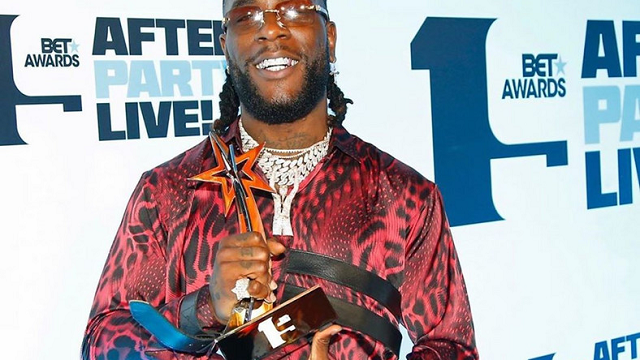
Nigerian Grammy-winning artiste Damini Ogulu, popularly known as Burna Boy, has become the first Nigerian artiste to surpass four billion views on YouTube.
The milestone was reached through the combined views of music videos and other content published on the artiste’s official YouTube channel.
Burna Boy’s catalogue includes songs such as “Ye,” “On The Low,” “Last Last” and “For My Hand”, which have collectively attracted hundreds of millions of views on the platform.
The latest achievement adds to a series of international milestones recorded by the artiste as his music continues to reach audiences across Africa, Europe, North America and other regions.
The Issues
The milestone highlights the growing importance of digital platforms in expanding the international audience for Nigerian music.
It also reflects the continued global reach of Afrobeats, with Nigerian artistes increasingly using streaming and video platforms to reach audiences beyond the domestic market.
Burna Boy’s four-billion-view milestone places him among the leading African artistes on YouTube and establishes a new benchmark for Nigerian music on the platform.
What’s Next
The milestone is expected to further strengthen Burna Boy’s position among Africa’s leading artistes on YouTube as his catalogue continues to attract international audiences.
The achievement also provides another measure of the growing global audience for Nigerian music through digital platforms.
Bottom Line
Burna Boy has become the first Nigerian artiste to surpass four billion YouTube views, four years after becoming the first to cross one billion. The milestone further underscores the expanding international reach of Nigerian music and Afrobeats.
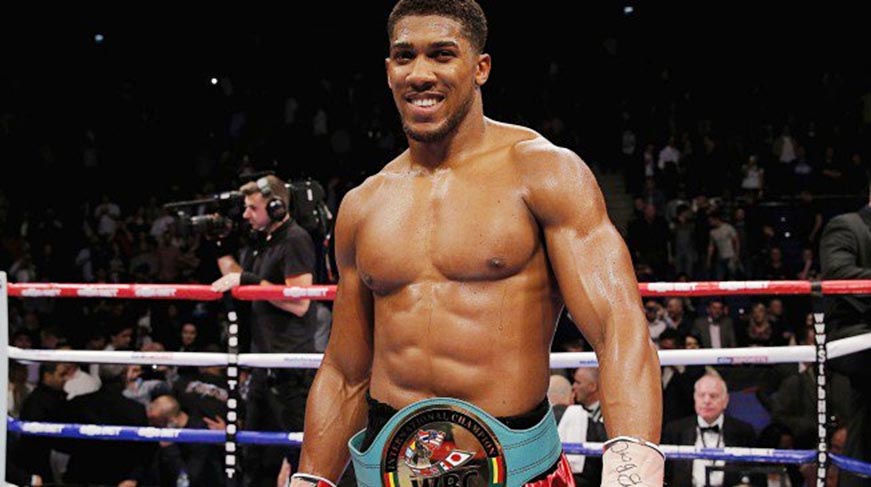
Anthony Joshua has yet to sign the contract for his proposed heavyweight fight against Tyson Fury.
British promoter Frank Warren said Fury has already signed his side of the agreement.
Disagreements over the proposed venue and other contractual details are delaying the fight.
Joshua’s original contract favoured a UK venue, with Wembley Stadium reportedly among the options.
Netflix and Saudi-backed Sela are pushing for the bout to be staged at Madison Square Garden in New York.
Warren said the conflicting contracts must be amended before the fight can be finalised.
Fury reportedly signed his contract in January when the fight was initially scheduled for September.
Main Story
Anthony Joshua is yet to sign the contract for his proposed heavyweight showdown with Tyson Fury, with disagreements over the venue and other contractual details threatening to delay the long-awaited all-British clash, British promoter Frank Warren confirmed that Fury has already completed his side of the agreement, but said outstanding contractual differences involving the venue and broadcasting arrangements must be resolved before the fight can be finalised.
Joshua’s original contract reportedly favoured a venue in the United Kingdom, with Wembley Stadium among the options under consideration, However, organisers and broadcasters Netflix and Saudi-backed Sela are pushing for the fight to take place at Madison Square Garden in New York.
Warren said the conflicting contracts need to be amended, leaving Joshua’s camp to resolve the outstanding issues, “It’s not for me to give him [a deadline]; it’s the people who are paying the money. It’s all this stuff, as I said from the beginning, it’s about contracts. I know what the contracts say. The contracts have all got to be amended,” Warren told The Independent.
He added that Fury had already signed and was prepared to fight regardless of the eventual location, “Tyson’s signed. Tyson’s done. He don’t care when the fight takes place. If they want it in New York, they want it in Barbados, they want it on the Isle of Wight, he’s signed. He’s done.”
The Issues
The main obstacle is reportedly a conflict between the contracts covering the fighters and the television and promotional arrangements, According to Warren, Fury signed his contract in January when the fight was originally expected to take place in September, However, the proposed schedule was disrupted after Joshua was involved in an accident, forcing the fight plans to be pushed back.
The fight was subsequently considered for November, but the venue remained unresolved, with different contracts reportedly specifying different locations, Warren explained that one contract identifies one venue, another lists a different venue, while the television contract contains another location.
What’s Being Said
Warren has made clear that Fury’s side has completed its contractual obligations and that the remaining issues are outside his direct control, “He signed for the fight in January,” Warren said, “The fight was supposed to take place in September, but what happened with AJ and his accident, that all got pushed back.”
He explained that after Joshua returned to action, the proposed fight was moved again, but disagreements over the venue and broadcasting arrangements continued, “Then, it was decided to put it on in November. But one contract says one venue, the other contract says another venue, and the TV contract says another venue. I don’t do the contracts.”
What’s Next
Joshua’s camp and the other parties involved must resolve the contractual disagreements before the fight can be officially confirmed, The venue remains one of the biggest outstanding issues, with Wembley Stadium and Madison Square Garden reportedly among the competing options, Until the contracts are amended and Joshua signs his agreement, the proposed Joshua Fury showdown remains subject to further delay.
Bottom Line
The highly anticipated Anthony Joshua Tyson Fury fight has yet to be finalised, despite Fury having already signed his contract, With disagreements over the venue and other contractual terms still unresolved, Joshua’s signature is now one of the key requirements before the long awaited heavyweight clash can move forward.
NADF calls for coordinated public, private and concessional financing for agriculture.
Agency says fragmented capital and weak project pipelines limit investment.
It wants agricultural funding assessed by outcomes for farmers and food systems.
Main Story
The National Agricultural Development Fund (NADF) has called for a new financial architecture to mobilise investment and accelerate the transformation of Africa’s food systems.
NADF Executive Secretary, Mohammed Ibrahim, made the call at a Policy and State Capability Thematic Plenary at the Africa Food Systems Forum (AFSF) in Kigali, Rwanda.
The plenary was themed “Aligning Investment to Fast-Track CAADP Objectives.”
Ibrahim said African countries needed financing systems capable of coordinating public, private and concessional capital, aligning investment with national priorities and reducing risks associated with agricultural projects.
He said the challenge was not simply a shortage of money but the fragmentation of available resources and the absence of structures capable of directing capital towards viable agricultural opportunities.
“Africa’s agricultural financing challenge is not only about the availability of capital, but also the fragmentation of existing resources and the absence of effective structures to coordinate investments,” he said.
According to Ibrahim, NADF was identifying national priorities, developing bankable investment opportunities and using public and concessional resources to attract additional financing.
He said public funds should be used to “crowd in, not crowd out” private investment, adding that a shortage of commercially viable agricultural projects remained a major barrier to mobilising private capital.
The Issues
Ibrahim said agricultural financing needed to move beyond conventional funding towards structured systems that could connect available capital with bankable projects.
He also stressed the importance of reliable data and accountability in determining where agricultural investments should be directed and whether they were producing measurable results.
“First of all, we are strengthening data for investment decisions. No investment decision is made without looking at the data and what it shows,” he said.
Rather than measuring success by the amount of money spent, Ibrahim said agricultural interventions should be assessed by their effect on farmers and the wider food system.
What’s Being Said
“We want to see that we are coordinating financial capital because there is sometimes a problem of capital availability, but also fragmentation of capital; that lack of a structure.” – Mohammed Ibrahim, NADF Executive Secretary.
“We are pushing for a transition towards accountability for outcomes. So, what has that money changed on the ground?” – Mohammed Ibrahim, NADF Executive Secretary.
“Africa’s agricultural financing challenge is not only about the availability of capital, but also the fragmentation of existing resources and the absence of effective structures to coordinate investments.” – Mohammed Ibrahim, NADF Executive Secretary.
What’s Next
NADF plans to strengthen data systems for investment decisions and develop bankable opportunities capable of attracting additional financing.
Ibrahim also called for independent monitoring, evaluation and learning systems to determine which agricultural interventions are effective, identify gaps and provide evidence for scaling.
He said outcomes should include improved yields, farmer profitability, participation in value chains, resilience and livelihoods.
Ana Loboguerrero, Director of Adaptive and Equitable Food Systems at the Gates Foundation, said philanthropic capital could provide patient and higher-risk financing for innovative agricultural solutions before commercial investors entered.
She said such financing could generate evidence, strengthen public-sector capacity and reduce risks, making agricultural projects more attractive to commercial investors.
Bottom Line
NADF says Africa needs a more coordinated financing architecture to turn available capital into productive agricultural investment. The proposed approach would use public and concessional funds to reduce risks and attract private capital while measuring success by tangible outcomes for farmers.
IPMAN says FCT filling stations are preparing to reduce petrol pump prices.
Marketers will review prices once new products begin entering the market.
The timing of the expected price adjustment remains uncertain.
Main Story
Filling stations across the Federal Capital Territory (FCT) are expected to begin reducing petrol pump prices within the next few days as new products enter the market, the Independent Petroleum Marketers Association of Nigeria (IPMAN) has said.
IPMAN National Publicity Secretary, Mr Chinedu Ukadike, disclosed this in an interview with the News Agency of Nigeria (NAN) in Abuja on Thursday.
Ukadike said marketers were preparing to review their pricing and sales strategies once the new products became available.
He said the adjustments would depend on when the new products officially began arriving, adding that marketers did not yet have a definite date for the commencement of the process.
“Once the new products begin arriving, marketers are expected to respond quickly by reviewing their prices and updating their product offerings,” he said.
Ukadike said marketers could begin making purchases within a few days, depending on when the process commenced, after which filling stations would adjust their prices and make the new products available to consumers.
He said the process would be carried out in line with existing rules and regulations.
The Issues
The expected price adjustment comes after recent increases in the ex-depot price of petrol supplied by Dangote Refinery.
Media reports show that the refinery raised its gantry price from N1,165 per litre to N1,185 per litre and subsequently to N1,200 and N1,265 within one week.
The increases were reflected in petrol pump prices across filling stations in the FCT, prompting concerns among motorists.
The latest development means consumers are now waiting to see whether the expected arrival of new products will translate into lower retail prices.
What’s Being Said
“Once the new products begin arriving, marketers are expected to respond quickly by reviewing their prices and updating their product offerings.” – Chinedu Ukadike, IPMAN National Publicity Secretary.
“After this process, when we make purchases tomorrow or the day after tomorrow, as soon as it starts, we will adjust our prices and begin making the new products available to consumers.” – Chinedu Ukadike, IPMAN National Publicity Secretary.
What’s Next
IPMAN said marketers would review their prices and product offerings once purchases of the new products begin.
However, Ukadike said the exact timing remained uncertain because marketers were yet to receive a definite date for the commencement of the process.
Meanwhile, motorists have urged the Federal Government to intervene and stabilise petrol prices following the recent increases.
Bottom Line
IPMAN expects petrol pump prices in the FCT to fall once new products begin entering the market, but the timing of the adjustment is still unclear. The expected reduction follows a week of increases in Dangote Refinery’s ex-depot petrol price.
Arise Television anchor Rufai Oseni has warned President Bola Tinubu to be cautious in his political relationship with FCT Minister Nyesom Wike.
Oseni reacted to Wike’s claim that he could be targeted by the opposition if Tinubu loses the 2027 presidential election.
He questioned why Wike would fear a possible “witch-hunt” if he believes his actions were justified.
Oseni accused Wike of previously using his influence as Rivers State governor to prevent Atiku Abubakar from campaigning in the state.
He warned that Wike could publicly disclose details of his relationship with Tinubu if the two political allies eventually fall out.
Oseni also recalled Wike’s previous criticism of godfatherism during the political crisis involving former Lagos State Governor Akinwunmi Ambode.
Main Story
Arise Television anchor Rufai Oseni has warned President Bola Tinubu to be cautious in his political relationship with Minister of the Federal Capital Territory (FCT), Nyesom Wike, saying the former Rivers State governor could reveal details of their relationship if they eventually fall out.
Oseni made the comments while reacting to Wike’s recent remarks that he could be targeted by opposition politicians, including former Vice President Atiku Abubakar and Peter Obi, if Tinubu fails to secure re-election in the 2027 presidential election, Speaking on Arise Television’s The Morning Show on Thursday, Oseni questioned why Wike would be concerned about a possible political witch-hunt if he was confident that his actions while in office were justified.
He particularly referenced Wike’s political disagreements with Atiku and alleged that Wike used his influence as Rivers State governor to prevent the former vice president from campaigning in the state, Oseni also questioned Wike’s concern about Peter Obi, referring to controversies surrounding the 2023 presidential election and the results recorded on the Independent National Electoral Commission’s (INEC) Results Viewing (IReV) portal.
He said Wike should not fear a potential witch-hunt if he has nothing to hide or regret about his political actions, Oseni subsequently turned his attention to Tinubu, warning the president about the potential consequences of a future breakdown in his relationship with Wike.
The Issues
The comments come against the backdrop of shifting political alliances ahead of the 2027 general elections, Wike, who served as Rivers State governor from 2015 to 2023, was a prominent member of the Peoples Democratic Party (PDP) before joining Tinubu’s administration as FCT minister.
His political relationship with Atiku became strained after the 2023 PDP presidential primaries, while Wike and four other governors formed the G-5 group that opposed Atiku’s presidential campaign, Oseni argued that Wike’s history of political disagreements with former allies should make Tinubu particularly careful about the nature of their relationship, He suggested that any political arrangements between Tinubu and Wike should be capable of being publicly defended if the relationship eventually breaks down.
What’s Being Said
Oseni said Wike could become highly vocal if his relationship with Tinubu deteriorates, “The day he quickly falls out with President Tinubu, this Wike will talk, and he will talk very well,” Oseni said, He urged Tinubu to ensure that whatever political dealings exist between them are matters that could withstand public scrutiny.
Oseni said: “President Tinubu, I hope whatever you are doing with Wike are things that we can say in public, He also recalled Wike’s previous criticism of political godfatherism, particularly during the dispute involving Tinubu and former Lagos State Governor Akinwunmi Ambode, According to Oseni, Wike had previously argued that Rivers State did not permit godfathers, while now maintaining a political alliance with Tinubu.
What’s Next
Wike is expected to remain an influential figure in Nigeria’s political calculations ahead of the 2027 elections, particularly because of his position as FCT minister and his extensive political network, The evolving relationship between Wike and Tinubu is likely to attract further attention as political alignments and presidential ambitions become clearer ahead of the election, The comments also highlight the continuing political tensions surrounding Wike’s relationships with former allies and opposition figures.
Bottom Line
Rufai Oseni has warned President Bola Tinubu that Nyesom Wike could publicly reveal details of their political relationship if the two eventually fall out, While Wike remains an important political ally within Tinubu’s administration, Oseni’s comments underline the potential risks associated with political alliances that could become contentious ahead of the 2027 presidential election.
Ebola outbreak has expanded from one to six provinces in the DRC.
The affected area now covers about 240,000 square kilometres.
Africa CDC says 6,206 confirmed cases and 3,009 deaths have been recorded.
Main Story
The Ebola outbreak in the Democratic Republic of Congo (DRC) has expanded to six provinces and 60 health zones, Africa Centres for Disease Control and Prevention (Africa CDC) has said.
The agency described the situation as extremely serious, saying transmission had continued despite response efforts by the DRC government and its partners.
In a post on its official X account on Thursday, Africa CDC said the outbreak, declared on May 15, had initially affected one province and two health zones.
It said the affected area now covered approximately 240,000 square kilometres, an area comparable to the size of the United Kingdom and nearly five times the size of Switzerland.
According to the agency, the outbreak has so far recorded 6,206 confirmed cases and 3,009 deaths.
The Issues
The expansion across six provinces and 60 health zones increases the geographical scope of the response required to contain transmission.
Africa CDC said the scale of the affected area and the number of reported cases and deaths underscored the seriousness of the public health emergency.
What’s Being Said
“The affected area now covers approximately 240,000 square kilometres, comparable to the size of the United Kingdom and nearly five times Switzerland.” – Africa CDC.
“The outbreak has recorded 6,206 confirmed cases and 3,009 deaths, underscoring the severity of the public health emergency.” – Africa CDC.
What’s Next
Africa CDC said it was working with the World Health Organisation and other partners to support the DRC government and strengthen ongoing response efforts.
The partners are working to bring transmission under control as the outbreak continues to spread across affected provinces and health zones.
Bottom Line
Africa CDC says the Ebola outbreak in the DRC remains extremely serious, with transmission now reported across six provinces and 60 health zones. The agency and its partners are supporting the government’s efforts to contain the outbreak.
NITDA says control of critical digital infrastructure is essential to Nigeria’s digital economy.
Cloud-first policy seeks to attract infrastructure investment from global technology companies.
Agency identifies health-tech, agri-tech and ed-tech as areas for startup growth.
Main Story
The National Information Technology Development Agency (NITDA) has called for greater control of Nigeria’s critical digital infrastructure to enable the country to capture more economic value from its growing digital economy.
NITDA Director-General, Mr Kashifu Inuwa, made the call on Thursday during a fireside chat at GITEX AI Nigeria in Lagos.
Inuwa said digital technology would be critical to Nigeria’s ambition of becoming a trillion-dollar economy by increasing productivity, income generation and prosperity.
He said modern businesses increasingly depended on data, connectivity and computing power, making domestic digital infrastructure important to how economic value was created and retained.
According to him, Nigeria’s National Cloud-First Policy is intended to encourage businesses and large organisations to prioritise cloud infrastructure while directing more resources towards innovation and core operations.
He said the policy was not designed to exclude international technology companies but to encourage them to invest in infrastructure and operate within Nigeria’s regulatory framework.
“We are saying, come to Nigeria, work with us and build with us,” Inuwa said.
He said the policy could attract investment from hyperscalers, other global technology companies and local investors into Nigeria’s digital infrastructure ecosystem.
Inuwa dismissed concerns that the policy could isolate Nigeria, saying it was instead intended to strengthen the country’s ability to determine its digital future.
The Issues
Inuwa said certain categories of data, including defence, financial transaction, citizens’ and healthcare data, required stronger protection because of their implications for national and economic security.
Nigeria’s position as a major internet transit hub for West and Central Africa also makes domestic digital infrastructure strategically important, he said.
According to Inuwa, infrastructure and digital skills developed in Nigeria could serve neighbouring landlocked countries and strengthen the country’s position in the regional digital economy.
He also said NITDA was working with state governments to domesticate relevant national policies and regulations, with the aim of ensuring that states had the infrastructure, talent and enabling environment to participate in the digital economy.
What’s Being Said
“We are saying, come to Nigeria, work with us and build with us.” – Kashifu Inuwa, NITDA Director-General.
“We want to see startups building similar solutions in other parts of the country, not just in fintech, where we already have many unicorns.” – Kashifu Inuwa, NITDA Director-General.
What’s Next
NITDA plans to continue working with state governments to implement relevant national digital policies and regulations.
Inuwa said government policies were also opening opportunities for startups in sectors beyond fintech, including health-tech, agri-tech and ed-tech.
He cited the establishment of a National Health Technology Office as part of efforts to decentralise healthcare and create opportunities for technology-driven solutions.
Similar interventions in agriculture and education are expected to create opportunities for entrepreneurs to develop technology-based responses to challenges in those sectors.
Inuwa urged startups to move beyond traditional business models and use technology to develop new value propositions and scalable solutions.
He said Nigeria’s experience in fintech showed how deliberate government policies and enabling infrastructure could stimulate innovation and create new industries.
Bottom Line
NITDA says Nigeria’s ability to benefit fully from its digital economy depends on stronger domestic control of critical infrastructure, data and computing capacity. The agency is seeking to attract global investment while encouraging Nigerian startups to expand technology solutions into sectors beyond fintech.
Parents and admission seekers say the N4,000 O’Level verification fee adds to admission costs.
JAMB says the one-time payment is intended to strengthen result verification.
Candidates are urged to rely on admissions processed through CAPS.
Main Story
Parents and admission seekers have raised concerns over the financial burden of securing tertiary admission, particularly the N4,000 fee introduced by the Joint Admissions and Matriculation Board (JAMB) for O’Level result verification.
They spoke in separate interviews with the News Agency of Nigeria (NAN) in Abuja on Thursday.
The new verification system requires candidates seeking admission into tertiary institutions to pay N4,000 once for verification of their O’Level results.
JAMB said the system was introduced to strengthen the integrity of O’Level results and prevent falsified results from being accepted during the admission process.
The Board also said the initiative would reduce the cost and stress associated with repeated visits to tertiary institutions and JAMB-approved Computer-Based Test (CBT) centres.
However, parents and candidates said the charge was coming on top of several other expenses, including JAMB registration, post-UTME screening, transportation, document printing and other admission-related services.
Mrs Akolade Opadere, a parent, said the additional payment was particularly difficult for families already struggling with multiple admission-related expenses.
“Parents are already spending money on many things for their children’s admission. Adding another payment makes things more difficult, especially for families that are not financially comfortable,” she said.
Opadere added that the burden was greater for parents with more than one child seeking admission.
Mr Nathenial Adamu, another parent, said the authorities should consider the total cost borne by families throughout the admission process rather than treating each payment separately.
“We are not saying that necessary services should not be paid for, but there should be consideration for candidates who may genuinely struggle to afford these payments,” he said.
He urged JAMB to provide clear information on the purpose of the fee and the services covered, saying greater transparency could reduce confusion and prevent unnecessary financial demands on candidates.
Admission seekers also expressed concern over their ability to meet the additional cost.
Matthew Ohizu said some candidates depended entirely on their parents or guardians and might not have immediate access to the money required for the verification.
“I understand that the result has to be uploaded, but the payment is another expense for us. Some candidates may not have the money readily available,” he said.
Another candidate, Ayomide Joseph, appealed to JAMB and tertiary institutions to streamline admission procedures and avoid charges for services already covered by approved fees.
Hawal Abdulfatai said his parents had already spent considerably on JAMB registration, post-UTME and transportation before receiving an admission offer.
The Issues
The financial burden of tertiary admission extends beyond the initial JAMB registration fee, with candidates and families also paying for institutional screening, transportation, documentation and other requirements.
JAMB’s clarification also states that candidates who previously uploaded their O’Level results are not required to upload them again or obtain a verification code under the new system.
The verification process is linked to JAMB’s Central Admissions Processing System (CAPS), which was established to automate and regulate admissions into tertiary institutions.
CAPS allows candidates to monitor their admission status and confirm provisional admissions, while institutions process admissions through the platform.
What’s Being Said
“I believe JAMB should consider the situation of ordinary parents and look at ways of reducing the financial burden on families.” – Mrs Akolade Opadere, parent.
“JAMB and other education authorities need to look at the total cost parents bear during the admission process and not consider each payment in isolation.” – Mr Nathenial Adamu, parent.
“For candidates from families that are struggling financially, this can be frustrating because you may have the required result but still face difficulty completing the admission process because of money.” – Matthew Ohizu, admission seeker.
What’s Next
Candidates have been advised to rely on admissions processed through CAPS and to be cautious of individuals or institutions offering admission outside the official system.
JAMB’s 2026 admission guidelines state that all admissions offered by tertiary institutions must originate from the Board and be reflected on the JAMB e-Facility.
The Board also stated that an admission offer from a tertiary institution without a JAMB admission letter is illegal and not recognised, warning candidates who accept such offers that they do so at their own risk.
Bottom Line
The N4,000 O’Level verification charge has become another point of concern for families already facing multiple costs during the tertiary admission process. While JAMB says the payment supports result verification and reduces repeated administrative visits, parents and candidates want the overall cost of securing admission to be considered.
Hello, my fellow Meeting Survivors, Boundary-Enforcers, and HR-Policy Forensics. Welcome back to our weekly sanctuary! Today is Thursday, September 3, 2026. If you spent your week sitting in a boardroom where a senior executive looked a 28-year-old manager in the eye and said, “Keep quiet, I was already paying taxes before your father met your mother!”—or if you’ve been subjected to insults disguised as “fatherly discipline” under the banner of “We are a family here,” pull up an ergonomic office chair. You are in the safest room on the internet.
Forget routine economic statistics, transport app updates, or rainy commute logistics; today, we are ripping the band-aid off the most toxic, pervasive, and sweeping cultural disease in the Nigerian workplace: The weaponization of age to strip people of basic dignity, the “We Are Family” gaslighting, and the normalization of derogatory language.
In many Nigerian organizations, traditional cultural hierarchy has mutated into a license for verbal abuse. The moment a workplace dispute, performance review, or difference of opinion occurs, a disturbing shift happens: the corporate conversation ceases to be about data or professional scope, and becomes about birth certificates.
It goes both ways, but the top-down version carries the heaviest structural damage.
The street commentary from young professionals navigating these daily landmines is peak comedy mixed with real emotional fatigue. You will present a 50-page strategy deck, and instead of reviewing the budget, an elder on the board will spend 20 minutes analyzing the angle of your head when you said ‘Good Morning’! You are carrying a master’s degree and leading a revenue team, but in the office, you are treated like a naughty child who brought home a bad report card!
Let’s be entirely fair—the disrespect isn’t exclusively top-down. The younger generation frequently weaponizes digital fluency to pass condescending, derogatory remarks toward older colleagues: Calling an older executive “a dinosaur,” “clueless,” or “outdated” behind their back or in private group chats. Dismissing decades of industry wisdom, client management skills, and institutional memory simply because an older colleague types slowly or asks how a new software feature works.
Respect isn’t a one-way street where elders receive immunity to insult juniors, nor is it a playground where juniors get to mock elders for aging. Dignity is the minimum entry fee for any workplace.
Why does derogatory language thrive in so many offices? Because HR departments and management teams wrap the entire company in a dangerous shield: “The Family Culture.”
When a workplace advertises itself as a “family” rather than a professional enterprise, standard civil rights, professional boundary lines, and HR anti-harassment policies get thrown into the lagoon.
Using terms like “useless,” “foolish,” “stupid,” or derogatory personal remarks about a person’s appearance, tribe, gender, or age is not “tough love.” It is psychological abuse. A job is an exchange of skilled value for financial compensation—it is not an adoption agency where you sign away your right to basic human respect!
Behind the hilarious boardroom anecdotes lies a critical, non-negotiable educational roadmap for business owners, corporate executives, and HR leaders in 2026: 1. Enforce Zero Tolerance for Derogatory Language: Write explicit language standards into employee handbooks. Words like “stupid,” “foolish,” “small boy,” “dinosaur,” or any tribal/gender-based slurs must trigger formal disciplinary warnings, regardless of whether the speaker is an intern or the Managing Director. 2. Banish “We Are Family” Rhetoric: Transition your corporate messaging from “Family” to “High-Performance Professional Team.” Teams operate on mutual respect, professional boundaries, clear objectives, and clear consequences for foul play. 3. Establish Safe, Independent Grievance Channels: Junior employees must be able to report verbal abuse and age-based harassment without fear of immediate career retaliation or being guilt-tripped by HR into “going to apologize to their elder.” 4. Separate Age from Authority: Older colleagues deserve human courtesy and respect for their life experience. Younger colleagues deserve professional respect and authority for their designated roles and competencies. Neither group has the right to insult the other.
Lessons to Carry into the Weekend Set Your Boundaries Early: If someone uses derogatory language on you at work, calmly and professionally address it immediately: “I am open to constructive feedback on my work, but I expect us to maintain professional language.” Check Your Own Words: Elders, evaluate whether you are providing feedback or simply venting anger through ageism. Juniors, evaluate whether you are showing professional courtesy or intellectual arrogance. Refuse the Gaslighting: Never let anyone convince you that enduring insults or verbal abuse is part of “paying your dues” or “being a good family member.” Your dignity is non-negotiable.
See you next Thursday—hopefully with respectful boardrooms, clean language, firm boundaries, and zero corporate gaslighting!
Real Madrid has opened disciplinary proceedings against defender Raul Asencio.
The 23 year old was convicted of drink driving in August and fined €14,400.
His driving licence was suspended for eight months.
Asencio is also facing a court case over the alleged non-consensual sharing of a sexual video from 2023.
Real Madrid coach Jose Mourinho expressed his disappointment, stressing that players represent the club off the pitch.
Three former Real Madrid reserve players are also on trial in connection with the alleged video sharing incident.
Asencio has been sidelined by a hamstring injury and has yet to feature in Mourinho’s matchday squad.
Main Story
Real Madrid has opened disciplinary proceedings against defender Raul Asencio following a drink-driving conviction and a separate ongoing court case involving the alleged non consensual sharing of a sexual video, The 23 year old centre back was convicted after an August 16 drink-driving incident in San Bartolome de Tirajana, Gran Canaria. A court source told AFP that Asencio was more than three times over the legal alcohol limit.
He was fined €14,400 ($16,700) and had his driving licence suspended for eight months, The latest development comes as Asencio is also due to appear in another court case in Gran Canaria concerning the alleged non-consensual sharing of a sexual video dating back to 2023.
Speaking to reporters, Real Madrid coach Jose Mourinho confirmed that the club had begun disciplinary proceedings against the defender and expressed his disappointment over the situation, Mourinho acknowledged Asencio’s professionalism at the club but stressed that players are expected to uphold Real Madrid’s reputation both on and off the pitch.
“He’s a model professional. When he was fit, no one trained as hard as him,” Mourinho said, “But a Real Madrid player remains so 24 hours a day, seven days a week, 12 months a year. Everything you do outside the pitch represents Real Madrid and could affect the club’s prestige., Mourinho added “I’m not happy. Everyone makes mistakes, but when they pile up, it’s not the same.”
The Issues
Asencio is facing two separate disciplinary and legal issues within a short period, The drink-driving conviction has already resulted in a financial penalty and an eight-month driving ban. The second matter involves allegations relating to the distribution of a sexual video recorded in 2023.
Spanish media reports indicate that Asencio expects to be cleared in the video-sharing case if the two women featured in the recording, who were aged 16 and 18 at the time, formally forgive him, Three former Real Madrid reserve players are also facing trial over allegations that they recorded and distributed the video, The trial is scheduled to take place on September 3, 4 and 7.
What’s Being Said
Mourinho has made clear that the club considers the conduct of its players away from football to be a matter of importance, While describing Asencio as a committed professional who works extremely hard in training, the Real Madrid coach said repeated incidents can become more serious because of the impact they can have on the club’s image, His comments suggest that Real Madrid’s disciplinary response will consider both the circumstances of the incidents and the reputational consequences for the club.
What’s Next
Asencio’s disciplinary proceedings at Real Madrid will continue alongside the ongoing legal process in Gran Canaria, The court proceedings involving the alleged video-sharing incident are scheduled for September 3, 4 and 7, Meanwhile, Asencio remains unavailable for selection after suffering a hamstring injury in July. He has yet to make Mourinho’s matchday squad since the coach took charge.
Bottom Line
Raul Asencio’s future at Real Madrid has come under scrutiny after a drink-driving conviction and a separate ongoing legal case. While Mourinho continues to acknowledge the defender’s professionalism in training, the coach has warned that players’ actions away from the pitch can directly affect the reputation of Real Madrid.