






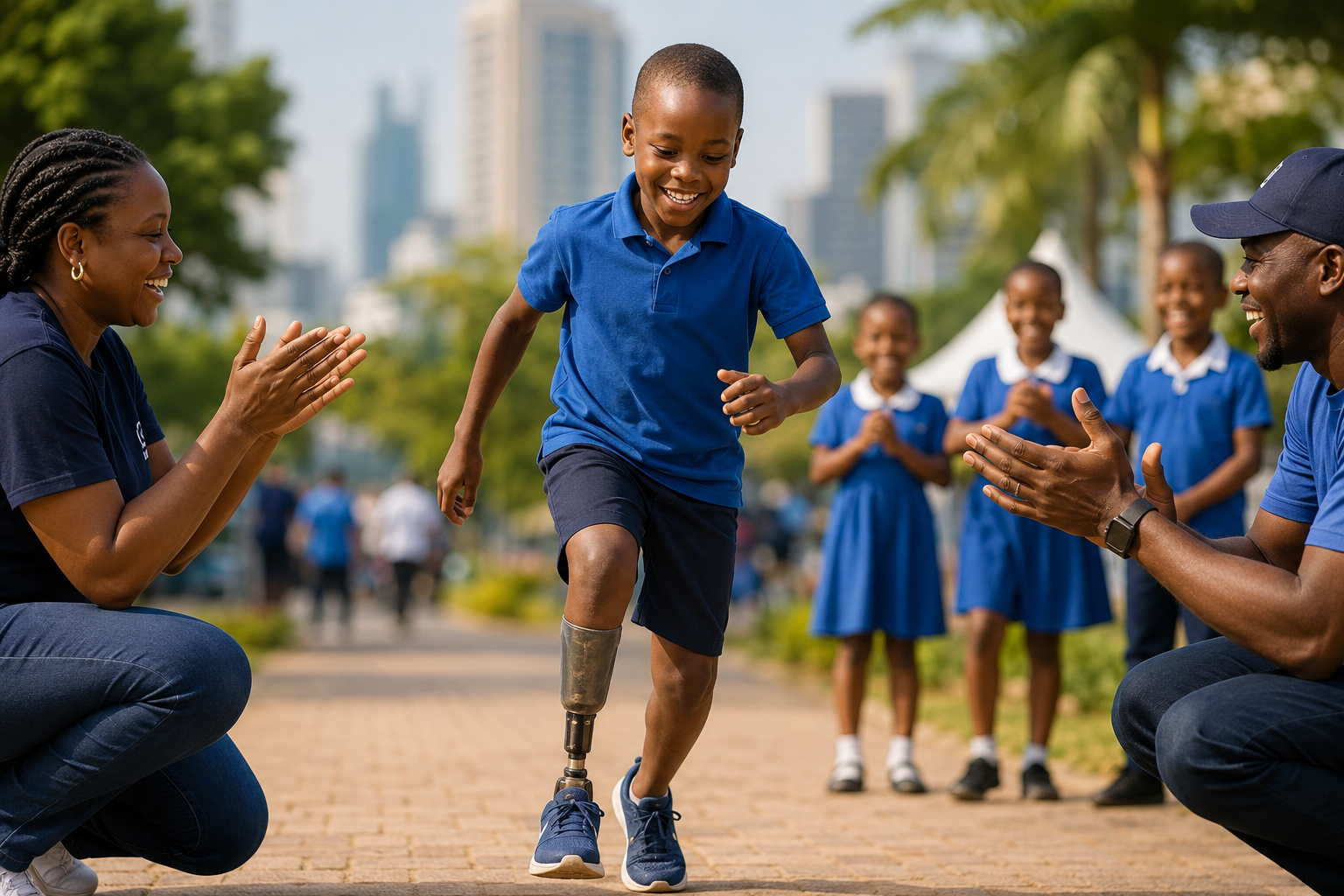
Hello, my fellow Timeline Auditors, Street-Level Philosophers, and Compassionate Neighbors. Welcome back to our weekly sanctuary! Today is Thursday, August 27, 2026. If you’ve ever spent your weekend witnessing a sea of blue shirts walking through Victoria Island, Lagos for the annual #Together4ALimb initiative, or if you’ve ever sat in a Lagos traffic gridlock and looked at a child with an amputated leg weaving between bumper-to-bumper cars, and overheard someone whisper, “Leave them, their family prefers it that way because it brings in money,” pull up a plastic chair. You are in the safest, most candid room on the internet.
This week, we are auditing a deeply emotional, complex, and widely misunderstood human reality: childhood limb loss, the toxic myths surrounding street begging, and the life-changing interventions restoring human dignity to our youngest citizens.
To understand what childhood limb loss actually means in Nigeria, forget clinical terms like “congenital limb difference” or “traumatic amputation.” Look at a neighborhood playground on a Saturday afternoon.
In our communities, kids play hard—chasing rolling tires, playing street football with plastic bottles as goalposts, and racing toward the local ice cream vendor.
But when a child loses a leg in a sudden road accident, or suffers a limb amputation following a medical treatment gone wrong, their world shrinks instantly.
The physical loss of a limb is only the smaller half of the hardship. The larger burden is the brutal emotional weight of societal stigma.
When a child stops going to school because of playground taunts, or when a father has to carry his growing daughter on his back every single day to her classroom, the entire family’s future gets paused.
Now, let’s address the elephant in the room—an uncomfortable narrative repeated in air-conditioned offices, ride-hailing cabs, and social media comment sections, especially regarding northern states.
Why bother giving prosthetic limbs or aid to children begging at traffic lights? Their families don’t want help. They make more money begging with a missing limb than working a regular job!
This is one of the most persistent, toxic myths in urban discourse. Let’s break down the street logic versus the lived reality.
When a child from an underserved family loses a limb to a road mishap, an untreated infection, or a botched traditional bone-setting attempt, the medical bills wipe out family savings. When they leave the hospital, there is no state-funded rehabilitation portal.
No parent wakes up in the morning praying for their 8-year-old child to spend 10 hours under the scorching sun dodging exhaust fumes in traffic. What people misinterpret as “preference” is actually the quiet surrender of people who were never offered a real door out. When given a genuine choice—a working prosthetic limb paired with a ₦1.5 million education trust fund—parents do not choose the highway median; they choose the classroom every single time!
This is precisely why long-term corporate interventions like Stanbic IBTC’s #Together4ALimb movement are so vital—they don’t just hand out temporary charity; they dismantle the structural trap completely.
On August 22, 2026, during their annual awareness walkathon under the theme “Be Un’limb’ited: Energise. Elevate. Grow.”, the initiative reached its 250th beneficiary milestone.
When a child who once hid behind a curtain receives a custom prosthetic leg, something magical happens. They don’t just walk; they put on school uniforms, run for class captain, and step back onto the football field. When an 11-year-old girl who used to be carried everywhere by her father suddenly walks into class on her own two feet, her father’s back—and his mind—finally get rest.
An artificial leg does far more than replace lost bone and muscle—it restores human dignity, silences playground bullies, and opens the door to becoming a future lawyer, doctor, or engineer.
Lessons to Carry into the Weekend
Audit Your Biases: The next time you see a child living with a physical disability on the street, replace cynicism with empathy. Lack of access, not lack of ambition, is what keeps people trapped.
Support Sustainable Interventions: Real empowerment isn’t handing out loose change at a red light; it’s championing initiatives, policies, and health frameworks that offer free adaptive tech and education to vulnerable kids.
Teach Inclusion at Home: Remind the young ones around you never to tease or exclude a classmate who looks or moves differently. Every child deserves to feel “un’limb’ited”.
See you next Thursday—hopefully with wider empathy, stronger support systems, and a country where every child can dream without limits!