Giant Brewer, Nigerian Breweries Plc has posted 10.50 per cent drop in profit after tax for the financial year ended December 31, 2015.
The brewer posted a profit after tax of N38.06 billion against, N42.52 billion achieved in the corresponding period of 2014. The report is contained in the company’s audited result released by the Nigerian Stock Exchange (NSE) in Lagos, on Thursday, February 11.
Further breakdown of the company’s result indicated that profit before tax dipped by 11.30 per cent to N54.514 billion from N61.461 billion reported in 2014.
Its turnover appreciated by 10.30 per cent to N293.91 billion compared with N266.37 billion achieved in 2014. Also, non-current liabilities dipped to N43.82 billion in contrast with N63.24 billion in 2014, while net assets increased to N172.321 billion from N171.964 billion in the previous year.
NB’s total non-current assets leaped to N302.91 billion from N296.51 billion, while total current liabilities grew to N140.08 billion from N114.03 recorded in the preceding year.
The Bankers’ Committee has shown support for the increasing significant financial services inclusion for a majority of Nigerians before the end of 2016.
The director, Banking Supervision, Central Bank of Nigeria, CBN, Tokunbo Martins, who addressed newsmen shortly after the committee’s meeting in Abuja, on Thursday, February 11, said that the committee extensively deliberated on the need for the 170 million Nigerians to have some form of financial inclusion and expressed delight that there has been substantial improvement in that regard.
She said: “A couple of years back, the number of Nigerians financially included are between 30 and 40 per cent, but currently we have 66 per cent (about 57 million) Nigerians financially included, and we hope that before the end of 2016, we would reach our target of 60.5 per cent.”
“If that target is achieved, I think we would have gone a long way to alleviate the sufferings of Nigerians as far as financial inclusion is concerned.”
On the issue of Nigerians resident in the North East, the committee said that they are working on creating more access point in the area through mobile, agency banking, which is expected to take off soon.
The committee, while refuting assumptions that bank charges discourage inclusion, said that they are going to drive a financial literacy awareness so that people can understand what they are being charged for to ensure bank customers get value for what they are charged.
Nigeria and Japan have signed a N2.19bn ($11 million) Memorandum of Understanding (MoU) for emergency improvement of electricity supply facilities for communities around Abuja.
The Minister of Budget and National Planning, Udoma Udo Udoma, at the signing ceremony held in Abuja on Thursday, February 11, said the electricity supply project by the Japanese government was intended to among other things complement the country’s efforts in guaranteeing steady power supply for economic growth.
Udoma said the project is aimed at installing capacitor banks in Apo and Keffi substations in Abuja and Nasarawa State.
“The sustained implementation of this project is expected to pave way for a significant access to quality socioeconomic services, thereby leading to reduction in unemployment,” he said.
The Ambassador of Japan to Nigeria, Sadanobu Kusaoke, said the power sector has long been one of the priority areas of Japan’s development cooperation with Nigeria.
Kusaoke disclosed that in future Japan will intervene in more ambitious power sector projects across the country.
The Nigeria Labour Congress, NLC, is set to propose a new minimum wage to the federal government following the crash in the value of naira.
The Secretary General, Nigerian Union of Textile Garment and Tailoring Workers of Nigeria (NUTGTWN), Comrade Issa Aremu, who said this on Thursday, February 11, on the sidelines of a policy dialogue on naira devaluation in Lagos noted that the current N18000 is no longer sustainable and the NLC would propose N48, 000 as minimum wage.
He said governors and employers of labour who fail to pay salaries should resign and be prosecuted.
He recalled that the first minimum wage was N125 in 1981 when the naira was about twice the value of the dollar and this translated to 250 dollars.
“The minimum wage has declined to 60 dollars. It has to move to N48,000. That is why the NLC is ready to prepare to submit our new proposal and this will be done, I tell you, whether through struggle, we will get that result.
“We are one of the poorest countries in the world. Ghanaians stand better than us. Workers’ wage is to turn the economy around and in spite of that some governors are still not paying as and when due.
“That’s why I said any governor or any employer that doesn’t pay salaries should resign and not only that, he should be prosecuted because the Nigerian constitution is very clear that they should pay salaries as at when due,”he said.
Digital technology is no longer new to Nigerians as almost everyone is affiliated in one way or the other. From phones to computers to other digital devices, Nigerians have their lives saddled with various digital media platforms and have to keep up with multiple processes and activities to stay on point.
Unfortunately, keeping it all on track can become a chore. Before long, you find you have not cleaned your phone in months, your password is no longer functional or is way too easy to guess, etc. and you realize you need a plan to help you clean up digital life and kick off a fresh start.
To help Nigerians stay abreast of new technology, Jovago.com, Africa’s No.1 online hotel booking portal suggest 5 easy tips.
Tune-up your device
Computers, laptops and phones require tune-ups at intervals. Take out time to study the device manual and read through relevant instructions that will guide you towards understanding exactly what you need to clean and how to go about it. You may be required to install a software, an app or use an extension, whichever you decide to ensure you backup before you begin.
Reset Your Passwords
Passwords are very sensitive and it is essential you stay on top of password trends, that way you keep yours impenetrable. Get a password manager as it is essential to greater online safety and security: It creates unique passwords for all your accounts, remembers those passwords and types them for you in a secure way. The password manager also collects your logins and passwords, and analyzes their strength, indicating passwords that need to be changed. There are so many password managers online that are free or at least render a level of free services.
Organize Your Photos
Thanks to social media and the incessant need for everyone to almost everyone has a large vault of pictures online as taking pictures and selfies are now essential parts of our daily routines. The truth is, You do not need all your photos on your device all the time. Scroll through the stack of photos on your devices and ensure you delete all useless photos or irrelevant photos. Make up your mind on what photos are essentially important to you, name them, tag them, sort them into albums or folders. Ensure you save them in one location , that way you know that the space is defined for saving photos only. For pictures than you have only in print, you can scan them and save them digitally in these folders as well. Good thing is, if you do not have an external hard disk, you can use the dropbox app or save to your google drive online.
Delete apps you do not use.
Most apps are free and so you find Nigerians crowding their phones with all sorts of apps, even the ones that do not apply to them in any way, even having as much three apps that perform the same functions at a time. While having these apps may seem trendy, they may be the reason your phone keeps clogging or crashing. Sweep through the apps on your phone painstakingly and delete every app you do not use at least once a week.
6 persons have been arrested by the police in Lagos state for allegedly disturbing the peace of residents of Olaomibiyi Street, Ogba, during a church service.
The church members – Ngozichukwu Onyebuchi (44), Clement Eromosele (26), Chukwudi Akwegbu (26), Chibuzor Chukwu (18), Godspower Enudi (21) and Okorie Livonus (36) – who were arraigned in a Lagos Magistrate’s Court sitting in Ogba, were accused of converting a residential apartment to a church.
It was learnt that the landlord and residents of the building where the defendants gathered to worship had complained that the congregation caused noise pollution whenever they prayed.
They were said to have cautioned the worshippers to lower their voices, but the members reportedly declined.
It was gathered that the church was reported to the police at the Pen Cinema division, who arrested the six members on January 14 during Sunday service, while the others were said to be at large.
They were brought before a Chief Magistrate, Mrs. T. Akanni, on two counts of engaging in a conduct capable of causing a breach of the peace.
The offence, according to a police prosecutor, Inspector Clifford Ogu, is punishable under sections 410 and 166 (1) (d) of the Criminal Law of Lagos State, Nigeria, 2011.
The charges read, “That you, Ngozichukwu Onyebuchi, Clement Eromosele, Chukwudi Akwegbu, Chibuzor Chukwu, Godspower Enudi and Okorie Livonus, and others still at large on Olaomibiyi Street, Ogba, Lagos, on January 14, 2016, at about 8am in the Lagos Magisterial District, did conspire to commit felony to wit: conduct likely to cause a breach of the peace.
“That you and others still at large on the same date, time and place, in the aforementioned magisterial district, did unlawfully convert the residential apartment of the aforementioned house to a church and disturb peace of the landlord and other tenants as you were praying on top of your voice, thereby committing an offence punishable under Section 166 (1) (d) of the Criminal Law of Lagos State, Nigeria, 2011.”
The accused, however, pleaded not guilty to the charges and elected summary trial.
The presiding magistrate, Akanni, admitted them to bail in the sum of N50,000 each with two sureties each in like sum. The magistrate added that the sureties must provide evidence of tax payments and their residential addresses to the court for the perfection of the defendants’ bail.
OVER N20M worth of cash and other prizes to be won. The search for the next inventor begins on the 2016 edition of COWBELLPEDIA Secondary School Mathematics Quiz TV Show. This is to officially announce that the 2016 online registration portal www.cowbellpedia.ng for schools/ students is now OPEN. Get your schools to register for this National competition endorsed by the Federal Ministry of Education & NECO immediately.
Exam Date across Nigeria is Sat., March 19, 2016
School Administrators, Principals and Math Teachers are hereby informed to endeavor to register their school(s)/student(s) on time as there will be a special prize from Promasidor for the first 500 schools to register.
PRIZE Money
1st Position- N1,000, 000
2nd Position- N750, 000
3rd Position- N500, 000
Lots of cash prizes for state winners & Math Teachers
Stanbic IBTC Asset Management Limited, a subsidiary of Stanbic IBTC Holdings Plc, has donated the sum of N250,000 to Thoughtful House Foundation, a non-governmental organization, to support the education and treatment of children with health challenges.
The donation is expected to support the activities of Thoughtful House Foundation, which, among others, is focused on providing education and therapy to children living with autism, create awareness for children and families, and wage a battle to beat autism in Nigeria and beyond.
Chief Executive, Stanbic IBTC Asset Management Limited (SIAML), Mrs. Bunmi Dayo-Olagunju, who presented the cheque to the body, described the gesture as the company’s way of supporting charitable causes and contributing positively to the wellbeing of children and youth, which will in turn facilitate a better future for Nigeria. Dayo-Olagunju reaffirmed SIAML’s continued support for Thoughtful House Foundation which the firm looks to sustain moving forward.
She said the donation represents an affirmation of the Stanbic IBTC Group’s efforts at making life better for the society, with focus on where the greatest good can be achieved. “We are firm believers in social investment as a fundamental part of the environment where we conduct our business. Education, economic empowerment and healthcare are the key pillars of our corporate social investment and we feel really honoured to be lending a hand to societal good,” she stated.
As an institution in Nigeria for the long haul, Dayo-Olagunju said Stanbic IBTC will remain faithful to time-honoured tradition of giving back to the society, while supporting the country’s developmental aspirations.
On her part, Representative, Thoughtful House Foundation, Ms Omo Judith Ogun, who received the cheque on behalf of the body, expressed appreciation to Stanbic IBTC for its humane approach to social corporate responsibility and consistent support to the body. “We thank Stanbic IBTC Asset Management Limited for this exemplary gesture and a touching sense of corporate responsibility. We look towards consolidating this partnership going forward. It is without a doubt that this donation will go a long way in addressing one of the crucial needs of our mandate,” she stated.
Stanbic IBTC Asset Management Limited is a wholly-owned subsidiary of Stanbic IBTC Holdings Plc, while Stanbic IBTC Holdings Plc is part of the Standard Bank Group, Africa’s largest bank by assets and market capitalization. Standard Bank Group has been in operation for 153 years and has direct, on-the-ground representation in 20 African countries. Stanbic IBTC Holdings Plc provides the full spectrum of financial services with a clear focus on three main business pillars – Corporate and Investment Banking, Personal and Business Banking and Wealth Management.
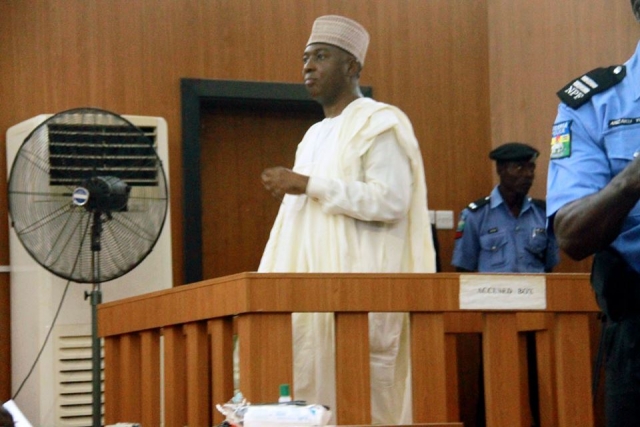
Senate President, Bukola Saraki at the Code of Conduct Tribunal
The Federal Government has written to the Code of Conduct Tribunal requesting for a date for the commencement of the trial of the Senate President, Dr. Bukola Saraki, on charges of false assets declaration.
The letter was written on behalf of the Federal Government by the lead prosecuting counsel, Mr. Rotimi Jacobs (SAN).
Head, Press and Public Relations of the CCT, Mr. Ibraheem Al-hassan, confirmed that the registrar of the tribunal had received the letter.
“I have confirmed from the registrar and he confirmed to me that Mr. Rotimi Jacobs (SAN), wrote the letter, informing the tribunal that the Supreme Court has dismissed the appeal that was stopping the trial from going on. He attached a copy of the judgment to the letter.
“The letter will be considered and a hearing notice will be issued later on.”
It is expected that the tribunal will give a date for the trial and issue hearing notices to parties to the case this week.
A seven-man panel of the apex court presided over by the Chief Justice of Nigeria, Justice Mahmud Mohammed, unanimously ruled in its judgment on February 5 that Saraki’s appeal against the jurisdiction of the CCT and the competence of the charges, lacked merit.
In the 13 counts initiated by the Federal Government, Saraki was said to have made false assets declaration in his forms submitted to the Code of Conduct Bureau as a two-term governor of Kwara State between 2003 and 2011.
The Senate President, who was said to have submitted four assets declaration forms which were allegedly investigated by the CCB, was found to have “corruptly acquired many properties while in office as Governor of Kwara State but failed to declare some of them in the said forms earlier filled and submitted.”
He also allegedly made an anticipatory declaration of assets upon his assumption of office as governor, which he later acquired.
He is also accused of sending money abroad for the purchase of property in London and that he maintained an account outside Nigeria while serving as governor.
This is contained in a statement made available to the News Agency of Nigeria (NAN) on Wednesday in Minna.
While admitting that the suspect, Abdulsalam Yunusa was admitted into the University in 2010/ 2012 academic session, the school said that he was a weak student who last registered in 2014/2015 academic session but absconded after the first semester.
It stated that the records showed that the alleged recruiter was in 300 level and did not register for the current session, adding that his mates were presently being mobilised for the National Youth Service Corps (NYSC).
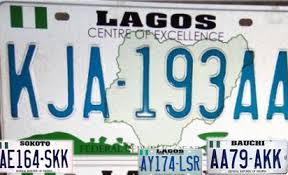
The National Bureau of Statistics has disclosed that a total of 5,011,290 vehicles and personal licenses were registered in the 36 states of Nigeria and the Federal Capital Territory, Abuja between 2013 to 2015.
In a statement issued on Wednesday, the statistical body said about 2,200,481 drivers licenses were processed within the period under review, while 1,868,730 and 942,079 plate numbers for vehicles and motor cycles were processed respectively across the country.
A further analysis of the statistics showed that in 2013 alone, 395,539 licenses were registered in the country and in 2014, 653,046 were also registered, while in 2015, a total of 1,151,906 licenses were registered across the federation.
Also, in 2013, a total of 1,004,469 plate numbers were processed in Nigeria with 234,667 motor cycles and in 2014, 560,987 and 418,417 plate numbers were also registered for vehicles and motor cycles respectively, whereas in 2015, 303,274 and 269,795 plate numbers were equally registered for vehicles and motor cycles respectively across the country.
From the entire statistics, Lagos state had the highest registration with 127,261 licenses in 2013, 225,284 in 2014 and 298,319 in 2015.
The FCT followed with 42,613 in 2013, 54,532 in 2014 and 106,946 in 2015.
The least state was Kebbi which recorded 1,274 licenses in 2013, 1349 in 2014 and 3,734 in 2015.
As part of efforts to close the gap brought about by the closure of the Port Harcourt and Kaduna refineries, the Nigerian National Petroleum Corporation (NNPC) has embarked on a massive importation of Premium Motor Spirit (PMS).
Also, major and independent petroleum marketers have continued to import PMS into the country despite the absence of subsidy in the 2016 budget.
The refineries were closed over crude supply challenges arising from recent attacks on vital oil pipelines. The Kaduna Refinery was already producing 3.2 million litres of petrol as at December last year and would have saved about $5.33 million for the country when it is 90 per cent operational. And the Port Harcourt refinery was recording a daily PMS yield of over 4.1 million litres before the attack on the pipelines.
So far, NNPC has been responsible for 78% of the total fuel consumed in the country, while the major and independent marketers fill the remaining 22% approved by the Petroleum Product Pricing and Regulatory Agency (PPPRA).
Reports say that Nigeria is seeking a $2billion loan from China to fund the 2016 budget.
According to a Reuters report, which quoted financial and government sources, the nation’s Finance Minister Kemi Adeosun, will travel to China next week to negotiate the loan to help fund the record budget spending.
The report also said Nigeria has shelved plans to meet investors about returning to commercial borrowing on the Eurobond market, and that any loan agreed during Mrs Adeosun’s trip could be signed by President Muhammadu Buhari in Beijing next month.
Nigeria wants to raise about $5 billion abroad to cover part of its 2016 budget deficit. This is projected to hit N3 trillion ($15 billion) due to heavy infrastructure spending at a time when the slump in global oil prices has slashed export revenues.
The president asked China last December to fund rail and power projects and Mrs Adeosun, who already visited Beijing last week, has raised the possibility of seeking a loan from the Export-Import Bank of China.
Nigeria had wanted to raise $1 billion from Eurobond investors but has dropped plans to sound them out at a non-deal “road show” which the Finance ministry had tentatively planned for March, financial sources say.
The former President of Nigeria, Olusegun Obasanjo stated that the private sector would continue to remain the driver of economic growth of Nigeria. He stated this at the commissioning of British American Tobacco Nigeria (BATN) new Head Office in Lagos, yesterday.
He said “Our economy is highly dependent on the private sector,” urged the federal government to create enabling environment for the private sector to strive.
“In 1999 Nigeria emerged as a democratic nation and needed sustenance and support from within and outside its economy.
“A few investors were sceptical about the political and economic climate of Nigeria, the government then embarked on reforms programme and intensify calls for investment in Nigeria, bringing various investors and providing them with necessary information and government incentives and opportunity.”
He noted BATN was among the first set of companies to come into the country, saying in 2001, BATN signed a Memorandum of Understanding (MOU) with the federal government which led to an investment of $150 million and the modernisation of Zaria factory.
He added that the company has continued to play a key role in the social economy of the county, in the area of agricultural development, corporate social responsibility, economy development partnership among others.
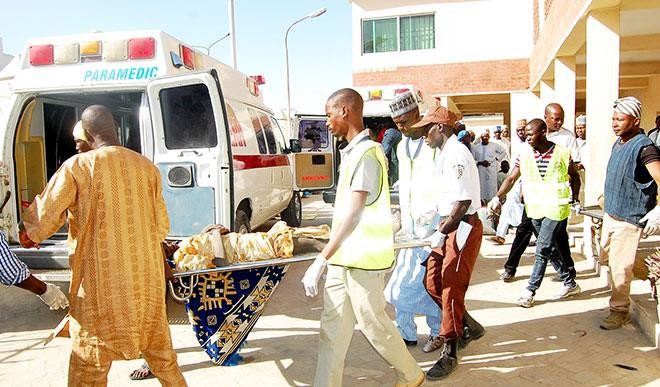
At least 51 people died in a suicide bomb attack , and another 78 persons evacuated for varying injuries following a suicide bomb blast at a camp for Internally Displaced Persons in Dikwa, a local council in Borno State.
A mass burial has already been conducted for the deceased victims, mostly women and children.
Dikwa which is 80 kilometres from Maiduguri once occupied by the Boko Haram terrorists, was declared liberated by the Nigerian Army since July last year.
Witnesses say two suicide bombers infiltrated the camp unnoticed and detonated their explosives while breakfast was being served on Tuesday morning.
One of the witnesses said “Between 6:00am to 7:00am [local time] when people were trying to line up for breakfast an explosive went off. In the ensuing confusion another blast went off again. We do not have control over our movement only the government decides where we stay but we wish they would relocate us to Maiduguri because we are in a war zone. Even though we are surrounded by soldiers”.
The Chairman of the State Emergency Management Agency (SEMA), Ahmed Satomi, said the army had gotten hold of the third culprit who was making confessions already.
No group has claimed responsibility for the attack, but the Boko Haram terrorist group is the prime suspect. The group had carried out similar attacks in the region in the past.
At least 51,000 Internally Displaced Persons are living in Dikwa.
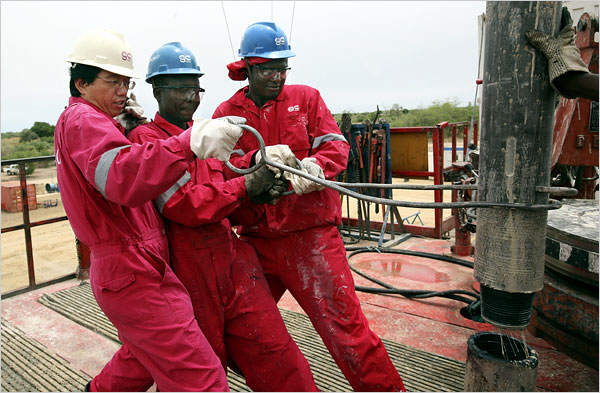
The Federal Government has taken moves to halt the abuse of the expatriate quota by foreigners in the country.
According to the Minister of Labour and Employment, Dr. Chris Ngige, the ministry was liaising with the Ministry of Interior to stop the abuse of the nation’s immigration laws.
“Speaking on the vexed expatriate quota issue, the Minister said the ministry was already in liaison with the Ministry of Interior to check the abuse of the nation’s immigration/Labour laws and promised that the displacement of qualified Nigerians by foreigners would soon become a thing of the past,” he said.
Ngige further noted that the Federal Government’s position that it would not allow job losses in the nation’s oil sector, adding that the Buhari Administration would not allow job losses in the nation’s oil sector and that all threats to existing jobs should be nipped in the bud.
Ngige explained that he had to summon the meeting because of petitions he received on employment-related issues and the abuse of the Nigerian worker and for emerging issues to be resolved after which a stakeholders’ summit would be held.
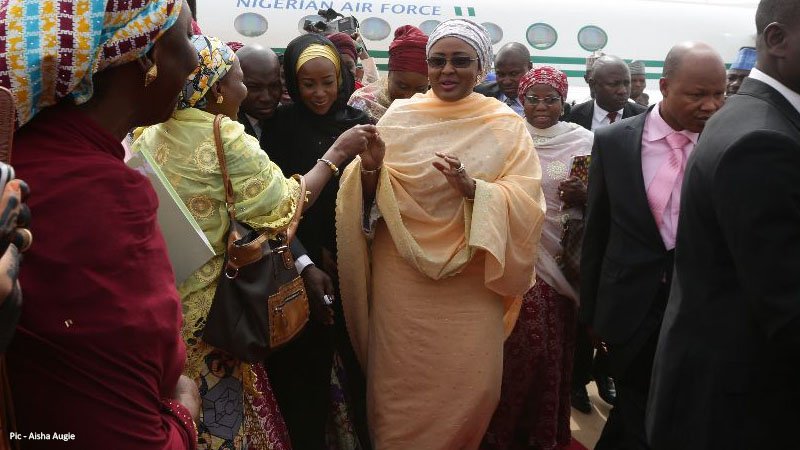
Wife of the president, Mrs. Aisha Buhari has expressed her support towards efforts made by the United Nations Population Fund (UNFPA), the United Nations Children Fund (UNICEF) to end Female Genital Mutilation and Circumcision (FGM/C) in Nigeria. She also on Tuesday launched the national response to eliminate the practice in Abuja.
“I also urge the wives of governors, particularly those from states where this harmful practice is rampant, to be the voice of the campaign to end FGM/C in their various states.
“We are mothers and women and have the primary role to use our privileged positions to make lives better for Nigerians, especially women and girls. I urge you to be vocal on the need for FGM/C to end in Nigeria and take action that will enable this to happen.” she said.
According to the Nigeria’s National Demographic Health Survey 2013, it was revealed that 25 percent of women in Nigeria have undergone the practise.
The UNFPA and UNICEF jointly noted: “Although the practice is slowly declining. Among the myths that still perpetuate the practice are ideas that FGM/C prevents young women from becoming promiscuous or that it is beneficial for the health of her children.
In fact, it exposes girls and women to severe and sometimes life-threatening health complications, including hemorrhage, tetanus, sepsis, urine retention, sexual dysfunction and infertility; women who have undergone FGM/C are twice as likely to die during childbirth, and their babies are more likely to during or just after birth.”
Statistics say it is widely practised in Nigeria, where an estimated 19.9 million Nigerian women have undergone the procedure.
According to the Chairman, Pharmaceutical Manufacturers Group of Manufacturers Association of Nigeria, Mr. Okey Akpa, Nigerians may experience scarcity of medicines in the country. He said the shortage of foreign exchange has prevented drug manufacturers from importing raw materials and chemicals need to produce most essential medicines the country.
“Presently, there is a drought of raw materials to produce because we can’t access forex from the banks to import raw materials which can’t be sourced locally.
“We have been using our previous stock since this development but we will soon run out. What this means is that essential medicines will be scarce and when they are available they will be unaffordable.
“We know why the dollar is scare but government should identify genuine manufacturers and give them forex. After food security, what is most important is the availability of drugs.”
President of the PSN Yakasai , has called on the Federal Government to revisit the N200bn intervention fund it had promised the pharmaceutical sector to encourage local manufacturers, adding that the financial support would ensure that 70 per cent of drugs sold in Nigeria were manufactured by indigenous companies.
Mr Goddey Agusa, the Head of Public Affairs Unit, warri zonal Office of Department of Petroleum Resources (DPR) disclosed that it has sealed about 100 erring petrol stations in the last five weeks in Delta for various offences. He said the petrol stations were sealed for offences bordering on hoarding, diversion, over-pricing as well as under-dispensing.
“The common practice among the oil marketers today is the issue of under-dispensing and DPR is equal to the task.
“Most of the marketers pretend to comply with the Federal Government directive on pump price of N86.50 per litre, but they under-dispense.
“About 80 out of the 100 petrol stations sealed in the last one month in the state were involved in under-dispensing to the public.
“We go out on surveillance with our measuring gauge and once we discover that you under-dispense, we don’t have options than to dispense your fuel to the public free of charge. However, if the practice continues, we may decide to revoke their operational licence,’’ he said.
He stated that regulatory agency would continue to monitor activities of petroleum marketers until they fully complied with the distribution and sales of petroleum products.
Keypoints
The Lagos State Internal Revenue Service (LIRS) has extended the deadline for filing individual annual income tax returns to April 21, 2026
Executive Chairman Ayodele...