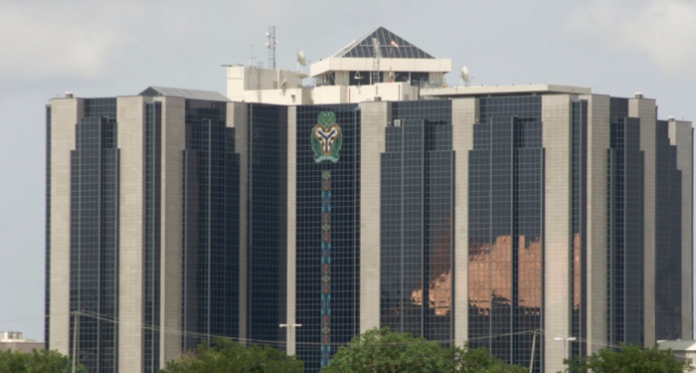
In a strategic move to stabilise the financial sector, the Central Bank of Nigeria (CBN) has introduced time-sensitive measures for a select group of commercial banks still adjusting to post-pandemic regulatory reforms.
According to a press statement from Mrs. Hakama Sidi-Ali, Acting Director of the CBN’s Corporate Communications Department, the new guidelines are designed to support the phased implementation of Nigeria’s 2023 banking recapitalisation programme.
The regulator said that the recapitalisation effort had already triggered robust capital inflows and improved balance sheets across the banking industry. “Most financial institutions have either achieved or are on track to meet the revised capital thresholds well before the March 31, 2026 deadline,” she stated.
The temporary measures—affecting only a few institutions—include restrictions on capital distributions, such as the suspension of dividends and performance bonuses. This is aimed at encouraging capital retention and shoring up capital adequacy ratios.
“All impacted banks have been officially informed and are under close regulatory supervision,” the statement noted.
The CBN has also permitted limited, time-bound regulatory leeway to ensure a smooth transition, in alignment with global best practices. Sidi-Ali highlighted that Nigeria’s capital adequacy framework remains more stringent than the Basel III international minimum.
“These regulatory adjustments are not unprecedented. Similar transitional guidelines have been adopted in the U.S., European Union, and other advanced markets as part of wider post-crisis financial sector reforms,” she added.
The CBN reiterated its commitment to transparency and ongoing dialogue with stakeholders through platforms like the Bankers’ Committee, the Body of Bank CEOs, and other key forums.
“These latest measures reflect an orderly progression of the reform agenda,” the CBN assured. “They are no cause for alarm but rather evidence of the regulator’s proactive stance in ensuring that the banking system remains sound, solvent, and ready to support Nigeria’s economic growth trajectory.”
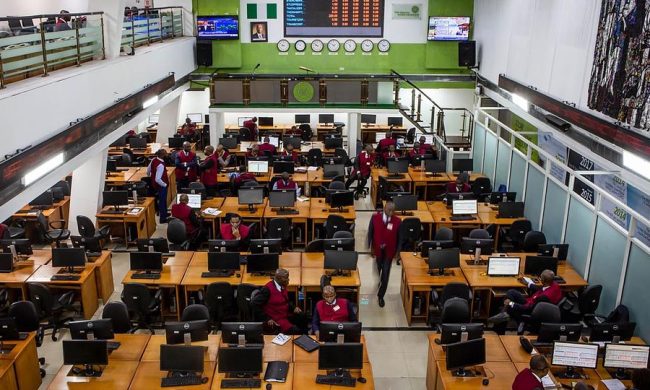
The Nigerian Exchange (NGX) witnessed a sharp decline in investor wealth on Tuesday, shedding over ₦170 billion in market capitalisation due to a wave of profit-taking in heavyweight stocks, notably Oando Plc and FBN Holdings (First Holdco).
Oando led the day’s losses, falling by the maximum 10% permissible on the exchange, while First Holdco dropped 4.2%. Their performance weighed heavily on the broader market, despite a 2.2% gain in MTN Nigeria shares and upward movement in Mutual Benefits Assurance.
Market data indicated that the NGX All-Share Index fell by 0.28%, or 328.08 points, settling at 114,910.16 at market close. Correspondingly, the total market capitalisation dipped by 0.23% to ₦72.50 trillion.
Stock analysts attributed the mismatch between the all-share index and market cap decline to the listing of 6.66 billion ordinary shares by Sterling Financial Holdings Plc at ₦4.00 each, part of its recent rights issue.
Despite the downturn in major indices, trading activity saw an uptick, with total volume and value increasing by 27.78% and 35.20%, respectively. Atlass Portfolios Limited reported that 787.31 million shares worth ₦25.67 billion exchanged hands in 23,170 deals.
ZENITHBANK led the trading volume chart, commanding 12.24% of total shares traded. GTCO followed with 10.60%, while UBA, ACCESSCORP, and ETI made up the rest of the top five. In terms of value, GTCO topped the chart, representing 24.34% of total trade value.
Among the day’s top gainers were CILEASING, MBENEFIT, and LEARNAFRCA, each appreciating by 10%. UPL rose by 9.82%, DEAPCAP by 8.64%, and LIVINGTRUST by 8.39%. Other notable advancers included SKYAVN and PRESTIGE.
On the flip side, TRANSPOWER was the day’s biggest loser, dropping 9.98%. Other laggards included OANDO (-9.97%), CUSTODIAN (-8.63%), UBA (-5.57%), FIRSTHOLDCO (-4.15%), and HONYFLOUR (-2.27%).
The market breadth ended negative, with 35 stocks closing lower versus 29 gainers. Sectoral performance was also broadly bearish, as the oil and gas sector fell 1.25%, consumer goods lost 0.50%, and banking shed 0.20%. However, the insurance and industrial sectors edged higher by 0.40% and 0.16%, respectively.
Cross River State Governor, Senator Bassey Otu, has announced the appointment of Mr Linus Obogo as the new Chief Press Secretary (CPS) and Special Adviser on Media and Publicity, in a move aimed at enhancing the administration’s communication strategy.
The Governor also reappointed Mr Nsa Gill, who previously served as CPS, as Special Adviser on Public Affairs.
The appointments were confirmed in a statement issued on Tuesday by the Secretary to the State Government, Professor Anthony Owan Enoh, who described the development as part of the Governor’s broader plan to strengthen public engagement and media relations.
“His Excellency, Senator Bassey Edet Otu, has approved the appointment of Mr Linus Obogo as Chief Press Secretary and Special Adviser on Media and Publicity to the Governor,” the statement read.
It noted that Obogo’s appointment aligns with the administration’s commitment to building a more robust and responsive information management system.
Mr Nsa Gill, now serving in a new capacity as Special Adviser on Public Affairs, is expected to lead efforts in deepening citizen engagement and improving transparency in policy communication.
“Mr Gill is expected to enhance the interface between government and the public, ensuring clarity, active engagement, and a consistent flow of accurate information,” the statement added.
CapCut, the popular video editing app used by many Nigerian skit makers, TikTok influencers, content creators, and small business owners, quietly updated its Terms of Service on June 12, 2025. The new terms could significantly impact how users control and share their content on the platform.
The app, owned by Chinese tech giant ByteDance (which also owns TikTok), now gives itself broad rights over any content users upload. According to the updated policy, when a user uploads a video, photo, or audio file to CapCut, the company gains extensive permission to use that content globally and indefinitely, without having to seek further approval or offer compensation.
CapCut now has the right to use, modify, adapt, reproduce, create derivative works from, display, publish, transmit, distribute, or store user content. This license is non-exclusive, royalty-free, transferable, sub-licensable, perpetual, and worldwide in scope.
The terms also state that all uploaded content is considered non-confidential. CapCut is under no obligation to treat any material as private or secure. Users are advised not to upload sensitive or personal material, as CapCut can use or share it freely.
There are also warnings about uploading music. Users are not allowed to post songs or beats unless they hold all necessary rights. Owning only the recording is not enough; users must also have the rights to the underlying composition. Failure to secure these rights could result in legal consequences, for which the user would be held responsible—not CapCut.
Additionally, users must waive certain rights, including the right to approve how their content is used in CapCut’s advertising or promotional materials. The app also removes moral rights, meaning users may not object even if their content is edited or used in a way they dislike.
If there is a legal dispute involving uploaded content, CapCut places full responsibility on the user. The company states that users will be liable for any claims or legal actions arising from content that infringes on someone else’s rights.
CapCut also reserves the right to delete or remove user content at any time, without providing notice or offering any explanation or compensation.
For many Nigerians who use CapCut to produce comedy skits, music videos, promotional content, or monetised social media material, these updates are worth reviewing. Using the app now means accepting that your original work could be used by CapCut and its partners without your involvement or control.
Users are advised to back up their content outside the app and carefully read the full Terms of Service to determine whether they are comfortable continuing to use CapCut under the new conditions.
The National Pension Commission (PenCom) and the Office of the Head of the Civil Service of the Federation (OHCSF) have agreed to jointly develop a gratuity framework for civil servants in treasury-funded ministries, departments, and agencies (MDAs) under the Contributory Pension Scheme (CPS).
The move was announced following a courtesy visit by the Director-General of PenCom, Ms Omolola Oloworaran, to the Head of the Civil Service, Mrs Didi Esther Walson-Jack.
According to PenCom, the proposed scheme is estimated to cost the Federal Government about ₦30 billion annually, based on a model that pays retirees 100% of their last gross annual remuneration. Oloworaran described it as a modest but impactful step toward improving the welfare of dedicated public servants.
She also addressed ongoing concerns over delayed pension payments due to the backlog of accrued rights. PenCom’s previous collaboration with the OHCSF had secured a Federal Executive Council (FEC) approval for a ₦758 billion bond to clear outstanding liabilities under the CPS.
To further streamline pension administration, PenCom will, from August 2025, launch a comprehensive online enrolment and verification exercise for all serving federal workers in treasury-funded MDAs who joined service before June 2004. The results will help determine the total accrued pension rights liability, with the goal of presenting the data to the government to raise a bond for complete settlement.
Ms Oloworaran requested support from the OHCSF to direct MDAs to participate fully and submit necessary documentation. She explained that the move would protect pension funds from political transitions and allow retirees to start earning returns on their pension assets promptly.
She also highlighted challenges faced by MDAs not enrolled in the Integrated Payroll and Personnel Information System (IPPIS), such as uncredited pension contributions due to missing schedules. To solve this, PenCom has introduced a new Pension Contribution Remittance System, requiring all employers to use certified Payment Solution Support Providers for accurate and timely remittances into Retirement Savings Accounts (RSAs).
Responding, Mrs Walson-Jack pledged her full support, acknowledging that civil servants have long demanded a return of gratuity payments. She promised to issue the necessary circulars and collaborate closely with PenCom on the scheme’s rollout.
Both institutions agreed to form a standing committee to develop the modalities of the proposed gratuity scheme and address future implementation challenges.
Oloworaran concluded by noting that the framework is in line with Section 4(4)(a) of the Pension Reform Act (PRA) 2014, which allows for the establishment of gratuity for retiring employees in treasury-funded federal MDAs.
… Defaulters may be denied passports, licences, and housing access
In a significant step toward reshaping Nigeria’s credit landscape, the Federal Government has announced plans to link citizens’ credit scores to their National Identification Numbers (NIN).
The initiative, spearheaded by the Nigerian Consumer Credit Corporation (CREDICORP), aims to establish a unified and transparent national credit framework that will influence access to public services and economic opportunities.
Speaking at a State House media briefing in Abuja, the Managing Director of CREDICORP, Uzoma Nwagba, described the reform as a transformative measure designed to consolidate financial data from banks, fintechs, and microfinance institutions into a central national credit bureau.
“This marks a paradigm shift in Nigeria’s credit system, Your NIN will now serve as a financial fingerprint. Whether you’ve taken a loan from a bank, fintech, or a cooperative, your repayment record will follow you—and it will matter.” Nwagba said.
Under the new policy, defaulters may face far-reaching consequences, including being barred from renewing passports, obtaining driver’s licences, or accessing public housing. Nwagba clarified, however, that the intent is not punitive but developmental.
“We’re not looking to punish; we want to build a financially responsible culture. Responsible borrowers will be rewarded, while poor credit behaviour will have real consequences,” he said.
The new system will use both financial and non-financial data to generate credit scores for every adult Nigerian, shaping a national credit profile that will influence their interaction with the economy.
“Our goal is simple: every Nigerian must have a credit score, access to economic empowerment will increasingly depend on financial behaviour.” Nwagba stated.
The broader vision, he said, aligns with President Bola Tinubu’s Renewed Hope Agenda, which aims to boost industrial productivity, reduce corruption, and improve living standards.
“When people lack access to credit, they often resort to unethical means. This reform offers a structured alternative—credit access that is fair, transparent, and inclusive,” he added.
Nwagba also emphasised the economic benefits of the reform, particularly its potential to stimulate demand for locally produced goods. “By tying credit facilities to the purchase of made-in-Nigeria products, we are not only empowering consumers but also supporting domestic industries and job creation.”
With Nigeria’s current credit gap estimated at over N183 trillion, he called for private sector collaboration, stressing that the government alone cannot meet the country’s credit needs.
“Robust institutions and transparency will give lenders the confidence they need. As this happens, interest rates will fall, and access to affordable credit will expand,” Nwagba said.
As part of the reform, CREDICORP is also launching YouthCred, a targeted credit initiative for young Nigerians, particularly members of the National Youth Service Corps (NYSC). The programme aims to embed financial literacy and access to structured credit among youth aged 18 to 35.
“YouthCred is not just about loans—it’s about building a financially capable generation,” said Olanike Kolawole, Executive Director of Operations at CREDICORP. “We’re giving young people the tools to succeed in today’s economy.”
Officials added that integrating credit profiles with NIN will also improve service delivery across government agencies, streamline civic engagement, and promote a data-driven approach to national development.
The National Agency for Food and Drug Administration and Control (NAFDAC) has faulted pharmaceutical companies and marketing authorisation holders for the delayed update of its Greenbook, a public database of approved medical products in Nigeria.
The agency raised the concern during the opening session of a two-day sensitisation and awareness workshop held in Lagos on Monday.
Representing the Director-General, Prof. Mojisola Adeyeye, the Director of Post-Marketing Surveillance, Mr Fraden Bitrus, stated that several registered pharmaceutical products remain absent from the Greenbook due to the failure of companies to submit necessary post-registration data.
“Some products are fully registered with NAFDAC but are yet to appear on the Greenbook platform because marketing authorisation holders have not provided the complete required information,” Bitrus said. He urged manufacturers and importers to ensure immediate compliance, warning that the current delay undermines public access to essential information on approved medicines and weakens the agency’s regulatory transparency.
He further decried the growing threat of counterfeit medical products in the country, describing them as a deliberate act of greed and inhumanity. “Counterfeit medicines are not accidental—they are the product of greed by unscrupulous businessmen and their international partners, who endanger public health purely for profit,” Bitrus stated.
Highlighting NAFDAC’s ongoing efforts to combat fake drugs, he listed initiatives such as regular consumer safety alerts, daily publications in national newspapers, the Shine Your Eye programme on national television, and the deployment of digital verification tools like TrueScan and Media Lab.
Bitrus also spoke on the recently introduced Pharmaceutical Products Flexibility Regulation 2024, which mandates all regulated products—whether manufactured locally, imported, exported or distributed in Nigeria—to carry a unique identifier. This new system, he explained, will enhance full traceability across the pharmaceutical supply chain, boosting consumer safety and regulatory oversight.
The Independent Petroleum Marketers Association of Nigeria (IPMAN) has confirmed the suspension of a proposed strike action by petroleum tanker drivers over the contentious N12,500 electronic call-up charges introduced along the Lekki–Epe corridor in Lagos.
The strike, which had raised nationwide concerns over possible fuel supply disruptions, was put on hold following the Lagos State Government’s decision to initiate dialogue with all concerned stakeholders.
Speaking to The Guardian, IPMAN’s National President, Alhaji Shettima Maigandi, said the state government convened a roundtable discussion scheduled for Thursday, June 19, 2025, in a bid to resolve grievances surrounding the e-call-up system introduced to regulate truck movements around the ports.
“The suspension of the service withdrawal was prompted by the Lagos State Government’s commitment to open discussions on the issue,” Maigandi stated. “Tanker owners have agreed to stand down their planned industrial action in the interest of national stability and in anticipation of a meaningful resolution.”
According to Maigandi, the proposed meeting will include representatives from IPMAN, the Nigerian Association of Road Transport Owners (NARTO), and other critical players in the petroleum logistics chain.
The Guardian gathered that the strike action was suspended after the Lagos government formally committed to engaging stakeholders over the controversial e-call-up levy, which many operators argue has increased the cost of operations and disrupted the free flow of petroleum products.
In a memo issued to all zonal and depot unit chairmen, IPMAN’s National Secretary, James Tor, reiterated the association’s position, stating that the state government’s willingness to consult with IPMAN’s National Executive Council and NARTO was key to the decision to suspend the protest.
“The Lagos State Government has agreed to engage IPMAN NEC and NARTO for an amicable settlement of the proposed N12,500 levy, based on this development, you are hereby directed to suspend the strike and resume normal operations, while we continue to engage constructively to reach a favourable outcome.” Tor noted in the circular.
He further urged members to remain united and vigilant as discussions progress, assuring them that the leadership remains committed to defending the interests of its members and ensuring a just resolution.
The Economic and Financial Crimes Commission (EFCC) has arraigned Precious Williams, Director of Glossolalia Nigeria Limited and Pelegend Nigeria Limited, for allegedly defrauding over 3,000 investors of N13.8 billion in a high-profile investment scam.
Williams was brought before Justice S.I. Mark of the Federal High Court in Port Harcourt, Rivers State, on a 14-count charge bordering on conspiracy, obtaining money under false pretence, and money laundering.
The EFCC’s charges stem from a string of petitions submitted by victims who alleged that Williams, in collaboration with Maxwell Chizi Odum—founder of the now-defunct MBA Trading and Capital Investment Limited, who remains at large—collected funds from investors under false pretences of guaranteed monthly returns ranging from 10 to 15 per cent.
According to the EFCC, between August 2019 and February 2020, over N10 billion was funneled through Glossolalia Nigeria Limited’s Sterling Bank account. Additionally, between December 2019 and November 2020, more than N1 billion was allegedly received by Williams and her second company, Pelegend Nigeria Limited, via a Polaris Bank account. The Commission maintains that Williams knowingly received proceeds of fraud linked to the investment scheme orchestrated by Odum and his firm.
Meanwhile, the Chairman of the Independent Corrupt Practices and Other Related Offences Commission (ICPC), Dr Musa Aliyu, has raised concerns over the erosion of ethical standards within the legal profession, particularly in relation to anti-corruption litigation.
Speaking during a goodwill message at the Nigerian Bar Association (NBA) Lagos Branch 2025 Annual Law Conference, held at the MUSON Centre, Onikan, Lagos, Aliyu criticised certain lawyers for deploying delay tactics and filing frivolous suits aimed at undermining the country’s anti-graft institutions.
The conference, themed “Reimagining the Practice of Law: Ethics, Innovation and the Future of Legal Services”, served as a platform for legal practitioners to reflect on the profession’s role in upholding justice and combating corruption.
Aliyu specifically lamented attempts by some lawyers to repeatedly challenge the Supreme Court’s affirmation of the ICPC’s investigative powers, warning that such actions not only slow down justice but also tarnish the image of the legal profession.
He urged the legal community to uphold ethical conduct and actively contribute to the fight against corruption, which he described as pivotal to Nigeria’s national development and institutional credibility.
The House of Representatives Committee on Nutrition and Food Security has launched an investigation into the alleged mismanagement and diversion of N1.12 trillion disbursed under the Central Bank of Nigeria’s Anchor Borrowers’ Programme (ABP).
At the inaugural investigative hearing held on Tuesday in Abuja, Chairman of the Committee, Hon. Chike Okafor, expressed serious concern over the opacity surrounding the disbursement of funds by several Ministries, Departments, and Agencies (MDAs), as well as participating financial institutions.
Okafor disclosed that although the Central Bank claimed to have engaged 24 financial institutions to disburse the funds to over 4.6 million smallholder farmers cultivating rice, maize, and wheat through 563 anchors, documentation had only been provided for nine of these institutions.
“We are probing how the Central Bank of Nigeria, through the Anchor Borrowers Programme, disbursed about N1.12 trillion to 4.67 million farmers involved in maize, rice or wheat farming,” Okafor said. “We are aware that the CBN listed 24 participating financial institutions, but only nine have submitted evidence of participation.”
The committee is also scrutinising the Nigeria Incentive-Based Risk Sharing System for Agricultural Lending (NIRSAL) Microfinance Bank over the disbursement of N215 billion to agricultural enterprises, as well as the Bank of Industry’s handling of N3 billion allocated to 22,120 smallholder farmers under the agriculture value chain financing initiative.
Okafor noted that the probe is part of the legislature’s strategic commitment to improving food security and ensuring transparency in agricultural funding. “The creation of this committee is a direct response to the growing concern over food security, and we are determined to collaborate with all stakeholders to make Nigeria a food-secure and nourished nation,” he said.
During the hearing, Charles Bassey, a representative of NIRSAL Microfinance Bank, attributed the underperformance of some loan beneficiaries to rising insecurity. He said many farmers were unable to access their farmlands due to incidents of banditry and herder-related violence, while others were impacted by natural disasters such as flooding and drought.
“In trying to determine who qualified to benefit from the intervention, we followed the approved guidelines,” Bassey said. “However, some farmers could not harvest or repay due to insecurity and environmental challenges. Some have even requested loan restructuring to enable them to repay in due course.”
Also testifying, the Group Head of Agric Finance and Solid Minerals at Sterling Bank, Olushola Obikanye, affirmed that the bank had fully repaid all funds disbursed under the scheme. He stated that a total of N113.49 billion had been repatriated to the CBN, leaving the bank with no outstanding liabilities.
“The amount returned includes both undisbursed and repaid disbursed funds. Sterling Bank currently owes zero naira under the scheme,” Obikanye clarified.
The committee vowed to continue its investigation until full accountability is established, while reiterating its resolve to ensure that agricultural financing serves its purpose of driving national food security and economic growth.
Despite efforts at reform, Nigeria’s land title registration system remains mired in red tape and corruption, with over 90 per cent of the nation’s land mass unregistered, an alarming statistic that experts say has rendered an estimated $300 billion in assets economically dormant.
The persistent failure to streamline property registration processes is discouraging landowners from obtaining Certificates of Occupancy (C-of-Os) and other valid titles. Development economists warn that this neglect undermines national housing delivery, limits access to credit, and sustains a shadow economy built on informal land ownership.
While digital reforms and land automation systems have been introduced in some states, challenges such as exorbitant registration fees, sluggish approvals, multiple regulatory layers, and corrupt practices by government officials continue to discourage compliance.
Cumbersome Processes Across States
Across states like Lagos, Ogun, Kano, Rivers, Abuja, and Adamawa, property developers and homeowners face complex and costly bureaucratic procedures. Approvals often span months, sometimes years with delays typically caused by human bottlenecks rather than technological inefficiencies.
Dr Esther Oromidayo Thontteh, a fellow of the Nigerian Institution of Estate Surveyors and Valuers, shared a personal experience in Lagos where, despite completing all required payments and documentation for a renovation in Ikeja GRA, her company was stalled for six months. According to her, even additional facilitation fees paid to agency staff made no difference.
“They kept claiming they needed to verify the receipts, even though they were authentic government payments. One official even said we were lucky the payments were genuine, or approval would have been near-impossible,” she recounted.
The Guardian’s investigation revealed that landowners are often required to present a cumbersome set of documents; survey plans, tax receipts, environmental permits, and allocation proofs before being considered for title approval. Even with full documentation, registration costs and endless visits to government agencies dissuade applicants.
Prohibitive Costs, Lack of Coordination
A Lagos-based property developer recently received a N450,000 bill from the State Safety Commission for safety approvals alone. The fees included N300,000 for hazard risk assessment, N50,000 for safety plan evaluation, and N100,000 for a compliance certificate—on top of other pre-existing regulatory charges and required safety installations.
Across most states, stakeholders complain about inconsistent documentation requirements, duplicative charges, and a system vulnerable to extortion. Even when governments announce timelines for processing C-of-Os, actual delivery often exceeds stated durations unless applicants have influential connections.
Processing times vary wildly: from three months to over a year in Lagos, three to four years in Ogun, and up to three years in Osun. In Ekiti and Ondo states, the wait can stretch beyond six months.
Startling Statistics Reflect Crisis
Findings from the Nigeria Living Standards Survey show that 71.4% of property owners across the country lack formal land titles. Only 13.2% have any form of title deeds, and a mere 8.1% possess a valid Certificate of Occupancy.
In Lagos—the state with the highest prevalence of C-of-Os—just 22.9% of buildings are titled. Despite this, the Special Adviser to the Governor on e-GIS and Urban Development, Olajide Babatunde, revealed that only 246 C-of-Os were applied for in the last six years, while 649 applications were made for regularisation.
Across the country, the story is similar. Between 2012 and 2021, only 392 C-of-Os were registered in Taraba State. In Oyo, 6,779 applications between 2020 and 2022 led to just 4,804 issuances. Borno State issued only 1,722 titles over two decades but improved between 2020 and 2024 with 2,500 C-of-Os granted.
The National Bureau of Statistics reported declining C-of-O issuances in Abuja from 980 in 2020 to 931 in 2022. In contrast, from May 2023 to December 2024, the FCT Administration processed 5,481 titles still fewer than the total issued over the previous 13 years.
Experts Urge Overhaul of Land Administration
Stakeholders are unanimous in calling for urgent reforms. Former Lagos State Governor Babatunde Fashola recently advised against using land titling as a revenue tool, warning that multiple overlapping agencies sometimes up to 17 in Lagos stifle efficiency and innovation.
The immediate past President of the Association of Town Planning Consultants of Nigeria (ATOPCON), Muyiwa Adelu, said delays in C-of-O applications are discouraging new submissions. “We’ve had to tell clients all kinds of stories because of the delay. Technology should help the process—not complicate it further,” he said.
Adelu urged state governments to recruit qualified professionals into land administration offices and ensure service delivery timelines are met. “If manpower is the problem, many trained professionals are available and willing to work,” he added.
President of the Real Estate Developers Association of Nigeria (REDAN), Akintoye Adeoye, echoed similar sentiments, stressing that the problem lies not in the law but in its implementation. “The Land Use Act provides a sound framework, but what we need is transparency and efficiency. Land should serve housing needs, not just revenue targets.”
For Adele Adeniji, regional head of the International Real Estate Federation (FIABCI), the consequences of inefficiency go beyond red tape—they affect Nigeria’s economic competitiveness.
“Land titles are essential for accessing capital. Without proper documentation, developers can’t raise funding, and banks won’t lend. Until the system becomes user-friendly and reliable, we will continue to bury capital in unproductive land,” he said.
Conclusion
With a staggering volume of land remaining untitled and unused, experts believe that Nigeria’s land administration crisis poses one of the greatest threats to its housing and economic development. Unless reforms are urgently undertaken to simplify, digitise, and demystify the registration process, billions of dollars in potential investment will remain locked in ‘dead capital.’
The Dangote Petroleum Refinery has announced that its direct distribution of petroleum products to end-users will not only tackle longstanding logistical inefficiencies but also create thousands of jobs, cut inflation, and potentially reduce pump prices across Nigeria.
In a statement on Tuesday, the company revealed plans to distribute Premium Motor Spirit (petrol), diesel, and other petroleum products directly to key sectors — including petrol stations, manufacturing, telecommunications, aviation, and other heavy consumers — with free logistics support.
The initiative, which includes the deployment of 4,000 Compressed Natural Gas (CNG)-powered tankers, is designed to streamline the nation’s fuel supply chain, reduce the influence of entrenched middlemen, and promote environmental sustainability.
Despite concerns from some market stakeholders — including the Petroleum Products Retail Outlets Owners Association of Nigeria (PETROAN), which fears job losses and potential shutdown of filling stations — energy experts have welcomed the move as transformative.
Dr. Abimbola Oyarinu, a university lecturer, noted that the plan could dismantle the longstanding dominance of intermediaries in the distribution chain, such as tanker drivers, who have at times leveraged their position to stall national progress.
“This initiative has the potential to break the grip of powerful middlemen who have historically held entities like NNPCL hostage. But Nigerians will measure its success by its effect on pump prices. If it leads to cheaper petrol, it could ease inflationary pressures,” Oyarinu stated.
Echoing this sentiment, energy analyst Ibukun Phillips described the scheme as “revolutionary,” stressing that it could redefine access and affordability, particularly in underserved rural areas.
“Logistics account for between 10 to 30 per cent of fuel prices. By eliminating this cost, Dangote could help reduce pump prices. Rural communities, which often pay more for fuel despite earning less, stand to benefit significantly. The scheme may also revive dormant filling stations and create more equitable distribution,” she explained.
Phillips added that at least 8,000 drivers would be employed to operate the new fleet of tankers, providing a major boost to job creation.
Kelvin Emmanuel, co-founder of energy consultancy Dairy Hills, emphasised that Dangote’s decision to absorb logistics costs marked a critical shift in Nigeria’s refining ecosystem, long plagued by inefficiencies.
“Rather than monopolistic fears, the real issue is systemic failure. Logistics and regulation have crippled fuel distribution. By addressing these gaps, Dangote is stepping into a vacuum,” Emmanuel said.
He observed that fuel supply remains inconsistent across the country, with Lagos, Abuja, and parts of the southwest enjoying relatively fair pricing, while other regions face sharp disparities.
“Dangote is taking on the responsibilities of transportation, storage, and bridging — duties that should have been addressed long ago. This move responds directly to the sabotage from vested interests resisting change,” he added.
While the scheme has drawn scepticism from certain quarters, industry observers suggest that, if successful, it could reshape Nigeria’s downstream oil and gas landscape — easing distribution challenges, enhancing price stability, and expanding employment opportunities.
The National Hajj Commission of Nigeria (NAHCON) has announced the successful return of over 6,500 Nigerian pilgrims from the ongoing 2025 Hajj exercise, marking a steady advancement in the airlift operations.
According to an update from the Commission’s Command and Control Centre in Makkah, a Max Air flight, VM265, departed Jeddah for Lagos at 08:33hrs on Tuesday, June 17, 2025, carrying 560 passengers. The breakdown includes 550 pilgrims and 10 officials. Of the pilgrims, 549 were from Oyo State, while one was from Plateau State.
With the completion of Max Air’s 16th flight, the total number of pilgrims airlifted back to Nigeria now stands at 6,528, highlighting the Commission’s commitment to a seamless and orderly return process.
NAHCON stated that 16 inbound flights have been concluded as part of the return phase, with more to follow in the coming days. In a statement posted on its official X (formerly Twitter) handle, the Commission reaffirmed its dedication to the welfare of pilgrims.
“We are committed to ensuring every Nigerian pilgrim returns safely and comfortably. The coordinated efforts of our teams and partners are yielding positive results, and we appreciate the patience and cooperation of all pilgrims,” the statement read.
The Commission continues to work with airline operators to ensure the timely return of all pilgrims to Nigeria following the completion of their spiritual rites in Saudi Arabia.
…Launches Full Investigation, Reaffirms Commitment to Due Process
The Nigeria Customs Service (NCS), Murtala Muhammed International Airport (MMIA) Command, has dismissed allegations of extortion levelled against its officers by a United States returnee, Oke Adhekegba.
In a statement issued on Monday, the Command’s Public Relations Officer, Usman Abdul, said a full-scale investigation had been initiated to ascertain the facts surrounding the complaint.
The Customs Area Controller at MMIA, Comptroller Effiong Harrison, explained that Adhekegba arrived at the Lagos airport on British Airways flight BA-75 from London on Friday, May 16, 2025, at approximately 6:47 p.m. with 10 pieces of luggage. The bags reportedly contained numerous personal effects, including 15 pairs of footwear, 22 bottles of perfume, 12 bags, and several new clothes.
Upon examination, the items were valued at $1,948.15, equivalent to ₦3,113,574.00 at the official exchange rate of ₦1,598.22. The assessed Duty Paid Value (DPV) stood at ₦1,000,004, which, according to Harrison, was calculated in line with the Nigeria Customs Service Act (NCSA), 2023.
He further clarified that the payable duties included Import Duty, Surcharge (SUR), Comprehensive Import Supervision Scheme (CISS) Charge, ECOWAS Trade Liberalisation Scheme (ETLS) Levy, and Value Added Tax (VAT). The sum has since been remitted to the Federal Government’s coffers, with evidence of payment attached.
The inspection was conducted by Chief Superintendent of Customs KO Adebayo and Assistant Superintendent of Customs I CC Ugboma.
Harrison reaffirmed the Service’s commitment to professionalism, transparency, and strict adherence to standard procedures. “The MMIA Command does not tolerate unethical practices or any compromise of operational standards by officers or passengers,” he said.
While welcoming scrutiny and constructive feedback from stakeholders, the Customs Chief stressed that all dutiable goods must be properly declared and assessed. He added that the Command remains firm in its resolve to enforce relevant provisions of the NCSA, 2023, against any infractions.
The Command reiterated its pledge to facilitate legitimate trade and travel while maintaining zero tolerance for misconduct or abuse of procedure at Nigeria’s ports of entry.
The Nigerian banking sector took a major hit on Monday following a policy directive from the Central Bank of Nigeria (CBN) that led to massive selloffs, particularly among the country’s leading tier-1 lenders.
The selloff came in response to the apex bank’s latest stance on the termination of the regulatory forbearance regime introduced five years ago. The CBN’s new guideline restricts the ability of affected banks to issue dividends and expand operations internationally, a move that has shaken investor confidence.
Market data showed that the five largest banks in Nigeria saw their cumulative market capitalization plunge by more than ₦361 billion, dragging their total valuation down to approximately ₦7.6 trillion. Investors dumped banking stocks en masse, seeking to hedge against the anticipated revenue and operational constraints that could follow the new regulatory environment.
The Nigerian Exchange (NGX) reported a substantial 403 basis point drop in the Banking Index, underscoring the magnitude of the market reaction. Among the worst-hit were ACCESSCORP, ZENITHBANK, and UBA, all of which hit their intraday price limits. Meanwhile, GTCO shed 0.56% in share value, Zenith Bank declined by 6.4%, and UBA fell by 5.7% from its opening value. First Bank Holdings also faced pressure, with a 6% drop in its market capitalization, while Access Holdings recorded the steepest decline at 8.3%.
The widespread losses in the banking sector overshadowed gains seen in select consumer goods stocks and dragged the broader market into negative territory. Stock analysts believe this bearish outlook could persist into the next trading session unless there is clarity or reversal from the CBN.
On the broader market front, the Nigerian equities market closed on a negative note. The All-Share Index (ASI) slipped by 14 basis points to settle at 115,269.09 points. This decline also reduced the year-to-date market performance to 11.99%, indicating a moderate cooling from earlier highs. Market breadth showed signs of weakness, with 43 decliners significantly outweighing 21 gainers.
The market’s response reflects the heightened sensitivity to monetary policy changes, especially in a climate where regulatory risks are increasingly factored into investment decisions. With financial sector reforms still unfolding, investors are bracing for continued volatility in bank equities over the near term.
In a strategic move aimed at controlling liquidity within Nigeria’s financial system, the Central Bank of Nigeria (CBN) initiated a high-profile open market operation (OMO) auction this week, successfully drawing ₦1.15 trillion in bids from investors across two different tenors.
The apex bank launched the auction on Monday, aligning it with its ongoing monetary tightening and liquidity mop-up agenda. The offering comes just ahead of the maturity of ₦985 billion in OMO instruments, expected to settle on Tuesday, June 17, 2025.
Initially, the CBN made ₦600 billion worth of Nigerian OMO instruments available to the market. However, investor appetite significantly exceeded expectations, with both banks and foreign portfolio investors placing aggressive bids, encouraged by a slight downturn in the country’s inflation rate and renewed confidence in naira-based assets.
Auction results indicated that bids from market participants surpassed the offer, with strong demand recorded on both the 155-day and 204-day tenors. Out of the total ₦1.15 trillion subscription received, the CBN allotted ₦1.07 trillion to successful bidders. The stop rates for the instruments came in at 24.20% and 24.59%, respectively, highlighting the central bank’s hawkish stance and the attractive yields currently available in Nigeria’s money market.
Investors are now anticipating significant inflows into the system, with total maturities from existing OMO bills projected to reach ₦985.88 billion on June 17. Additionally, an extra ₦27.19 billion in Nigerian Treasury Bills is due to mature on June 19, potentially increasing market liquidity.
Meanwhile, trading activity in the secondary market started the week on a subdued note. Most dealers and institutional players kept a close eye on the OMO auction results, leading to a quiet session in the OMO bill segment of the secondary market.
The central bank’s aggressive liquidity-tightening move signals its resolve to maintain inflationary control and stabilize naira volatility through strategic interest rate actions and market interventions.
In a strategic move aimed at controlling liquidity within Nigeria’s financial system, the Central Bank of Nigeria (CBN) initiated a high-profile open market operation (OMO) auction this week, successfully drawing ₦1.15 trillion in bids from investors across two different tenors.
The apex bank launched the auction on Monday, aligning it with its ongoing monetary tightening and liquidity mop-up agenda. The offering comes just ahead of the maturity of ₦985 billion in OMO instruments, expected to settle on Tuesday, June 17, 2025.
Initially, the CBN made ₦600 billion worth of Nigerian OMO instruments available to the market. However, investor appetite significantly exceeded expectations, with both banks and foreign portfolio investors placing aggressive bids, encouraged by a slight downturn in the country’s inflation rate and renewed confidence in naira-based assets.
Auction results indicated that bids from market participants surpassed the offer, with strong demand recorded on both the 155-day and 204-day tenors. Out of the total ₦1.15 trillion subscription received, the CBN allotted ₦1.07 trillion to successful bidders. The stop rates for the instruments came in at 24.20% and 24.59%, respectively, highlighting the central bank’s hawkish stance and the attractive yields currently available in Nigeria’s money market.
Investors are now anticipating significant inflows into the system, with total maturities from existing OMO bills projected to reach ₦985.88 billion on June 17. Additionally, an extra ₦27.19 billion in Nigerian Treasury Bills is due to mature on June 19, potentially increasing market liquidity.
Meanwhile, trading activity in the secondary market started the week on a subdued note. Most dealers and institutional players kept a close eye on the OMO auction results, leading to a quiet session in the OMO bill segment of the secondary market.
The central bank’s aggressive liquidity-tightening move signals its resolve to maintain inflationary control and stabilize naira volatility through strategic interest rate actions and market interventions.
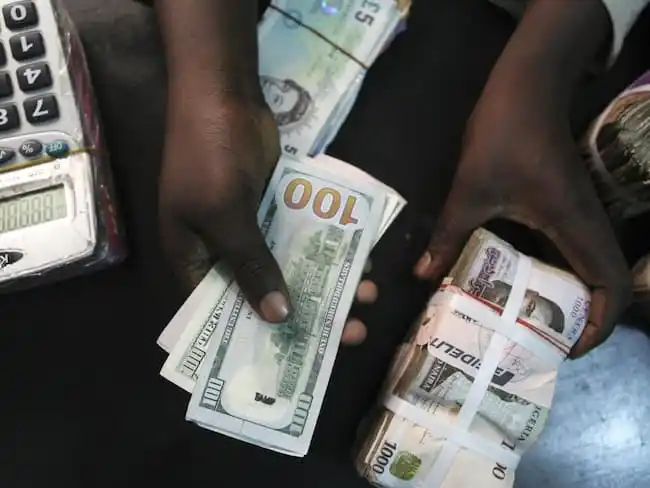
The exchange rate between the Naira and the US dollar, according to the data released on the FMDQ Security Exchange, the official forex trading portal, showed that the naira closed at 1595.00 per $1 on Tuesday, June 17th, 2025. The naira traded as high as 1541.00 to the dollar at the investors and exporters (I&E) window on Monday.
Dollar to naira exchange rate today black market (Aboki dollar rate):
The exchange rate for a dollar to naira at Lagos Parallel Market (Black Market) players buy a dollar for ₦1571 and sell at ₦1595 on Monday 16th June, 2025, according to sources at Bureau De Change (BDC).
Please note that the Central Bank of Nigeria (CBN) does not recognize the parallel market (black market), as it has directed individuals who want to engage in Forex to approach their respective banks.
Dollar to Naira Black Market Rate Today
Dollar to Naira (USD to NGN)
Black Market Exchange Rate Today
Buying Rate
₦1571
Selling Rate
₦1595
Dollar to Naira CBN Rate Today
Dollar to Naira (USD to NGN)
CBN Rate Today
Highest Rate
₦1555
Lowest Rate
₦1541
Please note that the rates you buy or sell forex may be different from what is captured in this article because prices vary.
The Federal Government has disbursed N8.6 billion as part of the arrears from the N32,000 pension increment approved by President Bola Tinubu in 2024.The Pension Transitional Arrangement Directorate (PTAD) disclosed this in a statement on Monday signed by its Head of Corporate Communications, Olugbenga Ajayi.
According to the agency, the latest payment covers 148,625 eligible retirees under the Defined Benefit Scheme. Beneficiaries include pensioners from the Civil Service, Police, Parastatals, and the Customs, Immigration and Prisons (now Correctional Service) pension departments.
A breakdown of the disbursement shows that:
N5.7 billion was paid to 59,342 retirees under the Parastatals Pensions Department;
N2.3 billion went to 71,084 retirees under the Civil Service Pensions Department;
N310 million was paid to 9,579 Police pensioners;
N276 million was disbursed to 8,620 retirees under the Customs, Immigration and Prisons Pensions Department.
PTAD’s Executive Secretary, Tolulope Odunaiya, described the disbursement as a testament to the government’s ongoing commitment to settling outstanding pension obligations.
She added that the move aligns with President Tinubu’s Renewed Hope Agenda, which prioritises improved welfare for Nigerian pensioners.
Earlier in the year, PTAD also completed the payment of arrears arising from the 20% and 28% pension increment approved in January 2024.
A Saudia Airlines flight carrying 442 Hajj pilgrims from Jeddah to Jakarta was forced to make an emergency landing in Medan, Indonesia, on Tuesday after authorities received a bomb threat via email.
According to a statement from Indonesia’s Directorate General of Civil Aviation, an unidentified individual sent an email around 7:30 a.m. local time threatening to “blow up” Flight SV 5276. The aircraft, which departed from Saudi Arabia, was originally bound for Soekarno-Hatta International Airport in Jakarta.
Shortly after 10:00 a.m., the pilot diverted the plane to Kualanamu International Airport in Medan, on Sumatra Island, in line with safety protocols. The flight was carrying 207 male and 235 female pilgrims returning from the annual Hajj pilgrimage.
“In response to identified safety threats, the pilot opted to reroute the flight to the nearest airport,” said InJourney Airports, the country’s airport operator.
Upon landing, all passengers were safely evacuated, and a bomb disposal unit thoroughly searched the aircraft for explosive devices. As of press time, the plane remained grounded in Medan.
Transport ministry officials confirmed that investigations are ongoing, although no explosives have been found.
Oil marketers under the aegis of the Petroleum Products Retail Outlets Owners Association of Nigeria (PETROAN) have raised concerns over the Dangote Petroleum Refinery’s plan to distribute fuel directly to filling stations and other businesses nationwide.
PETROAN warned that the policy could lead to job losses and place Dangote in a monopoly-like position. With a production capacity of 650,000 barrels per day, the association argued that the refinery should be competing with global refineries, not operating as a distributor in the downstream sector.
“This massive refinery, one of the largest in sub-Saharan Africa, is expected to satisfy domestic fuel demand and export surplus products,” PETROAN said in a statement signed by its Publicity Secretary, Joseph Obele.
The group alleged that Dangote’s strategy could include predatory pricing to dominate the market, leading to the closure of filling stations and job losses. It expressed worry over the introduction of 4,000 CNG-powered tankers by the refinery, stating that while cost-effective, the move threatens the livelihoods of truck drivers and owners.
According to PETROAN, Dangote’s direct supply strategy—what it called forward integration—could marginalise various players in the sector, including modular refineries and suppliers of diesel to telecom companies. The association maintained that thousands of fuel retail outlets, tank farms, and jetties face extinction due to the new distribution model.
It stated that many marketers had invested heavily in logistics and infrastructure during the fuel import era, but those investments now risk becoming obsolete as Dangote bypasses traditional supply chains. Already, PETROAN reported that over 4,900 petrol outlet owners have exited the market since the deregulation of 2023. The number of retailers, it said, has dropped from 120 to 50, while many tank farms and jetties are idle.
The association urged regulatory intervention, calling on the Chief Executive of the Nigerian Midstream and Downstream Petroleum Regulatory Authority and the Minister of State for Petroleum Resources to introduce price control mechanisms and ensure a fair market environment. PETROAN’s National President, Dr. Billy Gillis-Harry, said robust regulation, fair competition, and employment protection were essential for sectoral stability.
Contrary to these concerns, the Dangote Petroleum Refinery maintained that the direct distribution initiative would lower fuel prices, improve access to fuel across urban and rural communities, and strengthen economic efficiency. The company assured that petrol stations would now receive free product delivery without involving third-party middlemen.
Industry stakeholders expressed mixed reactions to the development. One petroleum economist described the strategy as a textbook example of vertical integration, not a monopoly, noting that although it could disrupt existing supply models, it would also improve product availability and reduce pump prices. The analyst stressed that what matters is the regulatory framework that ensures fair play—not the size or scale of Dangote’s operations.
Independent marketers also weighed in, describing the move as a welcome development that could enhance energy access and create more jobs. According to them, where their trucks cannot reach, Dangote’s CNG-powered fleet would ensure product delivery. They argued that increased supply would naturally lead to lower prices.
Dangote Refinery, in a statement, announced that from August 15, 2025, it would begin the nationwide distribution of Premium Motor Spirit (PMS) and diesel to filling stations, manufacturers, telecom firms, aviation, and other major consumers. The initiative includes free logistics support and is aimed at boosting national fuel access, eliminating middlemen, and enhancing economic sustainability.
The refinery also revealed plans to invest in CNG daughter booster stations and deploy over 100 CNG trucks nationwide. It promised to provide credit support for large-scale buyers—offering an additional 500,000 litres on a two-week credit backed by bank guarantees for those purchasing a minimum of 500,000 litres.
According to the company, the programme is designed to revitalise dormant filling stations, boost job creation, increase government revenue, and support economic growth through affordable fuel access. The refinery said the initiative aligns with the Federal Government’s Renewed Hope Agenda and reflects its commitment to inclusive development.
Registration for participation in the distribution scheme began on June 16 and will end on August 15, 2025, with Know Your Customer (KYC) verification conducted as part of the process.