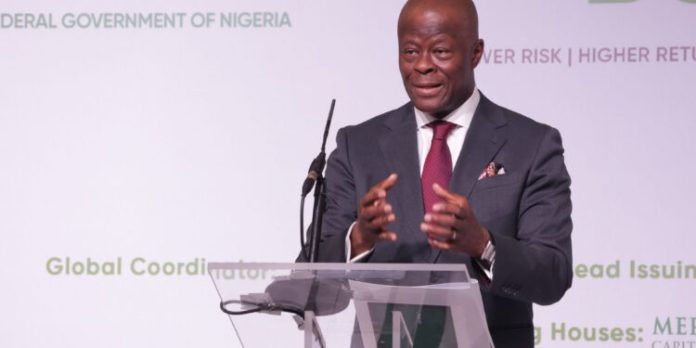
Nigeria has significantly reduced its debt servicing burden, now spending less than 50 per cent of its revenue on debt obligations, down from a staggering 97 per cent before recent fiscal reforms. This was disclosed by the Chairman of the Presidential Fiscal Policy and Tax Reforms Committee (FPTRC), Mr. Taiwo Oyedele, during the PwC Executive Summit on Tax Reform in Lagos on Monday.
Delivering a keynote address at the event themed “The New Tax Era: What Nigeria’s Tax Reform Means to Individuals and Businesses”, Oyedele credited ongoing reforms for improving fiscal stability, boosting external reserves, and enhancing the country’s infrastructure spending.
“We’ve cleared over $7 billion in unmet forex forwards, grown external reserves from under $4 billion to over $20 billion, and reduced budget deficits. Our tax-to-GDP ratio has risen from below 10 per cent to 13.5 per cent within two years,” Oyedele said.
He stressed that without the reforms, Nigeria’s economy was heading down a dangerous path similar to Zimbabwe and Venezuela, where hyperinflation and economic collapse left currencies virtually worthless.
“I carry with me a 100 trillion Zimbabwean dollar note. At the time, it could barely buy a loaf of bread. That could have been Nigeria’s story if we didn’t act,” he warned.
Missed Opportunities and the Cost of Delay
According to Oyedele, had these reforms been implemented a decade ago, Nigeria’s economy could have reached a $1 trillion valuation, with a more stable exchange rate and significantly lower petrol prices.
“If we had acted ten years ago, PMS would cost under ₦300 per litre, and the naira would exchange at under ₦300 to the dollar,” he asserted.
He noted that Nigeria lost valuable economic ground compared to peers like Kenya and South Africa, with the naira depreciating six times more than their respective currencies in the past decade.
Subsidy Regime and Fiscal Recklessness
Oyedele criticised past administrations for printing over ₦30 trillion to fund a bloated subsidy regime, which failed to deliver basic infrastructure.
“We were not building roads or improving electricity. We were paying salaries and subsidising PMS at all costs—even diverting taxes collected by NNPC and other operators. Yet, it wasn’t enough,” he said.
He added that without removing subsidies, Nigerians would have struggled to access fuel even with ₦100,000 in hand due to fiscal unsustainability.
Tax Reforms Targeting Equity and Simplicity
Oyedele also announced significant progress in tax reforms aimed at creating a fairer, more transparent system. He revealed that the bottom 97 per cent of informal sector operators—those with limited capacity to pay—have now been legally exempted from taxation.
“Let them breathe. When they grow, they’ll pay. But for now, it’s only the top 3 per cent of the informal sector who can contribute meaningfully,” he said, adding that mechanisms are in place to detect under-declaration and tax evasion.
He further disclosed that all major taxes have now become progressive, ensuring those with greater income contribute more, and that the gazette of the newly signed tax laws is being finalised for public release.
President Bola Tinubu had earlier signed four tax-related bills into law on June 26, 2025, with implementation scheduled for January 1, 2026.
Business Community Urged to Partner on Reforms
Speaking at the summit, PwC West Market Area Regional Senior Partner, Sam Abu, emphasised that real change requires collective action and not just government policy.
“Policy alone won’t deliver results. Everyone—government, business leaders, and private sector actors—must collaborate to shape the future we want,” he said.
He affirmed PwC’s commitment to simplifying tax and helping businesses navigate reforms efficiently, so leaders can focus on growth and innovation.
Meanwhile, PwC Partner and Tax Leader, Chijioke Uwaegbute, explained that under the new law, foreign entities with effective control or management in Nigeria will be fully taxed in the country.
“Also, indirect transfers of foreign shares resulting in changes in Nigerian company ownership will now be considered taxable events,” he added, aligning Nigeria’s tax practices with global standards to reduce avoidance and enhance revenue.
Key Highlights of the New Tax Law
Income Tax Exemption: Employees earning below ₦800,000 annually are exempt from personal income tax.
Tax Harmonisation: Federal taxes are now harmonised, with the FIRS designated as the sole collector.
Progressive Tax System: New structure ensures higher earners pay more.
Global Tax Compliance: Foreign entities effectively managed from Nigeria are now subject to Nigerian tax laws.
Indirect Share Transfer Taxation: Foreign sales that alter Nigerian company ownership are now taxable.
The reforms, according to Oyedele and other stakeholders, signal a new era of fiscal responsibility and economic potential—if sustained through transparency, accountability, and inclusive participation.
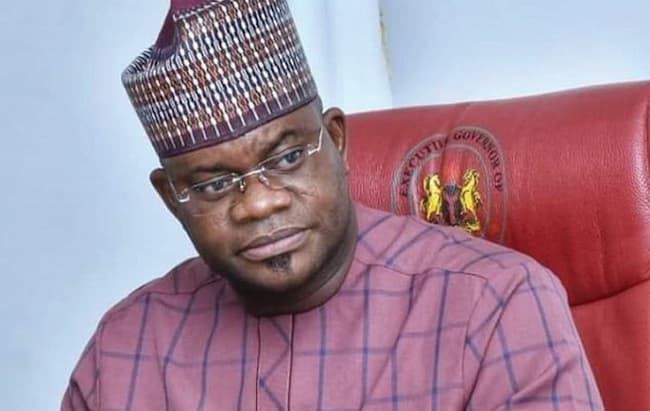
The Federal High Court in Abuja has dismissed an application by former Kogi State Governor, Yahaya Bello, seeking the release of his international passport to enable him to travel abroad for medical treatment.
Ruling on the motion on Monday, Justice Emeka Nwite held that the medical documents tendered in support of the request lacked credibility, particularly noting that the key medical report was unsigned and therefore inadmissible in law.
Bello is currently facing trial over alleged money laundering to the tune of ₦80.2 billion, brought against him by the Economic and Financial Crimes Commission (EFCC). The charges are before both the Federal High Court in Abuja and the Federal Capital Territory High Court in Maitama.
His legal counsel, Joseph Daudu (SAN), had argued that the former governor was suffering from hypertension and required urgent medical attention in the United Kingdom. Two documents—Exhibits A and B—were presented as expert reports to support the claim.
However, Justice Nwite ruled that Exhibit B, which formed the crux of the application, carried no legal weight as it was not signed by a medical professional.
“A document not signed by its maker has no legal weight. Exhibit B is devoid of probative value and cannot be relied upon by this court,” the judge stated, concluding that Bello had failed to provide sufficient justification for the release of his passport.
The court also addressed the EFCC’s argument that the application was an abuse of process and should have included Bello’s sureties. Justice Nwite dismissed this, noting that the case was strictly between Bello and the Federal Republic of Nigeria, and that there was no legal basis—local or international—for making the sureties parties to the application.
He further clarified that the request to travel did not violate the directive of the FCT High Court, which required the defendant to seek permission before leaving the country. The application, he said, was appropriately filed and did not constitute an abuse of court process.
“Consequently, this application is hereby refused,” the judge ruled.
The trial has been adjourned to October 7 and 10, and November 10 and 11, 2025.
Despite undergoing a major rebasing of its Gross Domestic Product (GDP), Nigeria has retained its position as the fourth-largest economy in Africa, according to the National Bureau of Statistics (NBS).
The rebasing, which updated the base year from 2010 to 2019, expanded Nigeria’s GDP to ₦372.8 trillion (approximately $243 billion) for the year 2024—up from ₦314.02 trillion in the previous year. The exercise, covering the period from 2019 to 2023, incorporated structural changes, improved sectoral data, and a broader coverage of the informal economy.
While the revised figures reflect a 30 percent growth above the International Monetary Fund (IMF)’s earlier projection of $188 billion, Nigeria still falls short of reclaiming its former top spot on the continent.
South Africa currently leads as Africa’s largest economy with a GDP of $410.34 billion, despite having a significantly smaller population. Egypt ranks second with $347 billion, followed by Algeria at $268.9 billion.
In a related development, Nigeria’s economy recorded a 3.13 percent growth rate in the first quarter of 2025, an improvement from the 2.27 percent growth recorded in the same period last year. This growth was largely driven by the services sector, which contributed 57.5 percent to the country’s aggregate GDP. The industry and agriculture sectors followed, with growth rates of 3.42 percent and 0.07 percent, respectively.
According to the NBS, the country’s aggregate GDP at basic prices stood at ₦94 trillion in nominal terms in Q1 2025—an 18.3 percent year-on-year increase compared to ₦79 trillion recorded in the first quarter of 2024.
The rebasing exercise aligns Nigeria’s GDP measurement with international standards, offering a more accurate reflection of the economy’s current structure and sectoral contributions.
Amid mounting financial pressures and sectoral disagreements, several Nigerian states have initiated reductions in electricity tariffs, sparking a backlash from power generation and distribution stakeholders.
The moves follow a new pricing directive issued by the Enugu Electricity Regulatory Commission (EERC) to MainPower Electricity Distribution Limited, which slashed the Band A electricity rate from ₦209 per kilowatt-hour to ₦160/kWh, effective August 1, 2025.
This development, which has ignited wider adoption by other sub-national governments, has drawn strong objections from both generation companies (GenCos) and distribution companies (DisCos), who argue that such measures may jeopardize the sustainability of Nigeria’s already fragile electricity market. The GenCos assert that the industry is grappling with debts exceeding ₦5 trillion—debts which they claim are yet to be addressed comprehensively by the federal government or market regulators.
In a statement issued on Monday, Joy Ogaji, Chief Executive Officer of the Association of Power Generation Companies, criticized the EERC directive as an unrealistic deviation from the actual cost of electricity production. “The decision in Enugu has laid a dangerous precedent,” Ogaji remarked. “It only captures ₦45 out of ₦112 for generation costs, assuming that the federal government will absorb the shortfall through subsidies that have neither been formally approved nor financially backed.”
Despite these concerns, more states are aligning with Enugu’s policy direction. The Nigerian Electricity Regulatory Commission (NERC) recently confirmed that seven states—Enugu, Ondo, Ekiti, Imo, Oyo, Edo, and Kogi—now wield autonomous control over their electricity markets under the Electricity Act of 2023. Additional states, including Lagos, Ogun, Niger, and Plateau, are in advanced stages of transitioning regulatory authority from federal to state control, expected to conclude by September.
The justification from these states is largely socioeconomic. In separate statements to the press, officials from Plateau and Ondo States reaffirmed their commitment to easing the financial burden of electricity on citizens. Lagos, Nigeria’s most populous state, indicated it is evaluating Enugu’s model and plans to unveil its own tariff strategy soon.
Ekiti State, however, has opted to retain the prevailing Multi-Year Tariff Order (MYTO) issued by NERC. Professor Bolaji Aluko, the state’s Commissioner for Infrastructure and Public Utilities, emphasized the need for financial sustainability in any reform. “While it’s commendable to consider reducing tariffs, we must ensure it won’t compromise consistent electricity delivery,” Aluko stated.
In Enugu, regulatory authorities maintain that the revised rate is a result of a data-backed, cost-reflective process that leveraged federal subsidies. EERC Chairman, Chijioke Okonkwo, stated during a media briefing that the commission undertook a comprehensive six-month review of MainPower’s tariff and licensing applications before arriving at the ₦160/kWh figure.
“Our tariff structure is based on a transparent cost model that accounts for inflation, infrastructure costs, energy losses, and federal subsidies,” Okonkwo said. He noted that the average cost of electricity delivery within MainPower’s network currently hovers just above ₦94/kWh, thanks to federal generation subsidies. However, he warned that should those subsidies be withdrawn, the cost could spike to over ₦112/kWh—pushing tariffs well beyond the current ₦160/kWh rate.
Still, power sector stakeholders are unconvinced. Ogaji pointed out that the federal government’s 2025 budget allocates only ₦900 billion for electricity sector support—an amount that falls significantly short of the annual ₦3 trillion needed to stabilize power generation. “The average monthly invoice for electricity generation alone stands at ₦250 billion,” she said. “There are no concrete plans involving debt swaps, financial instruments, or direct payments to close this gap.”
The situation remains tense as DisCos operating within these reform-minded states argue that tariff cuts without immediate compensation will undercut investor confidence. An anonymous official from a major Disco warned that if states fail to cover the resulting revenue shortfalls, it could lead to service degradation and regulatory challenges.
“Electricity, like any commodity, must be paid for,” the official stressed. “With Band A already unsubsidized at the federal level, if states choose to underprice it, they must fund the difference. Otherwise, it becomes an unsustainable drain on the system.”
This concern is further complicated by constitutional questions, with some stakeholders suggesting that any state-level regulation conflicting with federal mandates could be legally challenged and potentially nullified.
Plateau State Electricity Commission Chairman, Bagudu Hirse, said the commission would initiate its own tariff reduction plan in line with Governor Caleb Mutfwang’s energy reform agenda. Hirse emphasized that this policy direction was meant to align with the state’s goals of economic relief for citizens.
Meanwhile, Lagos State’s Commissioner for Energy and Mineral Resources, Biodun Ogunleye, said the state is reviewing Enugu’s tariff framework with caution due to the unique energy demands of the metropolis. “Lagos accounts for 50 percent of national electricity consumption,” he said. “Any drastic action without due diligence could threaten stability.”
In Ondo State, Commissioner Johnson Alabi revealed that the government was already implementing similar cost-control mechanisms but had yet to publicize them. He said the state has begun determining its own tariffs through direct energy procurement from the Transmission Company of Nigeria (TCN), a move uncommon among states.
Industry experts have also weighed in. Power sector analyst Tayo Adegbenle questioned the accuracy of EERC’s calculations, especially the assumption that federal subsidies would remain consistent. “Enugu wants autonomy but cannot ignore the liabilities that come with independence,” he said.
Another expert, Bode Fadipe, noted that the EERC’s move, though bold, may be strategic. “The broader impact remains to be seen. It’s possible this was a calculated push to trigger a national conversation on sub-national autonomy in electricity pricing,” he said.
As the debate unfolds, the future of Nigeria’s power sector hangs in the balance, with implications for consumers, investors, and regulators alike. Whether the state-led tariff reductions will prove to be a lifeline for citizens or a misstep in power sector reform remains to be seen.
The United States Citizenship and Immigration Services (USCIS) has officially introduced a revised fee structure for certain immigration-related applications, with the changes coming into force beginning July 22, 2025, under provisions outlined in the H.R. 1 Reconciliation Bill.
This development was detailed in a Federal Register Notice published on July 18, 2025. The notice indicates that any applications postmarked from July 22 onwards must include the updated fees, and any submissions received after August 21, 2025, that do not comply with the revised amounts will be automatically rejected.
Key among the revisions is the introduction of a new $100 fee for filing Form I-589, which is used for Asylum and Withholding of Removal applications. Additionally, applicants with pending asylum claims will now be required to pay an annual fee of $100—referred to as the Annual Asylum Fee (AAF)—for each calendar year that their case remains unresolved.
The fee adjustments also impact the Employment Authorization Document (EAD), Form I-765. The new structure outlines that:
First-time EAD applications will now cost $550
Renewals or extensions will require a payment of $275
Applicants filing after receiving re-parole through Form I-131 will also be subject to a $275 fee
Further changes include a new $250 Special Immigrant Juvenile fee associated with Form I-360, and a significant increase in Temporary Protected Status (TPS) registration fees via Form I-821—from $50 to $500.
USCIS emphasized that the newly implemented H.R. 1-related fees are supplemental to the existing charges and are not eligible for waiver or reduction—even for applicants who typically qualify for fee exemptions under regular USCIS guidelines.
The notice also introduced new conditions regarding work permit validity. For parolees, work permits will now be issued for a period not exceeding one year or the designated duration of parole—whichever is shorter. Similarly, individuals granted Temporary Protected Status will receive EADs valid only up to one year or the end date of their TPS coverage.
USCIS clarified in the statement: “Any alien who filed or files a Form I-589 after October 1, 2024, that remains pending for 365 days must pay the Annual Asylum Fee on the one-year anniversary of the application date and for each subsequent year the case remains active on that date.”
USCIS also signaled that additional fee revisions are forthcoming for other immigration forms, including Form I-131 (used for Travel Documents) and Form I-102 (Nonimmigrant Arrival-Departure Record Replacement), with official announcements expected in the coming months.
These fee adjustments come as part of a broader effort by USCIS to address administrative costs and streamline the processing of high-demand immigration services. However, the changes are expected to impact thousands of applicants who are already navigating complex immigration processes.
Malcolm-Jamal Warner, the acclaimed actor famously known for his portrayal of Theo Huxtable on the iconic sitcom The Cosby Show, has passed away at the age of 54, according to local officials in Costa Rica.
Warner reportedly drowned while swimming off the coast of Playa Grande near the town of Cocles in the Limón Province. Authorities with Costa Rica’s Judicial Investigation Agency stated that Warner was caught in a powerful riptide around 2:00 PM local time on Sunday (8:00 PM GMT) and was dragged out to sea.
Emergency responders said bystanders were able to pull him back to shore, and the Costa Rican Red Cross attempted resuscitation. Sadly, despite their efforts, Warner was pronounced dead at the scene. He is survived by his wife and daughter.
Warner, who rose to fame as the son of Cliff Huxtable on The Cosby Show from 1984 to 1992, received an Emmy nomination in 1986 for Outstanding Supporting Actor in a Comedy Series. His role helped redefine Black family portrayals on television, presenting a middle-class household that many viewers had never seen represented before.
Reflecting on the groundbreaking nature of the show in a 2013 interview, Warner said: “When the show first aired, some people doubted the authenticity of the Huxtables, saying Black families don’t live like that. Yet, we were flooded with fan letters thanking us for reflecting their lives.”
Warner secured his breakout role after being chosen by Bill Cosby himself during the final day of a national casting search. “I was literally the last person they auditioned,” Warner recalled during an interview last year.
Following The Cosby Show, Warner appeared in various television series, including Malcolm & Eddie with comedian Eddie Griffin. After the news of Warner’s death, Griffin paid tribute on social media, writing: “R.I.P. King. My big little brother.”
Warner also made guest appearances on beloved shows such as The Fresh Prince of Bel-Air and Sesame Street. More recently, he had a recurring role as cardiothoracic surgeon AJ Austin on Fox’s medical drama The Resident.
Beyond television, Warner showcased his musical talents, winning a Grammy Award in 2015 for Best Traditional R&B Performance alongside Robert Glasper and Lalah Hathaway. The award-winning trio collaborated on a cover of Stevie Wonder’s Jesus Children of America.
He received another Grammy nomination in 2023 for his spoken word album, Hiding In Plain View, a reflective and deeply personal project. In the same year, Warner launched a podcast titled Not All Hood, which tackled mental health challenges within the Black community.
Tributes have poured in from across the entertainment industry and beyond. Music legend Questlove, actors Jennifer Hudson, Taraji P. Henson, and Vivica A. Fox, and former NBA superstar Magic Johnson shared heartfelt messages.
Johnson, who once worked with Warner on an AIDS awareness video, said: “My wife and I were longtime fans of The Cosby Show and admired his work over the years. Every time we met, we had rich conversations about life, basketball, and business. He will truly be missed.”
Actress Tracee Ellis Ross, who starred with Warner on Reed Between the Lines, mourned the actor in an emotional post: “Warm, thoughtful, hilarious, and kind… you brightened every room you entered.”
Taraji P. Henson added: “Malcolm, we grew up with you. Your art, your grace, your wisdom — you left this world better than you found it. Rest easy, king.”
Senator Raphael Warnock of Georgia also weighed in, reflecting on Warner’s role in shaping a generation: “Malcolm-Jamal Warner was part of our upbringing. To many of us, Theo felt like family. May peace be upon him and comfort be granted to his loved ones.”
The US dollar began the week on a weaker note, declining against major currencies as investors braced for a pivotal speech by Federal Reserve Chairman Jerome Powell scheduled for Tuesday. With the Federal Open Market Committee (FOMC) entering its customary silence period ahead of the July 29-30 meeting, the market’s attention has turned to upcoming June home sales data and Powell’s potential clues on interest rate policy.
Recent economic signals have left investors grappling with mixed expectations. While the Fed has held off on further rate hikes, persistent inflation continues to cloud projections. This ambiguity has sustained market volatility and pressure on the greenback, as reflected in the subdued US dollar index.
President Joe Biden has faced mounting political pressure similar to that of his predecessor, Donald Trump, who repeatedly urged for rate cuts. Despite these pressures, Jerome Powell has maintained the central bank’s cautious stance, resisting hasty monetary easing until more favorable economic indicators emerge.
Foreign exchange movements on Monday reflected the global apprehension. The EUR/USD pair inched up to 1.1651 from 1.1626 at Friday’s close. GBP/USD advanced to 1.3469, while USD/JPY dropped to 147.6741, affected by the Japanese holiday and lack of new economic data. The Canadian dollar also gained ground, with USD/CAD slipping to 1.3712 ahead of key industrial and raw material price data from Statistics Canada.
In China, the offshore yuan traded flat at around 7.17 per dollar following the People’s Bank of China’s decision to keep benchmark lending rates unchanged, as widely anticipated.
Meanwhile, Europe is preparing for this week’s European Central Bank meeting, with no immediate rate action expected. Analysts believe the upcoming ECB and Bank of Japan decisions may offer further market cues, especially as the global economy continues to wrestle with inflationary pressures and trade policy uncertainties.
salary of a woman. euro banknotes in hands on a green background. Income of women in European countries
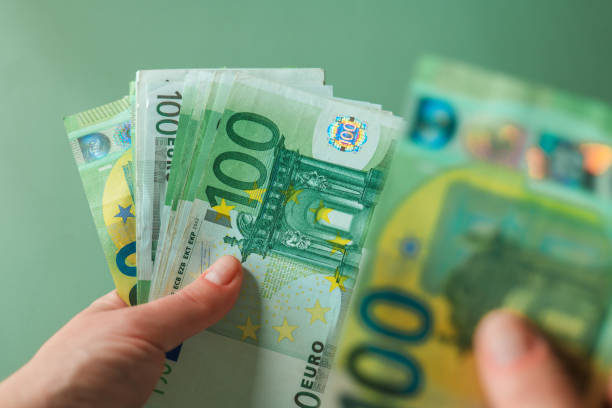
The euro remained resilient above the $1.16 threshold early Monday, as investors await the European Central Bank’s (ECB) monetary policy meeting set for later this week. The EUR/USD pair gained slightly, trading at approximately 1.1650, reflecting cautious optimism among market participants.
Despite growing concerns over transatlantic trade tensions and the impact of a stronger euro on Eurozone exports, the single currency has appreciated nearly 15% against the US dollar since the beginning of the year. While a stronger euro helps ease inflation by lowering the cost of imports, it also exacerbates pressure on European manufacturers by making their goods less competitive abroad.
The ECB is widely expected to hold interest rates steady during its upcoming meeting, breaking a sequence of eight consecutive rate cuts. This pause follows data indicating that annual inflation in the Eurozone hit the central bank’s target in June 2025.
With inflation showing signs of stability, policymakers are expected to adopt a wait-and-see strategy, particularly in light of escalating US tariffs and continued strength in the euro. Carsten Brzeski, chief economist at ING Bank, warned that the current trajectory risks pushing inflation below target levels again, possibly prompting future rate reductions if deflationary risks intensify.
Diplomatic engagements are also on the horizon, as EU envoys prepare contingency plans to address the potential fallout from stalled trade negotiations with the United States. US President Donald Trump’s increasingly aggressive tariff posture ahead of an August 1 deadline has added another layer of uncertainty to the outlook.
The ECB’s decision this Thursday is being closely monitored for any change in tone or forward guidance that might hint at future shifts in monetary policy amid a fragile economic recovery.
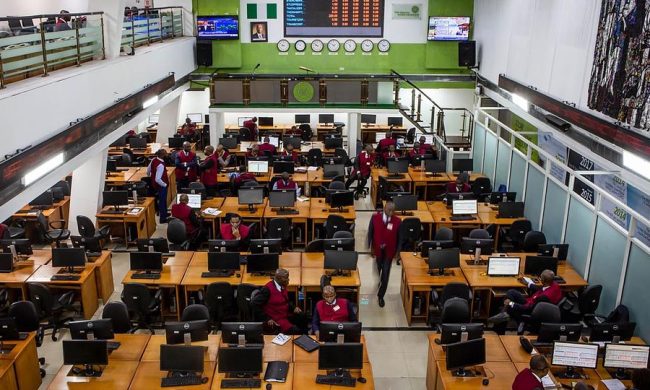
The Nigerian Exchange (NGX) recorded a strong start to the week as equity investors saw their portfolio value rise by ₦152 billion, driven by robust price movements in BUA Cement and PRESCO. The rally was further buoyed by gains in select mid- and small-cap stocks, reflecting cautious optimism ahead of this week’s Central Bank of Nigeria (CBN) Monetary Policy Committee (MPC) decision.
Despite early session volatility, market momentum turned positive, with strong demand in blue-chip stocks reversing initial losses. BUACEMENT surged 5.2%, while PRESCO jumped 5.1%, anchoring the market’s upward trajectory.
The All-Share Index (ASI) climbed 0.18% to close at 131,826.77 points, lifting the year-to-date return to 28.08%—a signal of sustained investor confidence in the domestic equities market. The market capitalization followed suit, rising to ₦83.39 trillion.
However, market breadth revealed a mixed sentiment. While 31 stocks posted gains, 44 declined, suggesting a combination of profit-taking and strategic repositioning. According to stockbrokers, this reflects a tactical rotation among investors eyeing fundamentally strong counters.
Trading data indicated ACCESSCORP led in transaction volume, accounting for 8.75% of all shares traded, followed by CONHALLPLC (6.24%) and CHAMS (5.48%). In value terms, PRESCO topped the chart, representing 14.43% of the total market value exchanged.
On the gainers list, CUTIX, INTENEGINS, and NCR each appreciated by 10%, while TIP (+9.97%) and CAVERTON (+9.75%) also showed notable performance. JBERGER (+8.66%) and WAPIC (+7.76%) were among the other top advancers.
Conversely, MEYER suffered a steep decline of -10.00%, leading the losers, followed by MCNICHOLS (-9.95%), DEAPCAP (-9.77%), and HMCALL (-7.98%). TRANSCORP shed -2.45%.
Sectoral performance was mixed. While consumer goods, industrial goods, and commodities sectors gained 0.06%, 1.50%, and 0.50%, respectively, the banking (-0.37%), insurance (-1.35%), and oil & gas (-0.10%) sectors slipped.
Although the number of executed deals rose by 7.54%, both transaction volume and value fell significantly—down 78.91% and 65.44%, respectively. A total of 706.04 million shares worth ₦21.56 billion were exchanged across 30,750 deals.
With the market showing renewed investor appetite in select sectors, attention now shifts to the outcome of the CBN’s MPC meeting, which could further influence market direction in the coming days.
The Federal Government has reaffirmed its strategic commitment to transforming Nigeria into a $1 trillion economy by the year 2030, aligning its vision with the Renewed Hope Agenda of President Bola Tinubu. This goal was emphasized during a Domestic Investment Summit held in Abuja on Monday, themed “Operationalising Nigeria First Policy.”
Minister of Industry, Trade, and Investment, Dr. Jumoke Oduwole, said the government is accelerating efforts across critical sectors including industrialization, digital technology, creative industries, manufacturing, and innovation. She emphasized that the “Nigeria First Policy” is designed to turn national ambition into tangible productivity and global competitiveness.
“Our non-oil export earnings rose by 24.75% in the first quarter of 2025, totaling $1.79 billion,” the minister said. “With new textile parks, auto manufacturing plants, and food hubs emerging within our Special Economic Zones, we are seeing a shift towards self-reliance, job creation, and regional industrial leadership.”
The summit, convened at the directive of President Tinubu, brought together Nigeria’s leading domestic investors to co-develop actionable strategies for achieving the $1 trillion economic milestone. Dr. Oduwole noted that these collaborations would help implement the 8-point Renewed Hope Agenda through specific reform targets.
She outlined that by the end of 2025, the ministry aims to attract $6 billion in foreign direct and portfolio investments, generate $6.5 billion in non-oil exports, boost trade value by 20%, and create 200,000 export-focused jobs.
“Through roadshows and strategic investment engagements, we’ve already unlocked over $50 billion in investment commitments,” Oduwole added, stressing that these funds will enhance investor confidence and strengthen Nigeria’s investment appeal.
Ambassador Nura Rimi, the ministry’s Permanent Secretary, echoed the strategic importance of the Nigeria First Policy, stating it goes beyond rhetoric by promoting local production and strengthening indigenous businesses.
CBN Governor Olayemi Cardoso, represented by Dr. Blaise Ijebor, said the central bank will continue collaborating with investors to foster a more enabling investment environment. The CBN is also aligning monetary policy to complement broader economic reforms aimed at sustainable domestic growth.
The summit marked a critical step in Nigeria’s journey to redefine its economic trajectory, with stakeholders agreeing that national transformation must be built on the strength of local capital, enterprise, and innovation.
The Nigerian naira held steady at N1,532 per US dollar at the official market on Monday, buoyed by sustained foreign exchange interventions by the Central Bank of Nigeria (CBN). This stability comes as external reserves continue their upward trajectory, reaching $37.938 billion amid steady foreign inflows.
On the parallel market, the local currency appreciated slightly, trading at N1,535 per dollar, as demand pressures for foreign currency eased. The CBN’s injection of $80 million into the FX market last week, along with further sales to local commercial banks on Friday, provided crucial support to the market.
These interventions helped boost dollar liquidity and ease the pressure from businesses and eligible market participants seeking foreign exchange. The naira has gained approximately 1.27%—or N19.36—at the official window since the beginning of the year, closing at N1,530 on June 30.
Meanwhile, in the informal market, the currency has strengthened by about 9.15% year-to-date, gaining N140 to trade at N1,565 by the end of H1 2025. Analysts credit ongoing structural reforms initiated by the apex bank for restoring investor confidence and reinforcing transparency across the FX ecosystem.
Cowry Asset Management forecasts a further strengthening of the naira, projecting it could stabilize around N1,500 by year-end, supported by improved macroeconomic indicators and consistent capital inflows.
Data from the CBN show external reserves surged from a low of $33.02 billion in January 2024 to a peak of $40.88 billion by the start of 2025. However, reserves dipped by 9.86% in the first half of 2025, falling to $37.21 billion as of June 30.
According to Cowry Asset, the recent improvements are tied to reforms like FX rate convergence, electronic FX platforms such as BMatch, higher interest rates, and improved transparency in forex operations.
On the global front, oil prices remained largely stable amid mixed economic signals from the U.S., intensifying trade friction, and additional sanctions against Russia by the European Union. Brent crude settled at $69.28 per barrel, while WTI declined slightly to $67.34. Gold prices rallied on the back of a weakening dollar, with spot gold rising 0.4% to $3,351.18 per ounce.
Nigeria’s economy expanded by 3.13% year-on-year in the first quarter of 2025, according to updated figures released by the National Bureau of Statistics (NBS). This growth figure, derived from a newly rebased economic model using 2019 as the base year, offers a more current reflection of structural shifts in the nation’s economy.
The rebasing exercise—covering economic data from 2019 through 2023—has redefined sectoral weightings and captured changes in industry contributions and data collection methodology. The result is a recalibrated picture of the country’s economic performance, although the growth pace remains modest compared to the ambitious $1 trillion GDP goal set by President Bola Tinubu’s administration.
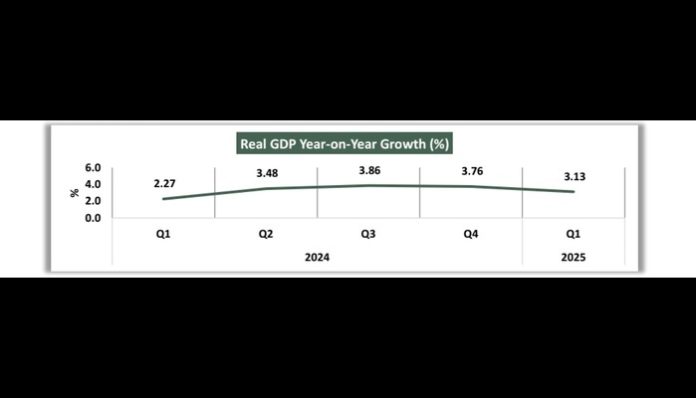
Under the updated framework, the Nigerian economy recorded 3.13% growth in Q1 2025, outpacing the 2.27% achieved in the same period last year. The previous estimate for Q1 2024 growth was 2.98%, which has now been revised due to the rebasing.
Despite the improvement, the latest figure also represents a slowdown from the final quarter of 2024, when rebased data showed growth of 3.76%. The Q4 2024 estimate before the rebasing had been 3.84%.
The NBS indicated that while the rebased data provides better insight into Nigeria’s evolving economic landscape, it also reveals the underlying challenges facing sustainable, high-impact growth. The revised methodology aligns Nigeria’s statistical measurement with international best practices, but underscores the need for deeper sectoral reforms to drive real GDP expansion.
The Anambra State Command of the Nigeria Security and Civil Defence Corps (NSCDC) has reiterated its resolve to deepen collaboration with the National Drug Law Enforcement Agency (NDLEA) in addressing the growing challenge of drug and substance abuse in the state.
This assurance was given by the NSCDC State Commandant, Mr. Maku Olatunde, during a courtesy visit by the newly posted NDLEA State Commander, Commander of Narcotics Onubuogu Charles, to the NSCDC Command Headquarters in Awka on Monday.
While welcoming the NDLEA delegation, Olatunde emphasised the critical need for sustained inter-agency cooperation in tackling the root causes of insecurity, a significant portion of which, he said, could be traced to drug-related offences.
“We are like brothers in the security ecosystem, and I am glad that our relationship is being sustained and even strengthened. The majority of crimes we face today are deeply linked to the abuse and trafficking of illicit substances,” the Commandant said.
He described the current drug situation, particularly among the youth, as alarming and warned of its long-term impact if not urgently addressed. Olatunde further pledged operational and intelligence support from the Corps to aid the NDLEA’s efforts at curbing the menace.
He congratulated the new NDLEA Commander on his deployment, describing it as a testament to his competence, commitment, and professional achievements. “Your track record speaks volumes, and I wish you a successful tenure in Anambra,” he said.
In his response, Commander Onubuogu noted that the visit was part of efforts to strengthen ties with key stakeholders in the state’s security architecture. He maintained that drug abuse and its associated crimes were collective challenges requiring multi-agency collaboration.
“No single agency can function effectively in isolation. The NDLEA recognises the strategic role of the NSCDC in community-level interventions, and we look forward to building a formidable alliance,” he said.
The NDLEA boss also advocated greater public enlightenment on the dangers of substance abuse, stressing that collective responsibility remains central to national drug control efforts.
The visit marked a renewed commitment by both agencies to intensify their joint operations, advocacy campaigns, and intelligence-sharing frameworks aimed at safeguarding public health and safety in Anambra State.
The West African Examinations Council Nigeria has disowned a viral social media claim that the 2025 West African Senior School Certificate Examination was cancelled, warning candidates, parents and schools to ignore what it called a false publication designed to cause panic as results processing enters its final stage.
The fabricated notice, which flooded WhatsApp, Telegram, X and Facebook on Saturday July 19 2025, alleged that the Federal Ministry of Education working with WAEC had scrapped the entire examination after so called massive malpractice, coordinated leaks of question papers and unauthorised digital circulation of exam materials.
In a formal rebuttal issued Sunday July 20 2025 and signed by Acting Head of Public Affairs Moyosola Adesina, the Council said, “The said examination has not been cancelled. Though the source of the information cannot be ascertained the Council is certain that the false claim is being peddled by mischief makers who are bent on bringing the Council to disrepute and causing confusion and panic among candidates who sat the examination.”
WAEC confirmed that marking of scripts has been concluded and assured that the 2025 WASSCE results will be released on or before Monday August 4 2025.
Reiterating its communication protocol, the Council said, “All official announcements of the West African Examinations Council Nigeria are issued only through our verified social media platforms accredited national media outlets and the Public Affairs Department.”
WAEC urged the public not to amplify unverified content. The Council said, “We urge all stakeholders and the general public to disregard the said publication and await our official release.”
The Federal Government has unveiled plans for the 2025 Build A Thon Holiday Camp a nationwide technology program designed to equip children with foundational digital skills. The camp is scheduled to begin Monday August 4 2025 across multiple locations including Abeokuta Abuja Federal Capital Territory and Kano and aims to enroll more than two thousand participants between the ages of 10 and 18.
Announcing the initiative on X the platform previously known as Twitter the Minister of Communications Innovation and Digital Economy Dr Bosun Tijani said the Build A Thon will give young Nigerians an opportunity to learn build and bond in practical technology environments.
According to the minister the camp will feature hands on sessions do it yourself kits and technology labs covering areas such as coding robotics and the Internet of Things. Beyond classroom style learning the program is structured to help participants collaborate and draw inspiration from one another.
Registration is open to eligible children nationwide. Parents and guardians can register through the official http://b.link/Buildatonholidaycamp-2025. Participants will be assigned to regional camps.
This years edition builds on momentum from the 2024 Build A Thon which the ministry says trained more than five thousand children across technology hubs in Abeokuta Maiduguri and Owerri.
The initiative is also tied to the administration broader agenda to grow the national digital talent pool. Under Dr Tijani leadership the ministry is running the Three Million Technical Talent program which offers training tracks in data analysis digital marketing search engine optimisation cloud platform navigation graphics design and user experience and user interface design.
We cannot wait to welcome even more future makers and innovators as we build the future one child one line of code at a time Dr Tijani said.
In a bold display of resilience, scores of retired police officers on Monday defied the rain to stage a protest at the main gate of the National Assembly in Abuja, demanding their removal from the Contributory Pension Scheme (CPS), which they described as unjust and exploitative.
Clad in plain clothes and visibly advanced in age, the ex-officers—many in their 60s and 70s—carried placards and chanted solidarity songs as they stood under the rain, calling attention to what they termed the Federal Government’s prolonged neglect of their welfare and entitlements.
Speaking on behalf of the aggrieved retirees, former Chief Superintendent of Police, CSP Manir Lawal (retd.), lamented the hardships many police veterans have endured under the current pension scheme.
“We are here to demand justice. The Contributory Pension Scheme has impoverished us,” he said. “I am 67 years old, and many of us here have dedicated over three decades of our lives to serving this country. We deserve to retire in dignity, not in destitution.”
Despite the heavy downpour, the retirees remained at the protest site, insisting they would not disperse until their grievances were acknowledged and addressed by the leadership of the National Assembly.
Security personnel maintained a visible presence at the scene to ensure the protest remained peaceful and orderly.
Monday’s protest is the latest in a series of demonstrations by retired police personnel, who continue to decry the economic hardships imposed by the CPS and call for a return to the defined benefit pension scheme that guarantees more stable post-retirement income.
Recently, Nigerian entrepreneur and artist, Mr Eazi, stirred conversations online, not by releasing new music or speaking about his relationship, but by promoting Making It Big, the new book by billionaire businessman and his father-in-law, Femi Otedola. The moment went viral, and just like that, the internet found its next obsession: the idea of Nepo babies versus Lapo babies.
On the other hand, the term Lapo baby is a more recent, Nigerian-coined contrast. Borrowed from LAPO Microfinance Bank, an institution known for supporting low-income individuals with small business and education loans, the label reflects the reality of those who start life with no safety nets. These are children born into survival, not stability. For Lapo babies, progress often means crawling through brick walls just to be seen.
Nepotism, particularly in a Nigerian context, is not always loud or obvious. Sometimes, it’s rooted in decades of planning—great-grandparents who bought land when it was worth little and passed it down, elders who built influence in quiet circles and handed down names that still open doors today.
Surnames like Otudeko, Okeowo, Balogun, Okoya, Adeola Odutola, Folawiyo, Otedola, Coker, Alakija, Adegunwa, and Adenuga have become synonymous with legacy and influence. For these families, wealth is not just about money—it’s about structure, foresight, and network. Even when the riches dwindle, the name remains powerful. These are families that have mastered the art of retention, making sure wealth and opportunity never stray too far from home.
Then there’s the other side. The people who grow up hearing the word “no” more than “yes,” who live in homes where rent, school fees, and basic survival are monthly battles. people who sometimes go to bed hungry or with tears. For Lapo babies, life is rarely about thriving; it’s about getting through.
I didn’t grow up with wealth, but I didn’t grow up with nothing either. My parents came from humble beginnings, yet they masked their struggles with grace. They gave me the best they could afford quality education, joy during festive seasons, and the sense that I was never truly lacking. It took years for me to realize how much they were doing behind the curtain.
For a long time, I didn’t consider myself privileged. But I now understand that having present, supportive parents is a kind of wealth too. I’ve never truly known hunger. I’ve never had to face a crisis without knowing someone would pick up my call because it takes me a blink to call my dad or mum. Even when the answers didn’t come instantly, they always came. That’s a cushion many don’t have.
And that realization changed something in me. It made me see that I don’t want my children or even my younger siblings to have to fight the same battles my parents did. I want to be the bridge that heals it all with one call. The one who turns resilience into inheritance. I want to be the last of the hustlers in my bloodline and the first of the builders.
So, What Now?
I may not be a Nepo baby by societal standards, but I’ve never fully been a Lapo baby either. I exist in the in-between a space where gratitude meets ambition, where soft landings were forged by parents who refused to let life harden me.
Privilege doesn’t always look like luxury cars or penthouses. Sometimes, it looks like a faded work uniform. A mother skipping meals. A father walking a mile to pay school fees. It looks like love wrapped in sacrifice. And that, too, is a starting point worth acknowledging.
So, instead of resenting the idea of Nepo babies or glorifying struggle as a badge of honor, maybe the real question is this: What are we doing with what we have?
Whether you were born with a silver spoon or had to carve one from wood, the goal should be the same, do more, be more, and leave more. Because in the end, it’s not about where you come from. It’s about what you’re building for those who come after.
In today’s fast-paced world, love doesn’t always need to arrive wrapped in extravagant gestures. Sometimes, a heartfelt good night message is all it takes to let your special woman know she’s on your mind. Whether you’re close or miles apart, sending her a sweet message before bed is a subtle but powerful way to express affection and ensure she ends her day feeling loved.
Good night texts are a simple yet deeply meaningful habit in relationships. They reflect care, attention, and emotional presence. Whether brief and sweet or poetic and dreamy, a well-timed message can comfort her, make her smile, and strengthen your bond, no matter the distance.
Romantic Good Night Messages for Girlfriend
1. Good night, my love. I hope you dream of all the beautiful moments we’ve shared.
2. Even the stars can’t match your sparkle. Sleep well, my princess.
3. Your smile haunts my dreams—in the sweetest way. Good night, baby.
4. Each night away from you feels incomplete. Good night, love.
5. May your dreams be filled with my kisses and cuddles.
6. Sleep tight, knowing that my heart beats only for you.
7. Good night, babe. I wish I was there to hold you close.
8. The moon is jealous of your glow. Good night, sweetheart.
9. As you sleep, know that I’m falling deeper in love with you.
10. No matter how busy the day was, my nights are always for you.
11. Close your eyes and feel my love wrapping around you.
12. You’re the last thought on my mind every night. Sweet dreams.
13. May the night bring you peace, comfort, and my love.
14. Sleep well, baby girl. You’ve made my world better.
15. Distance means nothing when love is this strong. Good night.
16. I miss your voice, your touch, your everything. Sweet dreams.
17. Sleep like the queen you are. I’ll be dreaming of you.
18. I count stars, but you’re the only one that matters. Good night.
19. My love for you grows even in dreams. Sleep well.
20. Good night, my everything. You’re my forever thought.
Good Night Messages for Wife
21. Rest easy, my queen. You’ve made today perfect.
22. Every day ends beautifully because you’re mine. Good night.
23. Thank you for being my peace and home. Sleep well.
24. You’re my forever, even in dreams. Good night, darling.
25. I love you more each night. Sleep tight, wifey.
26. Your love completes me. May your dreams be beautiful.
27. Every night with you is a blessing. Sweet dreams.
28. Holding you close in my heart always. Good night.
29. Sleep well, my soulmate. I’m grateful for you.
30. My favorite part of the day is falling asleep beside you.
31. You’re the calm to my storm. Sleep peacefully.
32. Even in sleep, I thank God for you. Good night.
33. You’re the reason I smile before I sleep. Rest well.
34. You’re not just my wife, you’re my world. Good night.
35. May your dreams be filled with laughter and joy.
36. Your love is all I need to sleep peacefully.
37. I pray angels guard you tonight. Sleep tight.
38. To the love of my life—good night and sweet dreams.
39. May our love grow stronger even in sleep. Good night.
40. You’re my last thought and first love. Sleep well.
Sweet Good Night Messages for Your Mother
41. Good night, Mum. Your love is my comfort.
42. Sleep peacefully, Mama. You’ve done more than enough today.
43. Thank you for your endless care. Rest well.
44. May God wrap you in peace tonight, Mother.
45. You are love in human form. Good night, Mum.
46. Rest your beautiful soul. You’ve given so much.
47. Sleep with a smile, knowing you’re deeply loved.
48. Sweet dreams, Mama. I’m proud to be yours.
49. Good night, my first love. I cherish you.
50. You’re the best gift I ever got. Sleep well.
51. Wishing you calm dreams and a warm heart.
52. Mum, you shine brighter than stars. Rest well.
53. Thank you for everything. Good night, queen.
54. Tonight and always, you are deeply appreciated.
55. May peace and warmth fill your night, Mum.
Good Night Messages for Female Friend
Goodnight messages
56. Good night, bestie. May your dreams be light and your heart at ease.
57. Wishing you a night full of peace and recharging sleep.
58. May your worries melt away as you drift to sleep.
59. Sleep well, my dear friend. You’ve earned it.
60. Night night! Let tomorrow be even brighter than today.
61. Your friendship means so much to me. Rest well.
62. Dream of laughter, love, and all things good. Good night.
63. You’re always on my mind. Sleep peacefully, friend.
64. May your pillow be soft and your dreams even softer.
65. Sending warm thoughts and hugs your way tonight.
66. Sleep tight. I’ll be right here cheering for you tomorrow.
67. Rest and recharge, beautiful soul. Good night.
68. Hope your dreams reflect how amazing you are.
69. You’re one of the kindest people I know. Sleep well.
70. Good night to the friend who makes life beautiful.
Funny Good Night Messages For Her
71. Don’t let the bedbugs bite… unless they pay rent! Good night.
72. If you snore, don’t blame the cat. Sleep tight!
73. You must be tired—running through my mind all day!
74. Put your phone down and close those beautiful eyes. Seriously.
75. If dreams were food, I hope yours are jollof-flavored tonight.
76. I’d say sweet dreams, but you’re the only dessert I need!
77. Sleep like a baby—just without the 3am crying.
78. Dream of me. Or at least try not to drool this time.
79. Night night! Don’t text your ex in your dreams.
80. Try not to kick your blanket off again tonight.
81. Close your eyes before your brain starts overthinking.
82. May your sleep be as deep as my bank account… before payday.
83. No scary dreams allowed tonight. I’ve got security on duty.
84. Even the moon says you need to go to bed. Listen to her.
85. You survived today—go rest like the hero you are.
Flirty Good Night Messages For Her
86. Wish I could be your pillow tonight. Sweet dreams, babe.
87. Sleep well, sexy. I’ll be dreaming of your smile.
88. If I were there, you wouldn’t get much sleep… 😉
89. Flirting with sleep but thinking of you. Good night.
90. Can’t wait to steal kisses in my dreams tonight.
91. Good night, hottie. Just thinking about you is dangerous.
92. If kisses were stars, I’d give you the whole galaxy.
93. I hope you dream of me the way I dream of you.
94. Sleep well, love. I’ll be waiting for you in dreamland.
95. You’re the spark in my dreams and heat in my heart.
96. The night’s only flaw is that I can’t kiss you good night.
98. I want to be your last thought before you sleep.
99. Go to sleep, gorgeous. You’ve already wrecked my thoughts.
100. I hope you feel the heat from my flirty thoughts tonight.
Dirty/Sensual Good Night Messages For Her
101. If only you knew what I want to do to you tonight.
102. Imagine my hands where you want them. Good night, baby.
103. Sleep tight… but not too tight. I plan to unwrap you in my dreams.
104. Let your fantasies run wild tonight—I’ll be the lead.
105. Your body is my favorite bedtime story. Good night.
106. I can’t sleep without craving your skin on mine.
107. If only dreams could turn physical… Sweet night, my temptress.
108. Good night, lover. I’ll be thinking of every inch of you.
109. Close your eyes and feel my lips everywhere.
110. Sleep well, my vixen. My dreams are NSFW tonight.
Inspirational Good Night Messages For Her
111. End today knowing you did your best. Rest easy.
112. You’ve got this. Tomorrow’s another chance to shine.
113. May your dreams refresh your spirit and heart.
114. Sleep with peace. Wake with power.
115. Rest now. Great things await you at dawn.
116. Even the stars envy your light. Shine again tomorrow.
117. Close your eyes and breathe out today’s stress.
118. Good night. You’re stronger than today’s struggles.
119. You are magic—believe it even in your sleep.
120. Tomorrow is a blank page. Rest now, write later.
121. Let go of today. Let in peace and rest.
122. Sleep is your reset button. Hit it proudly.
123. You’re doing better than you think. Good night.
124. Rest well, dream big, rise fierce.
125. Tonight, let rest recharge your greatness.
Long Distance Good Night Messages
Long Distance Good Night Messages
126. Even though you’re far away, you’re right here in my heart. Sleep well, love.
127. The distance may separate us physically, but emotionally, I’m hugging you tight. Good night.
128. Every star tonight is a reminder of our shared dreams. I miss you.
129. Good night, babe. I’ll be holding onto our memories until I can hold you again.
130. No matter how far you are, you’re always the last thought on my mind.
131. It’s hard falling asleep without your arms around me. Come back soon.
132. I’m staring at the moon and hoping you’re looking at it too.
133. May your night be peaceful, and may you dream of us together.
134. I know this distance is temporary. Our love is forever.
135. Counting the days until I can say good night in person.
136. Even apart, you’re my peace. Sleep tight, my love.
137. Until I can whisper good night into your ears, this message will do.
138. Love travels faster than light. So does my kiss tonight.
139. Distance tests love. Ours is passing beautifully. Good night.
140. Someday soon, we’ll fall asleep in the same bed. Till then, dream of me.
Long Good Night Messages
141. As the world gets quiet and the stars take the stage, I just want you to know how deeply you’re loved. Close your eyes and let your heart be at peace.
142. Even on the most chaotic days, your presence in my life gives me calm. May tonight wrap you in comfort and dreams of love and laughter.
143. Sleep isn’t just rest—it’s healing. Let this night mend everything today tried to break.
144. Tonight, I send you a thousand kisses in my thoughts. I hope they reach your dreams and paint a smile across your sleeping face.
145. Good night, my love. Let go of every worry and remember that you are deeply appreciated.
146. You’ve given your all today. Now it’s time to receive peace, comfort, and sweet dreams.
147. As you sleep, may your heart dance in joy and your soul find peace. You deserve it all.
148. Dream of fields of joy, rivers of peace, and skies filled with endless love.
149. Close your eyes and drift into the arms of sleep, knowing someone loves you unconditionally.
150. The night is still, but my love for you is loud. Sleep in that warmth.
151. Let your mind wander through beautiful thoughts and hope for tomorrow.
152. I pray the angels serenade you to sleep with songs of comfort.
153. My love, the day has ended, but my affection never does. Sweet dreams.
154. Sleep soundly. You are safe, loved, and cherished beyond measure.
155. I can’t be there physically, but I’m holding you in every heartbeat.
Short Good Night Messages
Short Good Night Messages
156. Sleep well, love.
157. Good night, beautiful.
158. Sweet dreams, darling.
159. Rest easy, babe.
160. Love you. Good night.
161. Till tomorrow, sweetheart.
162. Night night, cutie.
163. Stay cozy. Sleep tight.
164. Dream of me.
165. Peaceful sleep, love.
166. Miss you. Good night.
167. You rock. Sleep well.
168. End the day with love.
169. Snuggle up and rest.
170. Love surrounds you. Sleep.
171. Shut eye, open dreams.
172. You’re amazing. Good night.
173. Lights out, heart full.
174. Be still and rest.
175. Good night, my joy.
Messages to Make Her Fall in Love
176. Each night I text you, I fall in love all over again.
177. My heart beats for you—even in my dreams.
178. You’re not just someone I like—you’re someone I see forever with.
179. Good night, love. You’re the kind of person people search lifetimes for.
180. Falling asleep thinking of you is becoming a habit—and I love it.
181. You complete the parts of me I didn’t know were missing.
182. Your soul feels like home. Good night, my dream girl.
183. I don’t just love you—I’m in awe of you.
184. Every night I wish I could hold your hand until we fall asleep.
185. You’re the sweetest part of my day and the softest part of my night.
186. Good night, baby. You make life beautiful just by being in it.
187. I want to be the reason you smile in your sleep.
188. You’re the dream I didn’t know I had until I met you.
189. If I could, I’d write your name in the stars tonight.
190. Sleep well, future love of my life.
Deep & Profound Good Night Messages For Her
Good Night Messages For Her
191. You are the calm to my chaos, the moon to my tides.
192. Even the silence of night can’t drown the noise of my love for you.
193. Good night, my muse. You inspire everything good in me.
194. We are made of stars, and my brightest one is you.
195. Sleep is just a pause in our love story.
196. I hope your dreams speak to your soul tonight.
197. You are my poetry, even in the stillness of night.
198. No distance, no darkness can dim what I feel for you.
199. You are not just loved—you are understood.
200. Good night. You are everything words struggle to express.
Final Thought
Small actions create lasting impressions in love. A thoughtful good night message can become a ritual she treasures—a nightly reminder that no matter how far apart you are or how busy life gets, she is the last person on your mind before you sleep.
Man practicing karate on the grassy horizon after sunset. Art of self-defense. Silhouette against a bright orange sky.
At least 1,000 athletes from 31 countries have arrived in the Nigerian capital ahead of the 2025 African Karate Championship which opens July 21 and runs to July 28. Host nation Nigeria will compete across four divisions as it welcomes one of the largest assemblies of continental karate talent in recent years.
President of the Karate Federation of Nigeria Silas Agara told reporters on Sunday that final logistics are in place after a hectic build up that saw teams, technical officials and delegation staff stream into Abuja through the week. He said the turnout confirms Africa growing interest in the sport and Nigeria capacity to stage major events.
“As at Wednesday night when registration closed we had 31 countries confirmed with more than 1,000 athletes and officials,” Agara said. “Accommodation transport and visa on arrival processing have been demanding but we are on course. Most delegations are already on ground and ready.”
Competition will be decided in four categories. The cadet class covers athletes aged 14 and 15. The junior division admits ages 16 and 17. Senior and para karate events are open to athletes 18 and above. Agara added that the General Assembly of the African Karate Federation will also convene in Abuja during championship week further elevating the significance of Nigeria hosting rights.
Karate Federation Technical Director Dave Jegede said Nigeria will field 60 athletes drawn from a preparation programme that included four national and two regional tune up championships. “Our athletes have been in camp and competing regularly,” he said. “Many are African champions and medalists at continental and Commonwealth levels. With the work we have put in we are confident Nigeria will make the country proud.”
The arrival of full delegations now shifts focus to competition mats where continental rankings medals and national pride will be at stake through finals day on July 28.
Bitget, a leading cryptocurrency exchange and Web3 company, has officially launched its annual King’s Cup Global Invitational (KCGI) trading competition with a prize pool of six million USDT. This year’s edition promises to be the largest yet, drawing participants from over 100 countries and introducing fresh formats like team battles, bot trading, copy trading, and on-chain trading.
The contest will award cash equivalent prizes in USDT and unlock non cash partner experiences for top performers, including LALIGA matchday access, MotoGP circuit passes and other premium rewards that extend beyond trading results. Bitget said the broader reward mix is meant to boost participation across skill levels and geographies.
Bitget Chief Executive Officer Gracy Chen said, “Every year during KCGI we witness traders across the globe strategize synchronize and innovate. There is a lot of community and teamwork involved KCGI is our way of showing gratitude to our top traders. We are excited to kick off this year competition with 6 million USDT up for grabs and a range of dynamic challenges ahead. We invite our community to lead win and shape the future of trading.
KCGI 2025 introduces four main competitive tracks that reflect how digital asset trading has evolved on the platform. These are Team Battle for squad based performance, Copy Trading Showdown for strategy leaders and followers, Bot Trading Competition for automated and algorithm driven entries, and an On chain Arena focused on decentralized activity.
Registration is open and Bitget is urging early sign ups, noting that traders who join ahead of the official start can lock in bonuses, team captain slots and mystery reward draws. The Team Battle segment formally begins July 24 with other segments running on overlapping schedules through August under the KCGI calendar.
Bitget positions the annual KCGI as a flagship community event that showcases social and copy trading on its exchange while expanding its reach among regional trading communities worldwide. The company says it serves users across a global footprint and is building out a wider Web3 ecosystem around trading tools, partnerships and live fan experiences.