








Home Blog Page 142

Meet The BBNaija Season 10 Male Housemates Bringing The Heat To ‘10 Over 10’

The male contenders for Big Brother Naija Season 10 have officially been revealed, bringing a fresh wave of energy, charisma, and competition into the house. Following the earlier introduction of 15 female contestants, the latest group of male housemates was unveiled during the second launch night hosted by Ebuka Obi-Uchendu.

Each new entrant arrives with a unique backstory, compelling personality, and a game plan tailored to outlast rivals in Nigeria’s biggest reality TV franchise. Here’s a full breakdown of the dynamic male housemates joining the ‘10 Over 10’ edition of BBNaija 2025:

BBNaija Season 10 Male Housemates:

  1. Koyin (21, Ogun State): A model and nightlife enthusiast, known for his aloof demeanor and party-loving lifestyle.
  2. Danboskid (25, Ekiti State): Former construction worker turned Mr Ideal Nigeria 2024. An Aries and a fitness buff ready to flex both physically and strategically.
  3. Denari (27, Anambra): Works in sales at his father’s firm. He’s food-obsessed, football-crazy, and emotionally detached — a combination sure to cause sparks.
  4. Faith (25, Osun State): A medical doctor with a flair for love, intellect, and drama. He hints at bringing polyamorous tension to the house.
  5. Kaybobo (26, Ekiti State): Self-described “gentle giant,” intolerant of laziness, and self-assigned “ship destroyer” in the house.
  6. Rooboy (29, Ogun State): Loud, raw, and a natural hype man, Rooboy is all vibes and unfiltered commentary — he’s here to shake the energy.
  7. Bright Morgan (27, Imo State): Actor, chef, and gym lover who’s emotionally intense. He says he’ll keep the Twitter timeline buzzing.
  8. Kuture (27, Kogi): A sailor-turned-stylist with interests in fashion and music. From Ajegunle to the BBNaija house, he says he’s “single until made.”
  9. Victory (28, Akwa Ibom): A pig farmer and agropreneur who thrives in chaos and debate. He’s the self-proclaimed “King of Arguments.”
  10. Kayikunmi (25, Ekiti State): A laid-back storyteller with a romantic edge and unpredictable charm.
  11. Mensan: A disruptor by nature. He promises to bring intensity and drama, unafraid to apply pressure where it hurts.
  12. Otega (Delta State): Originating from Ughelli North, Otega is calculated, unpredictable, and not afraid to ruffle feathers.
  13. Kuture (Ajegunle): A bold stylist and street-wise personality who claims to be “real to the core” and ready to confront anyone.
  14. Jason Jae (29, Ondo State): A composed, fitness-forward music choreographer who says he’s a “Games Master” in disguise.
  15. Kola (28, Ekiti State): A software analyst who doubles as a romantic strategist. Known for calculated moves and a flair for drama.

With the house now evenly balanced between the ladies and the lads, BBNaija Season 10 is set to deliver another season of bold moves, heated confrontations, steamy alliances, and unexpected twists. Whether for love, rivalry, or sheer entertainment, these men are ready to make their mark.

Meet The BBNaija Season 10 Female Housemates Shaking Up The ‘10 Over 10’ Edition

The much-anticipated launch of Big Brother Naija Season 10, themed ‘10 Over 10’, took off with high energy on Saturday night as the spotlight turned to the 15 dynamic female housemates who will grace the reality show this year. Hosted by the ever-charismatic Ebuka Obi-Uchendu, the new season promises drama, entertainment, and a splash of unpredictability, thanks to this diverse cast of women.

The housemates, drawn from different regions and backgrounds, include legal professionals, single mothers, licensed therapists, outspoken personalities, and confident seductresses. Each one brings her unique flair, aiming to leave a lasting mark in the Big Brother house.

Here’s the full profile of the 15 female contestants introduced during the show’s Sunday night launch:

1. Zita

At 24, Zita is already making waves. She confessed during her introduction that her parents have no idea she’s in the Big Brother house. Describing her philosophy as a “no 100 per cent trust” approach, Zita is set to bring a fierce, independent edge to the house.

2. Mide

Mide has quickly been dubbed one of the most attractive housemates this season. She proudly labels herself a “polished hustler,” ready to blend beauty and business savvy as she navigates the challenges ahead.

3. Doris

Doris isn’t shy about what she wants. She said she’s “very, very single and ready to mingle”—but only with a guy who’s “nice and has sense.” She’s clearly coming in with expectations.

4. Sultana

Coming from Adamawa, Sultana is all about loyalty and meaningful relationships. She stated she’s not here to backstab anyone but is looking forward to pool parties and bonding without losing her values.

5. Big SOSO

Hailing from Kaduna but based in the UK, Big SOSO is a lawyer whose warmth and charm are already winning fans. She brings an international flair with a grounded Nigerian soul.

6. Dede

Dede made no effort to hide her love for drama, branding herself as an antagonist. She declared her intention clearly: “I came to take it all. Watch out!”

7. Joanna

Only 21 and representing Benue State, Joanna blends grace with thoughtfulness. A lover of kizomba and salsa, she’s introspective and poised to make intellectual and emotional connections.

8. Isabella

Isabella, a single mum from Rivers State, embraces her sensuality unapologetically. She openly describes herself as a “seductress,” and she’s not holding back in the house.

9. Ibifubara

From Rivers State, 27-year-old therapist Ibifubara is assertive about her goals. “I don’t mind betraying anyone if it would land me the win,” she revealed, signaling a strategic approach.

10. Tracy

At 27, Tracy—a graduate trainee from Anambra—declares she’s pressing pause on pressure and opting for pleasure instead. After years of being compared to others, she’s here to enjoy life authentically, bringing humor, honesty, and heartfelt energy.

11. Ivatar

The oldest of the female contestants at 37, Ivatar is a media powerhouse, a mother, and a self-described “main character” from Anambra. Her presence is expected to command respect and stir intrigue.

12. Sabrina

Representing Edo State, Sabrina combines royal heritage with boss energy. Holding a Master’s degree from the prestigious London School of Economics, she says she’s here to speak for women who’ve ever been labeled “too much.”

13. Gigi Jasmine

Gigi Jasmine, a 25-year-old from Lagos, is a thoughtful, sharp-minded contestant who’s not here for fake vibes. She promised to bring “big smoke for the fakes,” which means drama may not be far behind.

14. Thelma Lawson

Aged 26 and based in Port Harcourt, Thelma is a skincare entrepreneur known for being bold and straight-talking. She commands attention and embraces the “soft life,” ready to enjoy her time in the house.

15. Imisi

From Oyo State, 23-year-old Imisi is all style and sass. Known for her no-filter attitude and fashion-forward looks, she’s armed with witty clapbacks and ready to make headlines.

With this eclectic mix of strong personalities, diverse backgrounds, and fierce ambitions, BBNaija Season 10 promises to be nothing short of explosive. From late-night gossip to unexpected alliances, this all-female introduction sets the tone for what may be one of the most talked-about seasons yet.

Stay tuned as the drama unfolds and fans across Nigeria and beyond tune in for the rollercoaster ahead.

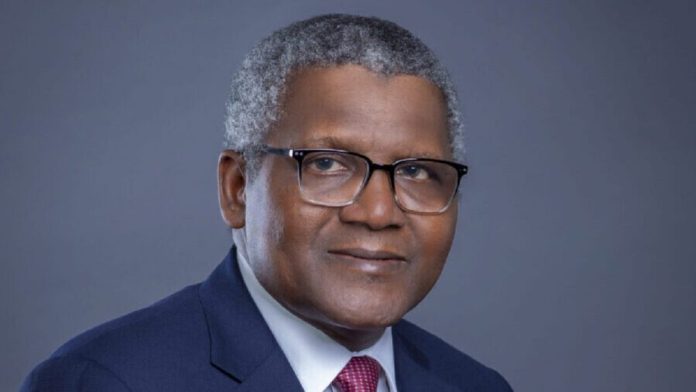
Dangote Presses Tinubu To Halt Fuel Imports, Sparking Policy Tensions

Tensions are rising in Nigeria’s oil sector as Africa’s richest man and President of the Dangote Group, Alhaji Aliko Dangote, has called on President Bola Tinubu to expand the ‘Nigeria First’ policy by banning the importation of refined petroleum products into the country. The proposal, however, has sparked immediate backlash from petroleum marketers and industry experts who warn it could trigger monopolistic practices and harm market competition.

Dangote made the appeal during the Global Commodity Insights Conference on West African Refined Fuel Markets, co-hosted by the Nigerian Midstream and Downstream Petroleum Regulatory Authority (NMDPRA) and S&P Global Insights. He argued that Nigeria’s continued dependence on imported fuel is crippling domestic refining efforts and discouraging investment.

“The Nigeria First policy announced by His Excellency, President Bola Tinubu, should apply to the petroleum product sector and all other sectors,” Dangote said. “We are now facing increased dumping of cheap, often toxic petroleum products, some of which are blended to substandard levels that would never be allowed in Europe or North America.”

Dangote claimed that heavily discounted fuel—some allegedly subsidised in Russia—was entering the Nigerian market at prices far below cost, undermining local refiners and distorting market stability. He warned that unless protected, Nigeria’s refining sector would be unable to survive.

“Due to price caps on Russian petroleum products, discounted fuel finds its way into Africa, severely undercutting our production. In Nigeria, this leads to fuel being sold as low as 60 cents—cheaper than Saudi Arabia,” he stated.

Despite denying that he was seeking a monopoly, Dangote said local investors needed protection similar to what producers in the U.S., Canada, and the EU receive.

“This is not about dominance or monopoly. Too many people with the means to invest in Nigeria prefer to sit on the sidelines and invest their wealth abroad while criticising local investors.”

To prove capacity, Dangote revealed that his $20 billion refinery has already exported over 1.35 billion litres of petrol in the last 50 days, effectively making Nigeria a net exporter of refined fuel.

“From early June to now, we have exported about 1 million tonnes of PMS. Nigeria is now a net exporter of refined products,” he said.

Marketers Push Back

The proposal, however, met strong opposition from independent petroleum marketers. National Publicity Secretary of the Independent Petroleum Marketers Association of Nigeria (IPMAN), Chinedu Ukadike, warned that banning fuel imports would stifle competition and trigger a monopoly in the downstream sector.

“We will depart from that request. If the government bans imports, it would spell doom. We will not be able to check inflation or monopoly since Dangote is the only refinery operating. Importation should continue even as we buy locally,” he argued.

Ukadike further countered Dangote’s claim that importation hurts local businesses.

“Importation won’t kill local refineries. Rather, it will challenge them to step up. We don’t support a ban at this point.”

President of the Petroleum Products Retail Outlet Owners Association of Nigeria (PETROAN), Billy Gillis-Harry, also rejected the idea.

“We are running a free economy. There’s no reason why any single company should dominate the entire downstream sector. Importation stabilises the market. Yes, some goods should be banned, but not refined petroleum products,” he said.

Expert Warns Against Monopolistic Risk

Energy law expert and professor at the University of Lagos, Professor Dayo Ayoade, also voiced strong opposition to the proposal, calling it economically and legally risky.

“We cannot have a legal ban on petroleum imports. That would give a monopoly to a private individual and pose a threat to energy security. International trade law does not favour outright bans, and we must tread carefully,” he cautioned.

He advised the government to focus instead on diversifying and liberalising the refining space.

“We need a broader product market base. Until then, banning imports is unwise. The market should determine price and supply naturally.”

Call for More Refineries

At the same event, Dangote urged regulators to revoke refinery licences from operators who have failed to build any infrastructure.

“You can’t obtain a licence and use it to decorate your house,” he said.

On this point, marketers agreed with the billionaire. IPMAN’s Ukadike said the country needs more operational refineries to meet local demand and scale up exports.

Meanwhile, Dangote is doubling down on expanding operations. He announced plans to ramp up refining capacity to 700,000 barrels per day by December 2025, up from the current 650,000 BPD.

In a related development, Dangote on Friday stepped down as Chairman of Dangote Cement to focus fully on managing the refinery, petrochemicals, and fertilizer business, as well as government relations.

The Dangote refinery is also set to commence a free fuel delivery scheme starting August 1. The initiative involves distributing petrol, diesel, and aviation fuel directly to filling stations and large consumers like telecom companies using 4,000 newly acquired CNG-powered trucks.

FG Launches N10m Loan Scheme To Support Tertiary Institution Staff

The Federal Government has introduced a new welfare initiative aimed at boosting the livelihoods and professional development of staff across Nigeria’s tertiary institutions. The scheme, known as the Tertiary Institution Staff Support Fund (TISSF), was officially launched during a high-level stakeholder engagement held in Abuja.

According to a statement released on Sunday by Folasade Boriowo, Director of Press at the Federal Ministry of Education, the loan scheme is targeted at both academic and non-academic staff in universities, polytechnics, and colleges of education.

Under the scheme, eligible staff members can access loans of up to ₦10 million, capped at 33.3 per cent of their gross annual salary. The funds may be used for a range of welfare-enhancing purposes, including transportation, medical expenses, and micro-enterprise ventures such as poultry farming.

Minister of Education, Dr Tunji Alausa, described the initiative as a cornerstone of the government’s broader efforts to reposition Nigeria’s tertiary education sector.

“TISSF is not just about welfare—it is about empowerment. We are ensuring that our education workforce is supported to live well, grow professionally, and continue contributing meaningfully to institutional excellence.” Dr Alausa said.

The fund will be administered in partnership with the Bank of Industry, which will oversee disbursements to ensure transparency, accountability, and effective delivery.

Also speaking at the event, Minister of State for Education, Suwaiba Sa’id Ahmad, noted that the fund was developed through extensive consultation with staff unions, institutional leaders, and other critical stakeholders. She affirmed that a robust monitoring and evaluation framework has been embedded in the programme to track its progress and long-term impact.

Key stakeholders present at the launch—including representatives from the Tertiary Education Trust Fund (TETFund), the Bank of Industry, vice-chancellors, rectors, and provosts—welcomed the initiative, describing it as timely and crucial for enhancing staff morale, improving performance, and fostering greater institutional productivity.

Governor Otu Procures Two Aircraft To Strengthen Aviation, Promote Tourism

In a major move to reposition Cross River State as a prime destination for tourism and investment, Governor Bassey Edet Otu received two new Bombardier CRJ1000 aircraft—regional jets designed to carry up to 100 passengers.

The acquisition marks a significant milestone in the administration’s broader plan to revitalise the state’s aviation infrastructure and improve socioeconomic mobility.

The aircraft were officially received at a ceremony held at the Nnamdi Azikiwe International Airport, Abuja. Governor Otu, accompanied by his wife, Eyoanwan Otu; former Minister of Culture and Tourism, Edem Duke; and other dignitaries, described the move as “a long-overdue leap into the future of seamless connectivity and economic transformation for our dear state.”

The official commissioning of the aircraft, under the supervision of the Federal Ministry of Aviation, is scheduled for August 12, 2025.

Governor Otu noted that the acquisition directly addresses long-standing air travel challenges, particularly the persistent delays and cancellations that have frustrated travelers to and from Calabar. “For too long, our people and visitors alike have endured the hardship of air travel disruptions. Today marks the beginning of the end of that era,” he said.

According to the state’s Commissioner for Aviation, Imah Eno Utum, the new additions bring the state’s total aircraft fleet to four. The two previously acquired Boeing 747 jets, secured by former Governor Ben Ayade, are currently operated by Aero Contractors. The newly procured Bombardier CRJ1000 jets will be operated by ValueJet Airlines, pending the state’s acquisition of an Air Operator Certificate (AOC) to run a fully independent airline.

Governor Otu underscored the strategic importance of dependable air transportation to the success of Cross River’s tourism-led economic strategy. “These aircraft are more than machines—they are catalysts of commerce, bridges of culture, and vessels of hope,” he said. “With Carnival Calabar, Obudu Ranch Resort, and our ecotourism assets beckoning the world, accessibility must never be a hindrance again.”

Beyond enhancing tourism, the initiative is expected to improve investor confidence and attract commercial activity into the state. “No economy thrives in isolation,” Otu added. “Investors want assurance of smooth logistics. These aircraft will ensure Cross River is no longer at the periphery of economic conversations.”

Former Minister Edem Duke described the development as a “game-changing intervention,” praising Governor Otu’s vision. He emphasized that the move would drastically improve Calabar’s image as a difficult destination, opening new doors in hospitality, agriculture, exports, and international conferences.

As the aircraft touched down, the moment signaled more than just a technical achievement—it symbolized a state taking flight. Governor Otu closed on a hopeful note: “This is just the beginning. Our People First agenda is not mere rhetoric. It is an unfolding promise—and Cross River is rising.”

-Business Day

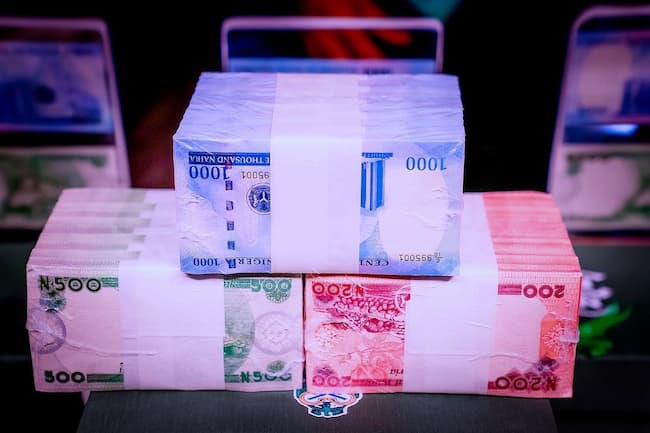
Dollar To Naira Exchange Rate For 28th July 2025

Dollar To Naira Exchange Rate For 8th Dec 2023

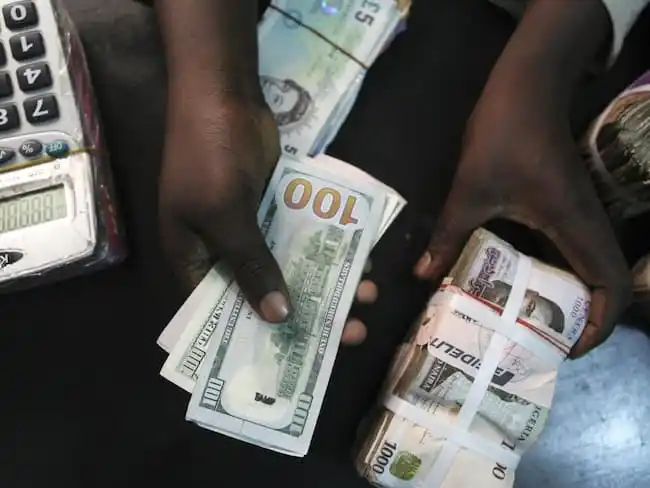
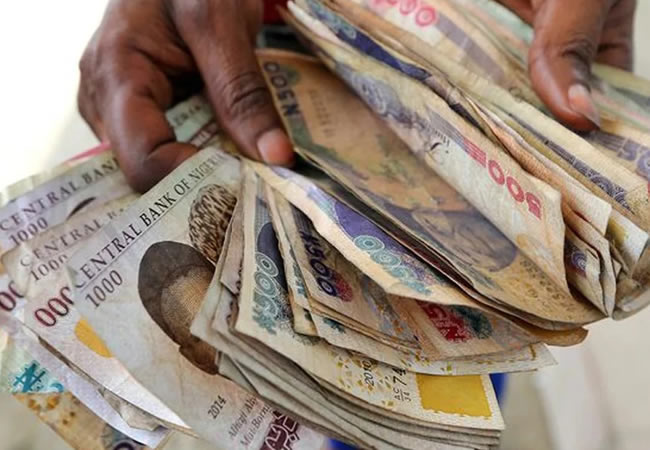
The exchange rate between the Naira and the US dollar, according to the data released on the FMDQ Security Exchange, the official forex trading portal, showed that the naira closed at 1545.00 per $1 on Monday, July 28th, 2025. The naira traded as high as 1534.00 to the dollar at the investors and exporters (I&E) window on Sunday.

How much is a dollar to naira today in the black market?

Dollar to naira exchange rate today black market (Aboki dollar rate):

The exchange rate for a dollar to naira at Lagos Parallel Market (Black Market) players buy a dollar for ₦140 and sell at ₦1545 on Sunday 27th July, 2025, according to sources at Bureau De Change (BDC).

Please note that the Central Bank of Nigeria (CBN) does not recognize the parallel market (black market), as it has directed individuals who want to engage in Forex to approach their respective banks.

Dollar to Naira Black Market Rate Today

Dollar to Naira (USD to NGN)Black Market Exchange Rate Today
Buying Rate₦1540
Selling Rate₦1545

Dollar to Naira CBN Rate Today

Dollar to Naira (USD to NGN)CBN Rate Today
Highest Rate₦1536
Lowest Rate₦1534

Please note that the rates you buy or sell forex may be different from what is captured in this article because prices vary.

Foreign Investors Flock To Nigeria’s Eurobonds Ahead Of November Maturity

DMO Set To Auction N150bn Bond On FG's Behalf

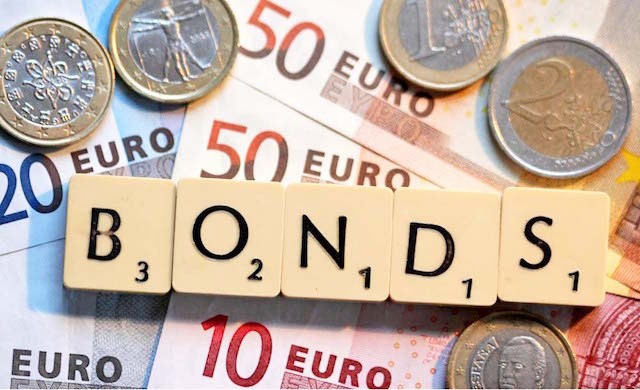
Foreign portfolio investors have ramped up their holdings of Nigeria’s sovereign Eurobonds, especially those maturing in November 2025, as improved macroeconomic fundamentals lift investor sentiment and trigger a rally in the US dollar-denominated debt market.

As demand surged, the yield on Nigerian Eurobonds dropped by 6 basis points to 8.39%, reflecting rising prices across the short and mid segments of the yield curve, according to Cowry Asset Management.

Analysts say the yield drop points to declining borrowing costs for Nigeria and other African issuers, a positive development supported by easing inflation, external trade pacts, and stabilized local economic indicators.

While the market is pricing in Nigeria’s ongoing disinflation, trading activity indicates foreign investors are adopting a more cautious stance. Recent movements suggest offshore players are gravitating toward shorter-duration securities, with November 2025 bonds seeing the strongest buy-side action.

Activity across the broader African Eurobond market was buoyant during the week. Positive trade developments between the United States and key partners like Japan and the EU contributed to a risk-on sentiment. Angola, Egypt, and Nigeria emerged as top gainers, while Ghana’s bonds faced selling pressure.

Nigeria’s Eurobond curve maintained a mildly bullish tone, supported by steady demand and limited sell-offs. Week-on-week, average yields declined by 22 basis points across the board. Analysts predict that upcoming U.S. tariff decisions—particularly the August 1 deadline—could significantly shape investor direction in the weeks ahead.

DMO Set To Offer N80 Billion In Local Bonds At Primary Auction

DMO: Nigeria's Total Debt Hits N49.25tn

The Debt Management Office (DMO) is preparing to raise N80 billion through the reopening of existing bonds at its upcoming primary auction, as investor appetite for fixed income assets remains robust amid easing inflationary pressures.

According to the auction notice released, the bonds to be reissued are the Federal Government of Nigeria’s (FGN) APR-2029 and JUN-2032 papers. Analysts forecast that the auction will draw strong interest, driven by persistent demand from banks, pension fund administrators, and asset managers.

The continued scaling down of bond issuance since early 2025 reflects improving fiscal revenue, supported by the removal of fuel subsidies and increased foreign borrowings. This has allowed the DMO to reduce supply, pushing spot rates downward in tandem with strong investor demand.

Market watchers from Cordros Securities project that marginal rates for the 2029 bond will fall within 15.65% to 15.95%, while the 2032 paper is expected to attract rates between 15.90% and 16.15%.

The auction comes amid renewed optimism for a dovish shift in monetary policy, with analysts maintaining a medium-term outlook for lower bond yields. The alignment of demand-supply dynamics and easing inflation is expected to sustain this trend.

“We foresee a continued moderation in spot rates given the robust demand and expectations of a more accommodative monetary stance,” Cordros noted.

Oil Prices Edge Lower Amid Global Trade Uncertainty

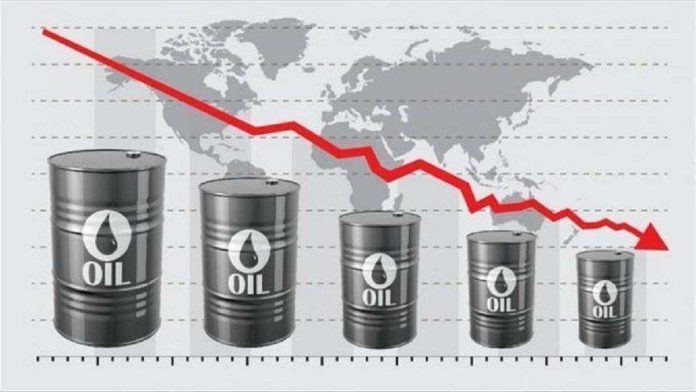
Oil prices declined slightly this week as renewed global trade tensions, fresh sanctions on Russian energy exports, and mixed signals from U.S. economic policy weighed on investor sentiment.

Brent crude, the international benchmark, traded at $68.53 per barrel on Friday, down roughly 0.9% from last week’s close of $68.60. Similarly, U.S. benchmark West Texas Intermediate (WTI) slipped to $65.92 per barrel, a weekly loss of about 1.1% from $66.

Markets opened the week under pressure following the European Union’s adoption of an 18th package of sanctions targeting Russia. The new measures, which affect 105 vessels and entities associated with Russia’s so-called “shadow fleet,” sparked concerns over global supply disruption but also raised uncertainties around enforcement and compliance.

Adding to market volatility, former U.S. President Donald Trump threatened to impose 100% secondary tariffs on any nation continuing trade with Russia unless a resolution to the Ukraine conflict is reached within 50 days.

Following a meeting with Trump, NATO Secretary-General Mark Rutte issued a stark warning to countries such as China, India, and Brazil, stating they could face severe U.S. sanctions if they failed to pressure Moscow into negotiations.

Meanwhile, geopolitical uncertainty intensified as Iran confirmed it would resume nuclear talks with the UK, France, and Germany in Istanbul on July 25. The prospect of easing sanctions and the potential return of Iranian oil to global markets added downward pressure to prices already threatened by potential oversupply from increased OPEC+ production.

Midweek losses deepened after Trump announced a new trade agreement with Japan, featuring a 15% tariff and securing $550 billion in Japanese investments. While the deal was seen as a partial win, the administration hinted at possible further tariffs, especially amid lingering uncertainty surrounding ongoing negotiations with China and the European Union.

Tensions in the Middle East also remained elevated. Trump defended recent strikes on Iranian nuclear sites, warning of further action if provoked. Iran’s foreign minister acknowledged the damage was “serious,” while Trump insisted the facilities were “destroyed” and accused the media of underreporting the scale of the attack.

Analysts say markets remain fragile, with crude prices vulnerable to both demand-side economic pressures and escalating geopolitical risks.

Investors Rush Treasury Bills As Yields Slide Following CBN Rate Actions

The average return on Nigerian Treasury bills has fallen to 17.67%, as investors pivot toward fixed-income securities in response to the Central Bank of Nigeria’s (CBN) reduction in spot rates during its latest primary market auction.

At the recent auction, the apex bank offered N290 billion worth of Treasury bills across the standard 91-day, 182-day, and 364-day tenors. The distribution included N50 billion for 91-day bills, N20 billion for 182-day papers, and N220 billion allocated to the longer 364-day notes.

Despite this issuance, total subscriptions came in at N675.66 billion—down sharply from the N1.33 trillion worth of bids received in the previous auction. This represents a significant dip in investor enthusiasm, as reflected in a reduced bid-to-offer ratio of 2.3x compared to 6.6x earlier.

CBN fully allotted the offered amount, disbursing N13.11 billion, N5.10 billion, and N271.79 billion across the respective tenors. Spot rates were slashed across the board: the 91-day paper settled at 15%, a 74 basis point drop; the 182-day bill was allotted at 15.50%, down 70 basis points; while the 364-day tenor came in at 15.88%, from a prior 16.30%.

With demand overshooting supply, unmet bids spilled into the secondary market, driving yields downward across all segments of the curve. The average yield declined by 12 basis points to 17.76%, as a risk-off sentiment prevailed following the CBN’s dovish stance at the last Monetary Policy Committee (MPC) meeting.

Secondary market trading reflected bullish activity, as investors repositioned for more attractive naira-denominated assets. This optimism was echoed in the Open Market Operations (OMO) segment, where yields eased to 24.7%.

Analysts suggest that the decline in available instruments, combined with a robust liquidity environment, could drive further reductions in Treasury bill yields. Market participants anticipate more rate adjustments as the bullish trend continues to dominate the fixed income space.

Yields On Nigerian Government Bonds Slide To 16.28% Amid Liquidity Surge

FGN Bond For Jan. 2021 Oversubscribed

Nigerian government bond yields have declined further in the secondary market, settling at 16.28%, as institutional investors increase their exposure to fixed income amid declining inflation and improved system liquidity.

This shift in market sentiment comes as Nigeria’s headline inflation rate eased to 22.22%, while the Monetary Policy Rate (MPR) remained elevated at 27.50%. With real returns standing strong at 5.28%, asset managers have intensified their interest in bonds.

Market analysts attribute the yield compression to recent coupon payments worth N284.73 billion from the Federal Government, which significantly boosted system liquidity to over N1.35 trillion. The influx of funds has encouraged reinvestment, particularly from pension funds and local banks.

Cordros Securities reported that the average yield dipped across all segments of the curve: short-term bonds dropped 35 basis points, mid-tenor instruments fell by 43 basis points, and long-term securities eased by 17 basis points. The steepest drops were recorded in APR-2029 (-48 bps), APR-2032 (-69 bps), and MAR-2036 (-40 bps) bonds due to increased bargain hunting.

Analysts anticipate that the prevailing downward trend in yields will continue, especially as the Debt Management Office (DMO) seeks to reduce borrowing costs. The upcoming FGN bond auction, scheduled for Monday, is expected to further influence yield trajectories.

Investors are positioning for potential monetary easing, and the market is responding positively to this outlook. With disinflation underway and the rebased consumer price index supporting lower inflation projections for H2 2025, the bond market is poised for continued bullish activity.

Tinubu To Host WAFCON Champions Super Falcons In Abuja

President Bola Ahmed Tinubu is set to host the triumphant Super Falcons team at the Presidential Villa in Abuja following their historic victory at the 2024 Women’s Africa Cup of Nations (WAFCON) in Morocco.

The Nigerian women’s national team staged a remarkable comeback on Saturday night, defeating hosts Morocco 3–2 in a pulsating final to clinch their 10th WAFCON title. The Super Falcons not only lifted the coveted trophy but also dominated the individual accolades at the tournament.

Team captain, Rasheedat Ajibade, was named Player of the Tournament, while goalkeeper Chiamaka Nnadozie received the Goalkeeper of the Tournament award. Head coach Justine Magudu was recognised as the Coach of the Tournament for his tactical brilliance throughout the competition.

Confirming the team’s return, the Director General of the National Sports Commission (NSC), Bukola Olopade, who was part of the federal government delegation in Morocco, said the squad is expected back in Abuja between Sunday and Monday.

“I am currently at the team’s camp, finalising logistics for our departure to Abuja,” Olopade told The Guardian on Sunday. “President Tinubu spoke with the players shortly after their win and assured them of a red carpet reception upon arrival.”

Following the victory, President Tinubu lauded the team’s resilience and fighting spirit in a statement released on Saturday night.

“The Super Falcons’ spectacular performance in Rabat, coming from behind to defeat a spirited Moroccan side on their home soil, epitomises the unwavering Nigerian spirit,” the President stated. “Through hard work, dedication, and tenacity, you have achieved a dream shared by millions. Nigeria celebrates you and eagerly awaits your return.”

Speaking further on the dramatic encounter, Olopade recounted the tension after Morocco took a two-goal lead within the first 25 minutes of play, with goals from Ghizlane Chebbak and Sanaa Mssoudy.

“To be honest, I remained confident despite the early setback,” he said. “I had faith in Coach Magudu’s tactics, and I’m grateful everything came together at the crucial moment.”

The Super Falcons’ comeback win has not only reignited national pride but also reaffirmed Nigeria’s dominance in African women’s football.

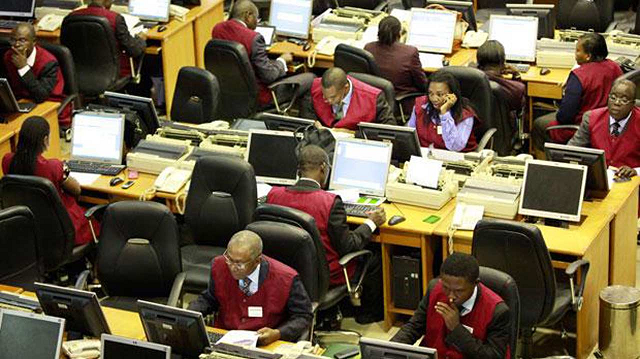
NGX Gains N1.81 Trillion Weekly, Market Capitalisation Climbs To N85.06 Trillion

Stock Exchange Closes Trading Week With N30bn Gain

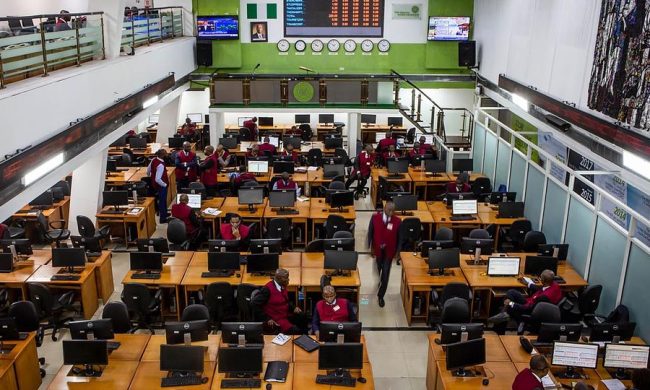
The Nigerian Exchange (NGX) closed the trading week on a high note, with market capitalisation expanding by a staggering N1.81 trillion to reach N85.06 trillion. The bullish sentiment was driven by bargain hunting, solid corporate earnings, and declining fixed-income yields, pushing the year-to-date return to 30.63%.

Analysts at Cowry Asset Management attributed the sharp rebound to the plunge in Treasury bill yields during the midweek Primary Market Auction, which encouraged a reallocation of funds toward equities. The Central Bank of Nigeria’s decision to maintain existing monetary policy parameters further sustained confidence in the stock market.

The NGX All-Share Index appreciated by 2.18% during the week, closing at 134,452.93 points. The surge reflected renewed buy-side activity as investors took positions in fundamentally sound stocks across various sectors.

Market breadth also stayed positive at 1.40x, with 60 stocks recording gains versus 43 decliners during the five-day trading stretch. This compares favorably to the previous week’s four-day session.

Despite the bullish trend, overall trading activity experienced a substantial drop. Volume of trades fell by 78.96%, while total turnover decreased by 77.65% to 3.68 billion units and N111.90 billion, respectively, from 17.49 billion units and N500.76 billion recorded the week before.

Analysts believe the sharp decline in activity was likely due to cautious moves by institutional investors as they prepare for month-end portfolio adjustments.

Sectoral indices also reflected strong bullish momentum, with all six major indexes closing in the green. The Industrial Goods Index and Insurance Index led with respective gains of 4.66% and 3.07%. These were driven by upticks in stocks like INTENEGINS, SOVRENINS, JBERGER, Lafarge Africa, and BUA Cement.

The Consumer Goods Index saw a 2.81% increase, followed by a 2.24% rise in the Commodity Index. The Banking and Oil & Gas sectors recorded gains of 1.84% and 0.87%, respectively, supported by interest in WEMABANK, OANDO, PRESCO, Dangote Sugar, Guinness, and Okomu Oil.

Top gainers of the week included The Initiates Plc (+60.8%), ACADEMY (+33.0%), Enamelware (+32.7%), WEMABANK (+23.6%), and PRESCO (+22.5%). On the other end, NSLTECH (-24.0%), OMATEK (-23.9%), MEYER (-21.4%), NEIMETH (-19.3%), and ABCTRANS (-18.8%) were the week’s major losers.

Looking forward, Cowry Asset anticipates a mixed performance in the new week, shaped by earnings announcements and possible profit-taking activity. “While some retracement is possible, fundamentally strong stocks will likely continue to attract investor interest, especially with the MPC maintaining monetary stability,” the firm said.

Naira Strengthens To N1,534.72 Amid Diminishing Forex Demand

Federation Account Amasses Over ₦5trn In 6months- RMAFC

The Nigerian Naira recorded a slight appreciation against the U.S. dollar on Friday as demand pressures in the foreign exchange market began to taper. Data from the Central Bank of Nigeria (CBN) shows that the naira firmed up by 4.52 kobo, closing at N1,534.72 per dollar at the official market.

This improvement represents a modest gain of 0.05% from the previous day’s exchange rate of N1,534.79. Market watchers attributed the gain to the CBN’s proactive supply-side interventions, which have helped enhance liquidity and dampen speculative pressure.

The local currency had hovered around N1,535 for most of the week, trading at N1,535.62 on Wednesday and N1,535.24 on Tuesday. Monday’s opening rate saw a minor decline of 20 kobo, reflecting fluctuating sentiment before the late-week uptick.

Meanwhile, in the parallel market, the exchange rate held steady at N1,530, supported by reduced demand from unofficial foreign exchange buyers. Traders noted a dip in speculative activities as the narrowing gap between official and black market rates suggested increased market efficiency.

Financial analysts observed that the improving performance of the naira, especially in the context of reduced pressure from importers and dollar speculators, signals a maturing currency pricing structure. This, they said, could encourage more transparency and trust in the official market over time.

Some currency traders believe the current trend could continue, especially with the renewed ability of Bureau de Change (BDC) operators to meet client demands at more affordable rates. Analysts, however, warn that sustained stability will depend on long-term reforms and continued intervention from the apex bank.

Nigerian Equities Market Climbs To N85 Trillion, Investors Rake In N793 Billion Gains

NGX Records N256bn Loss Last Week

The Nigerian equities market maintained its bullish momentum on Friday as the total market capitalisation surged past the N85 trillion threshold, bringing significant value appreciation to investors. The capital market added N793 billion in valuation, climbing 0.94% to end the day at N85.055 trillion, compared to the N84.262 trillion recorded in the previous session.

The All-Share Index (ASI) followed suit, advancing by 1,252.93 points or 0.94% to close at 134,452.93 points. The rally was driven by a surge in demand for stocks such as Champion Breweries, Ikeja Hotel, Unilever Nigeria, Enamelware, and The Initiates, among 43 other bullish equities.

With the market breadth firmly positive, 48 gainers outpaced 22 declining stocks. Champion Breweries topped the gainers’ chart with a 10% gain, closing at N12.32. Ikeja Hotel also rose by 10%, ending at N23.10. Unilever Nigeria matched the 10% increase, wrapping up at N68.20. Enamelware climbed by 9.98% to close at N27, while The Initiates Plc saw a 9.95% boost to settle at N16.13.

Meanwhile, on the losers’ board, Tripple Gee took the biggest hit, shedding 10% to end at N3.51 per share. Tantalizer declined by 8.55%, settling at N2.46. Sunu Assurances dropped 6.64% to N4.64, while Ecobank Transnational Incorporated lost 5.88%, finishing at N32. Neimeth International Pharmaceutical saw a 4.55% drop, closing at N6.50.

In trading activity, 713.7 million shares worth N24.2 billion were exchanged across 24,880 deals. This was a slight drop from the previous session’s 818.39 million shares worth N22.67 billion traded across 22,955 transactions. Access Corporation led the activity chart with 42.4 million shares valued at N1.18 billion.

Other top trades included Universal Insurance, which posted 40.7 million shares worth N29.7 million; Tantalizer with 32.2 million shares worth N83.1 million; Guaranty Trust Holding Company with 28.7 million shares worth N2.7 billion; and Ellah Lakes, which exchanged 26.3 million shares valued at N260.5 million.

Commenting on the market performance, David Adonri, Vice President at Highcap Securities, noted that the bourse has remained bullish, albeit with reduced momentum. “The positive movement is largely driven by gains in Okomu Oil and Presco, underpinned by impressive half-year results and an interim dividend announcement,” he explained.

He added that equities across all sectors saw gains, with no sector recording losses, buoyed by the stable outcome of the Monetary Policy Committee (MPC) meeting and consistent corporate disclosures.

Nigerian Diaspora Remittances Hit $20.92 Billion In 2024, Surpassing FDI By 400%

President Bola Tinubu has revealed that Nigerians living abroad sent home a staggering $20.92 billion in 2024 via official channels—an amount that surpasses the nation’s foreign direct investment (FDI) by fourfold.

Speaking at the 2025 National Diaspora Day (NDD) and National Merit Award event organised by the Nigerians in Diaspora Commission (NiDCOM) in Abuja, President Tinubu, represented by the Secretary to the Government of the Federation, Sen. George Akume, described the contribution as a pivotal force in Nigeria’s economic resilience.

This year’s NDD was themed “Optimising Formidable Diaspora Potentials for National Development and Growth,” reflecting the government’s strategy to deepen diaspora engagement across sectors.

President Tinubu praised NiDCOM for pioneering initiatives like the Diaspora Mortgage Scheme, Nigeria Diaspora Investment Summit, and the Diaspora Data Mapping Project. He also acknowledged the role of the annual presidential diaspora town hall meetings in strengthening the government’s engagement with Nigerians abroad.

Highlighting the importance of the diaspora community, Tinubu stated:

“Our brothers and sisters abroad are lifting Nigeria’s image globally. Many of them have become our goodwill ambassadors and are playing transformative roles in healthcare, ICT, agriculture, real estate, transportation, oil and gas, and sports.”

He noted that the inclusion of the National Diaspora Merit Award since 2023 has given a new face to the NDD celebrations.

NiDCOM Chairperson/CEO, Mrs. Abike Dabiri-Erewa, commended the over 20 million Nigerians living overseas, describing them as resilient, hardworking, and high-achieving professionals breaking barriers across multiple fields.

“Every year, we recognise and honour outstanding individuals and associations in our diaspora who have made valuable contributions both to their host countries and to Nigeria,” Dabiri-Erewa remarked.

She also spotlighted the Badagry Door of Return Festival, held annually in October, as a historical and cultural reconnection of descendants from the transatlantic slave trade era to the ancient city of Badagry.

Ms. Sharon Dimanche, Chief of Mission of the International Organization for Migration (IOM) Nigeria, praised NiDCOM for its continued efforts, describing the Nigerian diaspora as key agents of sustainable national development.

Citing the World Bank’s figures, Dimanche said:

“Out of the $905 billion in global remittances in 2024, Sub-Saharan Africa accounted for $56 billion, with Nigeria alone attracting $20.93 billion—an 8.9% increase from the previous year.”

She emphasized that beyond financial remittances, Nigerian professionals in health, arts, technology, and education are making waves globally while maintaining strong ties with their homeland. She noted that the diaspora youth, in particular, could be a driving force in pushing innovation and digital transformation in Nigeria.

Naira Weakens Against US Dollar Despite CBN’s $81m Forex Market Intervention

How Much Money Is Spent On Groceries In Nigeria, Other Countries?

The Nigerian naira experienced further depreciation against the US dollar last week, following growing demand from companies seeking to settle international payments through the Nigerian foreign exchange market (NFEM).

According to weekly trading data, the exchange rate dropped by N2.38, averaging N1,534.72 per dollar, indicating increased forex pressure that outpaced available supply.

In response, the Central Bank of Nigeria (CBN) intervened directly in the FX market, injecting roughly $81 million to stabilize the exchange rate and prevent excessive volatility, according to a report by AIICO Capital Limited.

Despite this move, Nigeria’s external reserves continued their upward trend, rising for a third consecutive week. CBN statistics showed that the country’s foreign reserves grew by $778.34 million week-on-week to $38.632 billion.

AIICO Capital analysts expressed cautious optimism, predicting near-term stability in the FX market as the CBN refines its policy framework.

However, global market dynamics exerted additional pressure. International oil benchmarks, including Brent crude and West Texas Intermediate (WTI), recorded three-week lows. Brent declined by $1.24 to $68.04 per barrel, while WTI shed $2.25 to close at $65.09.

Market watchers attributed this to weak economic data out of the United States and China. In the US, orders for manufactured capital goods fell unexpectedly in June, fuelling speculation about a potential interest rate cut, particularly after President Trump’s meeting with the Federal Reserve Chair.

Meanwhile, China posted a 0.3% year-on-year drop in fiscal revenue for the first half of 2025, further dampening global market sentiment.

In the precious metals segment, gold prices fell by 0.4% to $3,336.58/oz amid easing trade tensions. Recent tariff agreements between the US, Japan, and the EU have reduced demand for safe-haven assets.

Looking ahead, analysts expect oil prices to remain reactive to geopolitical developments, global supply-demand dynamics, and upcoming decisions by OPEC+.

Interest Rates Drop As Nigerian Banks Park Surplus Cash With CBN

Nigerian Banks Limit Dollar Deposit To $5,000 Monthly

Nigeria’s money market witnessed a sharp drop in short-term interest rates last week, as commercial banks opted to deposit excess liquidity with the Central Bank of Nigeria (CBN) amid a wave of fund inflows from various government sources.

Recent injections into the financial system—such as Nigerian Treasury Bill maturities, FGN bond coupon payments, and the Federation Account Allocation Committee (FAAC) disbursement—helped shift the banking sector from a deficit to a surplus liquidity position.

The overnight lending rate plunged by 575 basis points to settle at 26.9% on Friday, while the open repo rate slid by 583 basis points to 26.5%, marking the lowest levels seen in recent weeks, according to data from the FMDQ Exchange.

A total of N37 billion entered the market via NTB maturities, while FGN bond coupon payouts amounted to N284.73 billion. Additionally, FAAC distributed N850 billion to federal, state, and local governments, significantly boosting banking system liquidity.

Cordros Capital Limited noted in its commentary that average system liquidity improved to a net long position of N214.13 billion from a net shortfall of N465.18 billion the previous week.

Unless the CBN undertakes liquidity mop-up operations, analysts expect interbank rates to remain low, especially with another N41.62 billion expected from fresh FGN bond coupon payments this week.

The new trading week had opened with tighter liquidity, with rates spiking to 32.63% despite N89.85 billion in coupon inflows. Liquidity pressures persisted midweek, as heavy borrowing through the CBN’s Standing Lending Facility drove system liquidity down to N931.75 billion.

However, a major turnaround occurred by Thursday, as interbank funding rates fell 471 basis points to 26.75%, buoyed by FAAC-related inflows that lifted market liquidity to N831.36 billion.

By Friday, total liquidity stood at N1.35 trillion, reflecting strong participation by deposit money banks at the Standing Deposit Facility.

Financial analysts believe these dynamics, alongside shifting yields and policy adjustments, will continue to shape money market performance in the coming days.

Super Falcons Stage Stunning Comeback To Defeat Morocco 3–2, Claim WAFCON Title

Nigeria’s Super Falcons delivered a breathtaking second-half performance on Saturday night, overcoming a two-goal deficit to defeat hosts Morocco 3–2 and clinch the prestigious Women’s Africa Cup of Nations (WAFCON) trophy.

The Moroccans stunned the Nigerian side early in the match, grabbing the lead in the 12th minute with a powerful finish from Ghizlane Chebbak. The hosts extended their advantage in the 24th minute, when Sanaâ Mssoudy found the net to give Morocco a 2–0 cushion and send the home crowd into a frenzy.

But the Nigerian team, nine-time WAFCON champions, refused to back down. Returning from halftime with renewed energy, the Super Falcons mounted a fierce fightback.

Their persistence paid off in the 64th minute when Esther Okoronkwo calmly converted a penalty kick to bring Nigeria back into the game. Just seven minutes later, Folashade Florence Ijamilusi struck the equaliser with a well-placed finish that silenced the Moroccan fans.

The decisive moment came in the 88th minute as Jennifer Echegini delivered a clinical goal that sealed Nigeria’s extraordinary comeback, propelling the Super Falcons to their 10th continental title.

Statistically, Nigeria outplayed Morocco in key areas. The Super Falcons recorded 14 total shots, with five on target, compared to Morocco’s 10 attempts. They also dominated ball possession with 55%, successfully completing 280 passes at a 69% accuracy rate. Nigeria won five corners, while Morocco earned three.

Despite the fast pace and emotional intensity of the encounter, the match remained clean. No yellow or red cards were issued by the referee. Nigeria committed seven fouls during the match, while Morocco racked up 12.

The victory reinforces Nigeria’s dominance in African women’s football and showcases the team’s unyielding spirit under pressure. With this win, the Super Falcons not only reclaimed their crown but also sent a strong message ahead of future continental and global competitions.

FG Launches New Policy On Non-State Schools, Sets JSS Entry Age At 12

The Federal Ministry of Education has released a new policy framework for non-state schools, pegging the official age for admission into Junior Secondary School (JSS1) at 12, following six years of primary education.

The policy, launched last week, outlines clear age benchmarks for each stage of early education, aiming to streamline the education journey for children enrolled in non-state schools, institutions not owned or managed by the government. These schools, also referred to as private or independent schools, are typically funded through tuition fees, donations, religious institutions, foundations, and other non-government sources.

According to the policy document, children will now be admitted into Nursery One at age three, Nursery Two at age four, and into a compulsory one-year pre-primary class (Kindergarten) at age five, in line with Section 2(17) of the National Policy on Education (2013 Edition). Primary education will commence at age six and last for six years, with students expected to begin JSS1 at age 12.

The policy further states, “Basic education shall be of nine years’ duration. There shall be a six-year primary and a three-year Junior Secondary School (JSS). Children shall be admitted into Primary One when they attain the age of six years.”

If implemented strictly, the revised entry ages mean Nigerian learners would not be eligible to enter higher education institutions until they turn 18 — a move that reignites debates around minimum university entry age in the country.

This comes amid a policy back-and-forth on university admission age. Former Minister of Education, Prof. Tahir Mamman, had raised the minimum age for university entry to 18, before his successor, Dr. Tunji Alausa, reversed the policy and reinstated 16 as the minimum age.

The new document also reflects the growing influence of non-state schools in Nigeria’s education landscape. Data from the Nigeria Education Digest 2022 indicates that non-state schools now outnumber government schools at the junior secondary level in at least 26 states. At the primary level, however, government schools still dominate in 19 states.

Between 2017 and 2022, non-state primary schools saw a growth rate of 31.56%, compared to just 3.3% for state primary schools. At the junior secondary level, non-state schools grew by 35.06%, while state-owned counterparts grew by only 6.8% in the same period.

The Federal Government, through this policy, appears to be standardizing age-based progression and reaffirming its regulatory stance as the non-state school sector continues to expand rapidly.

BizWatchNigeria.Ng
Privacy Overview

This website uses cookies so that we can provide you with the best user experience possible. Cookie information is stored in your browser and performs functions such as recognising you when you return to our website and helping our team to understand which sections of the website you find most interesting and useful.