Chelsea begin their 2025/26 Premier League journey on Sunday with aspirations of a serious title charge as Crystal Palace make the short trip across London. Fresh off their Club World Cup success and a summer of high-profile arrivals, Enzo Maresca’s men are eager to translate their international dominance into domestic glory.
The Blues fell away in the second half of last season, finishing fourth despite a bright start, but optimism has returned thanks to new additions such as João Pedro and Liam Delap. With an attacking line full of promise, expectations are high for Chelsea to establish themselves as early contenders for the title.
Meanwhile, it has been a mixed summer for Crystal Palace. Their euphoric FA Cup triumph was followed by the disappointment of missing out on the Europa League after a demotion ruling. Manager Oliver Glasner, however, has kept his side focused, guiding them to victory in the Community Shield against Liverpool on penalties.
The biggest talking point surrounds Eberechi Eze, who has been heavily linked with a big-money move to Tottenham Hotspur. Reports suggest the deal could exceed £50 million, but despite ongoing negotiations, the England international is expected to feature against Chelsea.
Yesterday’s Premier League Action The season’s opening Saturday delivered drama, even without goals at Villa Park. Newcastle United dominated Aston Villa despite Ezri Konsa’s second-half red card, but failed to convert chances in a 0-0 stalemate—highlighting the absence of injured striker Alexander Isak.
Chelsea Eyeing Title Tilt For Chelsea, this season feels like one where only a title challenge will suffice. With the Club World Cup in the trophy cabinet and millions invested in new talent, pressure is mounting on Maresca to deliver consistency across the campaign.
Crystal Palace Dealing with Disruption Palace, on the other hand, enter the campaign under a cloud of uncertainty. Eze’s potential exit and the off-field setback regarding European football could unsettle the squad. Nevertheless, Glasner has built a resilient team, and Palace’s ability to trouble elite opposition makes them dangerous opening-day opponents.
Kick-Off Details Chelsea vs Crystal Palace kicks off at 2pm BST at Stamford Bridge. All eyes will be on how Chelsea’s new stars settle into Premier League action—and whether Palace can once again prove their credentials against one of the division’s giants.
Chelsea fans are bracing themselves with excitement as the reigning world champions prepare to launch their 2025/26 Premier League campaign on Sunday afternoon. After a pre-season that featured victories over Bayer Leverkusen and AC Milan—momentum built off their Club World Cup triumph—there is growing belief that Enzo Maresca’s side could mount a serious title challenge this term after fading over Christmas last season.
Yet, the opening-day London derby against Crystal Palace has all the hallmarks of a potential upset. The Eagles, under Oliver Glasner, have made a habit of troubling England’s top sides, and Stamford Bridge will be no easy ground for complacency.
Maresca has spent the summer integrating several exciting new signings into his squad, and Sunday’s clash is expected to feature a mix of established stars and fresh talent. Here’s how Chelsea are likely to line up.
Chelsea Predicted XI (4-2-3-1 Formation)
GK: Robert Sánchez – With no new goalkeeper signed in the summer window, Sánchez retains the No.1 spot heading into the season.
RB: Reece James – The captain returns with hopes of finally putting persistent injury troubles behind him.
CB: Trevoh Chalobah – Declared fit just in time for the opener, Chalobah is set to feature in central defence.
CB: Jorrel Hato – The teenage sensation is primed for his full debut after impressing off the bench during pre-season. With Levi Colwill sidelined long-term, Hato’s versatility will be crucial.
LB: Marc Cucurella – With Colwill unavailable, Cucurella’s experience keeps him cemented in the starting role.
CM: Moisés Caicedo – A cornerstone of the squad, the Ecuadorian midfielder’s dynamism and defensive prowess remain vital.
CM: Enzo Fernández – Operating slightly higher up the pitch, Fernández will look to link up with Cole Palmer and exploit his box-to-box qualities.
RW: Pedro Neto – Despite personal tragedy this summer, Neto has established himself as Chelsea’s first-choice right winger heading into the campaign.
AM: Cole Palmer – After a subdued domestic season, Palmer rediscovered his spark at the Club World Cup and is tipped to be Chelsea’s creative heartbeat again.
LW: Jamie Gittens – The ex-Borussia Dortmund youngster has impressed during pre-season and could be handed a first Premier League start.
ST: João Pedro – The Brazilian forward has made a flying start at Chelsea, scoring in both friendlies, and is expected to spearhead the attack.
With fresh faces and growing chemistry under Maresca, Stamford Bridge awaits what could be the dawn of a new Chelsea era.
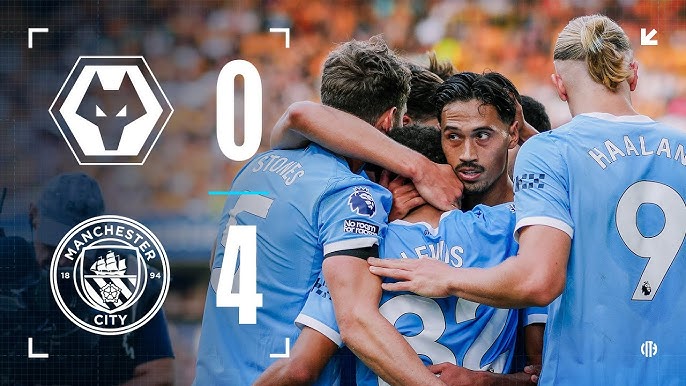
The new Premier League season began under the floodlights of Molineux with an evening that was as emotional as it was emphatic. Wolves paid tribute to their late former forward Diogo Jota before kick-off—a moment that quieted the ground and reminded fans of football’s power to connect generations. Yet, once the whistle blew, Manchester City shifted the tone entirely, dismantling Wolves 4-0 with a display that felt both clinical and ominous.
For Pep Guardiola’s men, this wasn’t just an opening-day victory. It was a statement: the champions aren’t slowing down. With Erling Haaland back to his ruthless self, Tijjani Reijnders making a dream debut, and a couple of fresh faces showing glimpses of promise, City’s campaign couldn’t have started on a brighter note.
The Opening
The match didn’t begin with City swarming Wolves the way many expected. In fact, the first 20 minutes carried a slight unease. Bernardo Silva floated in a teasing ball to Haaland, who stretched but couldn’t quite keep his header on target. Wolves, on the other hand, were prowling in the shadows, waiting for a turnover. Jørgen Strand Larsen forced John Stones into a sharp block, and Marshall Munetsi even thought he’d scored—only for VAR to quickly flag the offside.
But here’s the thing: when City need a goal to steady nerves, Haaland usually delivers. And that’s exactly what happened. A driving run from Reijnders sliced open Wolves’ midfield before he found Rico Lewis, who slipped in a smart ball for Haaland to tap home. The Norwegian didn’t even celebrate wildly—just a business-like acknowledgment, as if to say: “We’re back.”
Reijnders Announces Himself in Style
Barely had Wolves adjusted to being behind when City doubled their lead, and the architect was again their Dutch debutant. Oscar Bobb pounced on a loose Wolves pass, raced forward, and laid it off to Reijnders. With almost no backlift, the midfielder curled in a weak-footed finish that was anything but weak.
The away end erupted. A new signing scoring on his Premier League debut is always special, but this one carried an extra layer of promise. City fans have been spoiled in midfield over the years—from David Silva to Kevin De Bruyne—but there was something about Reijnders’ composure, movement, and confidence that felt like a glimpse into the club’s next chapter.
Wolves Threaten Again
To their credit, Wolves didn’t roll over. Early in the second half, Strand Larsen went close again, sliding just wide after Ki-Jana Hoever’s clever ball into the box. Molineux stirred, sensing a route back into the contest. But this is Manchester City. And against City, missed chances often carry a brutal price.
Moments later, Reijnders was at it again—linking beautifully with Bobb before cutting the ball back for Haaland, who rifled in his second. It was a pure City goal: patient, sharp, and devastating. The scoreboard read 0-3, and the Wolves faithful knew the evening had slipped beyond repair.
Cherki Joins the Party
James Trafford, City’s new No.1, had a quiet debut. His biggest test came from a low Strand Larsen drive, which he palmed away with minimal fuss. That was as close as Wolves got to spoiling City’s rhythm.
Then, just to rub salt in, City’s substitutes decided to add their names to the script. Nico O’Reilly teed up Rayan Cherki, who stepped into space outside the box and lashed in a precise, low drive. Another debut goal. Another young player stepping onto the big stage without blinking.
By the final whistle, the scoreboard read 0-4, but in truth, it could have been more. Wolves looked stretched, City looked relentless, and neutrals looked on thinking: is this the start of another title defense that feels inevitable?
Player Ratings: How the Stars Fared
James Trafford – 7.5
Handled what came his way calmly. A comfortable debut.
Rico Lewis – 8
Everywhere. Assisted Haaland’s opener and knitted City’s play together like a seasoned veteran.
John Stones – 7.5
Solid and composed. Just getting 82 minutes in the tank is a win for City.
Rúben Dias – 7
Shaky opening, but grew into the game with crucial blocks.
Rayan Aït-Nouri – 7
Faced his old side with a mixed start but steadied himself. Looked sharp in possession.
Nico González – 8
The so-called “mini Rodri” showed he can be more than a stopgap. Strong in duels, disciplined off the ball.
Tijjani Reijnders – 9 (Man of the Match)
Influenced three goals, scored one himself, and carried the swagger of a player who’s been here for years.
Bernardo Silva – 7.5
Worked tirelessly, played facilitator to perfection.
Oscar Bobb – 7.5
Energetic in the first half, clever assist for Reijnders.
Erling Haaland – 8.5
Two goals, same old Haaland. The machine never stops.
Jeremy Doku – 6.5
Struggled against Hoever, too hesitant at times.
Substitutes:
Matheus Nunes – 6 (shaky against his old team)
Nico O’Reilly – 6.5 (tidy on the ball, involved in fourth goal)
Omar Marmoush – 6 (lacked sharpness)
Rayan Cherki – 7 (brilliant goal, instant impact)
Abdukodir Khusanov – N/A
Guardiola’s Takeaway: A Perfect Start
If you listened closely to Guardiola post-match, you’d have noticed something. He wasn’t celebrating the 4-0 margin as much as others. Pep rarely does. Instead, he talked about “control,” “positioning,” and “still more to work on.” It’s classic Guardiola—always a perfectionist, never fully satisfied.
But deep down, he’ll know this was a near-ideal start. His new signings looked the part, his star striker looked sharp, and his squad depth already looks frightening.
What This Means for the Season Ahead
So, what can we take from this? City look ruthless, but we already knew that. Haaland’s sharpness is intact, which is bad news for defenders across England. Reijnders could be the signing of the season if this performance is anything to go by. And their younger players—Cherki, Bobb, O’Reilly—are showing that City’s pipeline of talent is as strong as ever.
For Wolves, this was always going to be a tough opener. They played with fight, but against City, fight isn’t always enough. Gary O’Neil will need to tighten his midfield and sharpen his attack if Wolves are to avoid getting dragged into trouble this season.
But let’s not overanalyze the numbers. Football is also about moments. The tribute to Diogo Jota. The roar of the away end for Reijnders’ goal. Haaland’s ruthless finishing. Cherki’s debut strike. These are the moments fans carry home, the ones they talk about over pints and in WhatsApp groups.
And as the new Premier League season kicks off, one thing already feels certain: Manchester City aren’t easing up. They’re revving the engine, and the road ahead looks daunting for anyone trying to keep up.
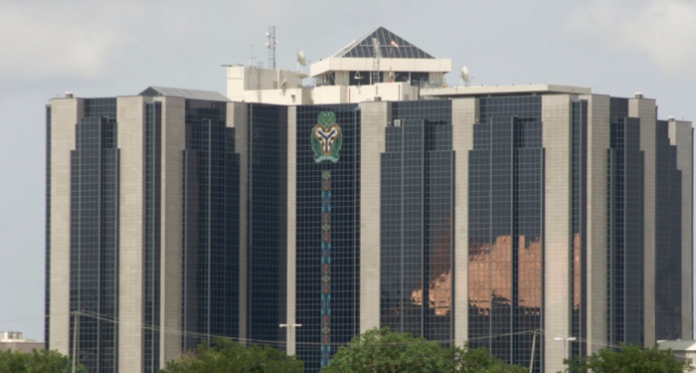
The naira extended its recovery streak against the US dollar, buoyed by fresh dollar injections from the Central Bank of Nigeria (CBN) aimed at easing pressure in the foreign exchange market.
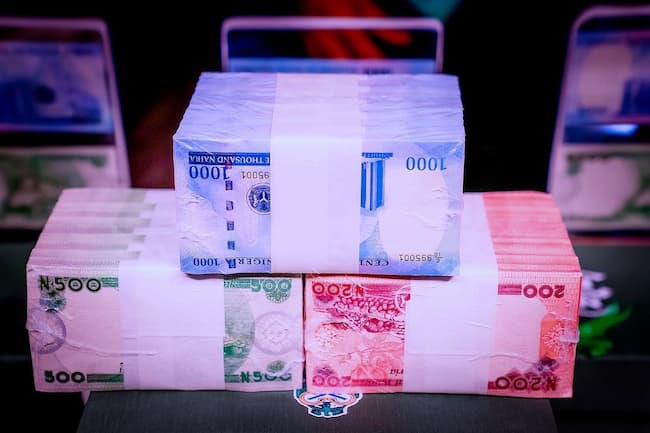
At the official FX window on Friday, the local currency appreciated slightly, closing at ₦1,532.51 per dollar, compared to ₦1,534.52/$1 recorded the previous day. The appreciation was supported by a combination of foreign portfolio inflows, improved exporter supply, and corporate demand management measures.
Data from the CBN showed that during intraday trading, the naira touched a high of ₦1,535/$1 and a low of ₦1,529.75/$1, reflecting stronger liquidity conditions. The apex bank further injected USD 166 million into the market through authorized dealers to curb rising dollar demand.
Despite the official market’s stability, the parallel market reflected a different narrative. The naira closed at ₦1,550/$1 in the black-market segment, marking a modest week-on-week depreciation due to growing demand for business travel and personal travel allowances. This widened the exchange rate gap between the official and parallel markets to about ₦23 per dollar.
Meanwhile, Nigeria’s external reserves continued on an upward trajectory, climbing for the sixth consecutive week. The reserves rose by USD 431.86 million to reach USD 40.72 billion, according to updated CBN data.
Financial analysts project that the naira will maintain relative stability in the near term, supported by stronger forex inflows and deliberate policy actions. Experts at Cordros Capital noted that sustained foreign portfolio investor (FPI) interest, alongside higher non-oil export receipts, would reinforce the currency’s resilience.
“We expect steady capital inflows from FPIs given existing carry trade opportunities and improved investor confidence. Additionally, limited incentives for naira speculation and a pickup in non-oil exports should sustain FX stability,” Cordros Capital said in its weekly note.
With growing liquidity and reserves back on the rise, the naira is expected to remain range-bound, provided that dollar inflows continue to strengthen and demand-side pressures remain contained.
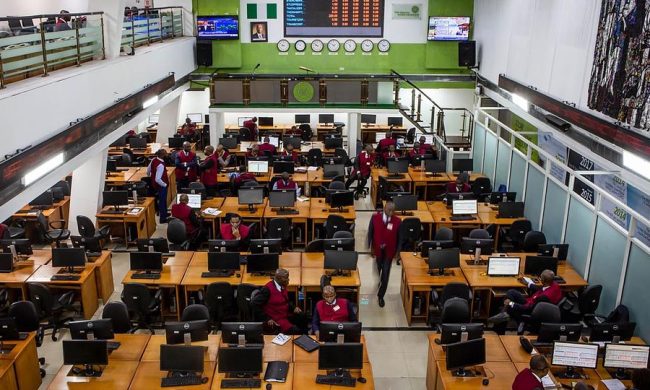
The Nigerian stock market ended the week on a bearish note as the Nigerian Exchange (NGX) All-Share Index declined by 0.46%, wiping off more than ₦425 billion in market value. This downturn was driven by persistent selling pressure, as cautious investors shifted focus towards fixed-income assets amid disinflationary signals in the economy.
Analysts observed that the equity market had shown signs of weakened risk appetite since the beginning of the week. Although bargain hunters initially targeted insurance stocks, profit-taking dominated trading sessions, sparking a broad-based sell-off across several sectoral indices.
By the close of Friday’s session, the NGX All-Share Index settled at 144,628.20 points, pulling the year-to-date return down to 40.52%. Insurance stocks were hit hardest, with NEM, CONAHLLPLC, ELLAHLAKES, MTNN, and 35 others recording losses.
Market turnover also reflected the downbeat sentiment, as trading activity slumped. The total volume of transactions dropped by 43.93%, while the total value of trades decreased by 36.80%, with stockbrokers reporting 1.37 billion units worth ₦13.76 billion exchanged across 31,717 deals.
UNIVINSURE dominated the activity chart in terms of volume, contributing 22.48% of the total market trades, followed by AIICO (8.59%), MBENEFIT (7.46%), VERITASKAP (5.13%), and SOVRENINS (4.52%).
On the losers’ list, NEM (-9.97%), STERLINGNG (-5.06%), INTBREW (-4.62%), MANSARD (-4.50%), and MTNN (-3.26%) were among the worst hit. Other major losers included FCMB (-1.35%), UCAP (-1.28%), UBA (-0.62%), OANDO (-0.48%), and FIDELITYBK (-0.24%).
Meanwhile, GTCO emerged as the most traded stock by value, accounting for 14.46% of the day’s total turnover. On the flip side, MBENEFIT led the advancers with a 10% gain, followed closely by IKEJAHOTEL (+9.95%), WEMABANK (+9.90%), DEAPCAP (+9.52%), TRIPPLEG (+8.32%), and DANGSUGAR (+6.57%).
In total, 39 equities declined while 30 posted gains, leaving market breadth in the negative territory. The heaviest losers of the day were LASACO, INTENEGINS, and LINKASSURE, which all slumped by 10%.
The market’s overall capitalization dropped by ₦425.05 billion, closing at ₦91.50 trillion. Sectoral performance was largely negative, with Insurance (-8.73%), Consumer Goods (-0.32%), Oil & Gas (-0.69%), Industrial (-1.32%), and Commodity (-0.57%) recording losses. Banking was the only sector that managed a modest gain of +0.56%.
Market experts note that the prevailing bearish trend reflects heightened investor caution and uncertainty over the market’s resilience, even as macroeconomic shifts continue to reshape asset allocation decisions.
Nigeria’s inflation rate eased by 34 basis points to 21.88% in July, according to the rebased Consumer Price Index (CPI) figures released by the National Bureau of Statistics (NBS) on Friday.
The moderation aligns with market expectations, driven by relative stability in the local exchange rate and the absence of fresh upward pressure from petroleum prices during the period.
Headline inflation slowed to 21.88% year-on-year from 22.22% in June. However, on a month-on-month basis, consumer prices rose by 1.99%, compared to 1.68% recorded in the previous month.
Food inflation accelerated by 77 basis points to 22.74% in July from 21.97% in June. Month-on-month, however, food inflation eased slightly to 3.12% from 3.25%, reflecting price declines in items such as vegetable oil, white beans, local rice, maize flour, guinea corn (sorghum), wheat flour, and millet.
Core inflation, which excludes volatile items like farm produce and energy, dropped by 143 basis points to 21.33% year-on-year from 22.76% in June. On a monthly basis, the core index fell sharply by 149 basis points to 0.97%.
The Nigerian Communications Commission (NCC) says its decision to return to market-driven pricing has attracted over $1 billion in telecom infrastructure investments in 2025.
Executive Vice-Chairman Aminu Maida disclosed this during a media session in Lagos on Friday, noting that the policy shift in January and February allowed mobile network operators to raise tariffs by up to 50% after nearly a decade of price stagnation.
“This act alone has allowed investments to flow in… we are talking about over a billion dollars in 2025 alone,” Maida said, adding that the change restored investor confidence and reversed years of underinvestment that had slowed network expansion and service quality.
He said the move aligns with the principles of the 2000 Telecom Policy and 2003 Communications Act, which promote fair pricing through market forces while safeguarding competition and consumer interests.
According to Maida, operators have begun receiving new equipment since June, with upgrades and site expansions already underway. The NCC tracks rollout progress through weekly calls with operators, intervening when they face regulatory bottlenecks.
Maida also highlighted operational challenges, including over 40 million litres of diesel consumed monthly to power base stations, total reliance on foreign exchange for importing all telecom equipment, and the need for better infrastructure protection.
He revealed that the NCC is working with the Office of the National Security Adviser to develop region-specific protection strategies, combining community engagement with stronger security presence in high-risk areas.
Telecommunication company MTN Nigeria Plc and Tier-1 names like Zenith Bank and GTCO were among other decliners that plunged the Nigerian Exchange market capitalisation downward during the early trading session on Friday.
The market index experienced a sharp intraday decline due to profit-taking activities that have persisted amidst earnings releases and interim dividend announcements. Investor sentiment has weakened amidst Broadstreet discussion on the extent of the looming market correction after a monster rally that lasted for almost one month.
At midday, the NGX All Share Index witnessed a bearish trend, Alpha Morgan Capital Limited said in an emailed note, reflecting a loss of -0.44%. Stockbrokers said this decline was mainly influenced by sell-offs in some mid- to high-capitalized stocks, led by a lightweight insurance name with minimal influence on market direction.
On the losers charts are MANSARD (-8.21%), AIICO (-5.25%), STERLINGNG (-5.19%), MTNN (-3.26%), UCAP (-1.03%), FCMB (-0.90%), INTBREW (-0.77%), ZENITHBANK (-0.28%), and GTCO (-0.21%), among others.
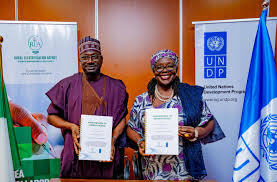
The United Nations Development Programme (UNDP) and the Rural Electrification Agency (REA) have signed a strategic agreement to speed up Nigeria’s clean energy transition, boost innovation, and train a new generation of renewable energy professionals.
Announcing the partnership on Friday, the REA said the Abuja signing ceremony established five focus areas: energising education and innovation, scaling skills development, supporting state-level policy reforms, unlocking innovative financing, and advancing research and public engagement.
REA Managing Director, Abba Aliyu, described the deal as a “game-changer” for Nigeria’s renewable energy ambitions, adding that it would expand local manufacturing, strengthen investment, and reduce governance costs.
UNDP Resident Representative, Ms. Elsie G. Attafuah, said the collaboration would go beyond powering communities to “igniting their full potential” through clean energy access, youth empowerment, and job creation. She highlighted opportunities to process Nigeria’s resources, such as lithium, into renewable energy products, and embed innovation in learning institutions.
Under the deal, UNDP’s University Innovation Pods and Maker Spaces will be integrated into REA’s Energising Education Programme to transform universities and teaching hospitals into innovation hubs. The initiative will also scale REA’s NEXTGEN programme to train clean energy professionals, support states in implementing the Electricity Act, and leverage blended finance to attract private capital into the sector.
Both agencies expressed confidence that the partnership will fast-track Nigeria’s journey to universal clean energy access and a greener economy.
Award-winning Nigerian gospel singer Mercy Chinwo and her husband, Pastor Blessed Uzochikwa, have announced the birth of their second child.
The couple shared the news in a joint Instagram post on Friday, expressing gratitude to God for what they described as “a precious gift.”
“The Lord has done it again! He has added to our joy, multiplied our laughter, and blessed us with the precious gift of a second baby,” the statement read. “His name will be lifted in our lineage forever… to the glory of God. Welcome, our precious gift.”
Mercy also celebrated her husband, calling him “an amazing father of two” and praising God’s continued goodness in their lives.
The couple, who married in August 2022, welcomed their first child in October 2023. Following the announcement, fans and fellow gospel artistes flooded their social media pages with prayers and congratulatory messages, hailing the new addition as another testimony of God’s faithfulness.
The Premier League’s back. The break was barely long enough to catch our breath, yet here we are again—stadiums ready, squads bolstered, and predictions flying faster than a Trent Alexander-Arnold cross used to before he swapped Anfield for Madrid.
And the elephant in the room? Liverpool. Arne Slot’s side didn’t just win the league last season—they bulldozed it. Now, with an even stronger squad and the wind of a record-breaking 21st title in their sails, the question practically writes itself: Who on earth is going to stop them?
A Summer of Statement Signings
Last season, Slot lifted the Premier League with just one major signing. This year, he’s been shopping like a man with a Black Friday coupon book. Florian Wirtz, Hugo Ekitike, Milos Kerkez—big names, big talent, big statement. And they might not be done yet. The Alexander Isak rumours haven’t gone away, and if that happens, good luck to whoever’s planning to defend against them.
It’s not just about names, though. FSG didn’t splash £300 million for the sake of headlines. These are players tailored to fit Liverpool’s system—Slot’s system—which already proved ruthless. They’ve strengthened in depth and quality, giving them the kind of squad that could handle both a Champions League run and a domestic title charge without blinking.
The Chasing Pack: Ready, but Really Ready?
Of course, Liverpool’s rivals haven’t spent the summer sunbathing. Arsenal’s big headline is Viktor Gyokeres, a proper No.9—finally. He’s exactly the kind of striker who could turn those frustrating draws into three points. For a club chasing its first league title since 2004, that’s huge. The Gunners have been “nearly there” for years. This season might be their best shot… if they can shake that creeping self-doubt that tends to show up every time the pressure cranks up.
Chelsea? Newly crowned world champions after their Club World Cup triumph, and Enzo Maresca now has a squad that’s starting to look like it actually makes sense. They’ve added firepower, tightened their backline, and for once, there seems to be a plan in place at Stamford Bridge. The danger? Fatigue. A deep Club World Cup run, plus the Champions League, can drain even the deepest squads.
Then there’s Manchester City. Pep Guardiola’s in rebuild mode—his first real one since arriving in England—and it hasn’t been smooth sailing. They’ve made moves, but nothing screams “dominance restored.” Some pundits even have them slipping as far as fourth.
Different Predictions, Same Theme
Ask ten pundits who’s winning the title and you’ll get at least six saying Liverpool.
Mark Doyle sees a tighter race but still tips the Reds, with Arsenal, City, and Chelsea filling the rest of the top four.
James Westwood predicts City will tumble to fourth, with Chelsea sneaking into third.
Amee Ruszkai thinks Liverpool will actually be better this season, which is a terrifying thought.
Sean Walsh refuses to bet against them—too much risk in predicting a flop.
Tom Maston still questions Arsenal’s mentality but expects a closer fight.
Joe Strange thinks losing Trent won’t stop them thanks to their “perfect” summer business.
Stephen Darwin says only a Van Dijk injury could derail them.
Krishan Davis is one of the few predicting an Arsenal triumph, in what he calls an “all-timer” of a title race.
Richard Martin? He reckons Liverpool have blown everyone “out of the water.”
Different nuances, but the recurring thread is obvious: Liverpool are favourites. Strong favourites.
Why Liverpool Feels Unstoppable Right Now
There’s something different about this team. Under Slot, Liverpool don’t just rely on high-press chaos—they’ve added more control, more tactical flexibility. They can grind you down or rip you apart in twenty minutes.
Last season’s dominance wasn’t a fluke. They had the league’s best defensive record, the most goals scored, and an almost eerie ability to win even when they weren’t at their best. Add in fresh talent, hungry to prove themselves, and you’ve got a squad that’s both battle-tested and buzzing with new energy.
And unlike some title-winning sides that stumble after tasting glory, this Liverpool looks hungrier. Maybe it’s the push to break Manchester United’s record of 20 English championships. Maybe it’s Slot’s insistence on standards. Whatever it is, you can feel it.
Potential Banana Skins
Of course, football has a way of humbling even the most dominant teams. Injuries can wreck plans—Van Dijk’s name comes up a lot here for a reason. A deep Champions League run could sap energy. And let’s be honest, the Premier League’s mid-table sides are no longer easy points; teams like Aston Villa, Brighton, and Newcastle can ruin a title bid with one inspired afternoon.
The other unknown is how Liverpool’s big spending gels over a long campaign. It’s one thing to sign quality—it’s another to keep the balance and dressing room harmony intact. Slot managed it brilliantly last year, but football history’s littered with teams who bought well and still fell apart.
The Emotional Element
This season isn’t just about tactics and transfer budgets—it’s about psychology. Liverpool play with a chip on their shoulder, a belief that they’re the standard-setters now. Arsenal’s challenge is overcoming their near-miss scars. City are trying to re-establish dominance in an era where the league’s never been more competitive. Chelsea want to prove their Club World Cup wasn’t just a golden week in an otherwise inconsistent era.
And that’s what makes this season so tantalising—it’s not just a title race, it’s a narrative battle. Legacies are on the line.
So, Who Wins It?
If you’re looking for a safe prediction, it’s Liverpool. Everything—from squad depth to recent form—points in their favour. But safe doesn’t always mean certain. Arsenal have closed the gap, City aren’t done yet, and Chelsea look dangerous if they can avoid burnout.
Still, right now, Liverpool are the team to beat. Maybe by Christmas we’ll be talking about an epic three-way battle. Or maybe, just maybe, we’ll be watching Slot’s side cruise towards history again.
Predicted Top Four for 2025-26 (Most Common Pundit Picks):
Liverpool – Relentless, reinforced, ready.
Arsenal – Stronger squad, but questions linger.
Chelsea – Building something real, if fatigue allows.
Manchester City – Rebuilding under Pep, still dangerous but less dominant.
Dangote Cement Plc has promised full medical care and compensation for Mrs. Ruth Otabor, a recent Auchi Polytechnic graduate who lost a leg after being hit by one of the company’s trucks in Auchi, Edo State.
In a statement on Thursday, the company said senior officials and its insurance team promptly visited the accident scene, met with law enforcement, and later visited the victim and her family at the Irrua Specialist Teaching Hospital.
“This action reflects our unwavering commitment to the well-being of those affected,” the statement read. “We are ensuring full support for Mrs. Otabor, including comprehensive medical care and appropriate compensation, in line with Dangote Group’s welfare policy. Our thoughts remain with her and her loved ones, and we wish her a full and speedy recovery.”
SaharaReporters earlier reported that Otabor’s other leg may also require amputation. The Edo State Police Command confirmed the truck driver — alleged to be underage and unlicensed — has been charged to court, where he pleaded guilty to three of four counts. The case was adjourned to August 21.
The motorcycle rider carrying Otabor at the time of the crash is also said to be in critical condition.
The Federal Government is deliberating between a full-scale rehabilitation or a complete rebuild of Lagos’ iconic Third Mainland Bridge, alongside the Carter Bridge, following alarming findings of critical structural damage beneath the water.
Minister of Works, David Umahi, revealed the development during a presentation to the Federal Executive Council (FEC), where he sought approval for the project under an Engineering, Procurement, Construction, and Financing (EPC+F) arrangement.
According to Umahi, underwater inspections conducted in 2013 and 2019 exposed severe deterioration of the bridge piers — originally supported by sand — due to illegal sand dredging, strong ocean currents, and prolonged corrosion.
While rehabilitation of the Third Mainland Bridge is estimated at ₦3.8 trillion, constructing a new replacement is projected at ₦3.6 trillion. Carter Bridge, however, has been deemed beyond repair, with a feasible new build costing about ₦359 billion.
“The Carter Bridge was given an estimated ₦380 billion for rehabilitation, but experts said it wasn’t viable. The realistic option was ₦359 billion for a brand-new bridge, with financing discussions already ongoing with the Dutch bank,” Umahi explained.
“For Third Mainland Bridge, rehabilitation was pegged at ₦3.8 trillion, while a new structure would cost ₦3.6 trillion. We approached FEC for approval to pursue both options under an EPC+F arrangement,” he added.
FEC’s Green Light
The minister confirmed that the FEC granted four approvals for the projects, notably permitting seven specialist contractors to carry out comprehensive structural investigations, prepare detailed designs, and submit bids for either reconstruction or rehabilitation.
Funding will follow a public-private partnership (PPP) model, with private sector investment expected to play a key role. Umahi disclosed that selective procurement would be used for the EPC+F process, while financing talks with Deutsche Bank were already underway.
“FEC has allowed us to engage at least seven specialist firms for full-scale design and investigation works. We will proceed under a selective procurement method to source EPC+F proposals,” Umahi stated.
Why Third Mainland Bridge Matters
Built between 1976 and 1990, the Third Mainland Bridge was Africa’s longest until 1996 when Cairo’s 6th October Bridge was completed. It remains a critical transport link between Lagos Island and the mainland, carrying hundreds of thousands of vehicles daily.
Years of heavy traffic and environmental exposure have left the structure vulnerable. In recent years, the bridge has undergone multiple repair phases, including a 110-day rehabilitation between May and September, which saw lane closures in both directions. On 8 August, the Federal Government imposed a ban on heavy-duty vehicles using the bridge over safety concerns.
Other Nationwide Infrastructure Approvals
Umahi also revealed that similar major road and bridge projects are underway nationwide. These include the Kano–Katsina Road (₦68 billion for the first section, ₦96.155 billion for the second), as well as approved interventions for the Jalingo Bridge in Taraba, Iddo Bridge in Lagos, and the Keffi Flyover.
The minister reaffirmed the government’s commitment to tackling Nigeria’s infrastructure deficit, stressing that safe and reliable transportation links are vital for economic growth and public safety.
Nigeria’s short-term benchmark interest rates surged on Thursday as tighter liquidity conditions gripped the financial system, driven largely by deposit money banks (DMBs) ramping up borrowings from the Central Bank of Nigeria (CBN).
With no major cash inflows recorded, money market rates broke past the 32% mark — a level rarely seen in recent months. Analysts project that without any significant liquidity injections in the coming days, rates are likely to remain elevated into next week.
This latest development follows recent open market operations (OMO) and Treasury bill issuances that further drained liquidity from the system. As a result, commercial banks, which had previously been in a position to deposit surplus funds, have now turned to the CBN’s Standing Lending Facility (SLF) for the third straight trading session this week.
Data from AIICO Capital Limited revealed that the deficit position in the banking system widened to ₦35.30 billion, while banks’ total borrowings from the CBN’s SLF spiked to ₦311.53 billion.
Funding Costs Climb as Interbank Rates Show Mixed Trends
The rising liquidity crunch has pushed funding costs higher. The Overnight Policy Rate (OPR) jumped by 20 basis points to 32.30%, while the overnight lending rate increased by 10 basis points to 32.60%.
According to Cowry Asset Management Limited, interbank rates (NIBOR) posted mixed movements across major tenors. The overnight and 6-month rates climbed by 43 bps and 19 bps respectively, while the 1-month and 3-month tenors fell by 5 bps and 11 bps.
Market watchers say that unless there is a major liquidity injection, rates are expected to hold around these elevated levels.
Meanwhile, the Nigerian Interbank Treasury Bills True Yield curve advanced across all maturities. Mild investor activity in the secondary market saw the average yield ease slightly by 1 basis point to 17.93%, even as the overall trend remained upward.
Analysts maintain that liquidity pressures, coupled with CBN’s monetary tightening measures, will continue to keep short-term interest rates elevated in the near term.
The United Nations Children’s Fund (UNICEF) has raised alarm over Nigeria’s low breastfeeding rates, revealing that 90% of Nigerian women have never breastfed their babies. UNICEF’s Communication Officer for the Enugu Field Office, Dr. Ijeoma Onuoha-Ogwe, disclosed the figures during a virtual Zonal Media Dialogue on the 2025 World Breastfeeding Week, organised in collaboration with the Broadcasting Corporation of Abia State.
She noted that only one in three babies in Nigeria are given breast milk within the first hour after birth, and the same proportion are exclusively breastfed for the first six months. According to her, early initiation of breastfeeding dropped from 42% in 2018 to 36% in 2023, while exclusive breastfeeding rates stagnated at 29% in both years.
Dr. Ijeoma stressed that breastfeeding should ideally continue for up to 24 months, as recommended by UNICEF and the World Health Organisation (WHO), but many Nigerian babies are weaned too early. She said the shortfall is linked to poor workplace policies, with 26 out of 36 states yet to provide paid maternity leave, breastfeeding breaks, and other enabling conditions.
“Many workplaces lack policies and facilities for effective breastfeeding,” she said, urging the government and employers to invest in support systems, workplace practices, and community networks to ensure no mother is left behind.
Earlier, the Head of Primary Health Care, Quararafa Quarters, Makurdi, Mrs. Deborah Verve, emphasised the importance of colostrum—the nutrient-rich first milk—which she described as “the baby’s first vaccine.” She said her clinic routinely sensitises pregnant and nursing mothers on exclusive breastfeeding from birth to six months.
Verve explained that the facility monitors compliance through feedback and the health of babies, noting that mothers often report visible health improvements in their children when they follow breastfeeding guidelines.
This year’s World Breastfeeding Week is themed “Prioritise Breastfeeding: Create Sustainable Support Systems.”
(FILES) Russian President Vladimir Putin (R) and US President Donald Trump are pictured before a meeting in Helsinki, on July 16, 2018. Putin told his US counterpart Donald Trump in a phone call on February 12, 2025 that "peaceful negotiations" on ending the Ukraine conflict were possible, the Kremlin said. "President Putin ... agreed with Trump that a long-term settlement could be reached through peaceful negotiations," the Kremlin said in its readout of the call, which it said lasted almost one-and-a-half hours. (Photo by Brendan Smialowski / AFP)
US President Donald Trump and Russian President Vladimir Putin will meet on Friday at Elmendorf Air Force Base, Alaska, in a high-stakes summit that could shape the future of the war in Ukraine.
It is Putin’s first trip to Western territory since launching the invasion of Ukraine in February 2022 — a conflict that has claimed tens of thousands of lives and in which Russia has recently made fresh territorial gains.
The meeting, proposed by Putin but hosted at Trump’s invitation, comes amid heightened global scrutiny. European leaders and Ukrainian President Volodymyr Zelensky, who was excluded from the summit, are watching closely. Zelensky has refused Trump’s calls to cede territory seized by Russia.
Trump has described the talks as a “feel-out meeting” to gauge Putin’s intentions.
“If it’s a bad meeting, it’ll end very quickly. If it’s a good meeting, we could have peace in the pretty near future,” Trump told reporters Thursday, estimating a 25% chance of failure.
The US president, who has pledged to consult European allies and Zelensky before finalising any deal, said any settlement would be discussed in a three-way meeting with Ukraine’s leader to “divvy up” disputed territory.
Trump’s history with Putin remains contentious. At a 2018 summit in Helsinki, Trump drew fierce criticism for appearing to side with Putin over US intelligence agencies on election interference. Since returning to the White House, he has maintained that he could end the war within 24 hours, blaming predecessor Joe Biden for the conflict.
Despite frequent contacts with the Kremlin and a combative February 28 White House meeting in which he publicly chastised Zelensky, Trump has expressed frustration at Putin’s refusal to compromise. He has warned of “very severe consequences” if Moscow rejects a ceasefire but agreed to meet in Alaska nonetheless.
Historic and Strategic Venue
Talks are scheduled to begin at 11:30 a.m. (1900 GMT) at Elmendorf, the largest US military base in Alaska and a former Cold War surveillance hub monitoring the Soviet Union. The location carries symbolic weight — the US purchased Alaska from Russia in 1867, a historical land deal Moscow has recently invoked in territorial rhetoric.
According to the Kremlin, the two leaders will meet privately with interpreters before a working lunch with aides. Neither is expected to leave the base for Anchorage, where protesters have displayed pro-Ukraine messages.
Putin’s travel remains limited due to an International Criminal Court arrest warrant, though the US — not a party to the ICC — has temporarily eased certain sanctions to allow his delegation to enter and access financial services in Alaska.
Criticism and Caution
The summit represents a marked departure from the stance of many Western leaders, who have insisted that Ukraine be at the table for any negotiations about its future. Zelensky on Tuesday called the Alaska meeting “a personal victory” for Putin, saying the trip ends his isolation and delays sanctions Trump had promised without progress.
Secretary of State Marco Rubio has urged the inclusion of binding security guarantees for Ukraine, though Trump has played down the idea.
Daniel Fried, a former US diplomat now with the Atlantic Council, cautioned that Putin could seek to exploit Trump’s deal-making instincts.
“Putin is a master of the new shiny object which turns out to be meaningless,” Fried said, warning that any apparent concessions should be treated with scepticism.
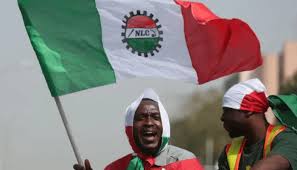
The Nigeria Labour Congress (NLC) has issued a seven-day ultimatum to the Federal Government, threatening a nationwide strike over the alleged diversion of 40% of workers’ contributions to the Nigeria Social Insurance Trust Fund (NSITF) into the national treasury.
In a communiqué issued Thursday, NLC President Joe Ajaero accused the government of violating the NSITF Act and undermining workers’ social protection rights. He insisted pension funds are “deferred wages, not government revenue,” warning that any further interference would spark industrial action.
The union also demanded the immediate constitution of the National Pension Commission’s (PenCom) Governing Board, warning that the current leadership vacuum leaves billions in retirement savings vulnerable to mismanagement and political interference.
PenCom’s Head of Corporate Communications, Ibrahim Buwal, countered that the Contributory Pension Scheme remains intact and continues to grow, stressing, “Nobody’s money is missing.” He said appointing a board is the responsibility of the Federal Government, not the regulator.
The Nigeria Employers’ Consultative Association (NECA) backed the NLC’s call, noting that the Pension Reform Act requires the board to be constituted. NECA’s Director-General, Adewale-Smatt Oyerinde, urged the president to act, citing workers and employers as the scheme’s only stakeholders.
The NSITF, however, declined immediate comment. Manager of Actuaries, Planning and Research, Emmanuel Ulayi, said there was no official response yet to the ultimatum, while the Head of Corporate Affairs, Alexandra Mede, disclosed she was hospitalised.
The dispute comes amid growing unrest in the pension sector. In July, labour unions in Ogun State gave the government 72 hours to halt the rollout of a contributory pension scheme until ₦82bn in arrears is cleared.
The NLC communiqué also addressed other matters, including dissolving its Edo State Council over alleged misconduct, and criticising government policies it said had worsened inflation, unemployment, and insecurity.
…Union issues seven-day ultimatum over alleged 40% pension fund diversion; NSITF silent
The Nigeria Labour Congress (NLC) has issued a seven-day ultimatum to the Federal Government, threatening a nationwide strike over what it described as the unlawful diversion of 40 per cent of workers’ contributions from the Nigeria Social Insurance Trust Fund (NSITF) into the national treasury.
The union is also demanding the immediate constitution of a governing board for the National Pension Commission (PenCom), warning that failure to meet its demands will trigger industrial action.
NLC President, Joe Ajaero, in a communiqué on Thursday, accused the government of violating the statutes establishing the NSITF, which was created as a safety net for workers in cases of injury, job loss, or other emergencies.
“Pension funds are deferred wages, not government revenue,” Ajaero said, alleging that the diversion amounted to “an assault on workers’ social protection rights.”
The union warned that the leadership vacuum at PenCom increases the risk of mismanagement and political interference in the pension sector, where billions of naira in retirement savings are at stake.
PenCom, NECA Respond
Reacting, PenCom’s Head of Corporate Communications, Ibrahim Buwal, said the appointment of a governing board is a Federal Government prerogative, not that of the regulator. He dismissed claims of missing funds, insisting that assets under the Contributory Pension Scheme (CPS) “remain secure and continue to grow” through regular contributions and profitable investments.
The Nigeria Employers’ Consultative Association (NECA) backed the NLC’s demand for a PenCom board, describing the delay as a violation of the Pension Reform Act. NECA Director-General, Adewale-Smatt Oyerinde, urged the government to act swiftly, noting that employers and workers are the only contributors to the pension scheme and therefore key stakeholders.
NSITF Maintains Silence
The NSITF has yet to issue an official response. Manager of Actuaries, Planning and Research, Emmanuel Ulayi, confirmed this to our correspondent, while the Fund’s Head of Corporate Affairs, Alexandra Mede, said via text that she was hospitalised.
Broader Labour Discontent
The NLC also ratified the dissolution of its Edo State Council over alleged unethical conduct and anti-union activities, appointing a caretaker committee to oversee the branch.
In its wider review of national affairs, the Congress accused the government of implementing policies that have worsened inflation, unemployment, hunger, and insecurity, and eroded public services. It called for a people-centred development model anchored on living wages, industrial revival, and strong social protection systems.
The communiqué further alleged attempts by the administration to amend the NSITF Act for full government control of workers’ funds, describing this as “a direct attack on workers’ rights” and vowing to use all legitimate means to resist it.
Lafarge Africa Plc has teamed up with the Ogun State Government to plant one million trees across 20 local government areas as part of the 2025 Ogun Tree Planting Day themed ‘Grow Trees, Sustain Life’.
The initiative, aimed at promoting environmental sustainability through afforestation, included beautifying the second entrance of the state secretariat at Oke-Mosan, Abeokuta.
Lafarge Africa’s CEO, Lolu Alade-Akinyemi, represented by the firm’s Head of Sustainability, Gabriel Pollyn, said the move aligns with Lafarge’s decarbonisation and quarry rehabilitation efforts, adding that the company plans to plant 150,000 native trees over five years in Ogun and Oyo States.
Ogun Commissioner for Forestry, Taiwo Oludotun, said the exercise responds to local climate challenges such as prolonged dry seasons, flooding and rising temperatures. Lafarge Africa also pledged continued community engagement to ensure the survival of the seedlings.
…Launches $50m Fund to Empower Nigerian Women in Digital Trade
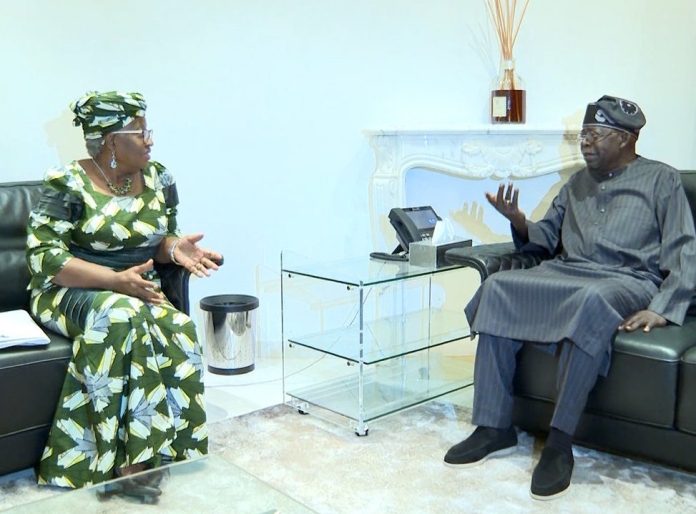
The Director-General of the World Trade Organisation (WTO), Dr Ngozi Okonjo-Iweala, has lauded President Bola Tinubu for stabilising Nigeria’s economy, describing his reforms as steps in the right direction.
Speaking to journalists in Abuja on Thursday after a closed-door meeting with the President, the former Minister of Finance, who has held the position twice, said the administration had worked hard to restore stability, which she noted was critical for sustainable economic growth.
“We think the President and his team have worked hard to stabilise the economy, and you cannot improve an economy unless it’s stable. So he has to be given credit,” she said. “The reforms have been in the right direction. What is needed next is growth, coupled with social safety nets to cushion the hardship reforms have brought on citizens.”
Okonjo-Iweala urged the Federal Government to prioritise programmes that would protect the most vulnerable while creating jobs and increasing disposable income for Nigerians.
$50m Fund for Women Exporters
Earlier, in collaboration with First Lady Senator Oluremi Tinubu, the WTO chief launched the $50 million Women Exporters in the Digital Economy (WEIDE) Fund, designed to boost women-led enterprises in the global digital marketplace. Nigeria is one of only four countries selected for the initiative, alongside Jordan, Mongolia, and the Dominican Republic.
Co-managed by the WTO and the International Trade Centre (ITC), the scheme—coordinated locally by the Ministry of Trade and Investment and the Nigerian Export Promotion Council (NEPC)—received 67,000 applications from Nigerian women. Of these, 146 were selected for the inaugural cohort.
Sixteen beneficiaries in the “Booster Track” category will each receive up to $30,000 in grants alongside 18 months of technical and business support. Another 100 entrepreneurs will receive $5,000 each, plus a year of business development assistance.
“This is just the beginning,” Okonjo-Iweala said. “We want Nigerian women to weather economic challenges, create jobs, and contribute more to the nation’s growth.”
Tapping into Trillion-Dollar Opportunities
Okonjo-Iweala challenged Nigeria and Africa to position themselves in the $4.25 trillion global digital trade sector, warning that Africa’s share currently stands at just one percent. She emphasised the need for better internet access, affordable electricity, and stronger digital infrastructure to unlock opportunities in digitally delivered services such as IT, consulting, education, and health.
“No nation can truly digitise without a steady supply of electricity,” she said, praising Nigeria’s proposed $2 billion, 90,000-kilometre national fibre optic network but stressing that power reliability remained a critical hurdle.
Highlighting gender gaps, she noted that only 30 per cent of surveyed Nigerian tech companies are owned by women and up to one-third have no female employees. She called for inter-ministerial cooperation to boost women’s participation in the digital economy, arguing that economic empowerment could also improve Nigeria’s low ranking—128th out of 148—in the latest Global Gender Gap Report.
Backed by donors including the United Arab Emirates, the State of Qatar, and the FIFA–Qatar World Cup Legacy Fund, the WEIDE Fund, she said, aims to “give women the tools, knowledge, networks, and resources they need to access global value chains, so their businesses are not just surviving but thriving.”