






Home Blog Page 11

Petrol Price Dispute Escalates As Dangote Levels Fresh Allegations Against NMDPRA Chief

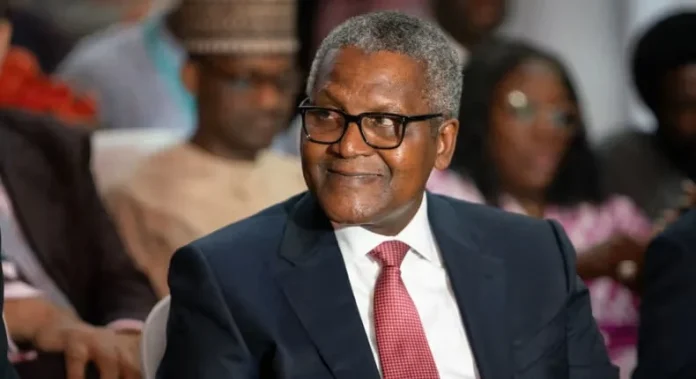
The ongoing tension in Nigeria’s downstream petroleum sector intensified on Sunday after the President of the Dangote Group, Alhaji Aliko Dangote, made fresh allegations against the Chief Executive of the Nigerian Midstream and Downstream Petroleum Regulatory Authority (NMDPRA), Mr Farouk Ahmed, accusing him of financial impropriety and economic sabotage.

Dangote alleged that Ahmed paid about $5 million in tuition fees for the secondary school education of his four children in Switzerland and called for a full investigation and public explanation of the source of the funds.

Speaking during a press briefing at the Dangote Petroleum Refinery in Lekki, Lagos, the billionaire industrialist said Ahmed should appear before the Code of Conduct Tribunal or any other relevant authority to account for the alleged expenditure, which he described as inconsistent with earnings from public service.

According to Dangote, the allegation, if left unaddressed, could further erode public trust and investor confidence in Nigeria’s petroleum regulatory framework.

“I have had people bringing complaints about a regulator who allegedly spent $5 million to educate his four children in secondary school over six years,” Dangote said. “It is difficult to imagine how someone in public service could afford such an amount without attracting serious scrutiny.”

He argued that such spending, if proven, would ordinarily trigger investigations by tax authorities, noting that even private business owners would be required to justify the source of such funds.

“When you look at his income, it does not align with paying this kind of fee. Even if I were to pay $5 million for my children’s education, the tax authorities would certainly ask questions,” Dangote stated.

The Dangote Group president also contrasted the alleged expenditure with the financial realities faced by many Nigerians, particularly in northern communities.

“Many families are struggling to pay N100,000 in school fees, and children are staying out of school because of that amount. It is troubling that someone who has spent his career in government service is alleged to have paid $5 million for secondary school education,” he said.

Dangote added that his own children attended secondary schools in Nigeria, stressing that he was not calling for Ahmed’s removal but for transparency and accountability.

“I am only asking for a proper investigation. He should be required to explain himself and show that he has not compromised his office to the detriment of Nigerians. What is happening amounts to economic sabotage,” he said.

He further warned that if the allegation was denied without investigation, he would release details of the alleged tuition payments and pursue legal steps to compel the schools involved to disclose records of payments linked to Ahmed.

The allegation is not new. In July, a group had similarly accused the NMDPRA chief of spending over $5.5 million on the foreign education of his children, claims the agency dismissed at the time as false and malicious.

Reacting then, the NMDPRA described the accusations as an orchestrated smear campaign against Ahmed and the authority’s leadership.

Beyond the personal allegations, Dangote used the briefing to criticise what he described as deep-rooted regulatory failures and vested interests in the downstream petroleum sector. He accused powerful actors of benefiting from fuel imports at the expense of domestic refining and national development.

“It is troubling that African countries, including Nigeria, still rely heavily on imported refined products. The volume of imports being allowed into the country is unethical and does a disservice to the economy,” he said.

He called for a strict separation between regulatory oversight and commercial interests, warning that allowing traders to influence regulation would undermine the integrity of the sector.

“A trader should never be a regulator. Despite the issuance of 47 refinery licences, no new refineries are being built because the environment is not conducive,” Dangote added.

He maintained that local refining would ultimately benefit Nigerians, even if fuel importers incur losses, assuring that the Dangote Refinery was working round the clock to ensure recent reductions in gantry prices were reflected at retail outlets nationwide.

When contacted for a response on Sunday, the NMDPRA spokesman, Mr George Ene-Ita, declined to comment, saying only: “For now, no comment.”
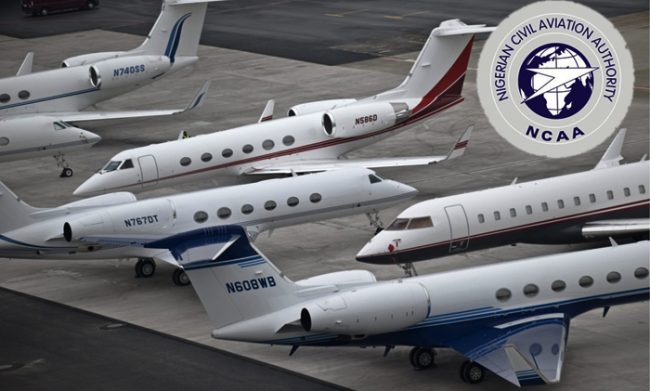
Nigeria’s Serviceable Aircraft Drop From 65 to 44

7% Surcharge On Imported Aircraft, Spares Delays Clearance - Onyema

Nigeria has emerged as the country with the highest number of grounded aircraft globally, with only 44 serviceable planes currently in operation, according to industry data.

Findings show that in 2022, local airline operators had 65 serviceable aircraft out of a total fleet of 107. However, data from CH-Aviation indicate that by 2025, Nigeria’s registered aircraft fleet had grown to 123, while the number of grounded planes rose to 79, leaving just 44 aircraft available for commercial operations across 15 scheduled airlines.

The situation places Nigeria ahead of Hong Kong on the global list of grounded aircraft, with Hong Kong recording 151 grounded planes out of a fleet of 244.

The sharp decline in serviceable aircraft has disrupted air travel nationwide, particularly during the yuletide season, with passengers facing frequent delays and flight cancellations on major domestic routes.

Confirming the industry-wide reduction in fleet capacity, the chief financial officer of Aero Contractors, Charles Grant, said the combined fleet of Nigeria’s scheduled airlines has continued to shrink. He disclosed that the aviation industry generated an estimated revenue of between 400 million dollars and 700 million dollars in 2024.

Grant said each serviceable aircraft generates between 10 million dollars and 18 million dollars annually and supports about 15,200 jobs, representing roughly 0.01 percent of Nigeria’s aviation workforce. He added that most domestic airlines now operate with only four to six active aircraft, a number far below national demand.

According to him, the reduced fleet size is not a deliberate business decision but the outcome of harsh operating conditions. He said aircraft shortages have resulted in delays, cancellations, missed connections and declining passenger confidence in local airlines.

Grant noted that the industry’s growth remains constrained by structural challenges, warning that unreliable service, job losses and declining competitiveness would persist unless underlying cost pressures are addressed.

Nigeria’s aviation sector, which plays a critical role in connecting its population of over 200 million and supporting trade, oil and tourism activities, has steadily lost aircraft capacity over the past decade. Available records show that about 90 aircraft were operational in 2014, but the COVID-19 pandemic grounded nearly 40 percent of the fleet between 2020 and 2022.

By 2025, fleet attrition accelerated further, driven largely by foreign exchange scarcity and rising operating costs. The naira’s depreciation from about N410 to the dollar in 2022 to over N1,600 significantly increased dollar-denominated expenses such as aircraft leasing and maintenance.

Industry data also show that more than 65 percent of Nigeria’s aircraft are over 15 years old, beyond their optimal operational lifespan. Global post-pandemic shortages of spare parts, combined with regulatory inspections by the Nigerian Civil Aviation Authority, have further sidelined dozens of aircraft.

BizWatch Nigeria: News of the Week in 5 Minutes | Sun, Nov 2nd – Sat, Nov 8th, 2025

Another week wrapped and as always, Nigeria kept the headlines busy. From government policy shifts sparking reactions, to business movements, tech updates, and the viral moments that lit up social media, this week came with plenty of conversation starters.

If you missed a few stories, don’t worry. We’ve pulled together the biggest highlights and major talking points into a sharp, simple 5-minute recap to keep you informed, engaged, and ahead of your timeline.

No long talk. No unnecessary extras. Just the key stories, delivered the BizWatch way.

🎥 Press play and catch up on everything that mattered this week. Staying informed has never been this smooth.

BizWatchWeekly #NigeriaNews #TopStories #NewsIn5 #Politics #Business #Economy #Tech #ViralUpdates #StayInformed #TrendingNow #FYP #MustWatch #NewsRecap #SmartNews #YouTubeShorts

🎥 Watch here –

BizWatch Nigeria: News of the Week in 5 Minutes | Sun, Oct 26th – Sat, Nov 1st, 2025

Another week wrapped, and trust Nigeria to never run out of gist. From policy moves that sparked reactions, to market shifts, business updates, tech buzz, and the viral moments that had everyone talking, this week delivered. If you blinked and missed the conversations, relax.

We’ve packed the major stories and trending highlights into a sharp, simple 5-minute roundup to keep you informed and ahead of the timeline.

No unnecessary talk. No overload. Just the important stories, curated the BizWatch way.

🎥 Hit play and catch up on everything that mattered this week, because staying informed has never been this smooth.

BizWatchWeekly #NigeriaNews #TopStories #NewsIn5 #Politics #Business #Economy #Tech #ViralUpdates #StayInformed #TrendingNow #FYP #MustWatch #NewsRecap #SmartNews #YouTubeShorts

🎥 Watch here

BizWatch Nigeria: News of the Week in 5 Minutes | Sun, Oct 19th – Sat, Oct 25th, 2025

Another week, another round of headlines that kept Nigerians talking; from major shifts in the economy and government decisions that stirred debates, to business trends, tech updates, and the viral stories that lit up your timeline.

If you missed it all, don’t stress. We’ve squeezed the biggest news and buzzworthy moments into a crisp, five-minute recap, so you stay informed, entertained, and ahead of the curve.

No fluff. No filler. Just the stories that matter, told the BizWatch way.

🎥 Sit back, press play, and catch up on everything that made the news this week, because being informed never looked this good.

BizWatchWeekly #NigeriaNews #TopStories #NewsIn5 #Politics #Business #Economy #Tech #ViralUpdates #StayInformed #TrendingNow #FYP #MustWatch #NewsRecap #SmartNews #YouTubeShorts

🎥 Watch here –

BizWatch Nigeria: News of the Week in 5 Minutes | Sun, Oct 5th – Sat, Oct 11th, 2025

It’s been one week of drama, decisions, and developments across Nigeria; from major economic updates shaping the markets, to political highlights that had everyone talking, and viral moments you just couldn’t scroll past.

If you missed the buzz, don’t worry; we’ve packed it all into one sharp, five-minute recap that keeps you informed, entertained, and ahead of the curve.
No fluff, no filler, just the stories that matter, told the BizWatch way.

🎥 Sit back, press play, and catch up on the biggest headlines of the week, because being informed never looked this good.

BizWatchWeekly #NigeriaNews #TopStories #NewsIn5 #Politics #Business #Economy #Tech #ViralUpdates #StayInformed #TrendingNow #FYP #MustWatch #NewsRecap #SmartNews #YouTubeShorts #CristianoRonaldo #Ronaldo #CR7 #Cristiano #Football

BizWatch Nigeria: News of the Week in 5 Minutes | Sun, 28th Sept – Sat, 4th Oct, 2025

From key economic updates to the hottest stories making waves, here’s your news recap in just 5 minutes. Straight to the point, no fluff, just the highlights you need to stay informed and ahead.

🎥 Press play and get caught up now!

BizWatchWeekly #NigeriaNews #TopStories #NewsIn5 #Politics #Business #Economy #Tech #ViralUpdates #StayInformed #TrendingNow #FYP #MustWatch #NewsRecap #SmartNews #YouTubeShorts

🎥 Watch here –

BizWatch Nigeria: Weekly News in 5 Minutes | Sun, 7th – Sat, 13th September, 2025

From breaking business stories and political highlights to tech shifts and viral social trends, we’ve wrapped the week’s biggest updates into just 5 minutes.

Quick, sharp, and straight to the point, everything you need to stay updated. Fast, concise, and all you need to stay informed.

🎥 Watch now and stay ahead

BizWatchWeekly #NigeriaNews #TopStories #NewsIn5 #Politics #Business #Economy #Tech #ViralUpdates #StayInformed #TrendingNow #FYP #MustWatch #NewsRecap #SmartNews #YouTubeShorts

BizWatch Nigeria: News of the Week in 5 Minutes | Sun, 21st – Sat, 27th September, 2025

From major economic headlines to trending stories that got everyone talking, we’ve got the highlights, packed into a crisp 5-minute video.

No long talk, just the news you need to stay informed and ahead.

🎥 Hit play and catch up now!

BizWatchWeekly #NigeriaNews #TopStories #NewsIn5 #Politics #Business #Economy #Tech #ViralUpdates #StayInformed #TrendingNow #FYP #MustWatch #NewsRecap #SmartNews #YouTubeShorts

BizWatch Nigeria: Weekly News in 5 Minutes | Sun, 31st, August – Sat, 6th September, 2025

From business updates and political moves to tech trends and social buzz, we’ve packed the week’s top highlights into just 5 minutes.

Quick, sharp, and straight to the point, everything you need to stay updated.

🎥 Watch now and stay ahead!

BizWatchWeekly #NigeriaNews #TopStories #NewsIn5 #Politics #Business #Economy #Tech #ViralUpdates #StayInformed #TrendingNow #FYP #MustWatch #NewsRecap #SmartNews #YouTubeShorts

Watch here 👉

Interswitch Strengthens Pan-African Collaboration, Welcomes Ethiopian National Payment Switch – EthSwitch For Strategic Knowledge-Exchange Visit.

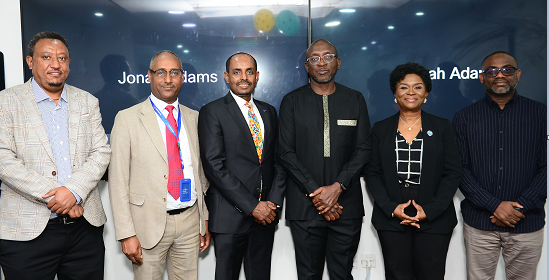
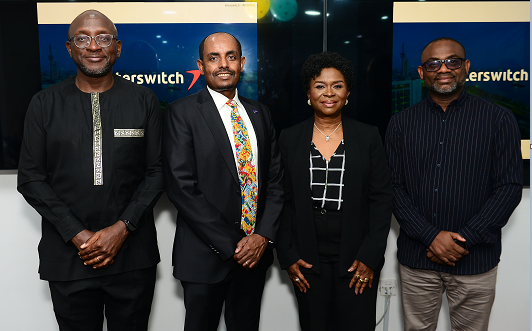
Interswitch, Africa’s leading payments and digital commerce company, recently welcomed a high-level delegation from EthSwitch, the national payment switch of Ethiopia, to its Lagos headquarters for an immersive exposure and knowledge-exchange session. The visit underscores Interswitch’s ongoing commitment to strengthening payment ecosystems across the continent through collaboration, capacity building, and shared innovation.

The engagement formed a significant part of EthSwitch’s efforts as it develops its next 5-year strategy and 15-year roadmap, designed to modernize Ethiopia’s payments landscape and deepen financial inclusion. By visiting Interswitch, widely regarded as one of Africa’s most successful and resilient payment infrastructure providers, the delegation sought practical insights into proven models that can support their long-term transformation journey.

During the session, the EthSwitch team explored Interswitch’s business architecture, corporate governance frameworks, product development approach, technology stack, operational excellence standards, and platform security systems. These learnings reflected the breadth of Interswitch’s capabilities and the company’s pioneering role in advancing secure and interoperable payment systems across Africa for over two decades.

Akeem Lawal, Managing Director, Payment Processing & Switching (Interswitch Purepay), delivered a comprehensive overview of the organisation’s diverse business lines, demonstrating how Interswitch’s integrated ecosystem continues to power daily transactions, enable innovation, and support partners in driving scalable digital payment solutions.  

Lawal reaffirmed Interswitch’s dedication to fostering collaboration with institutions across Africa and emphasized that knowledge-sharing sessions like this play an essential role in strengthening regional interoperability, accelerating digital transformation, and advancing the continent’s financial services industry. He said,

 “At Interswitch, we believe that Africa’s progress is accelerated when institutions learn from one another and work together toward shared goals. Engagements like this are invaluable because they deepen interoperability, inspire innovation, and strengthen the digital foundations that power our continent’s financial ecosystem. We remain committed to fostering these collaborations and supporting partners like EthSwitch as we collectively drive Africa’s digital transformation forward.”

Chief Executive Officer, EthSwitch, Yilebes Addis, highlighted Ethiopia’s ambitions for its evolving financial system, emphasising a focus on driving innovation, expanding critical infrastructure, and enhancing ecosystem efficiency. The insights gained from the visit to Interswitch were noted as valuable input for shaping EthSwitch’s strategic blueprint. Yilebes also welcomed the prospects for deeper collaboration with Interswitch, reflecting a shared commitment to strengthening Ethiopia’s digital payments landscape and advancing scalable, interoperable solutions across the continent.

This successful visit signals a growing alignment between both organisations, setting the stage for future partnership opportunities aimed at shaping a more connected and innovative African payments ecosystem. Discussions touched on shared priorities such as enhancing regional interoperability, strengthening digital payment acceptance, and supporting the development of scalable solutions tailored to Africa’s evolving financial landscape. This alignment of vision further underscored the importance of partnerships in accelerating sustainable progress across the continent.

Stanbic IBTC FUZE Festival Returns With The Ultimate Show On Saturday, 20 December

Stanbic IBTC, a member of Standard Bank Group, has announced the return of FUZE Festival, one of Nigeria’s most exciting year-end celebrations, now in its fourth edition. Holding on Saturday, 20 December 2025 at Tafawa Balewa Square, this year’s festival introduces an all-new outdoor format, offering guests an open-air experience with expanded activities, installations and immersive attractions.

Inspired by the magic and wonder of vintage circuses and carnivals, the 2025 edition adopts the theme “The Ultimate Show.” Think bold colours, thrilling performances, and whimsical moments. Attendees can expect magicians, parade performers, flash mobs, face painting, art displays, and other spectacular attractions that bring the festival theme to life.

This year also brings a significantly expanded marketplace, with a larger selection of vendors and shopping stalls. Guests will have even more opportunities to discover and shop from a broad mix of fashion, art, tech, food, and lifestyle brands, reinforcing FUZE Festival’s reputation as a vibrant hub for creativity, culture, and commerce.

Music lovers have a nostalgic treat ahead. Wande Coal and Pheelz, both beloved headliners from previous FUZE editions, will make a highly anticipated return to the FUZE stage, adding a sentimental ‘blast from the past’ element for long-time attendees. Chike will join them, along with Ms DSF, a renowned DJ, all set to deliver electrifying performances that capture the energy and spirit of FUZE.

In addition to the entertainment, festival goers will have direct access to a range of on-site experiences, including rich display of wares from home-grown vendors, promoting made-in-Nigeria products at competitive prices, at the FUZE Marketplace; freebies from partners and offerings from across the Stanbic IBTC Holdings group. This integration ensures a seamless, convenient experience for attendees while showcasing the institution’s commitment to inclusion, innovation and home-grown talent.

Speaking on the upcoming festival, Chuma Nwokocha, Chief Executive, Stanbic IBTC Holdings, said: “FUZE Festival has always been our way of creating a space where creativity can thrive, but this year we thought to push the boundaries even further. The outdoor format and circus-inspired theme allow us to design a more immersive experience that people can truly feel and participate in. It reflects our belief that innovation doesn’t happen only in offices; it happens in culture, in music, in art, and in the everyday interactions that inspire people to dream bigger. FUZE 4.0 captures that spirit.”

Since its inception, FUZE Festival has evolved into a dynamic platform that celebrates Nigerian creativity while promoting connection, collaboration, and community. Powered by Stanbic IBTC’s commitment to supporting the nation’s creative economy, the festival continues to inspire young Nigerians to dream boldly and showcase their talent to the world.

For more information and updates, visit the Stanbic IBTC website

Nigeria Committed To Tackling Climate Change, Says Aviation Minister

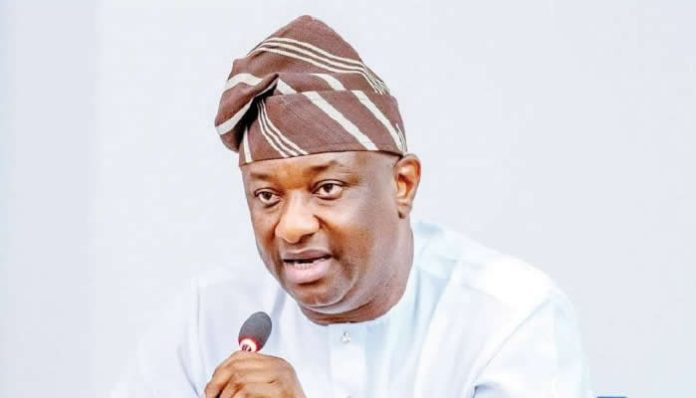
Minister of Aviation and Aerospace Development, Festus Keyamo, has reaffirmed Nigeria’s commitment to regional cooperation and climate resilience, saying the country remains fully engaged in efforts to strengthen climate services across West Africa and the Sahel.

Keyamo made the statement in Abuja while receiving the director general of the AGRHYMET Regional Centre, Issoufou Baoua, who led a high-level delegation to the ministry as part of a joint mission on the operationalisation of the Regional Climate Centre for West Africa and the Sahel.

The delegation included senior officials from AGRHYMET and the World Meteorological Organisation, as well as the immediate past director general of the Nigerian Meteorological Agency, Mansur Bako Matazu. The mission was carried out alongside the current director general of NiMet, Charles Anosike.

Special adviser to the minister on media, Tunde Moshood, said the visit focused on strengthening collaboration to ensure the full take-off of the regional climate centre, which is expected to enhance climate services, boost adaptive capacity and support evidence-based decision-making across the region.

During the meeting, Baoua briefed the minister on a recently signed memorandum of understanding between AGRHYMET and NiMet aimed at operationalising the centre. He said Nigeria was the first country visited by the mission and remains the only English-speaking nation among the 17 participating member states.

Baoua said the mission seeks to strengthen institutional partnerships, align regional priorities, identify capacity gaps and establish clear milestones for the effective commencement of the centre. He added that the project relies heavily on donor support and expressed confidence in Nigeria’s continued leadership.

Responding, Keyamo welcomed the delegation and reiterated Nigeria’s readiness to support the initiative, describing the country as a key player in regional commitments. He said Nigeria continues to host and fund the World Meteorological Organisation office in Abuja and will provide financial and institutional backing for the mission.

The minister commended AGRHYMET and the WMO for advancing climate services in the region, noting that the operationalisation of the regional climate centre will improve early warning systems, support aviation safety planning and strengthen climate research for Nigeria and neighbouring countries.

NCC Blocks Piracy Sites And Calls For Stronger Digital Protection In Nollywood

Digital Industry Created Jobs, Increased Revenue - NCC

The Nigerian Copyright Commission has urged Nigerian filmmakers to adopt stronger digital protection tools as Nollywood faces rising levels of online piracy driven by the growth of streaming platforms. The call was made during a webinar hosted by Greychapel Legal titled “Clicks, Streams, and Copyright: Who Owns Nollywood’s Digital Future” which brought together filmmakers, regulators, lawyers and media strategists to discuss how content ownership and copyright enforcement are shifting in the digital era.

Lynda Alphaeus, Director and Head of the NCC Lagos Office, said the Commission is intensifying its efforts to curb piracy across digital channels and is upgrading its operations to respond to emerging threats. She noted that Nigeria’s new Copyright Act was updated to strengthen creators’ rights in a period marked by rapid expansion of online distribution.

Alphaeus said the NCC now has the authority to block networks that publish illegal content and has already shut down seven websites distributing pirated Nigerian films. She added that the Commission has created a special taskforce known as the STOP Unit to coordinate online anti-piracy operations and is running awareness campaigns in markets and schools to educate creators and the public on copyright responsibilities.

She encouraged filmmakers to take responsibility for their digital safety by deploying available technological tools that can protect their work. She explained that encryption prevents unauthorised copying, blockchain technology provides permanent proof of ownership, digital watermarking helps trace illegal uploads, and cloud security with regular offline backups protects creative files before release.

Although copyright registration is not required by law in Nigeria, Alphaeus said registering a work strengthens protection and provides legal presumptions that support enforcement. She urged creators to prioritise copyright knowledge as part of their business strategy.

Other speakers at the webinar stressed the urgency of securing Nollywood’s digital assets. Film director James Omokwe said streaming platforms have opened major opportunities for visibility and revenue but have also expanded the avenues for intellectual property theft. Media strategist Solafunmi Laelle noted that control of audience data will increasingly determine leverage and value in film licensing negotiations, warning that creators who lose control of their intellectual property also lose access to vital data that influences long-term earnings.

Entertainment lawyer Nky Ofeimun highlighted the importance of understanding contracts, ownership terms, platform exclusivity and reversion rights. She said many filmmakers underestimate how easily digital copies can be duplicated or uploaded once control is lost.

Panelists agreed that as Nollywood expands its digital presence, piracy will continue to evolve and become more sophisticated. They called for the adoption of stronger technological tools, improved contract negotiation and broader education on copyright. They concluded that while content drives the industry, protection remains essential to its survival.

WHO Set To Launch New Initiatives On Safe Traditional Medicine

FG, WHO Launch Response Strategy To Combat Outbreaks

The World Health Organisation says new scientific tools are creating a major opportunity to rigorously evaluate and safely integrate traditional medicine into modern health systems. Speaking at a press briefing on Tuesday from Geneva, WHO experts said traditional medicine has become a global reality, noting that many countries rely on it as a first or preferred form of care.

The briefing came ahead of the second WHO global summit on traditional medicine scheduled for December 17 to 19 in New Delhi, India. The summit will bring together policymakers, researchers, practitioners and indigenous leaders from more than 100 countries to mobilise support for the global traditional medicine strategy 2025 to 2034, adopted at the World Health Assembly in May.

Shyama Kuruvilla, acting director of the Global Traditional Medicine Centre, said the gathering is significant because traditional medicine is often the closest or only form of care available for many people. She said demand continues to grow due to chronic illnesses, mental health needs and rising interest in personalised and holistic treatment.

Kuruvilla said WHO’s focus is to help countries ensure that traditional medicine is safe, evidence informed and fairly integrated into national health systems. She noted that although traditional medicine is widely used worldwide, it receives less than one percent of global health research funding. She said the summit will address this gap by pushing for stronger investment and improved evidence generation.

The WHO will also launch several major initiatives, including a global traditional medicine library with more than 1.6 million scientific records, a global research priority roadmap and a traditional medicine data network based on the organisation’s international classification of diseases.

WHO chief scientist Sylvie Briand said scientific advances are helping overcome long-standing challenges in assessing traditional, complementary and integrative medicine. She said artificial intelligence can now screen millions of compounds to help researchers understand the complex structure of herbal products and identify useful components while reducing harmful effects.

Briand said WHO has developed a global research agenda that guides priority setting and ethical standards. She added that more investment is needed to address chronic disease burdens and improve access to care. She urged countries to embrace innovation while respecting tradition to ensure that all approaches used in healthcare are safe, effective and accessible.

Dollar To Naira Exchange Rate For 12th December 2025

Dollar To Naira Exchange Rate For 8th Dec 2023

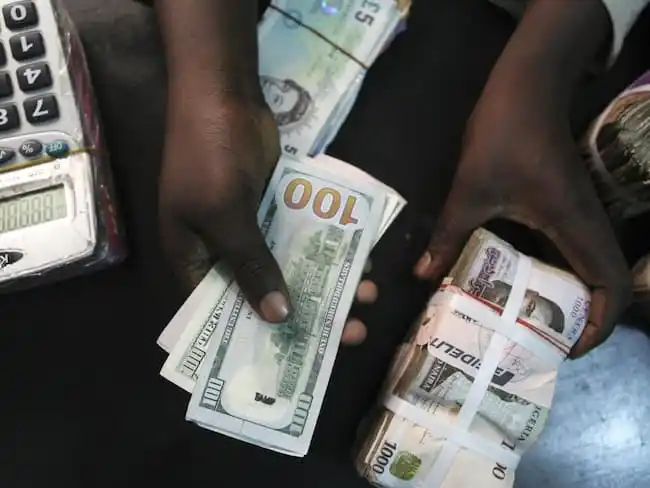
The exchange rate between the Naira and the US dollar, according to the data released on the FMDQ Security Exchange, the official forex trading portal, showed that the naira closed at 1490.00 per $1 on Friday, December 12th , 2025. The naira traded as high as 1453.00 to the dollar at the investors and exporters (I&E) window on Thursday.

How much is a dollar to naira today in the black market?

Dollar to naira exchange rate today black market (Aboki dollar rate):

The exchange rate for a dollar to naira at Lagos Parallel Market (Black Market) players sell a dollar for ₦1505 and buy at ₦1490 on Thursday 11th December, 2025, according to sources at Bureau De Change (BDC).

Please note that the Central Bank of Nigeria (CBN) does not recognize the parallel market (black market), as it has directed individuals who want to engage in Forex to approach their respective banks.

Dollar to Naira Black Market Rate Today

Dollar to Naira (USD to NGN)Black Market Exchange Rate Today
Selling Rate₦1505
Buying Rate₦1490

Dollar to Naira CBN Rate Today

Dollar to Naira (USD to NGN)CBN Rate Today
Highest Rate₦1459
Lowest Rate₦1453

Please note that the rates you buy or sell forex may be different from what is captured in this article because prices vary.

OPEC Crude Oil Production In November Declines

OPEC Output Cut

The Organization of the Petroleum Exporting Countries (OPEC) recorded a marginal reduction in crude oil output for the month of November, slipping by 1,000 barrels per day (bpd) to an estimated 28.48 million bpd, according to the group’s latest Monthly Oil Market Report released on Thursday.

The data shows that Venezuela, Iraq and Iran accounted for the most significant output declines, while Saudi Arabia—the group’s leading producer—posted the highest increase in production for the month.

Saudi Arabia boosted its supply by 54,000 bpd, bringing its total production to roughly 10 million bpd. In contrast, Venezuela’s output fell by 27,000 bpd to about 934,000 bpd. Iraq recorded a drop of 21,000 bpd to around 4 million bpd, while Iran’s production slipped by 19,000 bpd to approximately 3.2 million bpd.

However, crude supply from the broader OPEC+ coalition—which includes non-OPEC partners—rose by 43,000 bpd to reach 43.07 million bpd in the same period.

OPEC maintained its forecast for global oil demand growth in 2025 and 2026, projecting a year-on-year rise of 1.3 million bpd, which would bring total global demand to about 105.1 million bpd.

The report indicates that most incremental demand will originate from non-OECD regions, especially Asian economies including China and India, with additional growth anticipated across Africa and the Middle East. Demand within OECD countries is expected to grow modestly by 120,000 bpd to 45.96 million bpd, driven primarily by consumption in OECD Americas, while slight declines are projected in OECD Europe and OECD Asia-Pacific.

For 2026, OPEC anticipates a demand expansion of approximately 1.38 million bpd, pushing overall global demand to around 106.52 million bpd.

Reps Push For Lower Air Fares, Target Airport Charges, Taxes

Reps to Enhance Police Productivity
Police Productivity

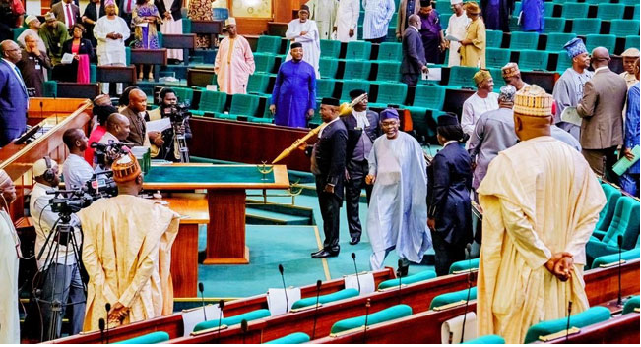
The House of Representatives has urged the Federal Government to immediately cut airport-related charges by half and introduce targeted tax incentives for aviation operators as part of measures to ease the financial burden on air travellers during the approaching festive season.

This position followed the adoption of a motion tabled by Rep. Obinna Aguocha (LP–Abia) during Thursday’s plenary session. Presenting the motion, Aguocha raised concerns over the steep increase in air ticket prices nationwide, noting that the situation now affects not only regular commercial passengers but critical services such as air ambulance operations, with implications for human lives.

He warned that the persistent surge in airfare has become a major strain on millions of households across the country. According to him, the Christmas period has historically symbolised reunion, shared memories and communal warmth, but the realities of current economic pressures are threatening this tradition, making domestic travel financially out of reach for many.

Aguocha explained that the rising cost of flying has effectively created a barrier for Nigerians attempting to reconnect with their roots, adding that the strain undermines family unity and diminishes the emotional wellbeing associated with homecoming.

Highlighting the operational challenges confronting airlines—including high JetA1 fuel costs and unstable exchange rates—the lawmaker cautioned that unchecked fare increases cannot be justified by the industry’s pursuit of profit at the expense of national cultural values.

He appealed for a temporary reduction in ticket prices as a demonstration of social responsibility and collective national goodwill. Such a gesture, he argued, would reinforce the principle that travel within the country should be accessible to all Nigerians regardless of economic status.

Aguocha also urged the Federal Government to extend to the aviation industry the same level of support it offered road transport operators last year, stressing that the air transport sector plays a vital role in strengthening national connectivity and facilitating family reunification.

Subsequently, the House issued a call to the Central Bank of Nigeria (CBN) to prioritise the release of foreign exchange to airline operators at concessionary rates. Deputy Speaker Benjamin Kalu directed the House Committee on Aviation to engage the Aviation Minister and relevant airline operators, with a mandate to report back within one week to enable further legislative action.

Naira Extends Volatility As NFEM Rate Falls To N1,456

Federation Account Amasses Over ₦5trn In 6months- RMAFC

The Nigerian currency continued its downward trend for the eighth consecutive trading session at the Nigerian Foreign Exchange Market (NFEM) window, weakening further to close at N1,456 to the dollar on Thursday.

Despite the Central Bank of Nigeria’s ongoing interventions, the naira remained under pressure amid increasing foreign payment obligations and a lack of meaningful inflows from key sources such as foreign investors, exporters and large corporate bodies.

Data from the CBN’s daily FX report indicated yet another depreciation of 0.05%, with the official rate settling at ₦1,456.07 per dollar. During the day’s trading cycle, the spot market briefly hit N1,459 per dollar before recovering marginally to close at N1,455.25. The currency also reached an intraday low of N1,453.55 at certain trading windows.

In the parallel market, the naira experienced a sharper decline, with rates sliding to N1,490 per dollar in the informal segment.

Throughout December, the currency has shown persistent instability, with only one trading day recording modest gains. The naira was last quoted at N1,445.3929 on December 2 before beginning the current slide.

Market analysts attribute the continued depreciation to significant dollar demand associated with year-end business activities, reduced investor confidence, and the widening gap between official and informal market supply.

Globally, the naira traded lower following reactions to the United States Federal Reserve’s decision to implement a 25-basis point interest rate cut on Wednesday. The move led to a weaker US dollar across major currencies, with volatility pushing the Dollar Index out of the lower range of its four-day band of 98.75 to 99.30.

US Lawmaker Prepares Briefing For Trump On Strategy To Halt Killings In Nigeria

U.S. Congressman Riley Moore has announced that he is finalising a comprehensive briefing for President Donald Trump, outlining a coordinated framework for the United States to collaborate with the Nigerian government in curbing alleged targeted killings of Christians across the country.

Moore, in a statement shared via X on Thursday, revealed that the forthcoming report also provides recommendations for assisting Nigeria in confronting the persistent insurgency and extremist attacks in the North-East.

His planned submission to Trump follows a recent visit to Nigeria as part of a congressional delegation, where members of the House Appropriations Committee held strategic discussions with top Nigerian officials, including National Security Adviser Nuhu Ribadu.

During the visit, Moore toured Benue State, where he said he witnessed distressing conditions in Christian communities displaced by violent attacks attributed to Fulani militants operating in the Middle Belt region.

“I just returned from a Congressional delegation to Nigeria with @HouseAppropsGOP. While there, we visited Benue State,” he wrote.

He added that he and his team held engagements with Bishops Anagbe and Dugu, as well as the Tor Tiv, and visited internally displaced persons (IDP) camps that are frequently attacked by what he described as Fulani Islamic extremists.

Moore recounted harrowing testimonies from survivors, including a woman who watched as her five children were murdered during an assault. According to him, the experience was deeply traumatic and unforgettable.

The congressman explained that his report to Trump will lay out a proposed roadmap for strengthening U.S.–Nigeria collaboration aimed at ending the violence and addressing terrorism-related threats in the country’s North-East.

“I am working on a report to @POTUS that will outline a path forward to work with the Nigerian government in a coordinated and cooperative manner to end the slaughter of innocent Christians in the Middle Belt and stop the ongoing terrorist threat in the Northeast,” he said.

His remarks come amid renewed American scrutiny of Nigeria’s security challenges after Trump reinstated Nigeria on the list of “Countries of Particular Concern” for alleged religious persecution in October 2025.

Trump cautioned at the time that sustained attacks could lead to a withdrawal of U.S. assistance.

However, President Bola Tinubu’s administration rejected the designation, insisting that Nigeria’s security crisis is not rooted in religion, while highlighting existing bilateral security initiatives with Washington.

BizWatchNigeria.Ng
Privacy Overview

This website uses cookies so that we can provide you with the best user experience possible. Cookie information is stored in your browser and performs functions such as recognising you when you return to our website and helping our team to understand which sections of the website you find most interesting and useful.