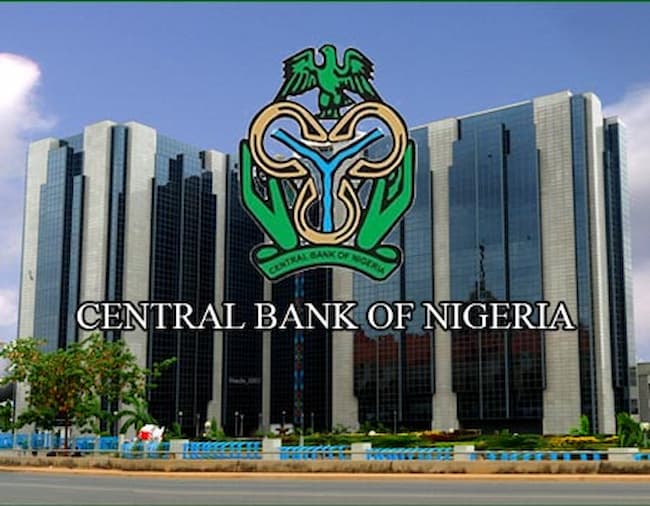
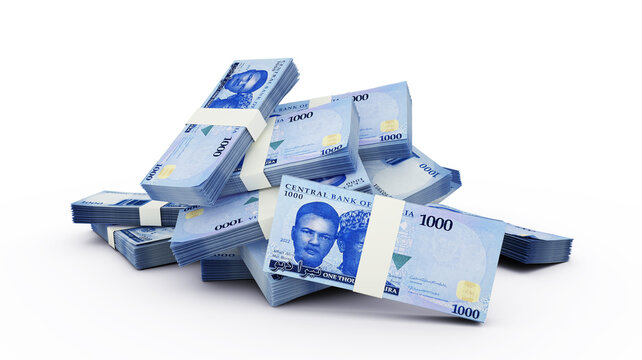
The Central Bank of Nigeria (CBN) is gearing up to open subscriptions for Treasury Bills in its scheduled midweek primary market auction. The Debt Management Office (DMO) will coordinate the auction on behalf of the apex bank, with offers distributed across standard maturities.
Market analysts expect spot rates to moderate as a result of easing inflationary pressure and widening real investment returns. Nigeria’s inflation rate dropped to 21.88% year-on-year in July, while the Monetary Policy Committee (MPC) retained the benchmark interest rate at 27.50%.
The MPC’s decision to maintain the tight monetary stance follows previous increases aimed at curbing persistent headline inflation, which has remained well above the CBN’s target range.
With disinflation and strong investor appetite at play, Treasury bill rates have been repriced across standard maturities, supported by improving macroeconomic fundamentals.
In the secondary market, activity has been more visible in the short- and medium-term maturities. Pre-auction trading remained subdued, although dealers reported mild buying interest in short-dated bills such as the November 20 NTB, while offers were spotted in the February 5 and February 19 maturities.
At market close, the average mid-rate held steady as investors turned their focus to the midweek auction, where ₦230 billion worth of Treasury Bills will be on offer, according to AIICO Capital Limited.
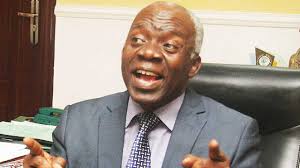
Prominent human rights lawyer Femi Falana has called on Nigeria’s leading political parties, the All Progressives Congress (APC) and the Peoples Democratic Party (PDP), to urgently pursue legal action to refute a Canadian Federal Court ruling branding them as terrorist organizations.
In a statement issued Monday, Falana, a Senior Advocate of Nigeria, criticized the parties for dismissing the ruling rather than addressing its serious implications. “Instead of attacking the Canadian judge, the APC and PDP should take immediate legal steps to prove they are not terrorist groups,” he said, according to Channels TV.
The Canadian court’s decision, delivered by Justice Phuong Ngo on June 17, 2025, stemmed from the rejected asylum appeal of Nigerian Douglas Egharevba, who was linked to both parties. The court cited their alleged use of violence, coercion, and subversion of democratic processes as grounds for the terrorist designation.
Falana tied the ruling to Nigeria’s history of electoral malpractice, including vote rigging and violence, often involving armed thugs, police, and military personnel. “It’s widely known that both parties manipulate elections and declare false results, with perpetrators of violence rarely facing justice,” he stated. He referenced inflammatory remarks, such as former President Olusegun Obasanjo’s “do-or-die” comment about the 2003 election and President Bola Tinubu’s 2023 call to “grab, snatch, and run with” power, arguing this fuel a culture of electoral aggression.
He also criticized Nigeria’s selective enforcement of the Terrorism (Prevention) Act, noting that while unarmed #EndBadGovernance protesters face terrorism charges, politicians who misappropriate public funds, causing widespread harm, often escape scrutiny.
Falana warned of severe global repercussions, including potential visa denials and deportations for APC and PDP members in countries like the United States, United Kingdom, and France if the ruling is upheld internationally. “This could tarnish Nigeria’s image and affect ordinary citizens, as their government is seen as backed by terrorist-linked parties,” he cautioned, urging the federal government to hire immigration lawyers to contest the judgment.
The Nigerian government has rejected the ruling as “erroneous” and called for its immediate withdrawal, arguing it misrepresents the country’s democratic framework.
In Nigeria’s ever-shifting financial landscape—where inflation bites, interest rates fluctuate, and the naira often seems to be fighting its own battles—investors are looking for more than just survival. They’re looking for stability, a little peace of mind, and ideally, returns that outpace inflation. That’s where money market mutual funds (MMMFs) have stepped in to prove their worth.
As of the week ended August 8, 2025, the industry’s total net asset value (NAV) climbed to ₦3.59 trillion, up from ₦3.52 trillion just a week earlier. That’s no small feat. Across 41 licensed fund managers, investors are increasingly parking their cash in these short-term debt funds for one main reason: they deliver liquidity while still preserving capital. And in an economy where traditional savings accounts barely scratch the surface, that combination is powerful.
But here’s the catch—while the whole sector is growing, some funds are clearly pulling ahead of the pack. Five of them, in fact, stand out with yields (YTD) so competitive that investors can realistically target up to ₦5 million annually in passive income, provided they commit the right level of capital.
So, which funds are worth watching right now? Let’s walk through the top five.
5. ARM Money Market Fund
Yield (YTD): 20.89%
NAV: ₦247.22 billion
Unitholders: 73,084
Earning Potential: ₦23.9 million required to earn ₦5 million annually
ARM’s fund is the heavyweight of the bunch—₦247.22 billion under management and more than 73,000 unitholders. That’s not just impressive scale, that’s investor trust written in big bold letters.
Now, at 20.89% YTD, its yield is slightly lower than its rivals, but scale brings stability. And for investors, sometimes steady wins the race. This fund is especially popular with retail investors, largely because it has one of the lowest entry thresholds in the market—just ₦1,000. Add quarterly interest payments to that, and you’ve got something that works well for salary earners who want predictable inflows, or retirees looking for a cushion.
It may not top the yield charts, but ARM Money Market Fund is like the reliable uncle at family gatherings: always there, dependable, and rarely surprising.
4. Zedcrest Money Market Fund
Yield (YTD): 21.62%
NAV: ₦6.43 billion
Unitholders: 4,111
Earning Potential: ₦23.1 million required to earn ₦5 million annually
Zedcrest is one of those funds that seems to always punch above its weight. At 21.62% YTD, it offers a blend of attractive returns without veering into the riskier end of the spectrum. Its size—₦6.43 billion—is big enough to give it credibility but small enough to allow flexibility in asset allocation.
Here’s what’s interesting: it’s accessible to both retail investors (again, minimum entry is ₦1,000) and institutional players who are chasing steady returns. With over 4,000 unitholders, Zedcrest has built a following on discipline, sticking with naira-denominated debt instruments and commercial papers.
Think of it this way: Zedcrest doesn’t necessarily shout for attention, but when you look closely at its track record, you see why investors keep coming back.
3. Meristem Money Market Fund
Yield (YTD): 22.09%
NAV: ₦50.67 billion
Unitholders: 6,023
Earning Potential: ₦22.65 million required to earn ₦5 million annually
Meristem has done something many funds struggle with: it has grown its asset base to over ₦50 billion without diluting returns. At 22.09% YTD, it’s comfortably one of the highest-yielding large funds in Nigeria. That’s a tough balance—big size usually means lower flexibility—but Meristem has consistently managed to find opportunities in Treasury Bills and top-tier bank placements.
For investors, the takeaway is simple: Meristem offers scale, credibility, and attractive returns in one package. And in a space where perception often dictates flows, this mix has helped it maintain a loyal following of more than 6,000 investors.
2. Page Money Market Fund
Yield (YTD): 22.14%
NAV: ₦938.9 million
Unitholders: 126
Earning Potential: ₦22.6 million required to earn ₦5 million annually
Page Asset Management is tiny compared to its peers, with less than ₦1 billion in NAV. But don’t let size fool you. The fund posted one of the sharpest jumps in yield in just a week—from 20.82% to 22.14%. That’s agility in action.
Its investor base is equally small, with just 126 unitholders. On one hand, that might suggest limited visibility. On the other, it gives the managers freedom to pivot quickly, seizing opportunities in the market before the bigger funds can react.
High-net-worth individuals (HNWIs) often favor funds like this because they offer aggressive returns without running wild risks. Page Money Market Fund may not yet be a household name, but it’s playing smart in the shadows.
1. DLM Money Market Fund
Yield (YTD): 22.20%
NAV: ₦65.82 million
Unitholders: 23
Earning Potential: ₦22.5 million required to earn ₦5 million annually
Now, here’s where things get fascinating. DLM Asset Management has the smallest NAV of them all—just ₦65.82 million—and only 23 investors. Yet, it tops the yield chart at 22.20% YTD. That’s a leap from 18.90% just a week earlier.
How do they pull it off? By keeping the structure tight. DLM invests primarily in government securities, mixes in some bank placements and commercial papers, and holds a modest cash buffer. It’s conservative, yes, but clearly effective.
For those who prefer a boutique-style approach to fund management, DLM is an attractive option. You get the sense they treat every naira with extra care, and in return, investors reap higher yields.
So, What Should Investors Really Take Away?
Money market funds used to be seen as conservative vehicles, not much more exciting than savings accounts. That perception is changing fast. In 2025, they’ve evolved into proper wealth management tools, helping investors not only preserve value but also generate real, inflation-beating income.
For the Nigerian investor with ₦5 million, the math is clear. With the right allocation, you can target ₦5 million in annual passive income, a figure that just a few years ago felt like a stretch.
But here’s the part often overlooked: it’s not just about yield. Liquidity matters. Credibility matters. Investor trust matters. A fund with a slightly lower return but a larger, more stable base (like ARM or Meristem) might make more sense for someone who values peace of mind. On the flip side, investors willing to take on boutique funds like DLM or Page could squeeze out higher yields—but with smaller safety nets.
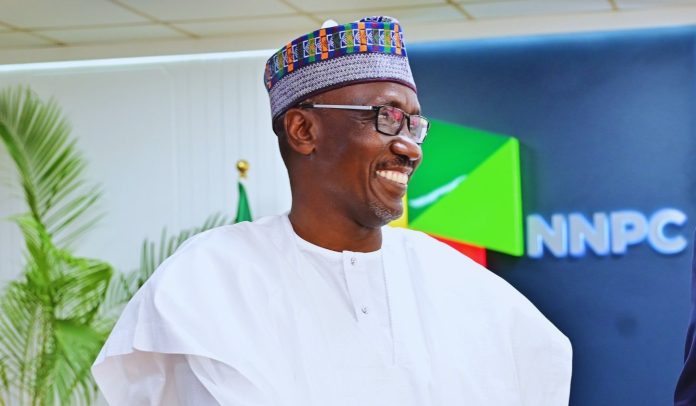
Bayo Ojulari, Group Chief Executive Officer of the Nigerian National Petroleum Company Limited (NNPCL), has firmly denied allegations circulating on social media that he paid a $1.5 million bribe to Adegboyega Fasasi and Usman Shugaba, President Bola Tinubu’s Chief Security Officer and Chief Personal Security Officer, respectively, to gain access to the President.
Ojulari dismissed the claims as “false, absurd, and malicious,” calling them a fabrication meant to deceive the public.
Speaking to journalists in Abuja on Monday, he expressed both shock and amusement at the accusations, attributing them to individuals with ill intentions toward Nigeria.
“When I first saw the report, I couldn’t believe it. These allegations are not only outrageous but clearly the work of those who wish to harm our country’s progress,” he said. “This is a deliberate attempt to smear my name and undermine the leadership of NNPCL.”
He stressed that the claims, which rely on unnamed sources, lack any evidence. “As NNPCL’s GCEO, I have direct access to the President when needed. I don’t require intermediaries,” Ojulari stated, noting that the outlet behind the story has a history of publishing unverified content.
On the possibility of legal action, Ojulari said he is consulting with his legal team. “We’re reviewing our options. Nigeria has laws, and you can’t hide behind free speech to spread falsehoods without consequences,” he added.
The allegations, first reported by SaharaReporters, have sparked controversy, but Ojulari remains focused on his role, emphasizing that such claims are distractions from NNPCL’s ongoing reforms.
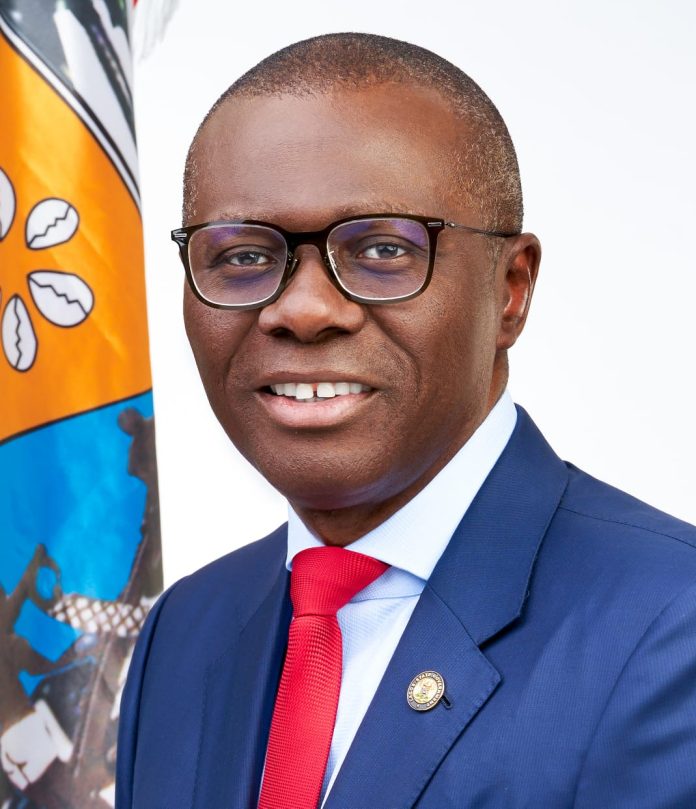
Lagos State Governor Babajide Sanwo-Olu has urged greater access to financing for agriculture, highlighting how Nigeria forfeits substantial economic gains by shipping out unprocessed commodities rather than value-added products.
Addressing the First Bank 2025 Agric and Export Expo at Eko Hotels and Suites in Victoria Island, Lagos, on Tuesday, Sanwo-Olu pointed out that while crop yields have risen, the country’s agricultural exports fall short due to insufficient processing and limited funding for farmers.
The expo, themed “The Fundamentals of Building an Export-Driven Economy,” gathered policymakers, investors, producers, and business leaders to discuss ways to broaden Nigeria’s economy via agriculture and non-oil sectors.
Sanwo-Olu emphasized the need to reduce reliance on crude oil amid volatile prices, currency strains, and rising import expenses, pushing for a focus on productive industries.
“We frequently send out raw materials instead of ready-to-sell items, missing the benefits of processing, packaging, and branding that create jobs and revenue,” he stated.
He highlighted Lagos’ ongoing investments in roads, ports, and online trade systems, but stressed that these require supportive financing to help farmers and businesses achieve international quality and volume standards.
“The world market isn’t pausing for us. Other African nations are actively promoting their farm goods. We need deliberate, calculated efforts to expand non-oil exports,” he added.
Sanwo-Olu praised the federal government’s initiatives under President Bola Ahmed Tinubu for boosting farm production, yet insisted more value lies in exporting processed items.
“As Nigeria’s main entry to global trade, Lagos bears the duty to enhance agribusiness and export strength,” he said.
Niger State Governor Umar Bago, also at the event, supported this view, arguing that countries exporting only raw items get undervalued in international deals.
“By adding value, we control pricing, not the purchasers,” Bago said.
He outlined plans to halt live cattle transport from Niger to Lagos and Ogun, shifting to meat processing for frozen deliveries to cut losses and boost farmer income.
“We’ll end live cow shipments at Mokwa, processing in Niger and supplying only frozen meat,” he explained.
Bago further revealed an expansion of land for collaborative farming with Lagos, from 20,000 to 100,000 hectares, to ramp up output and address food needs.
The management of Nnamdi Azikiwe University (UNIZIK), Awka, has announced an indefinite ban on the practice of “signing off” by final-year students during examinations.
In a statement issued on Tuesday and signed by the Registrar, Dr. Chinenye Okeke, the university said the directive takes immediate effect and was necessitated by recurring incidents of chaos, violence, and disruption linked to the celebrations.
“The university management wishes to inform you that, effective immediately, all forms of orchestration (‘signing off’) related to final examinations by final-year students are completely and indefinitely banned from the university premises,” the statement read.
According to the registrar, the decision was also influenced by the presence of unauthorised individuals on campus during such activities, which the school described as a threat to the safety and security of students, staff, and the wider university community.
The university warned that any student found engaging in the banned activity will face severe disciplinary action, including possible rustication. It added that outsiders who enter the campus to participate in or encourage such celebrations may be arrested and prosecuted for disorderly conduct and breach of peace.
Dr. Okeke reaffirmed the university’s commitment to providing a safe and secure environment for learning, stressing that management would not tolerate activities capable of undermining academic order.
“We urge all students to concentrate on their academic responsibilities and promptly report any instances of misconduct or threats to safety to the appropriate authorities,” the statement concluded.
The Federal Government has rolled out a nationwide housing intervention programme aimed at narrowing Nigeria’s widening housing deficit, with President Bola Tinubu’s administration pledging to deliver affordable homes across the country.
Speaking during the commissioning of the FHA Express View Estate Phase 1 and FHA Complex in Lugbe, Abuja, the Minister of Housing and Urban Development, Ahmed Dangiwa, said the initiative forms part of the government’s Renewed Hope Agenda.
Dangiwa, represented by Permanent Secretary Dr Shuaib Belgore, stressed that the commissioning was not just symbolic but a demonstration of the administration’s resolve to provide safe and affordable housing for all Nigerians.
“This is a testament to the fact that the Renewed Hope Agenda is real,” he said. “Mr President has made housing a priority because it is central to closing the housing gap, promoting urban development, and ensuring that Nigerians, regardless of their economic status, can have a secure place to live.”
Renewed Hope Projects Nationwide According to the Minister, several Renewed Hope housing projects are underway, including the construction of over 3,000 houses in major cities under the “Renewed Hope Cities” scheme. Additionally, “Renewed Hope Estates” are being executed in 13 states, while the government is also pursuing a social housing initiative to deliver 77,400 houses — equivalent to 100 houses in every local government area.
Dangiwa urged stronger partnerships between the Federal Housing Authority (FHA), Federal Mortgage Bank of Nigeria (FMBN), private developers, cooperatives, pension funds, and other stakeholders to drive the initiative.
Stakeholders’ Contributions Chairman of the House Committee on Housing and Habitat, Abdulmumin Jibrin, noted that while the sector has resources and land, financing remains a critical bottleneck. He argued that housing delivery in Nigeria often faces the paradox of “houses chasing money,” stressing the need to restructure the system so that “money will chase houses.”
The Managing Director of FHA, Oyetunde Ojo, revealed that the Authority has secured land in 28 states, with construction already commencing in 17 of them. He added that the Express View Estate being commissioned comprises 50 units of terraces and flats in its first phase, with the full project expected to deliver 110 units.
To modernise operations, Ojo disclosed that the FHA has begun digitising property files, automating service delivery, and setting up in-house laboratories for geological and integrity testing.
On his part, the Managing Director of FMBN, Shehu Osidi, highlighted affordability as a major challenge, noting that many houses are built beyond the reach of low- and middle-income earners. He assured Nigerians that the FMBN will provide mortgage facilities to make the new housing units accessible to ordinary citizens.
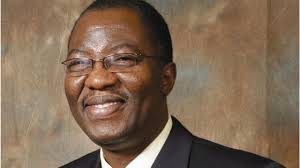
The Ogun State High Court in Sagamu has directed former Governor Gbenga Daniel to submit documents relating to his two properties in Sagamu Local Government Area, which are at the centre of a dispute with the state government.
The case concerns the Asoludero Court and Conference Hotel Limited, along with its annexe, both of which the government has marked for demolition following the issuance of quit and demolition notices.
Senator Daniel, who currently represents Ogun East in the National Assembly, has accused Governor Dapo Abiodun of political persecution and abuse of power in the matter. The governor, however, insists that the former governor is not above the law and must comply with the state’s request to provide property documentation, like other affected residents.
At the resumed hearing of Suit No: HCS/371/2025, Otunba Justus Gbenga Daniel and Anor v. The Governor of Ogun State and Others, Justice O.S. Oloyede ordered the former governor to furnish the government with the relevant papers within 14 days.
Olufemi Nuberu, Publicity Secretary of the All Progressives Congress (APC) in Ogun State, confirmed the directive in a statement on Tuesday night.
Court Proceedings
Appearing for the state, Solicitor-General and Permanent Secretary of the Ministry of Justice, O.T. Olaotan, alongside R.B. Kadiri, A.E. Odukoya, and W.A. Onawole, informed the court that the government had filed an interlocutory injunction and counter-affidavits in response to Daniel’s motion, noting that the matter was not yet ripe for hearing.
Counsel to the claimants, A.O. Kotoye (SAN), with O.T. Are and A.O. Adeniyi, applied for an extension of the interim order earlier granted by the court, which was set to lapse after seven days.
The defence argued that the court should instead direct Daniel to take advantage of the two-week extension granted by the government and submit the requested documents to the Ministry of Physical Planning, as other residents served with similar notices had begun to do.
Justice Oloyede subsequently ordered all parties to maintain the status quo and encouraged them to consider amicable settlement options. He further directed the claimants to comply with the government’s request within the grace period.
Both counsels agreed to adjourn the matter until 13 October 2025 for the hearing of pending applications.
The Federal High Court in Abuja has ordered the temporary freezing of four bank accounts allegedly linked to former Nigerian National Petroleum Company Limited (NNPCL) Group Managing Director (GMD), Mele Kyari, amid ongoing fraud investigations.
Justice Emeka Nwite issued the ruling on Tuesday after granting an ex-parte motion filed by the Economic and Financial Crimes Commission (EFCC).
According to EFCC counsel Ogechi Ujam, the accounts domiciled with Jaiz Bank are currently under investigation for offences including conspiracy, abuse of office, and money laundering.
Details of the Court Order The affected accounts include two personal accounts in Kyari’s name and two others operated under the Guwori Community Development Foundation, which investigators allege were used to launder funds disguised as NGO transactions.
The EFCC disclosed in court filings that preliminary investigations traced over ₦661 million suspected to be proceeds of unlawful activities into the accounts. Investigators claim the funds originated from suspicious inflows involving the NNPC and oil companies.
The Commission stated that it had already directed Jaiz Bank to place a 72-hour “no-debit” instruction on the accounts, pending the outcome of the investigation.
Petition and Findings An EFCC investigator, Amin Abdullahi, said the probe followed a petition filed on April 24 by the Guardian of Democracy and Rule of Law group. He explained that inquiries included obtaining bank records, reviewing Corporate Affairs Commission filings, and interviewing individuals linked to the transactions.
Abdullahi told the court that Kyari allegedly opened and managed the accounts through proxies, including family members, while disguising questionable deposits as proceeds from a purported book launch and NGO operations.
Justice Nwite, after reviewing the affidavit evidence, granted the EFCC’s request and adjourned the case until September 23 for further updates on the investigation.
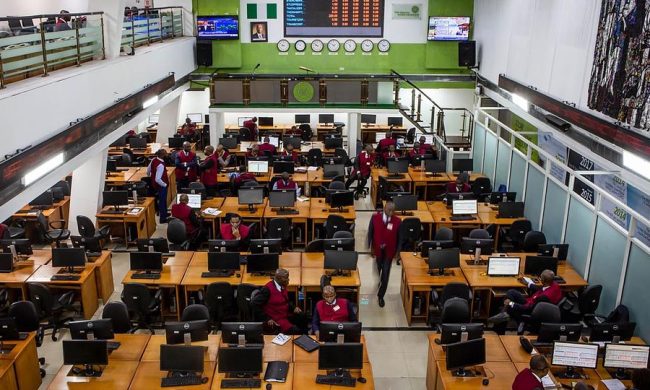
The Nigerian equities market suffered a massive blow on Tuesday as investors recorded losses amounting to ₦1.33 trillion, following heavy sell-offs in blue-chip stocks such as Dangote Cement, Oando, Nigerian Breweries, Zenith Bank, and Stanbic IBTC Holdings Plc.
At the close of trading, the Nigerian Exchange (NGX) ended in negative territory, with the benchmark All-Share Index (ASI) plunging by 2,200.41 basis points, representing a decline of -1.46%, to settle at 142,522.06 index points. This downturn dragged the market’s year-to-date (YTD) return below the 40% threshold.
Market analysts attributed the sharp decline to aggressive profit-taking in medium- and large-cap stocks, particularly Dangote Cement and Oando, which triggered broader bearish momentum across key sectors.
Despite the dip in overall performance, trading activity showed mixed results. The total volume of transactions fell by -10.87% compared to the previous session, while the total value of trades surged by +7.78%. According to brokers’ reports, about 1.022 billion shares worth ₦17.43 billion were exchanged across 34,087 deals.
Top Market Movers UNIVINSURE topped the volume chart, contributing 12.69% of total trades, followed by AIICO (9.76%), MBENEFIT (6.68%), PRESTIGE (6.52%), and REGALINS (4.50%). In value terms, Nigerian Breweries emerged as the day’s most actively traded equity, accounting for 12.10% of total market turnover.
On the gainers’ list, ENAMELWA advanced by 9.95%, leading other top performers including DAARCOMM (+9.82%), DEAPCAP (+9.60%), ACADEMY (+8.43%), INTBREW (+6.95%), and ELLAHLAKES (+4.89%).
However, losses outpaced gains with 39 decliners against 26 gainers, resulting in negative market breadth. ROYALEX (-10.00%) topped the losers’ chart, followed by DANGCEM (-9.88%), ZENITHBANK (-7.26%), OANDO (-7.11%), NGXGROUP (-6.25%), and FTNCOCOA (-4.29%).
Sectoral Performance The market’s bearish performance reflected across four of the six major sector indices. Industrial Goods led the downturn with a -4.37% slump due to losses in Dangote Cement, while Insurance fell by -3.86% as NEM stocks dragged. The Banking Index also dipped by -2.06%, weighed down by Zenith Bank, while Oil & Gas shed -0.68% on Oando’s decline.
On the flip side, the Consumer Goods Index gained +0.57%, buoyed by buying interest in International Breweries, while the Commodity Index closed flat.
Overall, the equities market capitalisation contracted by ₦1.33 trillion to settle at ₦90.23 trillion, underlining the extent of investor apathy and weak sentiment.
Nigeria’s manufacturing sector is paying more taxes even as its production shrinks, underscoring the mounting pressures on an industry grappling with weak output and eroding competitiveness.
According to the National Bureau of Statistics (NBS), manufacturers remitted ₦803.53 billion in value-added tax (VAT) in 2024 — a 50 per cent increase from ₦578.39 billion in 2023 and more than double the amount recorded two years ago.
However, sectoral output fell to $25.4 billion in 2024, the steepest decline in 15 years and less than half the $55.9 billion recorded the previous year, according to World Bank figures.
“This gap shows that manufacturers are paying much more to source inputs but producing far less in value terms,” said Matilda Adefalujo, an economic research analyst at Lagos-based Meristem. “High energy costs, exchange rate swings, expensive imported materials, and poor infrastructure are all pushing up costs while limiting production capacity. The impact is slower industrial growth, fewer jobs, and heavier dependence on imports.”
Reforms, Inflation and Naira Devaluation Squeeze Manufacturers
Between 2023 and 2024, Nigeria endured one of its most challenging economic periods as sweeping reforms saw the naira lose over 70 per cent of its value and inflation soar to record highs. The harsh conditions forced several local and foreign-owned manufacturers to scale down or shut operations.
Despite these challenges, VAT contributions from the sector continued to rise, driven largely by higher prices, increased tax enforcement, and currency weakness.
“The shrinking manufacturing output in the face of doubling VAT revenue does not augur well. It is a clear sign the sector is unhealthy. And despite doing badly, it is still burdened with heavy taxation,” said Samson Simon, CEO of Abuja-based ARKK Economics and Data Limited.
Sector’s Contribution to GDP Weakens
The sector’s woes have been compounded by structural constraints — high inflation, volatile foreign exchange, and infrastructure bottlenecks — leading to a reduced contribution to gross domestic product (GDP). Following Nigeria’s recent GDP rebasing, the industry’s share fell to 21.08 per cent in 2024 from 27.65 per cent previously.
“Growth across the manufacturing value chain has been subdued,” said Tobi Ehinmosan, a macroeconomic analyst at FBNQuest Merchant Bank. “While recent stability in the naira and easing of prices offer some hope, the record VAT levels reflect government reforms aimed at boosting revenue rather than genuine sectoral expansion.”
Ehinmosan added that the government is seeking to raise the tax-to-GDP ratio from 10 per cent to 18 per cent in the coming years, with manufacturers contributing significantly to the push.
Calls for Urgent Reforms
Industry experts warn that without deliberate policies to lower production costs, Nigeria risks stifling a sector critical to its economic diversification agenda and its ambition to achieve a $1 trillion economy by 2030.
“Addressing rising production costs, stabilising the exchange rate, and ensuring affordable energy are crucial to restoring competitiveness; without these, foreign investment will remain elusive, and the sector’s decline could accelerate.” Simon, who is also an economics lecturer at Baze University, Abuja, noted.
The Manufacturers Association of Nigeria (MAN) has repeatedly flagged energy costs as a major burden, with electricity and fuel accounting for 35–40 per cent of production expenses. As a result, many producers pass costs onto already cash-strapped consumers, deepening inflationary pressures.
For Adefalujo, the way forward lies in easing operational bottlenecks: “Expanding reliable and affordable electricity supply, improving access to foreign exchange for critical inputs, and enhancing transport and port efficiency would reduce cost uncertainty and support growth.”
Interswitch, one of Africa’s leading integrated payments and digital commerce companies, will take centre stage at Moonshot by TechCabal 2025 as a platinum sponsor, owning the Big Tech and Enterprise Stage and driving high-level conversations on enterprise innovation and Africa’s next phase of digital growth.
The flagship conference, hosted by African technology publication TechCabal, will take place from October 15–16, 2025 at the Eko Convention Centre, Lagos, under the theme “Building Momentum: Africa’s Tech Ecosystem Positions Itself for Its Next Big Leap.”
Moonshot by TechCabal is a premier platform where Africa’s brightest tech minds converge to exchange ideas, network, and collaborate. It offers a unique opportunity for stakeholders to drive growth in Africa’s payment ecosystem while celebrating the innovations shaping the continent’s digital future. Now in its third edition, Moonshot will convene policymakers, innovators, founders, and business leaders to explore how Africa’s tech ecosystem can scale sustainably and structurally.
As a Platinum Sponsor, Interswitch will feature in a high-level panel session on enterprise innovation and scaling the digital economy. The company will also participate in an exclusive closed-door gathering of top policymakers, industry leaders, and innovators, a strategic forum for shaping Africa’s digital future.
Speaking on the forthcoming event and partnership, Akeem Lawal, Managing Director, Payment Processing & Switching (Interswitch Purepay) said:
“Africa’s tech ecosystem is at a pivotal inflection point, moving from resilience to intentional, scalable growth and shaping the continent’s digital future. At Interswitch, we believe this is the right moment to deepen conversations on scale, structure, and sustainability, while championing the partnerships and innovations that will drive lasting impact. Moonshot provides the ideal platform to ensure these conversations translate into transformative action.”
As a pioneer in payments and digital commerce, Interswitch continues to demonstrate leadership through strategic partnerships, innovation and ecosystem collaboration. With its platinum sponsorship, Interswitch reinforces its commitment to driving Africa’s digital future through innovation, strategic partnerships, and ecosystem collaboration. By aligning with TechCabal’s vision, Interswitch’s participation goes beyond sponsorship, contributing meaningfully to the conversations, alliances, and actions that will define Africa’s next phase of digital advancement.
Moonshot by TechCabal 2025 promises two days of dynamic panels, thought-leadership sessions, high-impact networking, and solution-driven dialogue, with Interswitch at the forefront of the enterprise innovation narrative.
Bitcoin fell below $113,000 during mid-week trading, as profit-taking in the cryptocurrency market coincided with a broader sell-off in technology stocks and renewed concerns over U.S. inflation.
The flagship cryptocurrency, which had been trading along an upward trendline since early April, closed below its 50-day Exponential Moving Average (EMA) of $114,903 for the first time in weeks. The move marks Bitcoin’s first monthly loss since March, following a four-month rally that saw the asset surge 66% from its 2025 lows to its recent peak of $124,517 on August 14.
Inflation Data Weighs on Risk Appetite
Market sentiment shifted after a stronger-than-expected U.S. Producer Price Index (PPI) report dampened expectations of aggressive interest rate cuts later this year. The data triggered a pullback across risk assets, with Bitcoin and high-growth tech stocks among the hardest hit.
On Tuesday night, Bitcoin slumped to an intraday low of $112,580—down 9.5% from last week’s record high. Ether also slid into a key support range between $4,000 and $4,100, highlighting the broad sell-off across the digital asset sector.
Analysts noted that approximately $500 million worth of Bitcoin positions were liquidated in a single day, adding further pressure on prices. Traders are now closely watching the $112,000 support level, with many warning that a break below could fuel additional volatility.
Technical Indicators Signal Weakness
Bitcoin’s Relative Strength Index (RSI) slipped to 41, below the neutral 50 threshold, suggesting bearish momentum. The Moving Average Convergence Divergence (MACD) also showed a bearish crossover, reinforcing signs of downward pressure.
Despite global geopolitical tensions and rising central bank demand pushing gold to new highs, Bitcoin remains strongly correlated with risk-sensitive assets, limiting its appeal as “digital gold” in the current environment.
Institutional Support Still Intact
Industry analysts stress that the current correction reflects profit-taking and institutional distribution rather than a collapse in fundamentals. Bitcoin has climbed nearly 39% since August lows, with its market capitalisation still standing at $2.26 trillion and dominance at 58%—though slightly lower as altcoins gain ground.
The pullback comes as trading volumes eased to $66 billion, suggesting consolidation rather than panic selling. Analysts say institutional investors often book profits at cycle highs, creating temporary headwinds.
Attention now turns to the U.S. Federal Reserve’s September meeting and Fed Chair Jerome Powell’s remarks at the Jackson Hole Economic Symposium later this week. Traders are bracing for policy cues that could determine whether Bitcoin stabilises at current levels or faces further downside.
The naira began the new trading week on a weaker note, closing at ₦1,533.67 to the US dollar at the Nigerian Foreign Exchange Market on Monday. The figure represents a 0.08 per cent depreciation from Friday’s rate of ₦1,532.51/$.
During intraday trading, the local currency hit a high of ₦1,535/$ and a low of ₦1,532/$. In the parallel market, it settled at ₦1,543/$, slightly stronger than last week’s average of ₦1,545/$.
Market watchers had expected a steadier performance this week, supported by the Central Bank of Nigeria’s (CBN) intervention measures and rising foreign exchange inflows. Analysts suggest the naira could remain relatively stable unless disrupted by global shocks or external market pressures.
However, a stronger US dollar and softening crude oil prices remain downside risks for the local currency.
The International Monetary Fund (IMF) recently commended the CBN’s reforms to deepen financial inclusion and capital market development. It also urged the regulator to strengthen oversight in mortgage lending, consumer finance, fintech, and cryptocurrency operations.
Nigeria’s foreign reserves and investor confidence have seen some improvement, while oil production has provided additional support for the naira. OPEC data showed that Nigeria pumped an average of 1.5 million barrels of crude per day in July—7,000 barrels above its approved quota. This marked the second consecutive month Africa’s top oil producer exceeded its output ceiling.
Production reached its highest this year in January at 1.54 million barrels per day, before sliding to 1.4 million barrels in March and recovering to 1.48 million barrels in April. July’s figure of 1.507 million barrels per day was a marginal increase from 1.505 million barrels recorded in June.
CBN Moves Against New Naira Note Trading
Meanwhile, the CBN has urged citizens to report banks or staff involved in the illicit sale of new naira notes at social functions. Paul Onuoha, the bank’s Head of Currency Operations and Branch Management, warned that such practices persist largely due to insider collaboration within commercial banks. He encouraged the public to notify regulators or security agencies of any misconduct.
Dollar Remains Firm
Globally, the US dollar maintained its bullish run at the start of the week, with the US Dollar Index (DXY)—which tracks the currency against six peers—closing above 98 points. The Greenback’s strength was buoyed by geopolitical developments as US President Donald Trump disclosed plans for a trilateral meeting with Russian President Vladimir Putin and Ukrainian President Volodymyr Zelenskyy to discuss possible security guarantees.
While US economic data on producer inflation and retail sales beat expectations, markets remain focused on monetary policy signals. Despite dollar strength, traders are pricing in an 84 per cent probability of a 25-basis-point interest rate cut by the Federal Reserve in September, according to CME’s FedWatch tool.
Attention is now on Fed Chair Jerome Powell’s address at the Jackson Hole Economic Policy Symposium later this week. The event, themed “Labour Markets in Transition: Demographics, Productivity, and Macroeconomic Policy,” is expected to offer fresh clues on the Fed’s next policy direction.
PalmPay, a leading digital banking platform, in partnership with Nigeria’s telecom giant, Glo, is celebrating winners in the ongoing PalmPay & Glo Recharge. The exciting campaign, which kicked off on June 19, 2025, will run until August 23, 2025, rewarding loyal customers with fantastic prizes and exclusive bonuses.
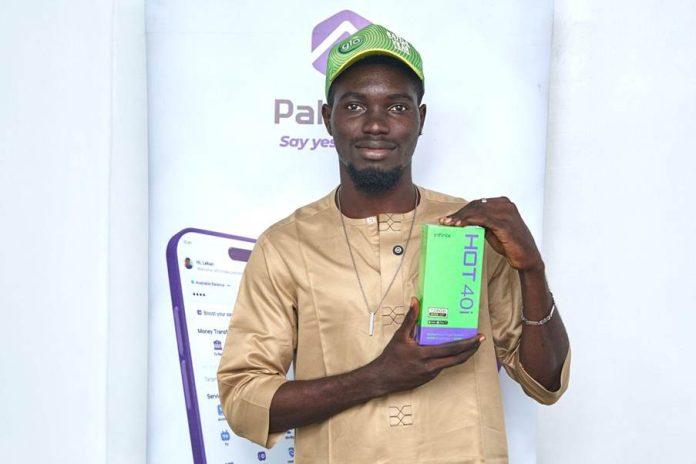
Since the promo commenced, users have won prizes ranging from Oraimo Earbuds to Infinix Hot 40i.
The ongoing weekly campaign has recorded 20 winners, which include:
Michael Emmanuel from Lagos emerged as the winner of an Infinix Hot 40i
Perpetual Amos, winner of an Infinix Hot 40i
Semiu Adekunle Abegunde, winner of an Infinix Hot 40i
Josiah Oluwasegun Adewale, winner of an Oraimo Earbuds
Michael Emmanuel from Lagos recounted his experience as the lucky winner of the Infinix Hot 401 as he couldn’t hide his excitement. He noted, “I am so excited! I didn’t even expect it. I received a call while I was sleeping, informing me that I’d won, and I went live immediately to confirm it was real. I’ve been using PalmPay for about two years now, and winning this is such a great feeling. I’ll keep using PalmPay, and I encourage everyone to recharge their Glo line on the app; you could win too.”
The campaign, which is in its last week, has winners revealed every Friday during a live raffle draw streamed across PalmPay’s social media channels. The campaign gives customers the chance to get amazing prizes, including an iPhone 15 Pro, an Infinix Hot 40, and many other exciting rewards. Users also enjoy up to 6% cashback when purchasing Glo airtime or data via the PalmPay app.
New Glo data subscribers who have not signed up for a plan in the past 90 days will also receive a 100% bonus on their recharge during the promo period.
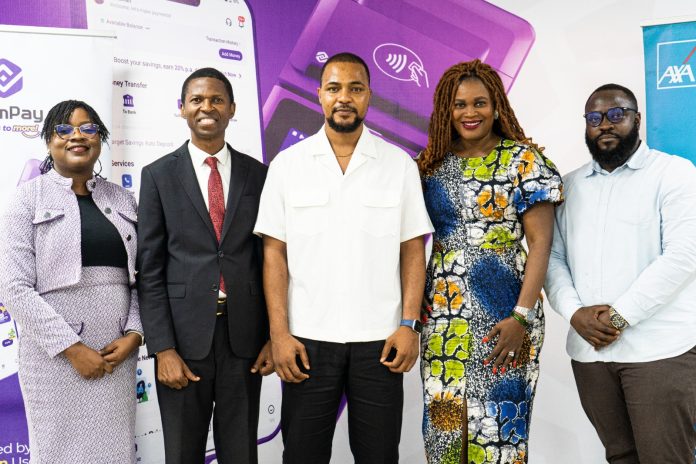
PalmPay, a leading fintech platform and full-stack digital neobank for emerging markets, has partnered with Nigeria’s biggest Health Insurance Company, AXA Mansard Healtha member of the globally trusted AXA Group, to provide millions of Nigerians with affordable, accessible digital health insurance.
This strategic partnership enables PalmPay users to seamlessly access a range of health insurance packages from AXA Mansard directly within the PalmPay app. With plans starting as low as N500 per month, users can now choose from flexible insurance options tailored to fit their everyday needs.
The plans are designed to meet a wide range of needs; for example, the AXA Digital Health plan offers access to telemedicine consultations with doctors, N5,000 worth of medications, and up to N40,000 in surgical coverage. Users can also opt for the AXA Mansard MicroHealth plan at N1,000 per month, which provides unlimited diagnostic tests and funeral benefits. Additionally, the AXA Mansard Accident plan, available for N500 monthly, offers comprehensive death cover for both accidental and non-accidental cases.
Speaking on the partnership, Habib Kowontan, Head of Wealth Product at PalmPay, said: “Insurance is a key pillar of financial security, yet millions of Nigerians remain underserved. Our partnership with AXA Mansard Health breaks down long-standing barriers by placing reliable and affordable insurance solutions right at our users’ fingertips.”
In her remarks, Jumoke Odunlami, Chief Distribution Officer, AXA Mansard Insurance said that the partnership with Palmpay presents the AXA with another opportunity to improve health and productivity of Nigerians. “Through partnerships like this, we are covering over 1.8 million Nigerians and ensuring that healthcare is accessible, available and affordable. So we are excited about joining forces with a brand like Palmpay to compliment the range of financial possibilities they offer their customers with health plans. It fits well with our mission and our purpose of acting for human progress by protecting what matters, and we are looking forward to doing even more with Palmpay”, she explained. This partnership reflects PalmPay’s broader mission to create a more inclusive digital financial ecosystem, one that empowers users to not only manage their money efficiently, but also secure their future.
This partnership reflects PalmPay’s broader mission to create a more inclusive digital financial ecosystem, one that empowers users to not only manage their money efficiently, but also secure their future.
Two housemates, Kayikunmi and Otega, have been evicted from the ongoing Big Brother Naija Season 10 reality show.
The live eviction, hosted by Ebuka Obi-Uchendu in Lagos on Sunday night, featured candid conversations with housemates about their week in the house. During the session, Tracy described fellow contestant Imisi as the most difficult housemate, accusing her of deliberately provoking reactions. Kola also clarified his earlier comments about Dede, explaining that he tried to appear diplomatic to avoid embarrassment on national television, but stressed that their bond remained intact.
Big Brother announced Jason Jae as the best-performing housemate for the week, awarding him the title of Most Influential Player for his contributions.
Otega, the third housemate to exit the show this season, said the experience was enjoyable and revealed plans to launch a culinary programme titled King of Spices after his exit. Kayikunmi’s eviction, however, came as a surprise to many fans. Reflecting on his journey, he admitted to being distracted and not putting himself forward enough, which he believes affected his chances in the game.
Meanwhile, Ivatar, who also made the bottom three, survived eviction and remains in the competition. The Head of House games are scheduled to follow the eviction show.
Nigerian Bottling Company (NBC), the official bottling partner of The Coca-Cola Company in Nigeria, is marking World Youth Day 2025 by celebrating the resilience, innovation, and impact of young Nigerians who are transforming their communities and driving inclusive growth.
At the core of this celebration is NBC’s flagship #YouthEmpowered initiative—designed to equip young people with essential life and business skills for the future of work. Since its launch in Nigeria in 2017, the program has empowered over 60,000 youth through hands-on training, digital upskilling, mentorship, and entrepreneurial coaching.
As part of this year’s activities, NBC will premiere a documentary that spotlights inspiring YouthEmpowered alumni who are building businesses, leading change, and shaping brighter futures for themselves and their communities. The documentary will be available to the public on NBC’s official website, YouTube channel, and social media platforms.
Featured in the film is Esohe Ekunwe, who now leads Alpha Connect, a community initiative focused on financial literacy, wellness, and civic engagement. She credits the YouthEmpowered program with not only influencing her business journey but also transforming her mindset.
The documentary also highlights other changemakers such as Doyin Ogunye, founder of Women and Youth Empowerment, whose environmental work in Lagos is tackling waste and creating jobs; and Kingsley Oguchechukwu, founder of Kingsman Luxury in Enugu, who turned a major business setback into a thriving fashion brand.
By shining a light on these stories, NBC reaffirms its commitment to empowering young Nigerians and supporting their vital role in national development.
Glovo, a leading technological platform connecting customers, businesses, and riders and offering multicategory on-demand services, has entered into a strategic partnership arrangement with the organisers of GITEX Nigeria Tech Expo & Future Economy Summit to select a Tech Startup founder during the summit to attend the 2025 Glovo Startup Campus programme scheduled to hold in October in Barcelona, Spain.
The Glovo Startup Campus is an annual programme by Glovo that brings tech startups from key markets to its headquarters in Barcelona for intensive mentoring, networking, and knowledge-sharing sessions focused on scaling their solutions for greater impact. Every year, participants are usually selected through a local startup competition, and the winner gets to represent their country at the Glovo Startup Campus in Spain.
For the first time, Glovo is extending the programme to Nigeria to enable a Startup Owner from Nigeria to participate.
In her remarks, Glovo Nigeria’s General Manager, Lamide Akinola explained that the partnership with GITEX Nigeria underscores the company’s commitment to spotlighting the continent’s rapidly evolving tech ecosystem and positioning Africa not just as a growth market but as a driver of global innovation.
Akintola stated that the 2025 Startup Festival offers the opportunity to exchange ideas on digital inclusion, sustainable urban logistics, and how platform businesses can fuel local economic development.
“It’s exciting to see many entrepreneurs, investors, and tech leaders come together to co-create solutions to uniquely African challenges. I’m particularly eager to explore partnerships and policy frameworks that can unlock the next wave of e-commerce potential in Nigeria and beyond,” she said.
She disclosed that the decision to enlist a Nigerian participant for the programme reflects the company’s commitment to nurturing entrepreneurial ecosystems in the country. The programme offers promising startups exposure to global best practices, mentorship from industry leaders, and the opportunity to plug into an international innovation network.
Now you can find the Week 10 pool fixtures 2025: pool fixtures for this week, this week pool fixtures, football pools results and fixtures, pool fixtures this week, classic pool fixtures, Aussie pool fixtures, UK pool fixtures, advance pool fixtures, Australia pool fixtures, pool panel results, pool result today Saturday, pool results and fixtures this week, fortune soccer pool fixtures.
Find all the Week 10 pool fixtures on Bizwatchnigeria.ng as soon as they are released by the FPA (Football Pools Authority).
Pool Fixtures For This Week: 10; SEASON: UK 2025/2026