




Keypoints
- Students at Obafemi Awolowo University (OAU), Ile-Ife, held a peaceful protest on Tuesday, April 28, 2026, over severe transportation shortages.
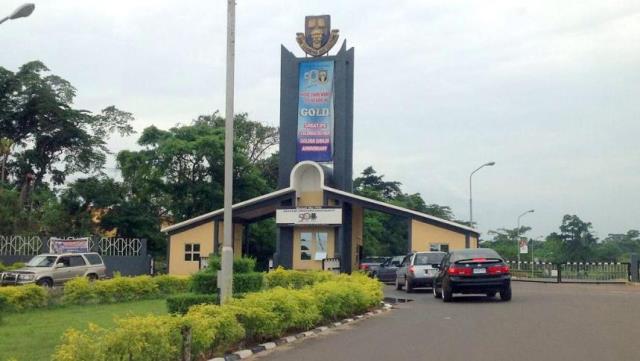
- The university’s main gate was temporarily blocked as students demanded more vehicles to serve the population of over 40,000 students and staff.
- While the First Lady, Sen. Oluremi Tinubu, recently donated 50 buses and 30 tricycles, the Students’ Union says these are still grossly inadequate.
- Students reported missing lectures due to long queues and rising transport costs for those living off-campus.
- The union also called for alternative housing for residents of the AWO Hostel who were displaced due to ongoing renovations.
Main Story
The gates of Obafemi Awolowo University were the site of a vocal but orderly demonstration on Tuesday as students called for an end to daily commuting struggles.
Led by the Students’ Union, the protesters utilized solidarity songs and placards to highlight a transportation system they describe as “grossly inadequate.”
Despite a recent high-profile donation of 50 buses from the First Lady, the sheer volume of commuters—including students, lecturers, and artisans—has overwhelmed the existing fleet.
Deputy Speaker of the Students’ Union, Nasiru Olajide, explained that the protest was a last resort after previous engagements with the university management failed to yield a solution.
Beyond the lack of vehicles, students are also grappling with the poor mechanical condition of the older buses in the fleet. The crisis has a ripple effect on academics, with many students spending hours in queues only to arrive late for or entirely miss their scheduled lectures.
The Issues
The primary challenge is the infrastructure-demand gap; with over 40,000 students, even the recent donation of 50 buses provides only one bus for every 800 students, excluding staff. Authorities must solve the problem of fleet-maintenance, as the union pointed out that many “existing” buses are frequently broken down and out of service.
Furthermore, there is a secondary-displacement risk; the demand for alternative housing for AWO Hostel students adds a layer of logistical pressure, as students forced to move off-campus will further increase the number of people relying on the already strained bus system. To succeed, the university must look beyond one-off donations and establish a sustainable “Bus Rapid Transit” (BRT) model with scheduled timing and regular maintenance cycles.
What’s Being Said
- “These buses are insufficient for the student population, and most of the existing buses are in poor condition,” stated Nasiru Olajide.
- Olajide noted that students are “missing lectures” as a result of spending long hours in queues.
What’s Next
- The OAU management is expected to issue a formal statement addressing the students’ grievances once communication lines with the Public Relations Officer are restored.
- The Students’ Union is anticipated to continue negotiations with the Division of Student Affairs to fast-track the renovation of the AWO Hostel or provide temporary housing.
- There may be a call for private transport operators to be allowed onto campus under strict price regulations to help augment the university’s fleet.
- Student leaders are likely to monitor the arrival of any new vehicles or the repair of grounded ones to ensure the “transportation crisis” is resolved before exam season begins.
Bottom Line
The protest at OAU is a reflection of the logistical strain facing Nigeria’s mega-universities. While the donation of 50 buses was a helpful start, the students’ demand for a more robust and well-maintained fleet shows that for a campus of 40,000, “temporary fixes” are no longer enough to keep the academic wheels turning.