






By Boluwatife Oshadiya | August 17, 2026
Key Points
- Headline inflation falls to 15.43 per cent in July from 15.91 per cent in June
- Month-on-month inflation declines to 1.57 per cent from 1.66 per cent in June
- Food inflation rises to 20.31 per cent year-on-year, driven by higher prices of key food items
Main Story
Nigeria’s headline inflation rate declined to 15.43 per cent in July 2026 from 15.91 per cent in June, according to the latest Consumer Price Index (CPI) report by the National Bureau of Statistics (NBS).
The NBS said the July headline inflation rate decreased by 0.48 percentage points compared with the June 2026 rate, indicating a slower annual increase in the average price level.
On a month-on-month basis, headline inflation stood at 1.57 per cent in July, down from 1.66 per cent in June. The bureau said the decline means the average price level increased at a slower rate during the month.
“This means that in July 2026, the rate of increase in the average price level was lower than the rate of increase in the average price level in June 2026,” the National Bureau of Statistics said.
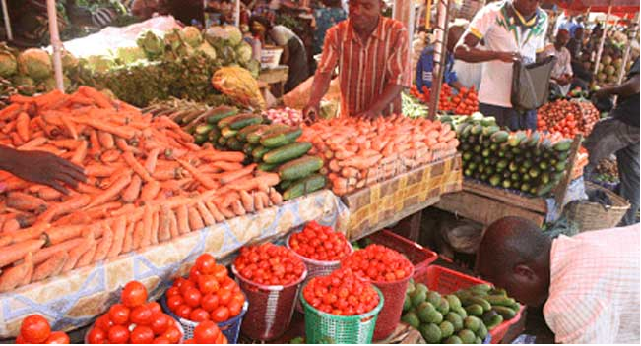
Despite the decline in headline inflation, food prices continued to exert pressure on consumers. Food inflation rose to 20.31 per cent year-on-year in July, although the rate remained below the 26.20 per cent recorded in July 2025.
The NBS attributed the movement in food prices to changes in the average prices of several food items, including crayfish, fresh pepper, fresh onions, carrots, rice, water yam, fresh tomatoes, garri, plantain, beef, eggs, guinea corn, ginger and plantain flour.
On a month-on-month basis, food inflation increased to 5.56 per cent in July from 3.75 per cent in June, representing a 1.82 percentage-point increase.
At the state level, Adamawa recorded the highest month-on-month food inflation at 17.02 per cent, followed by Lagos at 13.48 per cent and Borno at 13.26 per cent. Jigawa, Kebbi and Bauchi recorded declines of 3.68 per cent, 3.67 per cent and 1.85 per cent, respectively.
For year-on-year food inflation, Adamawa recorded the highest rate at 51.36 per cent, followed by Katsina at 30.84 per cent and Zamfara at 30.65 per cent.
What’s Being Said
“On a month-on-month basis, the Headline inflation rate in July 2026 was 1.57%, which was 0.09% lower than the rate recorded in June 2026 (1.66%),” the National Bureau of Statistics said.
The available source material does not include a response from an independent economist, analyst or private-sector stakeholder.
What’s Next
The July CPI figures provide the latest official inflation reading for policymakers, businesses and consumers as they assess price movements across the economy.
The next monthly CPI release from the National Bureau of Statistics will provide the subsequent update on headline and food inflation, including whether the July moderation in headline inflation continues.
Bottom Line
The Bottom Line: Nigeria’s headline inflation rate eased in July, signalling a slower pace of overall price increases. However, the sharp month-on-month rise in food inflation shows that the moderation in headline inflation has not translated into broad relief from food-price pressures.