





Key points
- The Nigerian capital market has officially transitioned to a T+1 settlement cycle effective from June 1, reducing transaction completion timelines to one business day.
- The transition was collaboratively driven by the Nigerian Exchange Ltd., Central Securities Clearing System Plc, and the Securities and Exchange Commission Nigeria.
- Implementing a shorter settlement cycle lowers counterparty risk, boosts market liquidity, and strengthens the overall resilience of the financial ecosystem.
- Markets operating under the T+1 regime currently account for approximately 60 per cent of total global market capitalization.
- Future capital market reforms will expand focus beyond equities to encompass private markets, fixed income, and digital assets.
Main Story
The capital market has taken a major step forward with the implementation of a T+1 settlement cycle, a reform expected to make trading faster, more efficient and more aligned with global standards.
The new system, which became effective from June 1, ensures that investors’ transactions are now completed within one business day, compared to the previous two-day settlement period.
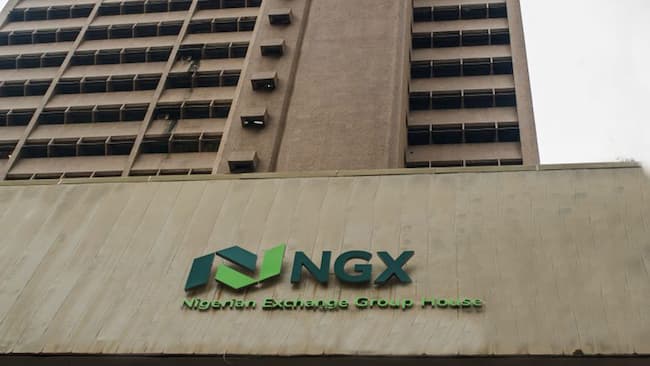
The transition was driven by key market institutions, including the Nigerian Exchange Ltd. (NGX), the Central Securities Clearing System Plc (CSCS), the Securities and Exchange Commission (SEC) Nigeria, and other stakeholders in the financial ecosystem.
Speaking at the T+1 settlement cycle transition ceremony organised by CSCS in Lagos on Monday, its Managing Director, Mr Shehu Shantali, said the reform would improve market efficiency and boost investor confidence.
He said the initiative, themed “Advancing Market Efficiency and Global Competitiveness,” would also reduce counterparty risk by shortening the time between trade execution and settlement.
Shantali noted that the transition reflected decades of capital market reforms, moving from manual processes and physical share certificates to a fully electronic system.
He recalled that before the establishment of CSCS in 1997, settlement cycles could take between three and six months.
He said the introduction of CSCS operations in April 1997 reduced settlement time to T+5 and eliminated physical share certificates.
Subsequent reforms led to a T+3 cycle in March 2000 and later T+2 in November 2025, before the latest move to T+1.
Shantali commended the SEC and its Director-General, Dr Emomotimi Agama, as well as other market institutions for their roles in achieving the milestone.
SEC Director-General, Dr Agama, said the transition would reduce settlement risks, improve liquidity and strengthen investor confidence.
He noted that major markets such as the United States, Canada and Mexico adopted T+1 in 2024, while India implemented phased reforms between 2022 and 2023.
According to him, markets operating T+1 now account for about 60 percent of global market capitalisation.
Chairman of NGX Group, Dr Umaru Kwairanga, also congratulated market operators, describing the reform as a step toward a more competitive financial system.
He said efforts would continue to deepen market participation and make investing more seamless for both local and international investors.
Chairman of CSCS, Mr Temi Popoola, commended stakeholders for their collaboration and said ongoing reforms would focus on strengthening trading infrastructure, data systems and operational processes to support increased market activity.
The Issues
- Upgrading operational infrastructure, data systems, and trading processes to support increased transactional activity under tight timelines.
- Aligning local trading practices with advanced global markets that migrated to accelerated settlement frameworks earlier.
- Managing the transition pressure on financial system operators who must process trade executions and funding decisions in one day.
What’s Being Said
- Announcing the official operational activation of the accelerated market clearing regime, Dr Emomotimi Agama stated: “The T+1 settlement cycle is now live, and with it, a new era has begun,”.
What’s Next
- Institutional and retail investors will begin accessing their funds and reinvesting capital on the shorter one-day business timeline.
- Capital market authorities will continue efforts to deepen participation and make investing more accessible for local and international investors.
- Reformers will expand attention beyond standard equities to include fixed income, private markets, and digital assets.
Bottom Line
Nigeria’s capital market has officially launched its T+1 settlement cycle, reducing transaction times to a single business day in a coordinated institutional move driven by the SEC, NGX, and CSCS to boost liquidity, mitigate counterparty risk, and align domestic trading infrastructure with global standards.