






KEY POINTS
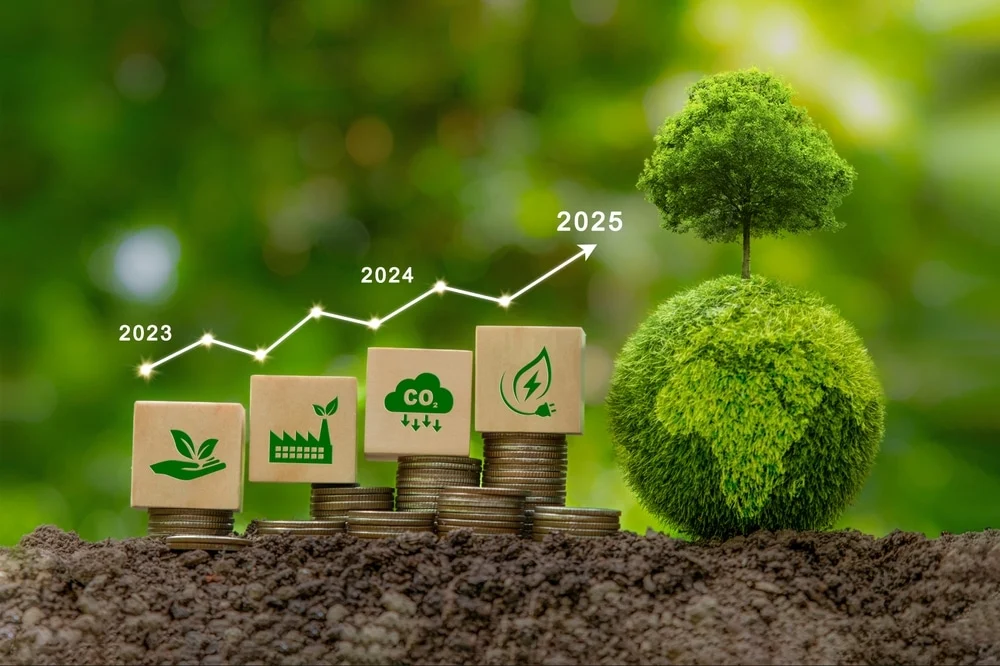
- Nigeria aims to capture $2.5 billion in high-integrity carbon credit investments by 2030, following the formal establishment of its carbon market.
- The Voluntary Carbon Market (VCM) is identified as a primary driver for growth, with Africa’s potential value estimated at $1.5 trillion by 2050 if integrity and equity are maintained.
- As of December 2025, over 120 carbon projects have already been registered in Nigeria, signaling high investor confidence and institutional readiness.
MAIN STORY
Prof. Simon Ortuanya, Vice Chancellor of the University of Nigeria, Nsukka (UNN), has disclosed that Nigeria is positioning itself to attract $2.5 billion in high-integrity carbon credit investments by 2030. Speaking at a validation workshop in Abuja on Thursday, Ortuanya explained that the establishment of a national carbon market framework is a critical milestone for transitioning to a low-carbon economy.
The workshop was organized by the Resources and Environmental Policy Research Centre (REPRC-EfD) to examine the potential and challenges of Nigeria’s Voluntary Carbon Market (VCM).
Ortuanya clarified that while Compliance Carbon Markets (CCM) remain largely hypothetical in Africa, the VCM has shown remarkable growth driven by the private sector. By aligning with Article 6 of the Paris Agreement, Nigeria seeks to trade carbon credits effectively while safeguarding against “carbon leakage” and negative impacts on vulnerable communities. He emphasized that strong governance systems are essential to ensure equitable benefits and environmental integrity.
Prof. Nnaemeka Chukwuone, representing the Vice Chancellor, noted that significant progress has been made since research began over a year ago. Nigeria now possesses a functional carbon market framework, facilitated by the National Council on Climate Change. With over 120 projects registered by the end of 2025, the initiative is expected to reduce emissions, generate revenue, and support poverty reduction, mirroring successful traction seen in regional peers like Ghana and Kenya.
WHAT’S BEING SAID
- “Nigeria is positioning itself to capture a sizeable share of about 2.5 billion dollars in high-integrity carbon credit investment by 2030,” stated Prof. Simon Ortuanya.
- Prof. Nnaemeka Chukwuone added: “Investor confidence and interest in carbon market opportunities were now high across the country.”
- Regarding governance, Ortuanya warned: “Poor implementation could lead to carbon leakage and adverse effects on vulnerable communities.”
WHAT’S NEXT
- Stakeholders will finalize the validation of research findings to develop actionable strategies for market regulation and community participation.
- Ongoing efforts will focus on strengthening Monitoring, Reporting, and Verification (MRV) systems to maintain “high-integrity” standards for international investors.
- The National Council on Climate Change will continue to oversee the registration and implementation of the 120+ existing projects to ensure they deliver measurable emission reductions.
BOTTOM LINE
The Bottom Line is that Nigeria’s newly established carbon market framework has turned a theoretical concept into a $2.5 billion investment opportunity. By prioritizing high-integrity credits and equitable community benefits, the country aims to become a major player in the global VCM, using environmental conservation as a catalyst for economic empowerment.










, has disclosed that Nigeria is positioning itself to attract $2.5 billion in high-integrity carbon credit investments by 2030. Speaking at a validation workshop in Abuja on Thursday, Ortuanya explained that the establishment of a national carbon market framework is a critical milestone for transitioning to a low-carbon economy.)