








Key points
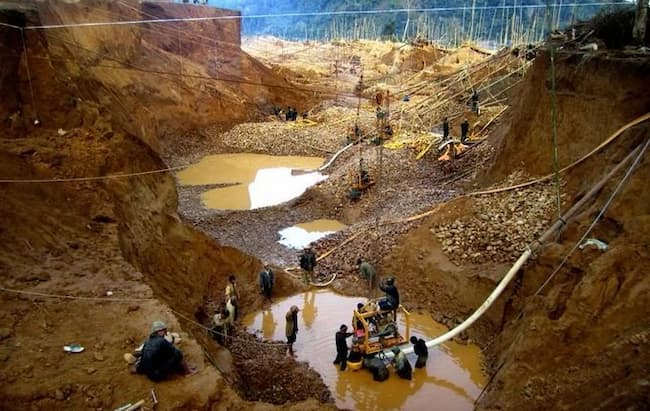
- Mining companies have been urged to obtain a Social Licence to Operate (SLO) from host communities in addition to regulatory approvals.
- The Mining Cadastre Office (MCO) says community trust is now critical to sustainable mining operations.
- Operators were advised to embrace Environmental, Social and Governance (ESG) principles and prioritise benefit-sharing.
- The MCO warned that communities can disrupt projects if they feel excluded from mining activities.
Main story
The Director-General of the Mining Cadastre Office (MCO), Obadiah Nkom, has urged mining companies operating in Nigeria to go beyond securing mineral titles and actively earn the trust and support of host communities through what is known as a Social Licence to Operate (SLO).
Nkom made the call during a masterclass session at the fifth African Natural Resources and Energy Summit (AFNIS) in Abuja, where discussions focused on sustainable mining practices and community engagement.
Represented by the Head of Research, Development and Statistics at the MCO, Hannatu Muhammad, Nkom said the future of mining increasingly depends on how well companies manage relationships with local communities and demonstrate responsible business practices.
He explained that while obtaining a mining licence remains a legal requirement, community acceptance has become equally important for project success and long-term sustainability.
According to him, the global mining industry is moving away from traditional extraction-focused models toward approaches built on environmental responsibility, social inclusion, transparency and shared economic benefits.
Nkom said mining companies should view Community Development Agreements (CDAs) as more than regulatory obligations, describing them as practical tools for delivering local development and strengthening community participation.
He noted that Nigeria’s Minerals and Mining Act provides a framework for responsible mining and requires operators to conduct their activities in a manner that benefits both the country and affected communities.
The MCO boss stressed that mining projects are increasingly vulnerable to disruption when communities feel excluded from decision-making processes or fail to see tangible benefits from resource extraction in their areas.
He urged operators to embed Environmental, Social and Governance (ESG) principles into every stage of their operations, arguing that responsible mining practices are now essential for maintaining investor confidence, operational stability and community support.
Nkom added that sustainable mining should be built on partnerships that create value for investors, governments and host communities alike.
The issues
Across Africa and other mining jurisdictions, host communities are demanding greater participation in decisions affecting natural resource projects.
While companies may possess legal permits, projects often face resistance when local populations believe they are excluded from economic benefits or environmental protections.
As a result, Social Licence to Operate has become increasingly important in the mining sector, with investors and regulators placing greater emphasis on ESG compliance, community engagement and benefit-sharing arrangements.
Failure to address community concerns can lead to protests, legal disputes, operational disruptions and reputational damage.
What’s being said
“Corporate trust and community programmes are critical. We cannot talk about sustainable mining when a company obtains a mineral title but lacks community trust.” — Obadiah Nkom, Director-General, Mining Cadastre Office
“There is a need for a social licence to operate. The new social contract promotes equity, connectivity and shared benefits.” — Obadiah Nkom, Director-General, Mining Cadastre Office
“We must move from resource extraction to shared value. Mining companies should adopt models based on transparency, accountability and sustainable development.” — Obadiah Nkom, Director-General, Mining Cadastre Office
“Communities today are more informed and organised. They can interrupt projects if they feel excluded or their interests are not protected.” — Obadiah Nkom, Director-General, Mining Cadastre Office
“Environmental protection, social inclusion, transparency, accountability and stakeholder participation are no longer optional.” — Obadiah Nkom, Director-General, Mining Cadastre Office
What’s next
Mining stakeholders are expected to face increasing pressure to strengthen community engagement and integrate ESG standards into project planning and execution.
The emphasis on Social Licence to Operate is also likely to influence how mining projects are assessed, financed and managed, particularly as host communities become more organised and assertive in demanding greater benefits from resource development.
Bottom line
The MCO’s message is that legal permits alone are no longer enough. Mining companies that fail to earn community trust and deliver shared benefits risk resistance that could threaten the viability of their operations.







, Obadiah Nkom, has urged mining companies operating in Nigeria ...)