








Key points
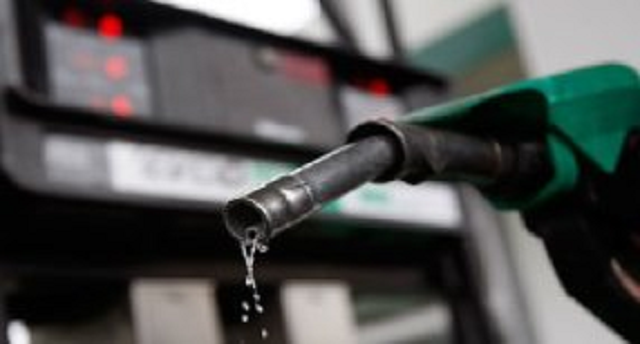
- Many motorists in the Federal Capital Territory have accused some fuel stations of adjusting their fuel pumps to under-dispense petroleum products.
- The sharp practice has forced several motorists to park their cars as they can no longer afford to fuel them amid rising economic hardship.
- Motorists noted that major marketers like MRS and NNPC maintain accurate meters, whereas independent marketers are frequently accused of pump manipulation.
- Development experts have called on the Nigerian Midstream and Downstream Petroleum Regulatory Authority (NMDPRA) to deploy “mystery shoppers” and carry out surprise inspections.
- The Independent Petroleum Marketers Association of Nigeria (IPMAN) has condemned the sharp practices and announced plans to organize ethical workshops for pump attendants.
Main Story
Many motorists in the Federal Capital Territory (FCT) have accused some fuel stations in the territory of adjusting their fuel pumps. According to them, the development has made them not to have value for their money.
The motorists said it was an act of wickedness for the fuel stations to adjust their fuel pumps just to make extra cash, adding that Nigerians were really going through a difficult time.
Media reports indicate that the development has forced many motorists to park their cars as they could no longer afford to fuel them. The motorists, at Dei-Dei, Central Area, Dutse, Nyayan, Mararaba and Kubwa, spoke with reporters in Abuja on Wednesday.
To evaluate intermediate structural dependencies, consumer protection analysts noted that minor volumetric discrepancies across high-volume distribution lines rapidly siphon significant purchasing power from daily commuters.
Mrs Ladi Odika said she observed that many pump attendants who dispensed petroleum products increasingly cheated consumers through pump adjustment.
She said some attendants could do all kinds of things, including blocking motorists from seeing their meters by introducing items to them to buy.
She noted that some attendants will make compliments on motorists in order to cause confusion or distract them, adding that her fuel gauge only rises properly when patronizing major marketers like MRS or NNPC.
Furthermore, trade compliance associations are partnering with logistics unions to run ethical training programs for downstream facility workers.
The National Publicity Secretary of the Independent Petroleum Marketers Association (IPMAN), Mr Chinedu Ukadike, condemned the alleged diversion and sharp practices in the distribution of petroleum products, warning that such activities threaten investors’ confidence and Nigeria’s energy security.
He stated that IPMAN will work in collaboration with the Nigeria Union of Petroleum and Natural Gas Workers (NUPENG) to address the issue through sensitisation and professional training for petroleum pump attendants.
The Issues
- Combating intentional pump adjustments by retail stations looking to make extra cash at the expense of consumers.
- Overcoming the regulatory challenges of monitoring every single filling station scattered across the country.
- Managing the loss of public trust and potential discouragement of investments in the downstream petroleum industry.
What’s Being Said
- Recounting his personal experience using a physical container to verify the volumetric accuracy of a local vendor, motorist Mr Abdul Danladi explained: “Now, I use a 25-litre jerry can to buy fuel. The filling station meter showed that they supplied me with 25 litres of the product but it did not fill-up. I insisted that the jerry can should be filled before paying. After all the arguments that attracted many people, the attendant complied and I paid,”.
- Explaining the strategic preference of choosing specific private operators only during severe time constraints, motorist Lateef Ojerinde noted: “Some filling stations like MRS and NNPC are still fair; when you buy, you see the difference. But some private ones are notorious, and if you complain, their attendants will insult you,”.
- Quantifying the direct financial loss an individual experiences when hit with an unverified twenty-five percent volumetric reduction at the pump, development expert Dr Aliyu Ilias noted: “Imagine I want to buy fuel worth N20,000, but they gave me N15,000 worth of fuel. That would have taken a lot of purchasing power from me,”.
- Demanding strict accountability from regulatory bodies to keep the downstream petroleum sector functional, Ilias added: “All these people need to be well monitored because anything you don’t monitor, you can not manage,”.
- Emphasizing that high commodity pricing raises the structural necessity for absolute financial transparency across retail lines, IPMAN National Publicity Secretary Mr Chinedu Ukadike stated: “It is not a very good practice considering the cost of petroleum products now and consumers deserve optimal services both in the quality and quantity of fuel dispensed,”.
- Illustrating how local consumer perceptions vary widely between different retail outlets based on historical transparency, Ukadike observed: “There are communities that will tell you that some stations are fair and always correct, while others are accused of sharp practices,”.
- Detailing the systemic field testing procedures deployed by state teams to verify the mechanical alignment of retail equipment, George Ene-Ita of the NMDPRA explained: “Normally, we implement an on-field surveillance framework designed to detect these anomalies. Our field teams are very thorough in these retail outlets and subject their underground tanks, pumps and meters to quality and quantity tests to ensure that the public is well served,”.
What’s Next
- The NMDPRA FCT regional office will carry out an operational assessment of the specific facilities following the latest public complaints.
- IPMAN and NUPENG will organize joint workshops to educate fuel attendants on ethical practices and proper dispensing procedures.
- Regulators will review calls to deploy mystery shoppers and calibrated measuring equipment to enhance independent field verification.
Bottom Line
Widespread complaints from motorists over adjusted fuel pumps at FCT independent filling stations have sparked calls for aggressive regulatory monitoring, prompting the NMDPRA to launch an operational assessment of the affected stations and forcing IPMAN to plan ethical workshops for pump attendants to restore public trust.







 have accused some fuel stations in the territory of adjusting their fuel pumps.)