KEY POINTS
• Ghanaian President John Dramani Mahama has called for a new global development bargain that gives Global South countries greater control over decisions affecting their development and health priorities.
• He linked the Accra Reset to stronger domestic production, financial resilience, accountable governance and reduced dependence on externally designed programmes.
• Mahama unveiled a report proposing reforms to the global health architecture and said the initiative was moving from design to implementation.
MAIN STORY
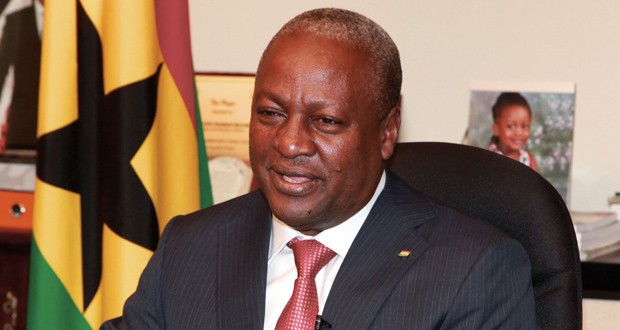
Ghanaian President John Dramani Mahama has called for a new global development arrangement that gives countries in the Global South greater control over how their health and development priorities are financed, designed and implemented.
Mahama made the call at the high level Accra Reset: Global Reset Dialogue held on the sidelines of the 81st United Nations General Assembly in New York.
He said countries could not take full ownership of development outcomes when key decisions remained outside their control.
“There can be no ownership without control,” Mahama said, linking the problem to the limited influence of developing countries over global systems governing trade, finance and health.
According to him, the Accra Reset was established around three interconnected challenges: geostrategic marginalisation, geopolitical vulnerability and donor dependence.
He said addressing these constraints would require countries in the Global South to strengthen the relationship between political authority, productive capacity and financial resilience.
Mahama urged countries to build the capacity to define, finance and sustain their own development priorities instead of relying heavily on external financing and programmes designed outside their countries.
He, however, said greater national control must come with accountability, responsible governance and fiscal discipline.
The Ghanaian president connected the global initiative with his administration’s Resetting Ghana Agenda, which he said promotes economic self reliance, local value addition, stronger public health infrastructure, transparent governance and the 24 Hour Economy initiative.
“A national reset without a global reset leaves us building on shifting sand,” he said.
In the health sector, Mahama advocated increased domestic pharmaceutical production, supported by predictable government procurement and access to regional markets.
He said Ghana’s health reset should not be limited to constructing medical facilities while depending on foreign partners for essential medicines and supplies.
“When we say we are resetting Ghana’s health sector, we do not mean simply building medical facilities and waiting for foreign donors to supply the essential vaccines or IV fluids,” he said.
Mahama said expanding local production would strengthen industrial capacity while improving access to essential health commodities in Ghana and across the region.
At the dialogue, he unveiled the High Level Panel report, “A Sovereign Future for Health”, which proposes changes to the global health architecture.
The report contains five political shifts and 10 recommendations focused on increasing national and regional capacity while retaining areas where international cooperation remains necessary.
Its recommendations include country led health compacts, sustainable financing transitions, stronger regional institutions, equitable health innovation, regional health manufacturing, improved procurement and commodity security.
The report also addresses protection of global public goods, humanitarian continuity, reform of global health institutions and independent accountability.
Mahama said the report marked the start of implementation rather than the end of the initiative.
“We are now moving from design to execution,” he said.
He said Ghana and the Accra Reset Presidential Council would work with governments, global health organisations, development finance institutions, philanthropic organisations and private sector stakeholders to translate the recommendations into country level agreements.
Mahama stressed that the initiative was not intended to promote isolation from international partners. Instead, he described its approach as “pragmatic interdependence”, involving cooperation among countries as equals while building stronger domestic and regional capabilities.
He argued that greater self reliance in the Global South should not be seen as a threat to countries in the Global North, saying stronger health systems and productive capacity would contribute to global health security.
Health was selected as the first major focus of the reset because its effects could be measured directly in human lives, Mahama said.
He identified maternal and child survival as an immediate measure of whether changes in financing and governance could produce tangible results.
He said the Mother Africa initiative and Business United for Mothers, Babies and Youth campaign would combine public policy with corporate responsibility to improve outcomes for women, newborns and children.
Mahama said Ghana’s maternal mortality remained above the Sustainable Development Goal target, making the initiatives an opportunity to test the proposed financing and governance model against measurable outcomes.
He also announced plans to take the Accra Reset into Africa’s collective policy framework when Ghana assumes the chairmanship of the African Union in 2027.
Ghana will also work with the Non Aligned Movement and the Group of 77 plus China to advance the initiative, he said.
THE ISSUES
- The proposed reset centres on who controls development decisions, particularly financing, programme design and implementation. Mahama’s argument is that greater ownership requires countries to have stronger influence over these areas.
- Health sovereignty is being linked to industrial capacity. The proposal for regional pharmaceutical manufacturing and stronger procurement systems is intended to reduce dependence on external supplies while supporting domestic production.
- The initiative also places responsibility on governments. Mahama said greater control must be accompanied by accountability, responsible governance and fiscal discipline.
- The proposed reforms extend beyond health to wider development cooperation, institutional reform, financing, skills, industrial capacity and shared prosperity.
WHAT’S BEING SAID
“There can be no ownership without control,” – John Dramani Mahama, President of Ghana
“A national reset without a global reset leaves us building on shifting sand,” – John Dramani Mahama, President of Ghana
“We are now moving from design to execution,” – John Dramani Mahama, President of Ghana
WHAT’S NEXT
Ghana and the Accra Reset Presidential Council are expected to engage governments, global health organisations, development finance institutions, philanthropic organisations and private sector stakeholders on country level implementation of the report’s recommendations.
Ghana also plans to advance the Accra Reset through the African Union, the Non Aligned Movement and the Group of 77 plus China.
BOTTOM LINE
Mahama is calling for a development model in which Global South countries have greater control over the decisions and resources shaping their priorities. The Accra Reset is now moving from policy design towards implementation, beginning with health.