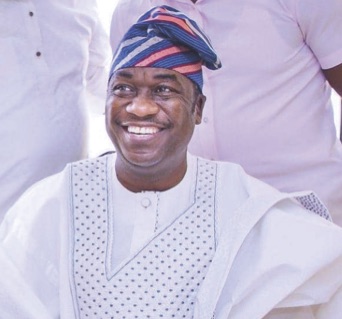
As political permutations begin to take shape ahead of the 2027 governorship cycle in Lagos State, one name increasingly surfaces within elite political conversations: Dr. Obafemi Hamzat, the incumbent Deputy Governor.
Yet, the discourse around him extends beyond ambition or succession. It reflects a deeper question rooted in Lagos’ political sociology: is Hamzat defined more by heritage or by contribution and in Lagos politics, which carries greater weight?
This question sits at the intersection of identity politics, institutional loyalty, and the long-standing, largely informal rules that have shaped leadership selection in Nigeria’s most economically and politically influential state.
Lagos: a political system built on continuity and elite consensus
To understand Hamzat’s relevance in Lagos succession politics, it is essential to situate the state within its historical political architecture.
Modern Lagos governance has evolved through distinct political eras, from the dominance of the Action Group tradition in the First Republic under Obafemi Awolowo’s progressive political philosophy, through the civilian administration of Lateef Jakande in the Second Republic, and into the Fourth Republic where party structures matured into what is now the All Progressives Congress (APC).
While Awolowo did not govern Lagos State directly, his ideological imprint through the Action Group established the foundational political culture of the Western Region, which later influenced Lagos’ preference for:
- Policy-driven governance
- Elite consensus over populist disruption
- Administrative competence over ethnic mobilisation
From Jakande’s social welfarism to the technocratic administrations of Tinubu, Fashola, Ambode, and Sanwo-Olu, Lagos has largely followed a structured succession model, anchored on:
- Strong party machinery (AD → AC → ACN → APC)
- Political grooming and mentorship
- Elite consensus rather than open electoral competition within the ruling bloc
This pattern is often mischaracterised as zoning, but it is more accurately described as a managed continuity system within dominant party structures.
Hamzat: lineage, politics, and institutional capital
Dr. Femi Hamzat occupies a distinct position within Lagos political hierarchy. Born in Lagos in 1964, he represents a blend of indigenous linkage and institutional political socialisation. His father, Alhaji Mufutau Olatunji Hamzat, was a known Lagos political figure who served in legislative and executive capacities during earlier republics.
This establishes a political family footprint within Lagos governance history, even as his broader ancestry includes cross-state origins, an increasingly common feature in Lagos’ cosmopolitan identity.
Beyond lineage, Hamzat’s political credentials are primarily institutional:
- Former Commissioner for Science and Technology under Governors Bola Tinubu and Babatunde Fashola
- Commissioner for Works and Infrastructure, overseeing key urban development portfolios
- Deputy Governor of Lagos State since 2019, re-elected in 2023
His governance profile is therefore defined less by symbolic identity and more by administrative continuity within Lagos’ executive structure, particularly in infrastructure and digital governance reforms.
The Lagosian question: identity, citizenship and political acceptance
The recurring debate over who qualifies as a “Lagosian” is not new. It reflects a broader tension between indigene identity and urban citizenship in one of Africa’s most cosmopolitan megacities.
Historically, Lagos has absorbed large populations from across Nigeria and beyond, making political identity fluid but politically sensitive.
However, empirical observation of Fourth Republic politics suggests that leadership selection in Lagos has been guided less by strict ethnic origin and more by three dominant factors:
- Integration into dominant party structures
- Demonstrated administrative capacity
- Acceptance within elite political consensus blocs
Within this framework, Hamzat’s political identity aligns more with institutional belonging than ethnic classification, a factor that has increasingly shaped governance legitimacy in Lagos.
Succession politics: is there a path for hamzat?
Speculation around Hamzat’s potential 2027 governorship ambition has gained traction within political circles, particularly following informal discussions linked to elite advisory structures such as the Governance Advisory Council (GAC).
However, it is important to separate political speculation from confirmed party decisions.
In Lagos’ political system:
- Deputy governors are not automatic successors
- Governorship succession is typically determined by elite negotiation and party consensus
- Political loyalty and long-term alignment remain critical variables
Hamzat’s political trajectory reflects these realities. In the 2018 APC primaries, he stepped down in favour of Babajide Sanwo-Olu—a decision widely interpreted by analysts as strategic alignment within the party’s internal consensus framework rather than political withdrawal.
This positioning has since reinforced his reputation as a party-aligned technocrat within Lagos’ continuity system.
Fit for office? A data-driven assessment of political capital
Any assessment of Hamzat’s suitability for higher office must be grounded in verifiable governance experience rather than speculation.
Documented strengths:
- Over two decades of public sector administration in Lagos
- Experience spanning science, technology, and infrastructure portfolios
- Direct involvement in urban development and digital governance reforms
Institutional positioning:
- Serving Deputy Governor, currently the second-highest executive office in the state
- Deep integration into Lagos State Executive Council decision-making structures
- Established visibility within ruling party governance architecture
However, there is no official APC nomination, endorsement, or declared candidacy for 2027 at this stage. Any projection remains political inference rather than confirmed succession planning.
Does origin still matter in lagos politics?
This remains the most politically sensitive dimension of the discourse. Lagos operates within a hybrid identity structure where:
- Indigenous sentiment occasionally shapes political rhetoric
- Cosmopolitan realities dominate demographic and electoral composition
- Party machinery ultimately determines candidacy viability
In practice, Lagos leadership selection since 1999 has favoured individuals who are:
- Embedded in the state’s governance institutions
- Strongly aligned with ruling party structures
- Perceived as administratively competent and politically reliable
In this sense, debates around Hamzat’s identity may reflect evolving political anxieties rather than decisive structural criteria in leadership selection.
The bigger picture: 2027 and the politics of continuity
As Lagos moves toward another transition cycle, the central question may not be about identity or heritage alone, but about continuity within a tested governance system.
Hamzat’s profile—technocratic, institutionally embedded, and politically aligned—places him within the established Lagos governance tradition.
However, Lagos politics remains fundamentally dynamic. Elite consensus can shift, alliances can be renegotiated, and new political actors can emerge rapidly within the ruling structure.
Bottom line
Dr. Femi Hamzat represents the intersection of political lineage and institutional contribution within Lagos governance. Yet, Lagos history consistently shows that leadership outcomes are rarely determined by identity narratives alone.
Ultimately, in Lagos politics, succession is shaped not by speculation or sentiment, but by structure, elite consensus, and strategic timing within a tightly managed political system.