







KEY POINTS
- President Prof. Hugh Brady reaffirmed Imperial College London’s commitment to West Africa, highlighting a strategy to “double down” on international hubs following Brexit.
- A new Global Hub in Accra has been established to serve the West African region, joining existing hubs in Singapore, Shenzhen, and San Francisco.
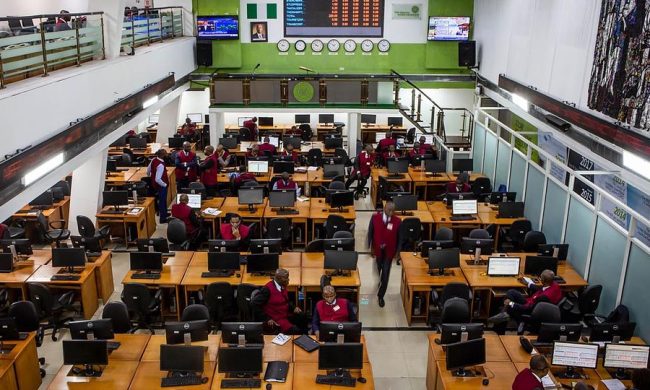
- Since 2020, Imperial has collaborated with 69 Nigerian institutions, resulting in 403 co-authored publications, primarily in the field of medicine.
- Journalists from Nigeria and Ghana toured cutting-edge labs, including the Digital Diagnostics for Africa and Target Malaria facilities, to witness real-world scientific impact.
MAIN STORY
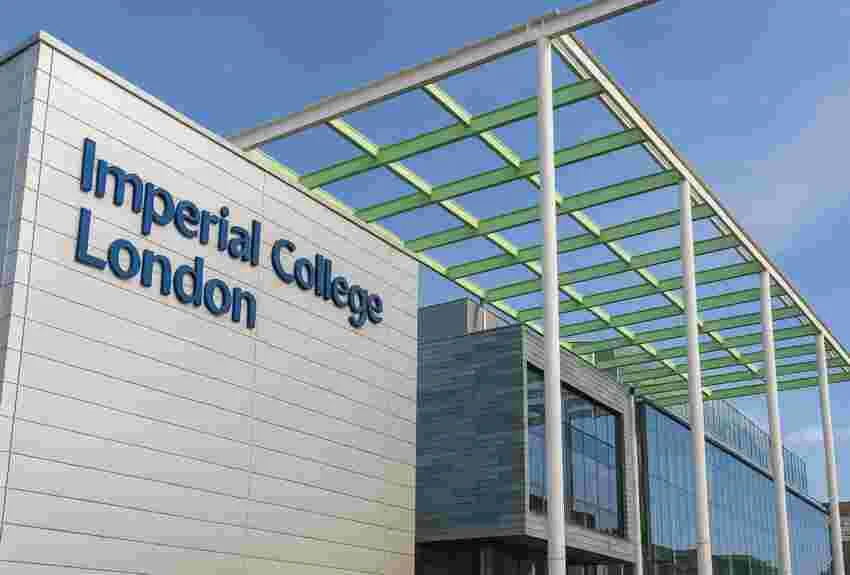
Imperial College London is repositioning itself as a primary scientific bridge between the UK and West Africa.
During a learning visit for Nigerian and Ghanaian journalists in London, President Hugh Brady explained that the institution is intentionally moving beyond traditional academic boundaries to drive industrial and social utility. By focusing strictly on Science, Technology, Engineering, Medicine, and Business (STEMB), Imperial aims to translate complex research into scalable solutions for climate change, food insecurity, and healthcare.
The strategy is rooted in a “multiplier effect” intended to strengthen research ecosystems over the next five years. The visit highlighted specialized laboratories like the Polymateria and Muju Earth labs, where researchers are developing technologies tailored for African contexts.
This collaboration is already yielding high-volume output; Nigeria and Ghana currently contribute to approximately 80 joint research publications annually with Imperial, signaling a robust and growing intellectual exchange.
THE ISSUE
The primary challenge identified is the “Science-Trust Gap.” Prof. Brady warned that without effective communication, the public may reject emerging technologies due to a lack of understanding or fear of risks. This “Narrative Deficit” can stall the adoption of life-saving innovations in digital diagnostics or malaria control. To resolve this, Imperial is calling for a “Translational Media Partnership,” urging journalists to act as the essential link that converts dense scientific data into accessible, trustworthy narratives for citizens across West Africa.
WHAT’S BEING SAID
- “Following Brexit, Imperial chose to expand its global reach… our response was to double down on international partnerships,” stated Prof. Hugh Brady, President of Imperial College.
- “If we don’t have the trust of citizens, we risk losing the opportunity to use science and technology as a force for good,” Brady warned journalists.
- “Central to this strategy is the creation of global hubs, including one in Accra serving West Africa,” he added regarding regional expansion.
- “Imperial has collaborated with 69 institutions in Nigeria since 2020… with medicine being the most popular area,” reported the News Agency of Nigeria (NAN).
WHAT’S NEXT
In the coming months, the Accra Global Hub is expected to ramp up operations, serving as the nerve center for talent discovery and investment across the sub-region. Imperial plans to increase its co-authored output with Nigerian universities, moving beyond the current 403 publications to include more climate-focused and agricultural research. Media professionals who participated in the London tour are expected to launch a series of “accessible science” features to bridge the public trust gap. Furthermore, look for new scholarship and fellowship announcements specifically targeting West African researchers to staff the digital diagnostics and malaria labs.
BOTTOM LINE
The bottom line is that Imperial College is trading “Isolation” for “Integration.” By establishing a physical and intellectual anchor in West Africa, the institution is ensuring its research remains globally relevant and locally applicable. For Nigerian and Ghanaian scientists, this partnership represents a direct line to world-class laboratories and the global investment stage.