










KEY POINTS
- The International Criminal Court (ICC) publicly unsealed four arrest warrants against senior Taliban figures, accusing them of crimes against humanity for the systematic persecution of women and girls in Afghanistan.
- The warrants target Taliban Supreme Leader Haibatullah Akhundzada, Chief Justice Abdul Hakim Haqqani, Education Minister Habibullah Agha, and Higher Education Minister Neda Mohammad Nadim.
- Judges concluded that the suspects implemented oppressive government policies resulting in severe violations of fundamental human rights, including widespread educational bans, deprivation of movement, and institutionalized gender-based harm. Anadolu Ajansı
MAIN STORY
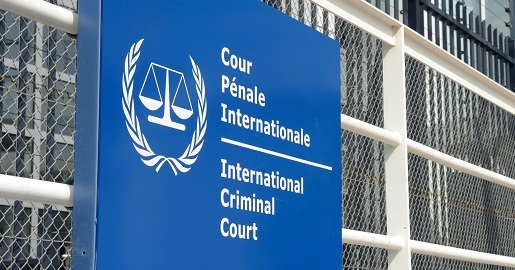
The International Criminal Court (ICC) has formally unsealed four arrest warrants for top-ranking Taliban officials, marking a major legal step addressing the sweeping suppression of women and human rights in Afghanistan.
Originally issued under seal between July and September 2025 to protect vulnerable witnesses and preserve judicial integrity, the public disclosure exposes the leadership chain allegedly responsible for systematic gender and political persecution since the regime’s return to power in August 2021.
The unsealed documents implicate Taliban Supreme Leader Haibatullah Akhundzada, Chief Justice Abdul Hakim Haqqani, Education Minister Habibullah Agha, and Higher Education Minister Neda Mohammad Nadim. According to the ICC Pre-Trial Chamber, reasonable grounds exist to hold all four criminally liable for ordering, inducing, or soliciting persecution as a crime against humanity under Article 7(1)(h) of the Rome Statute.
Judges emphasized that the systemic edicts imposed by the de facto government went beyond standard rule enforcement, specifically stripping women and girls of fundamental rights to education, employment, privacy, and freedom of movement, alongside politically targeting individuals perceived as allies to women’s rights.
Legal experts note that while the warrants represent a critical symbolic and accountability milestone for international justice, enforcement remains heavily constrained.
Because the ICC lacks an independent police force, execution depends entirely on state cooperation, leaving the suspects insulated within Afghanistan where the Taliban maintains absolute control. The Taliban leadership has consistently dismissed the court’s jurisdiction and legitimacy.
THE ISSUES
- Enforcing international arrest warrants against de facto governing authorities remains structurally challenging when local regimes refuse cooperation and reject international judicial jurisdiction. Afghanistan International
- Codifying systematic institutional oppression and gender-based discrimination as a crime against humanity under international law establishes vital legal precedents for protecting marginalized populations under authoritarian rule.
WHAT’S BEING SAID
“The chamber found that the suspects implemented a government policy resulting in severe violations of fundamental rights in connection with murder, imprisonment, torture, rape and enforced disappearance.” – ICC Pre-Trial Chamber Findings
“Afghanistan does not recognize any court under the title of the ‘International Court,’ nor does it attach any significance to its positions.” – Zabihullah Mujahid, Chief Spokesperson, Taliban Government The Standard (HK)
WHAT’S NEXT
The ICC will continue working with international bodies and member states to document ongoing human rights abuses in Afghanistan while monitoring potential pathways for future enforcement and suspect accountability.
BOTTOM LINE
The ICC has publicly unsealed arrest warrants for four senior Taliban leaders over the systematic persecution of women and girls, highlighting ongoing global efforts to hold the regime accountable for crimes against humanity.



 has formally unsealed four arrest warrants for top-ranking Taliban officials, marking ...)