



Key points
- UN Secretary-General António Guterres described the lack of a permanent African seat on the Security Council as a “historic injustice” during a visit to Nairobi.
- Guterres broke ground on a $340 million expansion of the UN’s Kenyan campus, signaling a shift in global operations toward Africa.
- The Secretary-General warned that the ongoing conflict involving Iran is severely impacting African food security, with urea prices rising over 35% in one month.
- He called for a reform of the international financial architecture to provide Africa with fairer access to resources and debt relief.
- Guterres criticized external “spoilers” who fuel African conflicts by supplying arms to warring parties in regions like Sudan and the Sahel.
Main Story
United Nations Secretary-General António Guterres has issued an urgent call for the reform of global institutions to reflect modern realities, specifically advocating for permanent African representation on the UN Security Council.
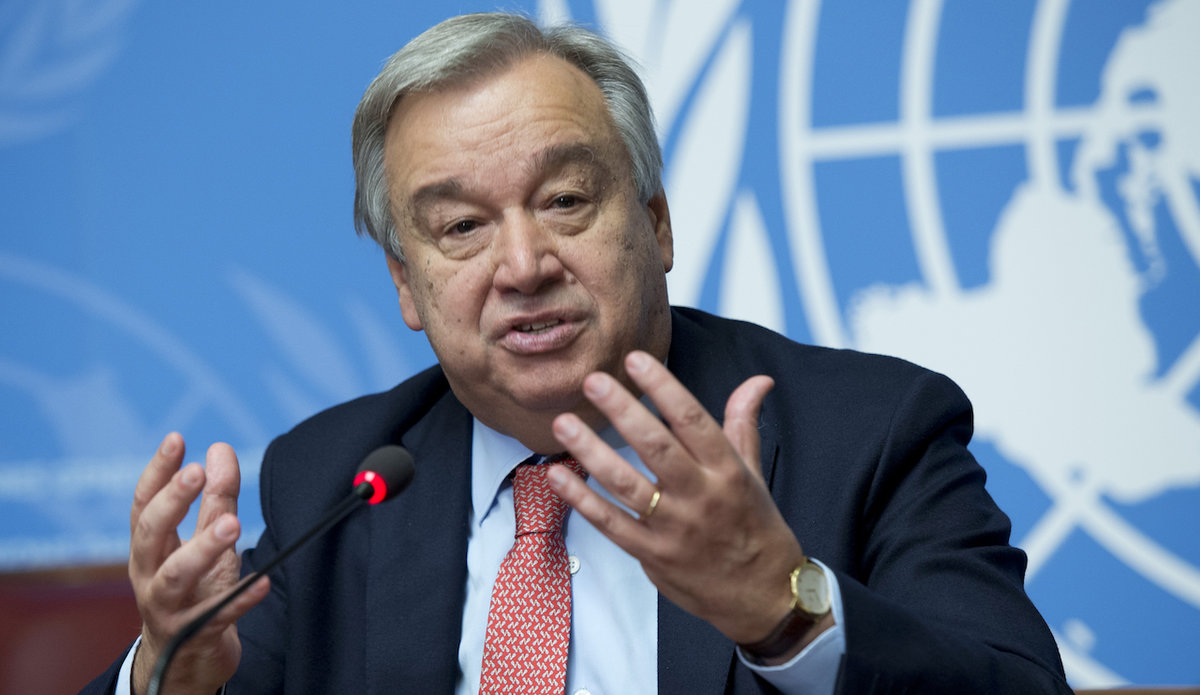
Speaking at a press conference in Nairobi, Guterres argued that the current global governance structure is “indefensible” and rooted in a post-WWII landscape that no longer exists.
He emphasized that Africa deserves a voice and resources commensurate with its growing global importance and population.
During his visit, Guterres broke ground on a $340 million expansion of the UN Office at Nairobi (UNON), which he described as a “green centre of gravity” for the organization.
Beyond administrative reforms, the UN chief highlighted the economic vulnerabilities facing the continent due to external shocks. He specifically cited the conflict involving Iran and the disruption of the Strait of Hormuz, through which 13% of Africa’s imports pass.
This geopolitical tension has triggered a spike in fertilizer costs, with the price of urea jumping 35% at the peak of Africa’s planting season, threatening to undermine regional food security.
The Issues
- The veto power of the five permanent Security Council members remains the primary obstacle to the structural reforms Guterres is demanding.
- High borrowing costs and inadequate climate financing continue to trap African nations in cycles of debt, preventing investment in sustainable development.
- Disruptions in the Middle East have a direct “inflationary ripple” on African agriculture, illustrating the continent’s high dependency on imported inputs like oil and fertilizer.
What’s Being Said
“A reform of the UN Security Council has become necessary to strengthen the legitimacy and effectiveness of the UN,” Guterres added.
“Civilians are paying an unconscionable price as they continue to be targeted, intentionally starved, and forcibly displaced,” he said regarding African conflicts.
“There are no military solutions to these conflicts,” Guterres warned, calling instead for dialogue and regional cooperation.
What’s Next
- Guterres will carry his reform message to the upcoming Africa Forward Summit in Nairobi and the annual AU-UN conference in Addis Ababa.
- The $340 million expansion of the Nairobi UN hub is expected to move thousands of staff from European offices to Kenya to reduce operational costs.
- International monitors will track the price of agricultural inputs as planting seasons progress to determine the severity of the Hormuz-linked food crisis.
Bottom Line
António Guterres is positioning Africa at the heart of a renewed multilateralism, arguing that global peace and economic stability are impossible without correcting the “historic injustice” of African under-representation.