



KEY POINTS
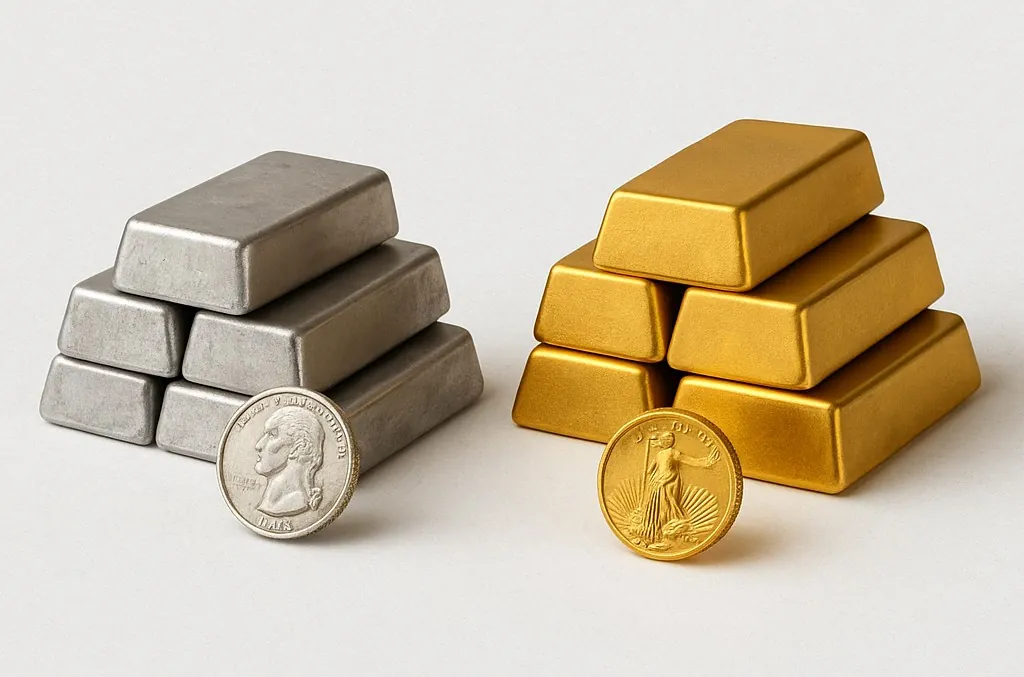
- Spot gold recovered from a dramatic 8.8% plunge to trade near $4,417.82 after US President Donald Trump postponed planned military strikes for five days.
- Silver erased an intraday loss of more than 10%, rallying back to $68.52 an ounce as risk appetite showed signs of returning to the market.
- Investors have been liquidating gold throughout the 24-day war to raise cash, following a market precedent seen during the 2008 and 2020 economic shocks.
- The recovery in precious metals was supported by a 0.3% drop in the Bloomberg Dollar Spot Index after claims of “productive” conversations with Tehran.
MAIN STORY
The precious metals market experienced extreme volatility on Monday as news of a potential de-escalation in the US-Israel-Iran conflict reached traders. Spot gold, which had plummeted to a four-month low earlier in the day, rebounded sharply after President Trump announced a five-day pause on strikes against Iranian energy and power infrastructure. Trump stated that the postponement was a gesture of goodwill following discussions aimed at a total resolution of hostilities.
The news triggered a massive short-covering rally in gold and silver, which had both been hammered by a combination of a surging dollar and rising interest rate expectations since the conflict began on February 28.
Market analysts noted that gold’s poor performance throughout the war has surprised many who expected the metal to act as a traditional safe haven. Instead, the energy-driven inflation shock caused by the closure of the Strait of Hormuz led markets to price in more aggressive interest rate hikes from global central banks.
This shift made non-yielding bullion less attractive compared to the US dollar. David Wilson, director of commodities strategy at BNP Paribas, explained that this initial liquidation phase is a common market reaction, as investors typically sell liquid assets to hold the US dollar during the early stages of a major macro-economic shock.
THE ISSUES
The primary hurdle for a sustained gold rally remains the relationship between energy costs and real interest rates. While geopolitical fear usually drives gold higher, this conflict has spiked energy prices so severely that it has reignited global inflation concerns, forcing central banks to maintain a “higher-for-longer” rate stance.
This environment increases the opportunity cost of holding gold. Additionally, the massive margin calls in equity and energy markets over the last three weeks have forced institutional investors to sell gold and silver to cover losses in other sectors. Until the volatility in the oil market stabilizes and the threat to regional infrastructure is permanently removed, precious metals may continue to trade as liquidity proxies rather than stable safe havens.
WHAT’S BEING SAID
- “Gold initially fell as markets reacted to news flow, with investors typically selling assets to hold the US dollar,” stated David Wilson, BNP Paribas.
- “Productive conversations with Iran… subject to the success of ongoing discussions,” posted Donald Trump on social media.
- “Surging energy prices have raised the odds of rate hikes… making bullion look less appealing,” noted market analysts in London.
WHAT’S NEXT
- Traders are focused on the Friday deadline to see if talks fail and if the threat to Iranian power plants returns.
- Markets will scan upcoming speeches from Federal Reserve officials to see if the recent oil price dip changes the outlook for a May rate hike.
- Analysts are watching for reports of opportunistic buying by emerging market central banks looking to diversify during price dips.
- If the five-day pause leads to a genuine truce, gold may decouple from the dollar and begin a secondary rally based on long-term inflationary damage.
BOTTOM LINE
The Bottom Line is that Gold is finally catching its breath, but it isn’t out of the woods. Today’s rebound was a relief rally triggered by a pause in the war, but until the threat to Iran’s power grid is permanently removed and oil prices stabilize, precious metals will remain vulnerable to the brutal mechanics of forced selling and a dominant US dollar.