








Key points
- FMBN and the Surveyor-General say the National Housing Data Programme will eliminate conflicting housing statistics.
- The initiative will establish a National Housing Data Centre to support evidence-based planning.
- FMBN says a National Mortgage Registry will improve transparency in mortgage transactions.
- Stakeholders call for accurate housing and population data to determine Nigeria’s actual housing deficit.
Main story
The Federal Mortgage Bank of Nigeria (FMBN) and the Office of the Surveyor-General of the Federation say the Federal Government’s National Housing Data Programme will eliminate years of uncertainty and conflicting figures in Nigeria’s housing planning.
They stated this on Wednesday at the Stakeholders Workshop on the Validation of the National Housing Data Programme Report and the Regulation of the Built Environment in the Housing Sector in Abuja.
The workshop was organised by the Federal Ministry of Housing and Urban Development.
Managing Director of FMBN, Shehu Osidi, said credible and accessible housing data was essential for effective planning, particularly as Nigeria’s population continues to grow.
“We cannot effectively plan for the housing needs of our growing population without credible, reliable and accessible housing data.”
He added:
“The establishment of a robust National Housing Data Programme therefore represents a significant step towards strengthening evidence-based decision-making in the sector.”
Osidi said the proposed framework for data collection, management and sharing, alongside the establishment of a National Housing Data Centre, would improve understanding of housing demand, supply, affordability and the evolving needs of Nigerians.
He said FMBN’s mandate of expanding affordable housing finance and deepening the mortgage market depended on the availability of accurate and timely information.
Osidi noted that the bank had actively participated in developing the programme and would continue to support initiatives aimed at improving housing data.
He described the validation exercise as critical to reviewing data sources, methodologies, data-sharing arrangements and approaches for estimating Nigeria’s housing deficit and Housing Affordability Index.
According to him, addressing the country’s housing needs requires collaboration among government institutions, financial organisations, developers, professionals and other stakeholders.
Osidi also highlighted FMBN’s ongoing development of the National Mortgage Registry, a digital platform approved by the National Council on Land, Housing and Urban Development.
He said the registry would serve as a central repository for mortgage transactions, improving transparency, access to mortgage information, risk management and confidence in the mortgage market.
He added that the success of both the National Housing Data Programme and the Mortgage Registry would depend on collaboration among ministries, state land registries, financial institutions, mortgage operators, developers and professional bodies.
Surveyor-General of the Federation, Abdulganiyu Adebomehin, called for a comprehensive assessment of Nigeria’s housing stock and population to determine the country’s actual housing deficit.
“We need to know the number of houses we have. Let us know our real population. Even if it is not very accurate, let it be near it. Then divide it with the number of houses so that we can determine the housing deficit.”
Adebomehin said housing planning should focus not only on the number of homes but also on their quality and suitability.
He added that reliable data would help government project future housing demand based on population growth and household formation.
Chairman of the House of Representatives Committee on Urban Development and Regional Planning, Rep. Awaji-Inombek Abiante, expressed concern over conflicting estimates of Nigeria’s housing deficit, saying previous figures ranging from 17 million to 50 million raised questions about their accuracy.
He also warned against unplanned urban development, particularly in Abuja, where indiscriminate conversion of residential areas into commercial centres was gradually creating urban slums.
Abiante called for proper impact assessments before land-use changes and urged authorities to enforce the Abuja Master Plan fairly.
He pledged the National Assembly’s support for legislative measures aimed at strengthening the housing sector and improving access to decent housing.
The issues
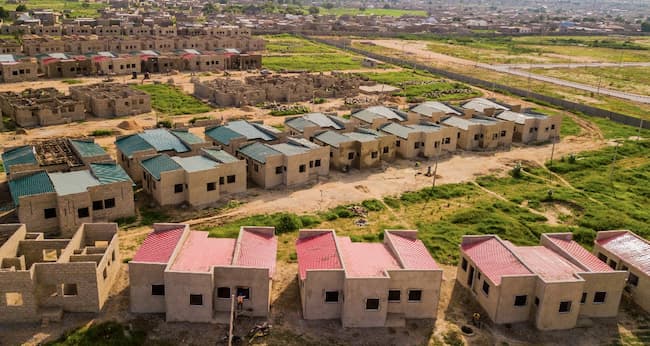
Nigeria has long relied on varying estimates of its housing deficit, making it difficult to formulate effective housing policies and accurately target investments. A unified national housing database could provide a common evidence base for planning, financing and policy implementation.
What’s being said
“We cannot effectively plan for the housing needs of our growing population without credible, reliable and accessible housing data.” — Shehu Osidi, Managing Director, FMBN.
“We need to know the number of houses we have… Then divide it with the number of houses so that we can determine the housing deficit.” — Abdulganiyu Adebomehin, Surveyor-General of the Federation.
Bottom line
The Federal Government is seeking to replace inconsistent housing statistics with a centralised national database and mortgage registry, a move expected to improve housing policy, financing and long-term planning.










 and the Office of the Surveyor-General of the Federation say the Federal Government's ...)