






Keypoints
- The Federal Government announced that implementing the Nigeria First Policy in the automobile sector will drive jobs and investments.
- Bureau of Public Procurement executives signed a comprehensive policy framework on procurement of locally assembled vehicles on Friday.
- Planned directives mandate that vehicle manufacturers must establish standard maintenance facilities across the country.
- The National Automotive Design and Development Council is establishing a National Automotive Training Institute to grow technical capacity.
- Strategic collaborations with technical boards aim to formally certify skilled workers throughout the local automotive sector.
Main Story
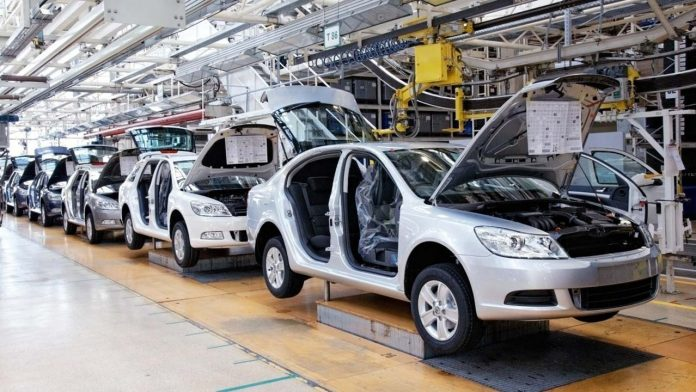
The Federal Government has reiterated that the implementation of the Nigeria First Policy in the automobile sector will create jobs, attract investments and boost local manufacturing.
The Director-General, Bureau of Public Procurement (BPP), Dr Adebowale Adedokun, said this after the signing of a policy framework on procurement of locally assembled vehicles by government agencies on Friday in Abuja.
Adedokun said the policy would create employment opportunities for engineers, technologists and skilled workers in the automotive sector. According to him, the initiative will also improve technical education and provide practical learning opportunities for students and graduates in engineering and related fields.
To evaluate historical manufacturing ecosystems, Adedokun recalled that in those days, students visited PAN, Volkswagen and Leyland to learn automobile manufacturing processes, engineering and quality assurance.
He maintained that this policy will revive such opportunities and help Nigeria rebuild technical capacity in the automotive industry. The BPP boss added that the policy would encourage foreign direct investment, retain more money within the economy and position Nigeria as a production-driven nation rather than a consuming one.
He noted that the initiative would also stimulate the growth of small and medium-scale enterprises involved in the production of vehicle components and spare parts, adding that manufacturers would be required to establish standard maintenance facilities across the country as part of the policy implementation.
Furthermore, the Director-General, National Automotive Design and Development Council (NADDC), Mr Joseph Osanipin, described the policy as a major step toward transforming Nigeria’s automotive industry and economy.
Osanipin said the policy had already attracted interest from global Original Equipment Manufacturers (OEMs) and spare parts producers seeking to establish operations in Nigeria.
According to him, the automotive industry has strong linkages with sectors such as steel, oil and gas, lubricants and technical services, making it critical to industrial development.
He stated that NADDC was establishing a National Automotive Training Institute to build the technical capacity required to support the policy implementation, while working with the National Board for Technical Education (NBTE) to certify skilled workers in the automotive sector.
The Issues
- Ensuring domestic assembly plants consistently meet strict quality assurance benchmarks required for heavy public sector utilization.
- Developing comprehensive nationwide support infrastructure, including standardized diagnostic facilities and localized spare parts lines.
- Aligning curriculum standards between training institutes and evolving manufacturing technologies deployed by global equipment partners.
What’s Being Said
- Discussing technical education pipelines, BPP Director-General Dr Adebowale Adedokun noted that “In those days, students visited PAN, Volkswagen and Leyland to learn automobile manufacturing processes, engineering and quality assurance.”
- Emphasizing the operational goals of the current framework, he added that “This policy will revive such opportunities and help Nigeria rebuild technical capacity in the automotive industry.”
- General summaries from the procurement bureau acknowledged that “local vehicle assemblers had already improved product quality and were providing reliable vehicles for government use.”
- Outlining the structural position of the automotive market, NADDC Director-General Mr Joseph Osanipin stated that “the automotive industry has strong linkages with sectors such as steel, oil and gas, lubricants and technical services, making it critical to industrial development.”
- Outlining long-term local content projections, he added that the unified policy framework “would revolutionise Nigeria’s industrial landscape and strengthen local content development in the automobile industry.”
What’s Next
- Government agencies will adjust their annual procurement plans to prioritize locally assembled vehicles under the signed BPP framework.
- Project engineers will break ground on the physical infrastructure for the upcoming National Automotive Training Institute.
- Technical experts from the NADDC and NBTE will finalize the certification criteria for skilled technicians across production plants.
Bottom Line
By leveraging mandatory government procurement frameworks to replace foreign imports with domestic assembly, the Federal Government, through the BPP and NADDC, aims to stimulate external investments, establish advanced training institutes, and position Nigeria as a production-driven automotive hub.