







By Emmanuella Opara | October 29th 2026
KEY POINTS
- The Federal Competition and Consumer Protection Commission has warned electricity distribution companies against estimated billing, arbitrary charges and disconnections without due process.
- FCCPC chief Tunji Bello says the commission will use its enforcement powers where engagement fails to secure compliance.
- Complaints from consumers served by Ikeja Electric and Eko Electricity Distribution Company prompted a town hall meeting in Ikorodu, Lagos.
- DisCos were urged to resolve billing disputes, schedule meter installations and reconnect customers who were disconnected improperly.
- Consumers were advised to report violations while paying for electricity consumed and avoiding illegal connections.
MAIN STORY
The Federal Competition and Consumer Protection Commission has warned electricity distribution companies to comply with regulations on billing, metering and disconnections, threatening enforcement action against operators that fail to address persistent consumer complaints.
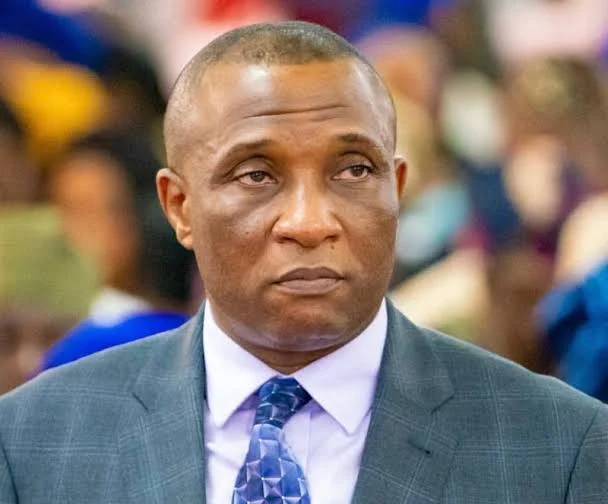
The Executive Vice-Chairman and Chief Executive Officer of the FCCPC, Tunji Bello, gave the warning at the commission’s electricity consumer complaints resolution town hall meeting in Ikorodu, Lagos, on Tuesday.
Bello said recurring complaints from communities served by Ikeja Electric and Eko Electricity Distribution Company showed that more needed to be done to protect electricity consumers.
He identified estimated and arbitrary billing, delays in meter installation, disputed bills, disconnections without due process, delayed reconnection and poor customer service as some of the issues the commission was seeking to address.
The town hall followed a formal request from the Ikorodu West community, whose residents asked the commission to explain their rights and help resolve longstanding problems with their electricity provider.
Bello said consumers were entitled to fair treatment, accurate information, honest billing and effective redress when service providers failed to meet their obligations.
He acknowledged the regulatory responsibilities of the Nigerian Electricity Regulatory Commission and the Lagos State Electricity Regulatory Commission, describing the FCCPC’s intervention as complementary to their work.
The FCCPC chief urged the distribution companies to empower their representatives at the town hall’s resolution desks to make decisions on complaints without unnecessary delays. These included reviewing disputed bills, correcting billing errors, arranging meter installations and reconnecting customers who had been disconnected improperly.
He said the success of the intervention should be measured by the number of complaints resolved rather than the number received.
Bello also called on the commission’s officers to handle complaints professionally, document cases properly and follow each matter through to resolution.
While urging electricity consumers to understand their rights and report violations, he reminded them of their responsibilities to pay for electricity consumed, avoid meter bypasses and illegal connections, and protect electricity installations against vandalism.
The FCCPC said it would continue engaging distribution companies but would not hesitate to deploy its enforcement powers where discussions failed to produce the required results.
THE ISSUES
Estimated billing, disputed charges and delays in metering remain central to the consumer complaints highlighted by the FCCPC. The commission’s intervention also addresses concerns about disconnections without due process and the time customers spend seeking reconnection or corrections to their bills.
The involvement of the FCCPC alongside the Nigerian Electricity Regulatory Commission and the Lagos State Electricity Regulatory Commission highlights the need for coordination among agencies responsible for consumer protection and electricity regulation.
For consumers, the immediate concern is whether complaints will lead to corrected bills, timely meter installations and the restoration of electricity where disconnections were improper. For DisCos, the warning signals the possibility of enforcement action if regulatory requirements are not followed.
WHAT’S BEING SAID
“Let me be candid, the volume and recurrence of complaints from your franchise areas tell us that much work remains. Estimated billing must give way to accurate metering. Regulatory directives on billing, disconnection, and reconnection must be obeyed in letter and in spirit. Customer service must move from telling consumers to wait, to telling them what has been done,” Tunji Bello, Executive Vice-Chairman and Chief Executive Officer of the FCCPC, said.
“The commission will continue to engage, but where engagement fails, we will not hesitate to deploy the full weight of our enforcement powers. Compliance is far cheaper than consequences,” Bello said.
“Consumers do not care which agency’s letterhead resolves their complaint. They care that it gets resolved. Our collective duty is to make sure no complaint falls through the cracks between institutions,” Bello said.
“Let this Town Hall be remembered not by how many complaints were heard, but by how many were resolved,” Bello said.
WHAT’S NEXT
The FCCPC is expected to continue engaging electricity distribution companies and monitoring the handling of consumer complaints. DisCos were urged to resolve billing disputes, arrange meter installations and reconnect customers where disconnections were improper.
Consumers have also been encouraged to escalate unresolved complaints to the relevant authorities.
BOTTOM LINE
The FCCPC has warned electricity distribution companies that persistent failures involving estimated billing and unlawful disconnections could attract enforcement action. The effectiveness of the intervention will depend on whether consumer complaints translate into timely corrections, proper metering and improved service delivery.