








Key Points
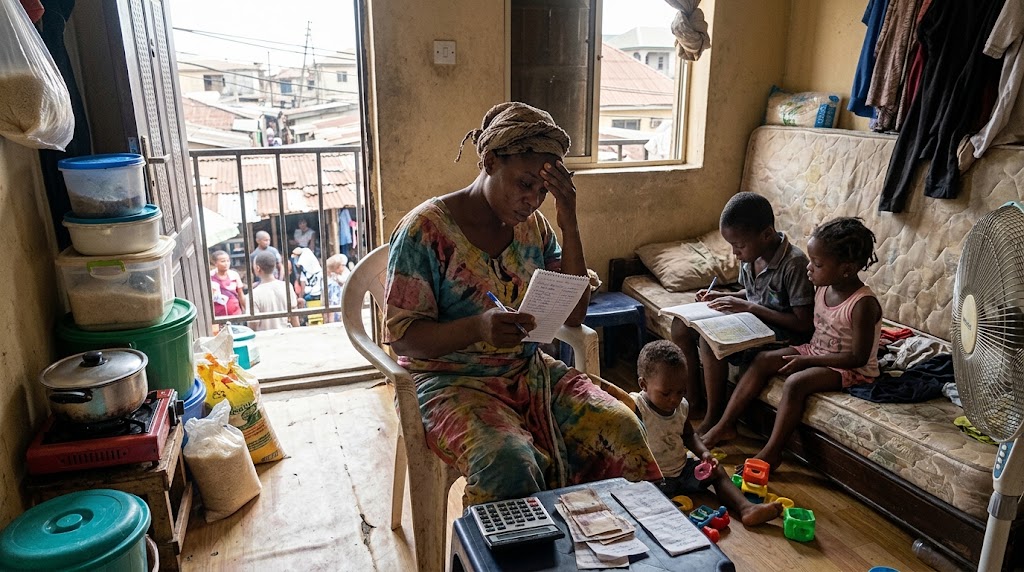
- Parents say rising food prices, school fees, rent and healthcare costs are making it increasingly difficult to provide for their children.
- UNICEF reports that 54 per cent of Nigerian children aged zero to 17 live in multidimensional poverty.
- Health and nutrition experts warn that financial pressures are exposing children to malnutrition, infections and developmental challenges.
- School administrators say rising operational costs are forcing schools to increase fees, putting quality education beyond the reach of some families.
- Experts recommend affordable nutrition, targeted government support, subsidised healthcare and stronger public education services.
Main Story
Raising children in Nigeria is becoming an increasingly expensive responsibility as rising food prices, healthcare bills, school fees and other household expenses put growing pressure on families.
For many parents, providing basic necessities has become a daily struggle, forcing them to make difficult decisions about food, healthcare, education and other essential needs.
The situation is particularly concerning given the number of children in the country and the challenges affecting their welfare.
According to UNICEF’s 2025 Annual Report, 54 per cent of Nigerian children aged zero to 17 live in multidimensional poverty, experiencing deprivations in essential areas of their well-being.
The organisation also reported in June 2024 that approximately 11 million Nigerian children under five experienced severe food poverty, increasing their vulnerability to wasting and other forms of malnutrition.
Speaking in an interview with the News Agency of Nigeria (NAN) on Sunday, Mrs Oluchi Ezeh, a clothes vendor and mother of four, said the rising cost of living had made it increasingly difficult to provide basic necessities.
She explained that feeding expenses now consumed a significant portion of household income, leaving parents struggling to provide three meals daily.
Another parent, Mr Lawrence Adeniyi, a civil servant and father of four, said rising food prices, school fees, rent, transportation and healthcare expenses had forced him to make personal sacrifices.
He disclosed that the high cost of medical consultations and drugs sometimes made him postpone taking sick children to the hospital.
Similarly, Mrs Esther Okon, a civil servant and mother of four, said she had resorted to replacing expensive fish and meat with eggs to manage household expenses.
She added that she had sold her gold to ensure her children could eat properly, urging the government to increase salaries and introduce measures to protect households from rising costs.
The Issues
Beyond household finances, experts warn that the rising cost of raising children could have long-term consequences for their health, education and development.
Economist Mr Iheanyi Nze said low- and middle-income families were particularly affected because household earnings were not increasing at the same pace as prices.
He explained that essential expenses such as food, education, healthcare and transportation could not easily be avoided, leaving parents with limited options when costs increased.
Nze also clarified that disinflation did not mean prices were falling, but rather that the rate at which prices increased was slowing.
He recommended targeted cash transfers, improved public education, subsidised healthcare for children and better food storage facilities to reduce household expenses.
What’s Being Said
Highlighting the health implications, Dr Fidel Ezeome, Senior Registrar in the Department of Paediatrics at Irrua Specialist Teaching Hospital, Irrua, said financial difficulties could negatively affect children’s nutrition, healthcare and overall development.
He noted that infant formula costing between N9,000 and N15,000 could require monthly spending of N40,000 to N60,000, placing additional pressure on families who cannot breastfeed.
According to him, poor nutrition weakens children’s immune systems, increasing their vulnerability to infections, frequent hospital admissions, poor weight gain and impaired brain development.
He warned that children with otherwise treatable conditions could develop life-threatening complications when parents could not afford medication or medical investigations.
Ezeome advised parents to practise exclusive breastfeeding for infants below six months, ensure adequate nutrition, maintain routine immunisation and seek medical attention early.
On nutrition, Dr Oluwaseun Ariyo, Senior Lecturer in the Department of Human Nutrition and Dietetics at the University of Ibadan, said declining purchasing power had made balanced meals increasingly difficult for many households.
He observed that families were increasingly prioritising filling their children’s stomachs over providing nutritionally balanced diets.
According to him, some households had replaced fish, meat, milk, fruits and vegetables with cheaper staples such as rice, garri, yam and cassava.
He also noted that some families had reduced meal portions, skipped meals or moved from three meals to two daily.
Ariyo warned that inadequate nutrition could lead to micronutrient deficiencies, weakened immunity, stunting, wasting, poor concentration and impaired brain development.
He recommended affordable alternatives such as beans, groundnuts, soybeans, eggs, small dried fish, seasonal fruits and locally available vegetables.
He also suggested meals such as beans porridge with vegetables and fish, pap with eggs or moi-moi, and rice and beans with vegetable stew.
On education, Mr Dayo Moyo, Principal of Isador Model School, Agodo-Egbe, Lagos State, said increasing operational expenses had forced many school owners to review their fees.
He explained that maintaining quality education required competent teachers, adequate facilities and learning materials, all of which had become more expensive.
Moyo warned that some parents could no longer afford their preferred schools or essential learning materials, potentially widening the academic gap between disadvantaged children and their more privileged peers.
What’s Next
The growing financial pressure on households highlights the need for stronger government interventions to protect children’s welfare.
Targeted financial assistance, affordable healthcare, improved public schools and policies that make nutritious food accessible could help reduce the burden on struggling families.
Increased investment in child nutrition, preventive healthcare and education would also help prevent today’s economic difficulties from becoming long-term barriers to children’s development.
Bottom Line
The rising cost of raising children in Nigeria is no longer just a household budgeting problem. It is increasingly a child welfare and development concern.
When parents cannot afford nutritious meals, timely medical treatment or quality education, children bear the consequences.
Protecting their future will require more than asking families to make sacrifices. It will require deliberate government action to make food, healthcare and education affordable and accessible to every child.